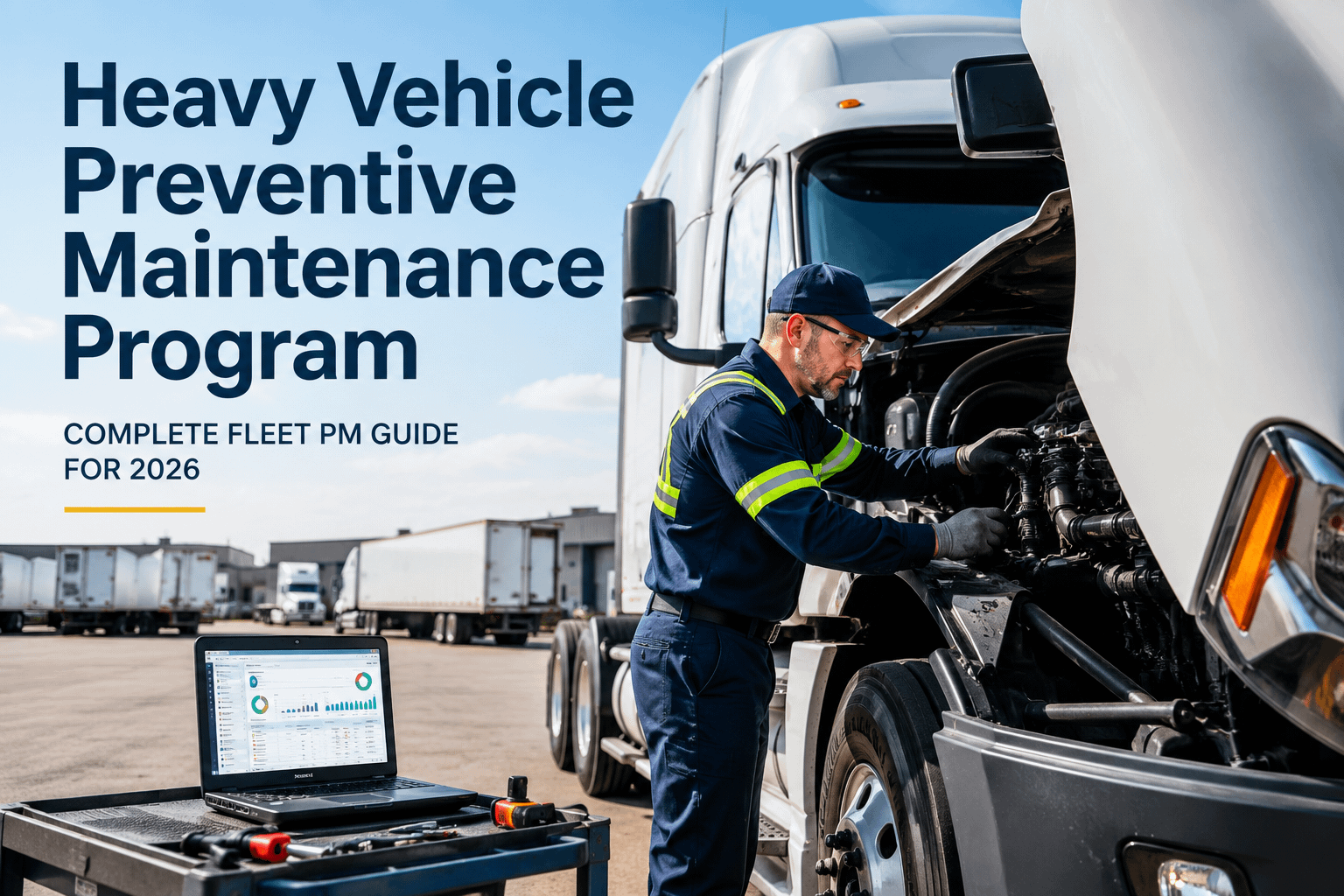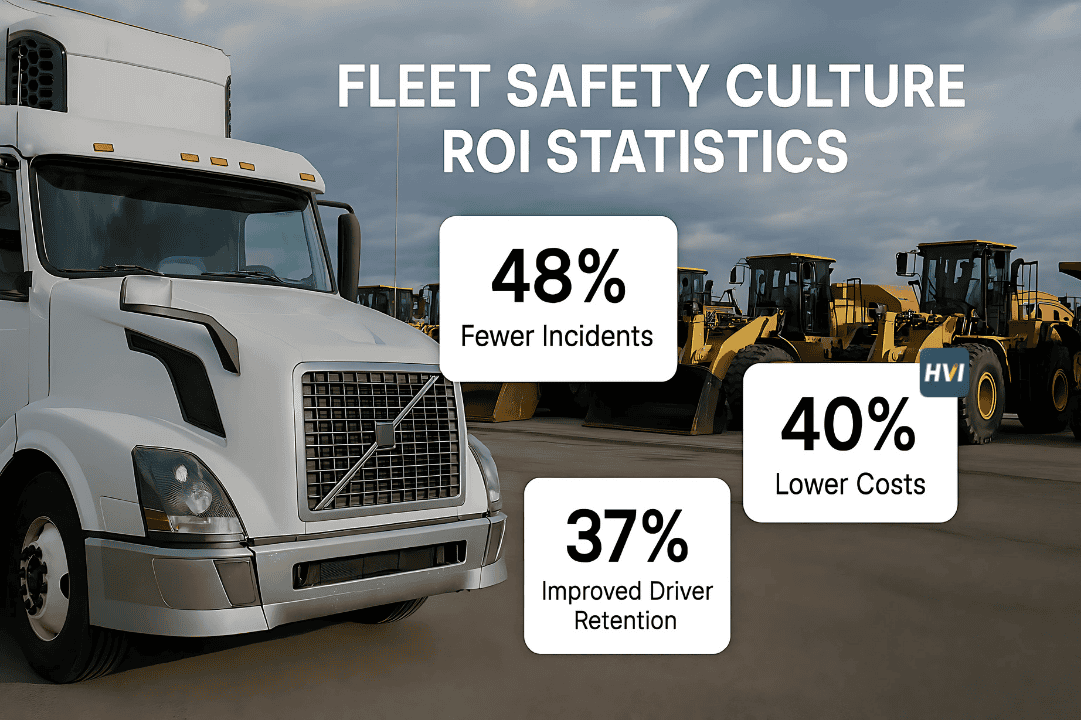
Building a preventive maintenance heavy vehicles program is the single highest-leverage operational investment any fleet operator makes in 2026. Heavy vehicles — Class-7 and Class-8 tractors, vocational trucks, heavy haulers, dump trucks, and trailers — accumulate wear faster, fail more catastrophically, and cost more to repair than any other vehicle class on the road. Fleets running structured PM programs report 45% less unplanned downtime, 30% lower total maintenance costs, 35% fewer emergency repairs, and 70% fewer roadside breakdowns compared to reactive operations. The fleets that struggle aren't the ones missing technology — 60% of fleet managers still run PM through spreadsheets, and 52% rely on paper records. The fleets that struggle are the ones that never built a structured program in the first place, or built one without the digital foundation that makes scheduled maintenance actually happen on schedule. This guide walks through exactly how to build a preventive maintenance heavy vehicles program from scratch — the 8 program-build steps, the service interval matrix for every major component, the most common mistakes that derail PM programs, the metrics that prove ROI, and how HVI's inspection and maintenance platform makes every step structurally enforceable. Start your free HVI trial to build your PM program on a digital foundation, or book a 30-minute demo to see the complete workflow live.
HVI replaces spreadsheet schedules and paper logs with a digital PM platform built specifically for heavy vehicles — multi-trigger scheduling, automated work orders, ELD integration, and audit-ready records. Most fleets see their first prevented breakdown within 30-45 days.
What is a preventive maintenance heavy vehicles program?
A preventive maintenance heavy vehicles program is a documented, systematic schedule of inspections, services, and component replacements performed on Class-7/Class-8 tractors, vocational trucks, heavy haulers, dump trucks, and trailers — triggered by mileage, engine hours, calendar time, or sensor condition before failures occur. The program covers daily DVIRs, weekly under-vehicle inspections, monthly lubrication and detailed reviews, quarterly compliance audits, and annual DOT periodic inspections (49 CFR § 396.17), with every service recorded in an audit-ready system that satisfies FMCSA's § 396.3 "systematically inspect, repair, and maintain" requirement.
Unlike reactive maintenance ("fix it when it breaks") or generic vehicle PM, heavy vehicle PM programs account for the specific failure modes, regulatory requirements, and operating conditions of commercial trucks — air brake systems, fifth-wheel coupling, hydraulic systems, GVWR-related wear patterns, and the CSA scoring categories that affect every operation. HVI's PM module is built specifically for this category — not a general CMMS adapted for trucks, but a heavy-vehicle-first platform with the regulatory awareness that determines whether your program passes a DOT audit.
Why heavy vehicles need a dedicated PM program (more than other vehicles)
Heavy vehicles operate under different physics, regulations, and consequences than passenger vehicles or light-duty fleet. Generic maintenance scheduling fails for heavy vehicles because it ignores the specific failure modes that produce roadside out-of-service orders and crash exposure.
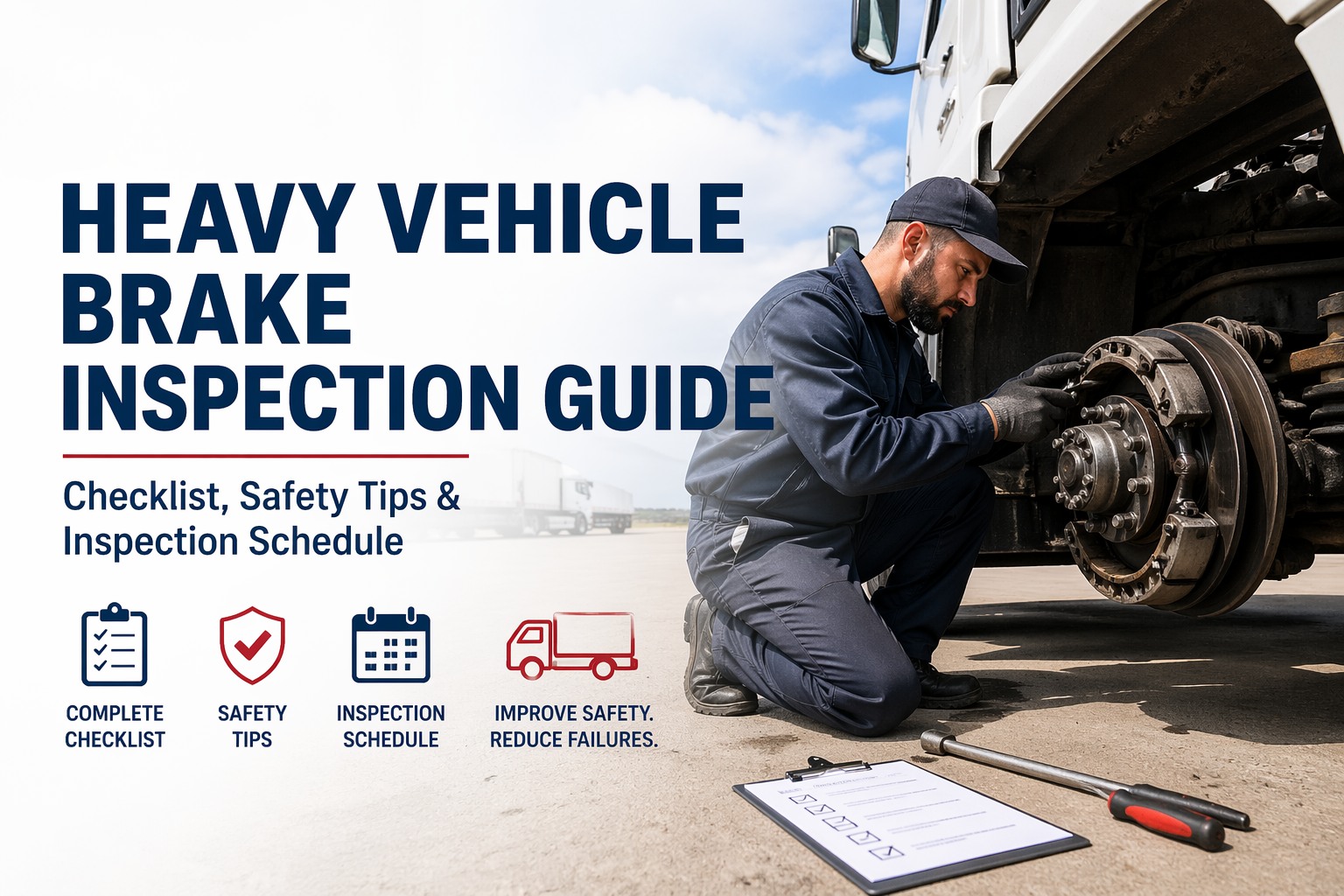
Brake defects account for 30% of all vehicle out-of-service orders at commercial vehicle roadside inspections — the highest of any category. PM programs catch brake adjustment, lining wear, and air system issues before roadside.
FMCSA research identifies brakes as a contributing factor in 29-30% of all truck crashes. Heavy-vehicle PM directly affects safety outcomes, insurance underwriting, and litigation exposure in ways light-duty PM does not.
78% of unplanned breakdowns trace to deferred or missed maintenance. For heavy vehicles, single breakdowns cost $500-$2,000+/day in downtime and $760+ average emergency repair before cascading costs.
The February 2026 CSA methodology update doubled severity weighting for maintenance OOS violations. Heavy vehicle PM directly affects CSA scores, insurance premiums, and audit ratings under the new system.
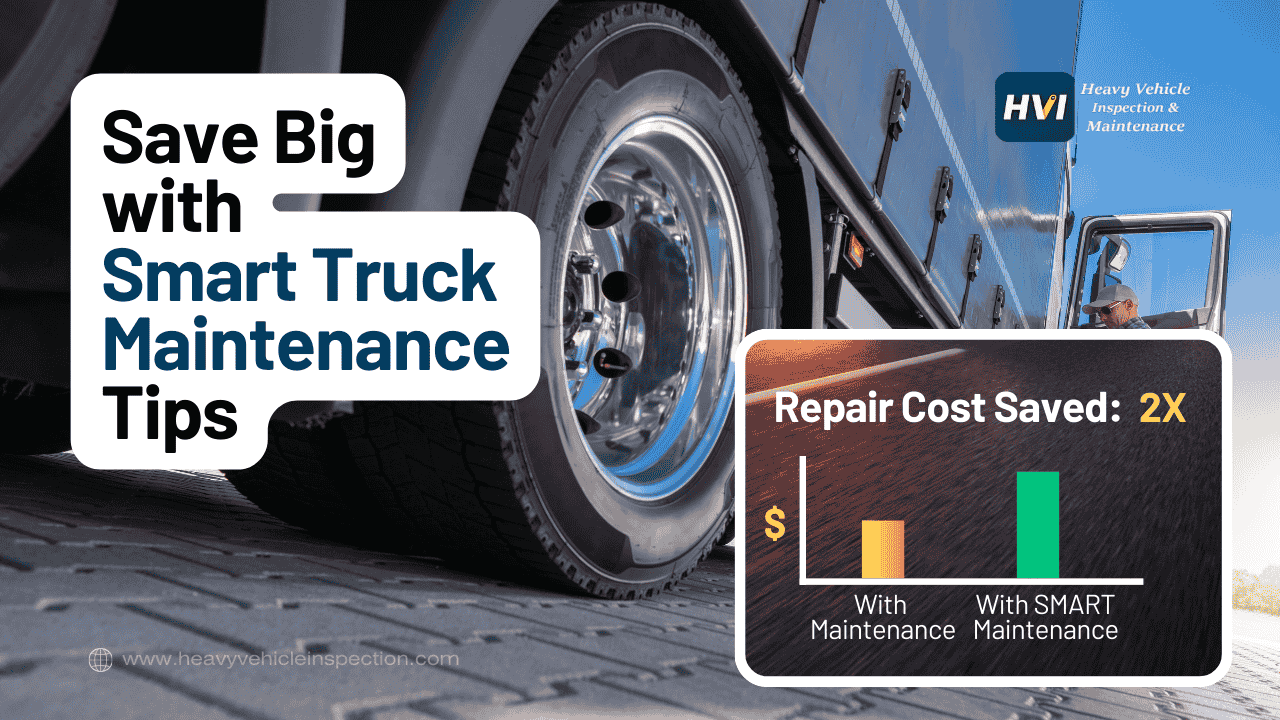
Reactive maintenance on heavy vehicles costs 22-28% more per vehicle annually than scheduled PM. The cost gap is wider than light-duty fleet because heavy-vehicle parts and labor are more expensive when emergencies hit.
Maximum FMCSA fine for dispatching a heavy vehicle with unrepaired defects. PM programs that document the inspection-to-repair-to-acknowledgment chain eliminate this exposure — paper systems cannot.
The 8-step playbook to build your PM program from scratch
Building a preventive maintenance heavy vehicles program is not a single decision — it's a sequenced process that starts with asset inventory and ends with continuous improvement. Skip any step and the program will eventually break down. Here's the complete sequence.
Every heavy vehicle, trailer, and major component (engine, transmission, hydraulic unit, reefer compressor) gets a unique asset ID with VIN, year, make, model, GVWR class, mileage at onboarding, engine hours, and assigned location. Generic spreadsheets miss the component-level tracking that drives heavy-vehicle PM effectiveness.
Not every heavy vehicle gets the same PM treatment. Tier 1 (critical revenue-producing tractors, hazmat-rated assets, key reefer units) gets predictive analytics layered on preventive PM. Tier 2 (standard fleet trucks, support vehicles) gets robust calendar/mileage PM. Tier 3 (yard tractors, backup units, low-utilization assets) gets minimum-required PM only. The 20/50/30 allocation works for most operations.
Heavy vehicles need multi-trigger PM rules — mileage AND engine hours AND calendar AND condition simultaneously per service. Oil change at 15,000 miles OR 250 engine hours OR 6 months, whichever fires first. Brake adjustment audit quarterly OR 30,000 miles. Annual DOT periodic inspection per § 396.17 always calendar-based. Skip the multi-trigger approach and idle-heavy or low-mileage vehicles get over-serviced or under-serviced.
Pre-trip and post-trip DVIRs are the operational foundation of any heavy-vehicle PM program. Photo-required checkpoints for brakes, tires, lights, coupling, fluid levels, and air system. Defect-to-work-order routing automatic. Three-signature chain (driver, mechanic, next driver) enforced structurally. Without this digital workflow, drivers default to "rubber-stamp" inspections and PM programs lose the data that drives them.
PM software earns its keep through alerts that fire before services come due — typically 500 miles or 7-14 days ahead of trigger date. Service due = work order auto-created with vehicle details, last service history, parts list, and assigned technician. Linked parts inventory reserves required parts; reorder triggers fire on low stock. The combination prevents the "service is overdue" panic scenarios that paper systems produce constantly.
Driver adoption is the #1 predictor of PM program success. The platform you choose must be designed for drivers, not just for fleet managers — under-10-minute mobile inspection workflows, large tap targets for gloved hands, photo capture, offline mode for dead zones, single sign-on. Modern mobile-first platforms see 95%+ adoption within 30 days. Platforms tolerated by drivers but designed for managers collapse within months.
Engine hours, mileage updates, and fault codes flow automatically from telematics (Samsara, Geotab, Motive, Verizon Connect) into PM triggers. ELD HOS data cross-references against maintenance schedules to avoid conflicts with driver-mandated rest. Parts inventory deducts on work-order completion. The integration eliminates manual data entry — the silent killer of most PM programs.
A PM program without metrics is a hope, not a system. Track service compliance rate (target 95%+), emergency-to-PM ratio (target under 1:5), mean time between failures (MTBF) per vehicle class, cost-per-mile trending, and unplanned downtime hours per vehicle per year. Review monthly. Refine PM rules based on actual failure patterns. The fleets that hit 700% ROI are the ones that treat PM as a continuously improved discipline, not a deployed checkbox.
Service interval matrix — every major component, every interval
Below is the standard service interval matrix for heavy vehicle PM. Adjust based on duty cycle, OEM specifications, and operating environment. HVI ships pre-configured templates for these intervals that fleets can customize per asset.
5 mistakes that derail heavy-vehicle PM programs
Most failed PM programs share the same five mistakes. Avoiding them is what separates fleets achieving 95% service compliance from fleets stuck at 60-70%.
Calendar-only PM over-services idle vehicles and under-services heavily-used ones. Mileage-only PM ignores idle hours and PTO operations. Multi-trigger (whichever-comes-first) is the only rule that fits heavy vehicles.
If drivers don't have a mobile app for DVIRs, defect reporting, and pre-trip workflows, the PM program loses its primary data source. Driver-observed defects vanish, scheduled services miss the early warnings drivers detected.
Work orders without linked parts inventory cause delayed repairs ("waiting for parts"). The cost cascade — vehicle sitting idle waiting for $40 part — eats more than the PM software costs annually for many fleets.
A PM program without service compliance rate, emergency-to-PM ratio, and MTBF tracking is a hope, not a system. The fleets that hit 700% ROI review metrics monthly and refine rules quarterly.
Pilot the program on 5-10 vehicles first. Find friction points. Train champions. Refine PM rules based on real data. Then roll out by depot or vehicle class. Fleet-wide-on-day-one launches fail more often than they succeed.
The metrics that prove your PM program is working
Five KPIs separate successful heavy-vehicle PM programs from theatrical ones. HVI tracks all five in real time on the compliance dashboard.
Percentage of scheduled PM services completed within the due-date window. Below 80% = program at risk. Above 95% = world-class. HVI compliance dashboard tracks per vehicle, per service type, per technician.
For every 5 scheduled PM events, no more than 1 emergency repair. Higher ratio means the PM intervals are too long, or scheduled services are getting skipped. HVI flags this automatically when ratios drift.
Hours of operation between unplanned failures per vehicle. Trending up means PM is working. Flat or trending down means the program needs adjustment. HVI calculates MTBF per asset and per fleet automatically.
Total maintenance cost divided by miles driven, per vehicle. Year-over-year reduction is the financial proof that PM is paying back. HVI surfaces cost-per-mile trends across fleet, sub-fleet, and individual vehicles.
Total hours each vehicle was unavailable due to unplanned issues. World-class fleets average under 24 hours per vehicle per year. HVI tracks this per asset and benchmarks against fleet average and industry data.
Frequently asked questions — building a heavy vehicle PM program
Stop building PM programs that break down.
HVI delivers every step in this 8-step playbook on day one — heavy-vehicle-specific asset tracking, multi-trigger PM rules, eDVIR workflow, automated work orders, parts inventory integration, ELD/telematics sync, real-time KPI dashboards, and audit-ready records. Most transport companies running heavy vehicle fleets recover the entire annual subscription within 60-90 days. Stop running PM on spreadsheets and start running it on HVI.
No credit card required · PM program live in 2-4 weeks · First prevented breakdown typically in 30-45 days