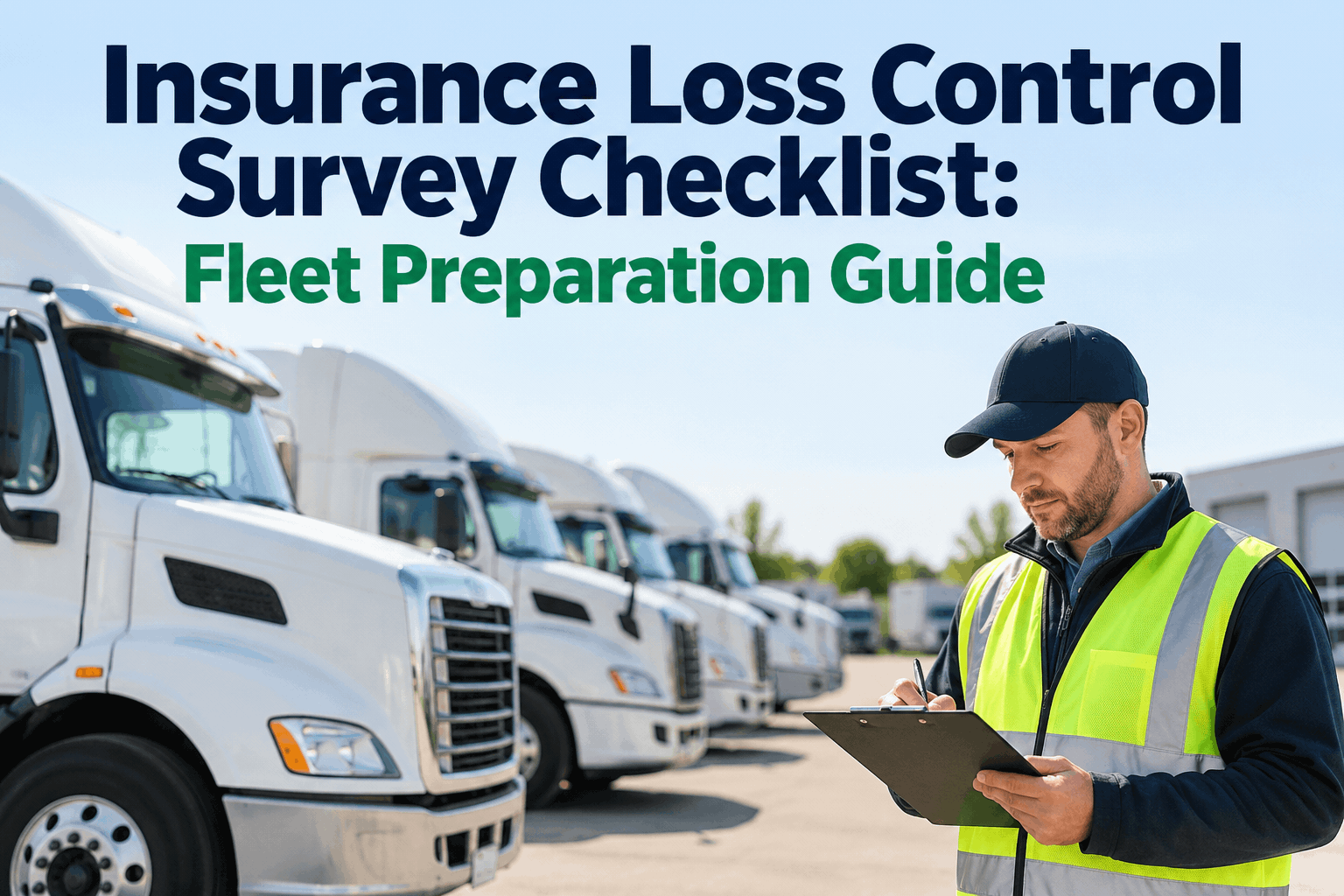
An insurance loss control survey can expose a problem long before renewal: an overdue brake repair, a missing inspection trail, or a safety recommendation nobody closed. Fleet owners need more than a tidy policy folder. This guide shows what surveyors commonly review, how to prepare usable evidence, and how to document the improvements that follow.
Insurance Loss Control Survey Checklist: Be Ready to Show the Work
Walk into the survey with an evidence trail—not a stack of unexplained spreadsheets. See the six risk areas, the records to collect, and the follow-up plan to keep.
What is an insurance loss control survey?
An insurance loss control survey is a review by an insurer or its risk-control representative of the exposures that could lead to claims. For a commercial fleet, the review may include vehicle condition, maintenance practices, driver selection and training, incident trends, dispatch practices, facilities, and the way corrective actions are managed. The insurer decides the survey scope and whether it involves an interview, document review, site visit, or vehicle sampling.
A risk picture
A way to identify preventable loss exposures and recommend improvements based on the insurer's underwriting and risk-control approach.
A guaranteed premium discount
Passing a survey does not automatically reduce premiums or replace DOT, OSHA, contractual, or other applicable obligations.
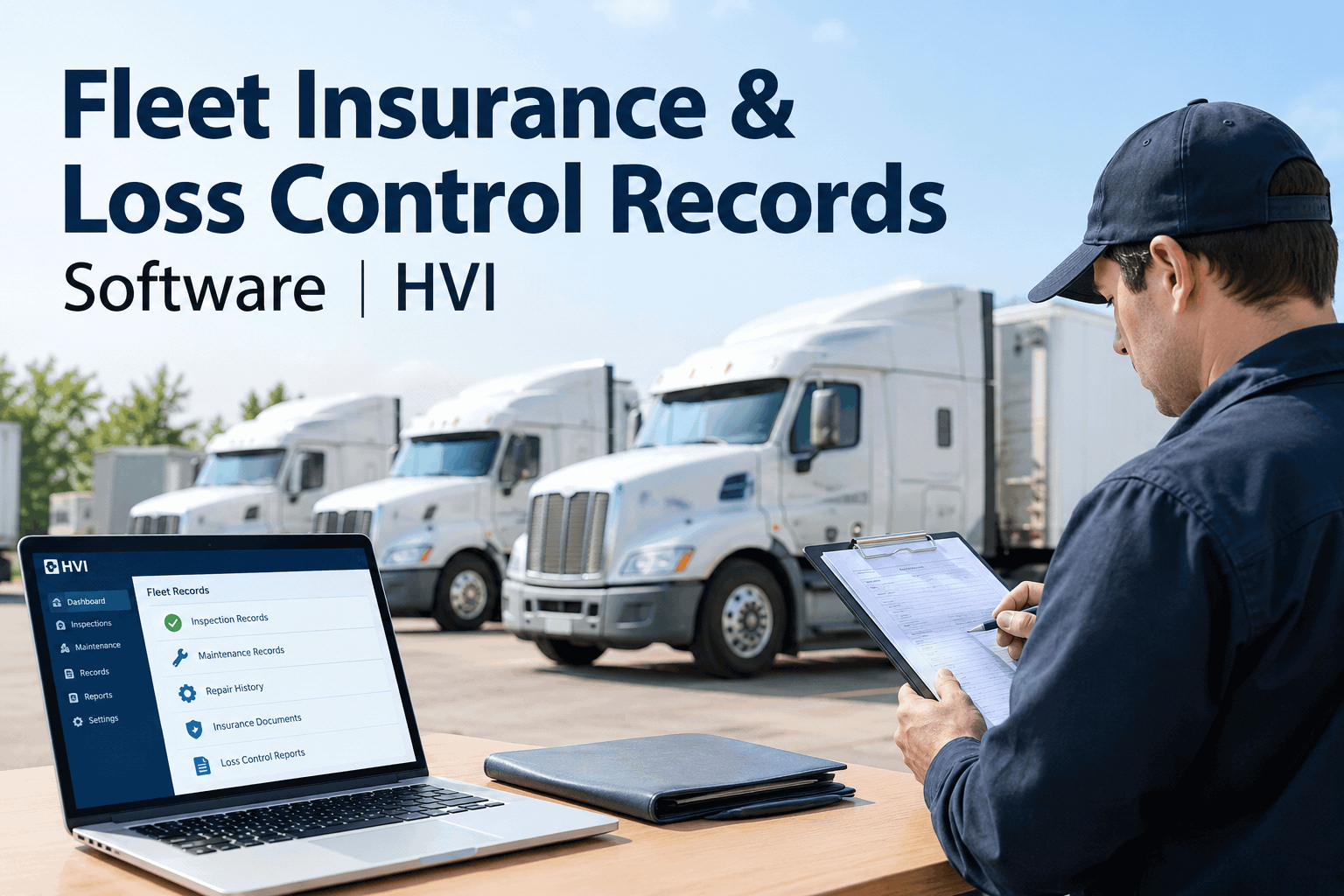
Start with HVI's HVI fleet safety management features to connect inspections, defect evidence, maintenance follow-up, and incident records. Book a demo to see a fleet safety evidence workflow.
Six areas an insurer may ask your fleet to demonstrate
Use this fleet insurance loss control checklist as a starting point, then request the actual survey agenda from your broker or insurer. The right evidence varies by operation, vehicle type, insurer and jurisdiction.
Vehicle condition
Brake, tire, light, coupling and safety-equipment inspections; out-of-service decisions.
Maintenance discipline
Preventive service intervals, overdue work, repairs and return-to-service proof.
Driver controls
Licenses, qualifications, onboarding, training, coaching and policy acknowledgments.
Incidents and claims
Crash and near-miss trends, investigations, contributing factors and corrective action.
Operations and exposure
Routes, hours, cargo, vehicle use, parking, theft prevention and changes in fleet operations.
Management follow-through
Who owns risk items, deadlines, verification, and unresolved insurer recommendations.
Practical tip: bring samples from ordinary operating days—not only records created the week before the visit. Start free to standardize your daily inspection records.
Build an evidence packet the surveyor can actually follow
A good packet is indexed by record type, date range, vehicle or driver, and document owner. Avoid sending unnecessary personal information; share sensitive driver and claim records only through an approved, secure channel.
For every requested document, confirm:
- Does it cover the requested date range and fleet units?
- Can the reviewer identify who completed or approved it?
- Does a defect link to its repair and verification?
- Is an overdue item openly flagged with a corrective plan?
- Is the evidence appropriate to share with the insurer?
HVI digital vehicle inspection reports and HVI preventive maintenance and work order records can help establish the vehicle-side trail. Book a demo to see inspection and maintenance evidence retrieval.
What to do before, during, and after the review
Confirm survey scope; review open defects and overdue PM; reconcile your fleet list; collect requested documents and assign a spokesperson.
Walk through a real inspection-to-repair example. Be accurate about missing records, pending actions and controls still being implemented.
Log each recommendation with an owner, due date, action taken and evidence of completion. Confirm response expectations with the insurer.
For fleets with multiple yards or shifts, the weak link is often the handoff between finding a problem and proving it was fixed. Start free to connect inspections and work orders in HVI.
From survey finding to documented correction
The following example is illustrative, not an actual insurer finding. It shows why a completed repair needs evidence rather than a verbal assurance.
HVI supports the underlying HVI safety incident and corrective-action tracking. Book a demo to review a documented defect-to-repair workflow.
Track recommendations instead of filing them away
Insurers may issue recommendations after a loss control survey. Treat each as a managed action, and confirm the required response date and acceptable proof directly with the insurer.
| Illustrative finding | Owner | Action & evidence | Status |
|---|---|---|---|
| Overdue PM on two units | Maintenance lead | Service work orders and completion records | In progress |
| Missing inspection sign-off | Fleet supervisor | Checklist process review and new signed samples | Review |
| Unclosed tire defect | Shop manager | Repair record and verification inspection | Closed |
Sample entries only. A recommendation is not “closed” merely because a task was assigned; keep the evidence that the action was completed and, where requested, acknowledged by the insurer.
The 10-minute fleet loss control readiness check
Any unchecked item is a preparation task, not a reason to fabricate or backdate a record. Start a free HVI trial to build consistent inspection evidence going forward.
Insurance loss control survey FAQs
What is an insurance loss control survey?
It is a risk review arranged by an insurer or its representative to understand exposures and recommend ways to reduce losses. A commercial fleet review may examine vehicles, maintenance, drivers, incidents, operating practices and documented follow-up. The exact scope varies by insurer and policy.
What documents should a fleet prepare for a loss control survey?
Common requests include a fleet roster, vehicle inspection records, preventive maintenance history, defect and repair records, driver qualification and training evidence, incident summaries, written safety procedures and the status of earlier recommendations. Ask the insurer for its specific list.
Can an insurance loss control survey affect fleet insurance premiums?
Survey findings may inform underwriting, renewal terms, risk-control recommendations or eligibility, but no particular premium outcome is guaranteed. Claims history, exposures, insurer appetite and other factors also matter.
How should a fleet respond to loss control recommendations?
Assign each recommendation to an owner, document the action and completion date, keep supporting evidence and submit it by the insurer’s stated deadline. If a recommendation is unclear or impractical, discuss an acceptable alternative with the insurer rather than marking it complete.
How does HVI help with insurance survey preparation?
HVI can support the vehicle and maintenance evidence trail through digital inspections, defect documentation, work orders, preventive maintenance schedules and safety-related records. Insurer-specific forms, policy terms and sensitive HR documents may still need separate management.
Make fleet safety evidence easier to find before anyone asks for it.
Capture inspections, follow defects through repair, and keep maintenance history connected to each unit. Start with HVI—or see the process in a live demo.