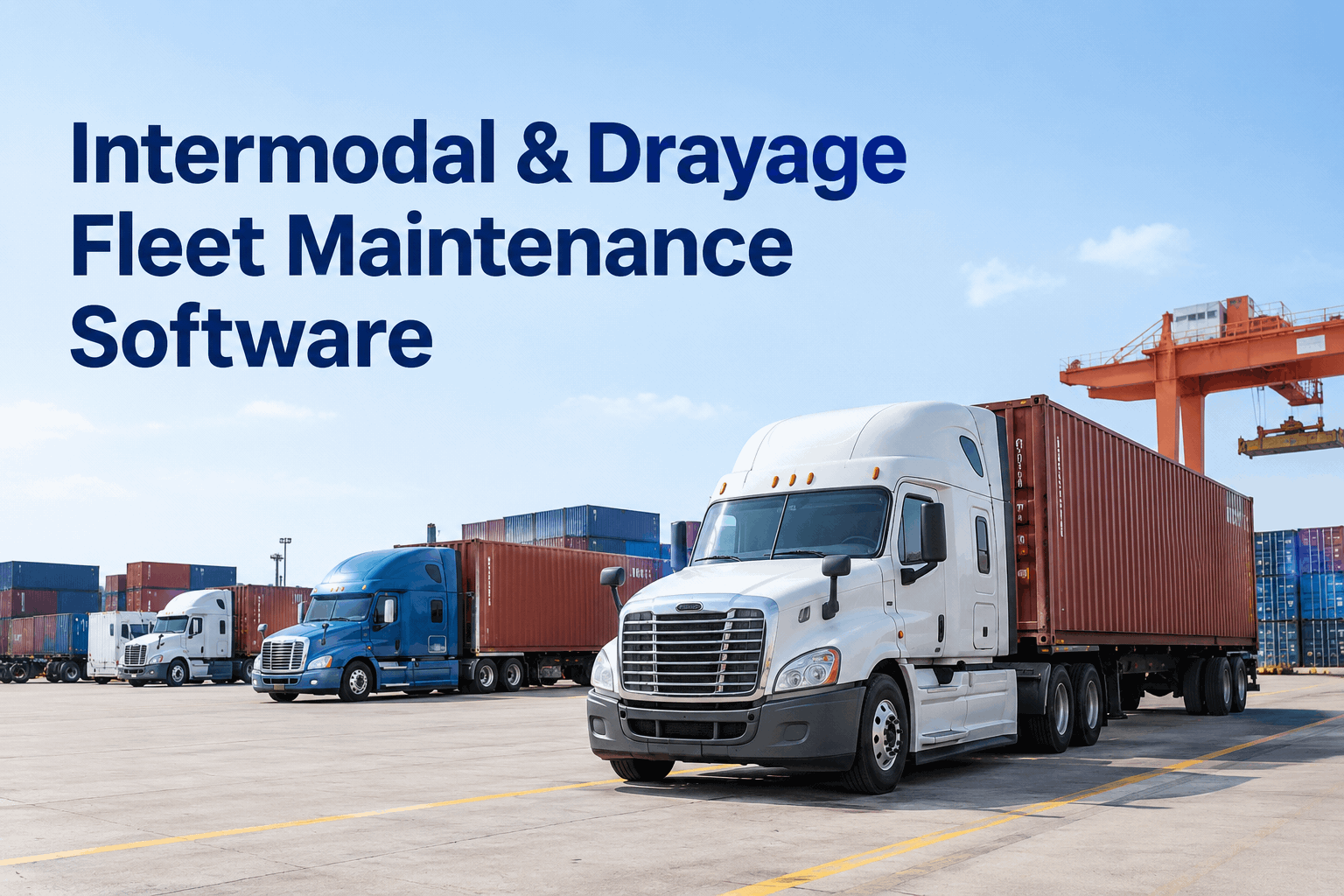
The chassis you just picked up at the rail ramp has a flat-spotted tire and a marker light out — and it's not even yours. You're hauling someone else's container on a pool chassis, but the second you roll out the gate, that defect is on your DOT record. This is where intermodal and drayage fleet maintenance software earns its place: tracking the tractor, the chassis, and the container as three separate assets, each with its own inspection and liability trail. Book a demo to see HVI set up for drayage
Maintenance software that tracks the tractor, the chassis, and the box
Gate-ready inspections, chassis roadability checks, defect-to-work-order, and a clean DOT file — across owned and pool equipment.
One move, three assets, three liabilities
Every other trucking vertical inspects one rig. Drayage inspects a chain: your tractor, a chassis you often don't own, and a container you definitely don't own. Each carries its own defect risk, and a roadability violation on a pool chassis lands on your carrier record, not the chassis provider's. That's the problem generic fleet software never models.
Tractor (yours)
- Full PM schedule by mileage
- Pre/post-trip eDVIR
- Brakes, tires, DEF, DOT annual
Chassis (often pool)
- Roadability inspection at pickup
- Tires, brakes, lights, landing gear
- Defect logged before you roll
Container (the box)
- Seal & number verification
- Damage photo-logged at interchange
- Protects against false damage claims
When each asset has its own inspection record, a disputed chassis defect or a false container-damage claim is settled with a timestamped, photo-backed entry — not a shouting match at the gate. Start free and track all three assets from day one
The drayage turn cycle, tracked gate to gate
A drayage day is a stack of fast turns, and every turn passes through the same checkpoints. HVI captures each one so nothing gets skipped when the yard is running hot and the clock is on detention.
Gate-in
Driver logs arrival; tractor pre-trip already signed on the phone.
Chassis roadability
Walk the chassis, flag any tire/brake/light defect with a photo before accepting it.
Defect → work order
Out-of-service defect auto-opens a WO; safe defects logged and flagged to the IEP.
Container interchange
Seal checked, box number verified, any damage photo-logged against the container.
Gate-out & filed
Full inspection record timestamped and stored — roadability-ready for any audit.
Every checkpoint lives on the driver's phone and syncs to the back-office dashboard in real time — no paper interchange slips to lose. Book a demo to see the gate-to-gate flow walked through live
The chassis roadability checklist HVI loads by default
The FMCSA roadability rule makes the motor carrier responsible for inspecting a chassis before each move, and chassis equipment is where the out-of-service violations pile up. This is the roadability checklist HVI ships ready to use — the one your driver runs at the ramp before accepting the equipment.
Chassis running gear
- Tire tread depth & sidewall condition
- Tire inflation — no flat-spots or cuts
- Wheels, rims, lug nuts secure
- Brake shoes, drums, air lines
- Brake adjustment & slack adjusters
- Landing gear & crank operation
- Suspension, springs, air bags
Lights, locks & frame
- Marker, brake, tail & turn lights
- Reflective tape & conspicuity
- Electrical pigtail & glad hands
- Twist locks & corner castings
- Frame rails, crossmembers, welds
- Kingpin & upper coupler plate
- Mud flaps & registration holder
Container interchange
- Container number matches paperwork
- Seal present & number verified
- Doors, hinges, locking bars
- Roof, side & floor damage photo-logged
- Placards correct (if hazmat)
- Weight / overweight flag
- Prior-damage exceptions noted
Every item signed, every defect photographed, every entry stamped with gate and time. When a chassis provider disputes a defect or a shipper files a damage claim, your record settles it. Start free — the roadability checklist is loaded on day one
What a roadability out-of-service actually costs
A chassis pulled out of service at a roadside inspection doesn't just cost a repair — it strands the container, blows the appointment window, triggers detention, and dents your CSA score. For a high-turn drayage operation, one OOS cascades through the whole day.
Per FMCSA data, vehicle-maintenance violations are consistently among the most common out-of-service categories in roadside inspections — and chassis defects are over-represented in intermodal. Catching them at the gate, before interchange, is the whole game. Book a demo to see roadability defect capture in action
Pool tracking vs. asset-level tracking
Blind to the chain
- Only the tractor is in the system
- Chassis defects live on paper interchange slips
- No photo trail when a defect is disputed
- Container damage claims go undefended
- Roadability file rebuilt by hand at audit time
- No idea which pool chassis is a repeat offender
Every asset, every move
- Tractor, chassis & container tracked separately
- Chassis roadability signed on the phone at the gate
- Every defect photo-stamped with time & location
- Container damage logged, claims defended
- Roadability file exportable as a signed PDF
- Repeat-defect chassis flagged automatically
The carriers that win disputes and pass audits aren't lucky — they have the record. Start a free trial and build that record automatically
From a drayage operations manager
Our drivers were accepting pool chassis with bald tires because the yard was slammed and nobody wanted to be the one holding up the line. Then we'd eat the roadside OOS three hours later. We had no record of what the chassis looked like when we took it, so every dispute was our word against the provider's.
Once the roadability inspection moved to the phone with photos, two things changed fast: drivers actually started refusing bad chassis because flagging one took thirty seconds, and our vehicle-maintenance violations dropped off a cliff. The photo log alone saved us on three damage claims in the first quarter.
What's inside HVI for drayage carriers
Chassis roadability eDVIR
Gate-ready inspection signed, timestamped, and photo-logged before you accept the equipment.
Container interchange log
Seal, number, and damage captured per box — your defense against false claims.
Defect-to-work-order
Out-of-service defects open a work order instantly and route to the right shop.
PM for high-turn day cabs
Mileage-based schedules that fit short, frequent port runs — not long-haul assumptions.
Repeat-defect analytics
See which pool chassis keep failing so you can refuse them before they cost you a turn.
DOT & roadability export
Months of inspections and repairs as a signed PDF — ready for any officer or auditor.
All of it on the driver's phone at the gate and the web dashboard back at dispatch. Start a free trial and have your fleet live this week
Frequently asked questions
Can HVI track pool chassis and containers I don't own?
Yes. HVI treats the tractor, chassis, and container as separate assets, so you can run a roadability inspection on any pool chassis and log container condition at interchange, keeping a record even on equipment you don't own.
Does HVI handle FMCSA chassis roadability requirements?
Yes. The default roadability checklist covers tires, brakes, lights, and frame items, and every inspection is signed, timestamped, and photo-logged so your motor-carrier roadability file is audit-ready at any time.
How does HVI help defend against container damage claims?
At interchange, drivers photo-log container condition and note prior-damage exceptions against the box number. That timestamped record is your evidence when a shipper or line files a claim after the fact.
Do I need hardware or telematics to start?
No. HVI runs on the mobile app and web dashboard with meter readings entered at inspection. Telematics and ECM integrations can be added later for automatic odometer sync.
How quickly can a drayage fleet get running on HVI?
Most carriers run their first gate inspection within a day or two of signup. Full setup of tractors, chassis templates, and driver logins typically takes under two weeks.
Run every drayage move on one connected record
Tractor, chassis, and container — inspected, defect-tracked, and DOT-filed from the gate. Stop carrying liability for equipment you don't own.
No credit card · No hardware install · Roadability file from day one
-
Chassis roadabilitySigned & photo-logged at the gate
-
Container interchangeSeal, number & damage per box
-
Defect → Work OrderOut-of-service caught before interchange
-
3-asset trackingTractor, chassis & box, separately
-
Roadability exportAudit-ready signed PDF, any time
-
Repeat-defect flagsRefuse the bad pool chassis early