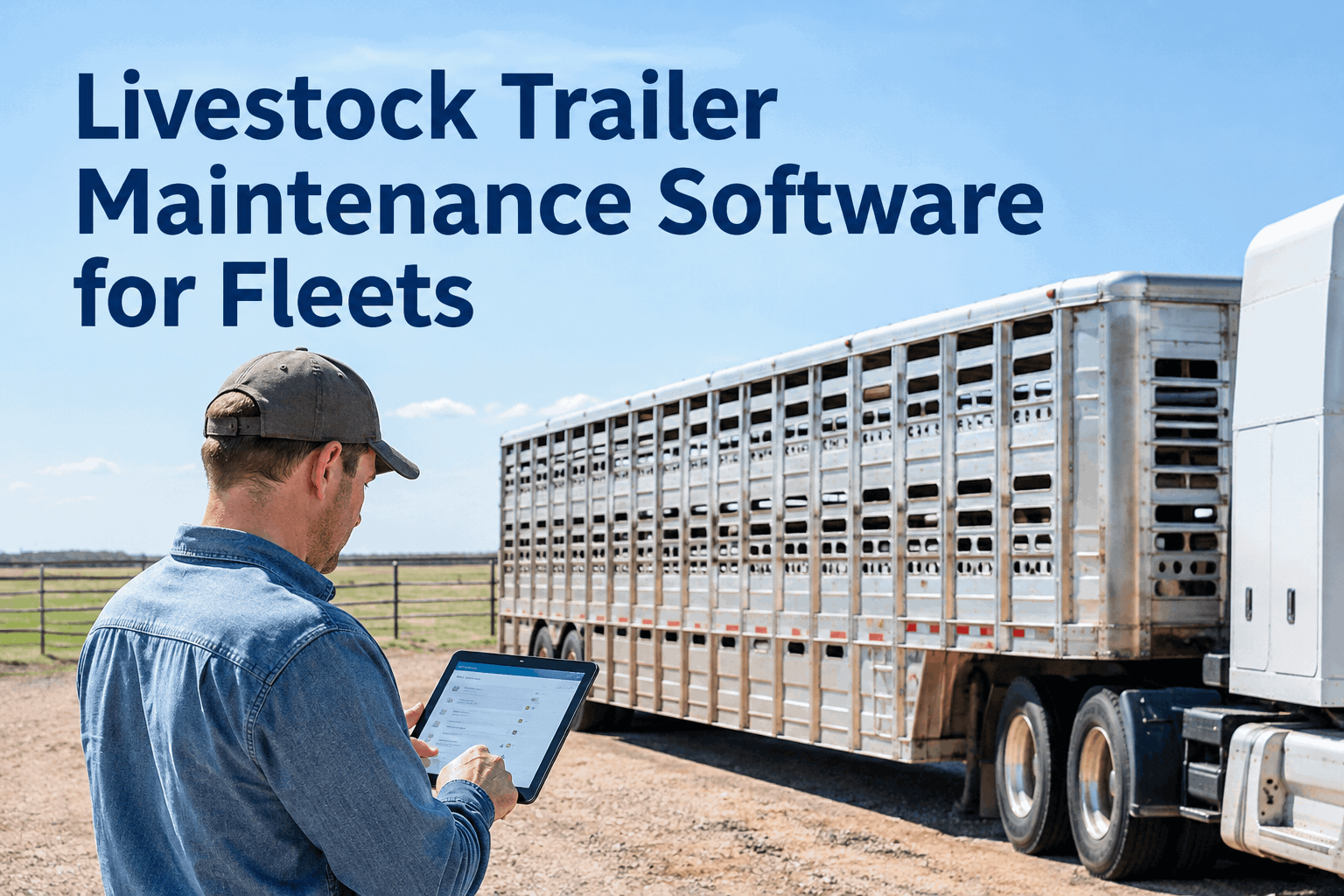
A soft floorboard on a cattle trailer isn't a repair line — it's a steer with a leg through the floor, a vet bill, and a load you can't deliver. Livestock trailers carry live, heavy, shifting weight over bad roads, and the parts that fail — floors, gates, vents, latches — are the ones a generic truck checklist never looks at. Livestock trailer software built for haulers puts those on the schedule, before the animals are loaded. Book a demo to see it on your trailers.
Livestock Trailer Software That Keeps the Floor, Gates and Vents Load-Ready
Inspections, preventive maintenance, defects and repairs for cattle, hog and sheep trailers — in one system, so a soft floor or jammed gate is caught before loading, not at the chute.
A dry van hauls boxes. A reefer hauls temperature. A livestock trailer hauls animals that can be hurt by the trailer itself — a slick floor, a gap they can catch a hoof in, a gate that swings loose. That's why livestock trailer software can't just be a brakes-and-lights app: the welfare-critical parts need their own inspection lines, their own schedules, and a record that proves you checked.
When a part fails, so does the loadwhy a livestock trailer defect costs more than the repair
On a dry van, a broken part means downtime. On a livestock trailer, the same failure means an injured animal, a welfare problem, and a delivery you can't make — all at once. The repair is the cheapest part of the bill.
A soft floor or sharp edge injures livestock. That's a vet bill, a welfare issue, and sometimes an animal you can't sell.
A trailer pulled from service at loading means a missed haul window, a held buyer, and a call you don't want to make.
No documented check means no defense if an inspector, auditor or buyer asks whether the trailer was fit to haul.
A documented, scheduled check on the welfare-critical parts is the cheapest insurance a hauler has. A purpose-built digital inspection puts floors, gates and vents on the checklist with a photo on every flag. Book a demo of a livestock trailer template.
The parts a truck app skipsthe livestock-specific zones livestock trailer software has to cover
Every fleet tool checks tires, brakes and lights. On a cattle trailer, those aren't where the animal-welfare risk lives. The failures that hurt livestock and strand a load are in the zones a dry-van template has no line for.
Rot and soft spots in wood, corrosion in aluminum, worn cleats or mats. A slick or broken floor is the top injury risk — and the first thing to inspect before a load.
Side slats, roof vents and louvers kept clear and working. Airflow is welfare on a long haul, and it changes with the weather the trip will see.
Interior gates, rear ramp and latches tested under hand pressure. A latch that lets go means loose animals and injury — to stock and handlers.
Clear drain holes, watertight seals, no standing fluid. Clean footing and biosecurity wash-down both depend on drainage that actually works.
Each zone needs its own inspection line, service interval and history — the welfare side that general livestock trailer inspection checklist work covers item by item, now tracked and scheduled in software. Book a demo of the welfare-zone inspection.
Found early or found at the chutewhy livestock trailer software catches the floor before loading day
A soft floorboard doesn't appear overnight — it rots slowly, haul after haul. The only question is whether you find it on a scheduled check with the trailer empty, or at the loading chute with a buyer waiting and animals in the alley.
Soft spot flagged on a pre-haul inspection, trailer empty. A board swapped in the shop on your schedule.
Cheap, planned, no animals near itThe board gives way as stock load. Now it's an injured animal, a stopped load and a scramble for another trailer.
Vet bill, missed window, no recordThe repair is the same board either way. What changes is everything around it. Scheduled checks and reminders are what preventive maintenance scheduling is for — the floor gets looked at on a cadence, not on loading day. Book a demo on your own hauling fleet.
The livestock trailer checklistwhat the software runs on every trailer, by phase
A livestock trailer is best checked in phases — before the haul, on the road, and after wash-out — because a trailer that's roadworthy can still be unfit to haul animals. Each line ties to the trailer, takes a photo on a flag, and opens a work order on a fail.
- Floor sound — no rot, soft spots or corrosion; footing non-slip
- Interior gates, dividers and rear ramp latch and hold under pressure
- Vents, slats and louvers clear and set for the weather
- No sharp edges, protruding bolts or gaps a hoof can catch
- Tires, tread and inflation across all positions, spare ready
- Brakes, slack adjusters and air lines within limits
- Lights, reflectors and electrical connection working
- Hitch, safety chains, landing gear and suspension sound
- Drain holes clear, seals watertight, no standing fluid
- Wash-down and disinfection logged for biosecurity
- Floor and mats re-checked for damage from the last haul
- Any flagged defect carried to an open work order
Run this on paper and the welfare lines are the first skipped on a busy sale day. In the software, a flagged floor or latch can hold the trailer from dispatch until it's cleared. Start a free trial and load this checklist on your fleet this week.
Every trailer, one recordwhat a livestock unit looks like inside the platform
Open any trailer and the whole story is there — last check, open defect, next service, parts on hand and cost to date — instead of a clipboard in one truck and a service log in the office.
When a buyer asks whether the trailer was fit, or an auditor asks for your records, you open the trailer, not a filing cabinet. It all ties together in the maintenance management workflow, with the right floor boards and latches in stock for every scheduled fix. Book a demo on a trailer from your own fleet.
From a cattle hauler who stopped finding floors at the chute
We run cattle and hogs to sale barns, and the nightmare was always a floorboard letting go while we loaded — an animal hurt, the whole load stopped. Once the floor, gates and vents were on a scheduled check the app reminded us about, we started catching the soft boards in the shop instead of at the chute. Last spring we swapped two before they'd have dropped a steer. The office finally sees every trailer's condition without driving out to the yard.
Livestock trailer software FAQs
What is livestock trailer software?
How is it different from a general trailer maintenance app?
Can it schedule floor and gate maintenance automatically?
Does it handle the DOT pre-trip and defect reporting too?
How long until it's running on our hauling fleet?
Keep every livestock trailer fit to haul
Livestock trailer software should track the welfare-critical parts, not just the brakes and lights. Put inspections, PM, defects and repairs on one platform and catch the soft floor before the animals do.
- Welfare-zone inspection templates
- Floor & gate PM scheduling
- Defect-to-work-order in one tap
- Per-trailer cost & history