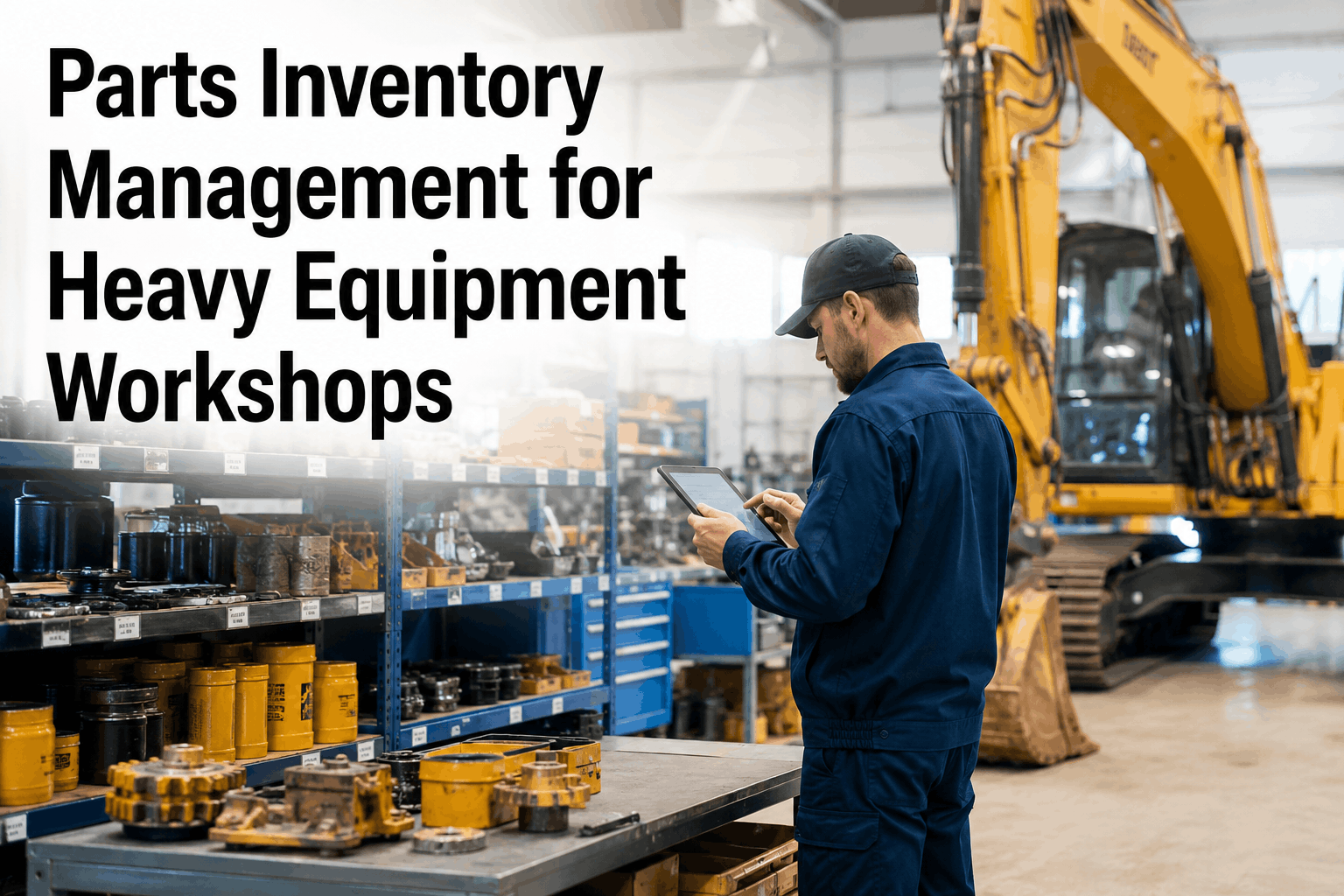
Here's the scenario that quietly drains a multi-site fleet budget: a $40 hydraulic fitting fails on a machine at your north yard. There's no spare on that shelf, so someone orders one with expedited shipping — while the exact part sits unused on a shelf at the south depot 30 miles away. The machine, a $300,000 asset, idles at $2,000-plus a day until the part arrives, and a single critical stockout like this can cost $10,000–$20,000 once you add emergency freight, overtime, and rental gear. The root cause isn't a parts shortage — it's a visibility shortage. When each site runs its own stockroom in its own spreadsheet, you simultaneously over-buy (20–40% of MRO inventory is typically excess or obsolete) and run out of the things you need most. Multi-site parts inventory management fixes both by giving every yard, shop, and job site one shared view of what exists and where. HVI's parts inventory software links stock levels across all locations to your work orders and PM schedules, so you check before you buy, transfer before you expedite, and reorder before you run out. This guide covers cross-site visibility, ABC classification, min/max automation, the transfer workflow, and consumption analytics. schedule a 30-minute walkthrough with our team to see it mapped to your locations.
The part you're about to expedite is probably already sitting at another site.
HVI gives every yard, shop, and job site one shared view of parts — check stock anywhere before ordering, transfer between locations with digital documentation, and auto-reorder by per-site min/max so a truck never sits idle waiting on a part you already own.
What siloed inventory actually costs
When sites can't see each other's stock, the same money leaks out two ways at once — too much capital tied up, and too many production-stopping stockouts. The numbers are consistent across heavy fleets.
A $40 fitting idles a $300,000 machine at $2,000+/day until it arrives. The fix costs a fraction of one stockout: cross-location search alone cuts emergency procurement 15–20%, and structured inventory management reduces carrying costs 30–40% while reaching 95%+ parts availability.
The foundation: one shared view across every site
Multi-site inventory starts with a single source of truth. Before any optimization works, every location's stock has to be visible to every other — and tied to the machines and work orders that consume it.
Cross-site visibility
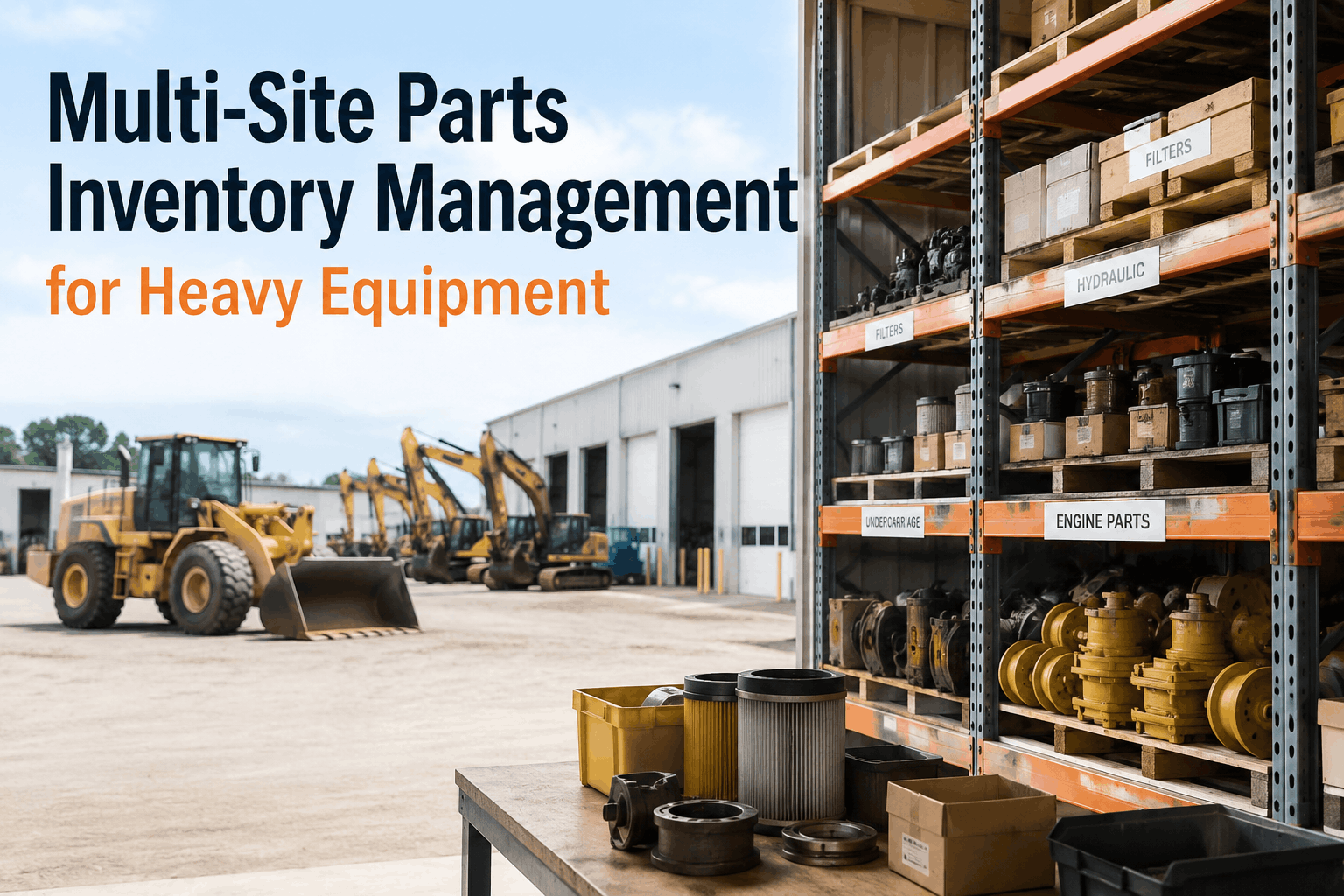
One centralized view across all yards, shops, and job sites. Before ordering anything, check whether the part already exists at another location — the part you need might be 30 miles away, not two weeks out.
Digital transfers
Move parts between locations with full digital documentation — quantity, source, destination, and date all logged. An internal transfer takes a day; vendor reorder can take two weeks.
Part-to-machine link
Every part tied to a machine and a work order, with up to several storage locations per part. That link is what turns raw stock counts into real consumption data and accurate per-asset cost.
Cross-location search is the single highest-ROI habit in multi-site parts management — it stops you buying what you already own. sign up for a free HVI account and put every site's stock in one searchable view, or schedule a live demo to see a cross-site transfer logged end to end.
Not every part deserves equal attention: ABC classification
Treating every SKU the same is expensive and ineffective. Classify parts by criticality and value, then stock each class to a different rule. This is the backbone of a lean multi-site program.
Critical spares — single points of failure
Expensive, slow-moving, hard to source — final drives, control boards, critical bearings with no substitutes. Stock 2–4 weeks of supply; for slow critical movers, keep one-unit minimums, pool across sites, or use vendor-managed inventory.
PM consumables — predictable demand
Filters, belts, common wear items used on a known schedule. Stock 1–2 weeks. These suit EOQ-style ordering driven by your PM forecast, since demand is steady and predictable.
Commodity items — low cost, high volume
Fasteners, fittings, fluids, shop supplies. Bulk-stock these — the carrying cost is trivial and the stockout disruption isn't worth managing tightly. Simple reorder thresholds are enough.
A practical rule: your top 20 failure parts from the last 12 months should never be out of stock — that list typically covers 80% of unplanned demand. HVI's consumption reports surface those parts automatically so your Class A list is data-driven, not guesswork — sign up free and see your top failure parts across every site.
Set min/max per site — not one rule for all
The most common multi-site mistake is applying one min/max everywhere. A remote job site and a central shop have completely different needs. Right-size each location to local reality.
What sets each site's level
- Equipment count and types at that location
- Supplier proximity — remote sites need higher minimums
- Local demand and failure patterns
- Storage capacity and transfer options to nearby sites
How often to review
- Most parts: review quarterly
- High-value items (track chains, drives): review monthly
- Immediately after new equipment, project changes, or new suppliers
- Seasonal items: adjust 4–6 weeks before peak
When a technician draws a Class A part down to its minimum, the system should auto-generate a reorder — but check other sites first. That one rule, cross-location reorder before vendor purchase, is what cuts emergency procurement 15–20% and keeps capital from piling up in duplicate stock.
The cross-site transfer workflow
This is the loop that replaces expensive expediting with cheap internal movement. When a part is needed and not on the local shelf, the system runs this sequence before any purchase order.
Need triggered
A work order or PM task calls for a part that's below minimum at the local site.
Search all sites
The system checks every other location's stock before suggesting a vendor order — surfacing nearby availability instantly.
Transfer or order
Transfer from the nearest site with digital documentation, or auto-generate a PO only if no site has it. One day versus two weeks.
Track consumption, not just counts
Stock levels tell you what you have today; consumption data tells you what to do next. Tracking usage and cost per part and per machine is what turns inventory from a cost center into a planning tool.
Cost per part & per asset
Track procurement, usage, and carrying cost per part, and parts spend per machine. See which assets generate the highest parts cost — often the signal a machine is nearing replacement economics.
Top failure parts
Surface the parts driving the most unplanned demand. Your top 20 from the last year define the Class A list that should never stock out — automatically, from real consumption history.
PM-driven forecasting
Because parts link to PM schedules, the system forecasts demand from upcoming services — so consumables are stocked before the work order, not scrambled for after the machine is down.
Spreadsheets vs. HVI multi-site inventory
Both can list parts. Only one connects every site, every machine, and every work order — and tells you to transfer before you expedite.
Per-site spreadsheets
- Each site's stock invisible to the others
- Parts expedited while the same part sits idle elsewhere
- Over-buying and obsolete stock pile up unnoticed
- Reorders happen after a machine is already down
- No usage or cost data per part or per machine
- Counts drift from reality between manual audits
With HVI software
- One shared view across every yard, shop, and job site
- Cross-location search before any purchase order
- Per-site min/max with auto-reorder right-sized to each location
- PM-driven forecasting stocks parts before the work order
- Cost and consumption tracked per part and per machine
- Every transfer and draw logged against a work order
lower carrying costs with structured multi-site inventory management — alongside 95%+ parts availability, 15–25% less total inventory investment, and 15–20% fewer emergency orders from cross-location search. HVI connects inspections, work orders, and parts across every site in one platform, so you stop paying for parts you can't find and parts you didn't know ran out.
Frequently asked questions
What is multi-site parts inventory management?
It's managing spare parts across multiple locations — yards, shops, and job sites — from one shared system instead of separate per-site spreadsheets. The core capability is cross-site visibility: before ordering a part, you can see whether it already exists at another location and transfer it rather than buying new. It also includes per-site min/max levels, automated reorder points, and consumption tracking tied to machines and work orders. For heavy fleets running from multiple depots, this eliminates duplicate purchasing and reduces total inventory investment by 15–25%, because you're stocking the network as a whole rather than every site in isolation.
How much does a single parts stockout really cost?
Far more than the part itself. A stockout on a $40 hydraulic fitting can idle a $300,000 machine at $2,000-plus per day until the part arrives. Add emergency shipping (typically 3–5x standard), overtime labor for the rushed repair, rental equipment to cover the gap, and cascading schedule disruptions, and a single critical stockout commonly reaches $10,000–$20,000 in total impact. That's why prevention through min/max automation and cross-site visibility pays for itself many times over — the cost of one avoided stockout typically exceeds the cost of the whole system. Around 23% of unplanned downtime traces back to an unavailable spare part.
Should min/max levels be the same at every site?
No — this is one of the most common and expensive mistakes. Min/max levels should be customized per location based on local factors: equipment count and types, supplier proximity (remote sites need higher minimums because lead times are longer), local demand and failure patterns, storage capacity, and the ability to transfer from nearby sites. A central shop near a distributor can run lean; a remote job site cannot. Review most parts quarterly, high-value items like track chains monthly, and adjust immediately after new equipment, project changes, or supplier changes. HVI lets you set and track distinct min/max levels for each location.
What is ABC classification and why does it matter?
ABC classification sorts parts by criticality and value so you don't manage everything the same way. Class A parts are critical spares — expensive, slow-moving single points of failure like final drives or control boards; carry 2–4 weeks and consider pooling across sites or vendor-managed inventory. Class B parts are PM consumables with predictable demand like filters and belts; carry 1–2 weeks using EOQ-style ordering. Class C parts are low-cost, high-volume commodities like fasteners and fluids; bulk-stock them with simple thresholds. The principle: focus tight control and capital where stockouts hurt most. Your top 20 failure parts usually cover 80% of unplanned demand and should never stock out.
How does HVI handle multi-site parts inventory?
HVI provides fleet-wide inventory visibility across all locations — yards, shops, and job sites — in one view. Before ordering, you check whether a part exists at another site, then transfer it between locations with digital documentation, and each part can track several storage locations. Min/max levels are set per site with automated reorder, and because parts link to machines, work orders, and PM schedules, HVI forecasts demand and surfaces your top failure parts automatically. It also tracks procurement, usage, and carrying cost per part and per machine, plus vendor cost trends and warranty recovery. Everything connects inspections, work orders, and parts in one platform. schedule a demo and we will set it up around your specific sites and stock on the call.
Stop paying for parts you can't find and parts you didn't know ran out.
HVI connects parts inventory across every yard, shop, and job site — with cross-site search, digital transfers, per-site min/max auto-reorder, PM-driven forecasting, and cost tracking per part and per machine. One platform linking inspections, work orders, and parts for your entire heavy fleet. Sign up free and put your whole network's stock in one view.
No credit card required · Live in under two weeks · Cross-site visibility + transfers + min/max + consumption analytics in one platform