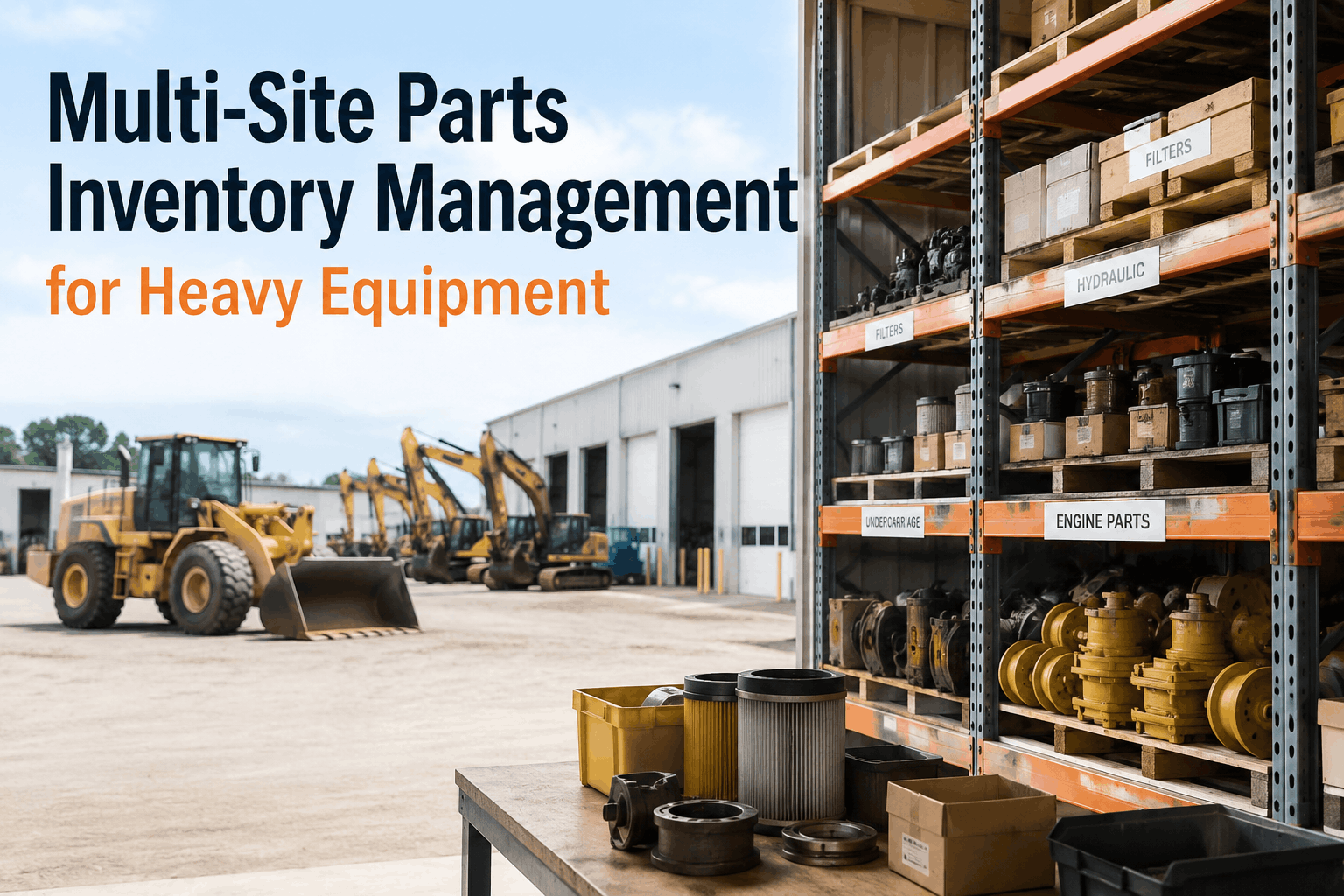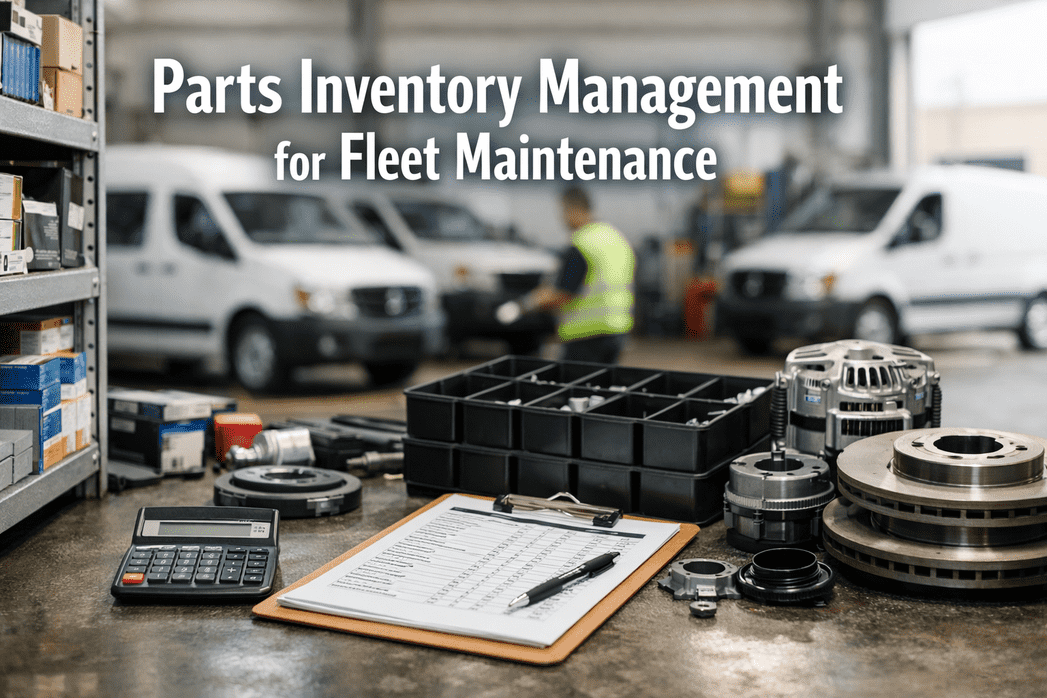
A heavy equipment workshop's parts stockroom is where two opposite problems live at the same time. Stock too little and a machine sits dead waiting on a part waiting for parts accounts for as much as 60% of total repair time. Stock too much and capital rots on the shelf, because holding MRO inventory costs 20–30% of its value every year and 30–50% of parts often haven't moved in two years. MRO spare parts run 40–50% of a maintenance budget, so the stockroom isn't a back-office afterthought — it's one of the biggest levers a workshop has on both uptime and working capital. The way out isn't stocking more "just in case." It's knowing exactly what each machine consumes, setting reorder points that reflect real usage and lead time, classifying parts by how badly a stockout hurts, and reordering automatically before the shelf runs dry. This guide breaks down the criticality framework, the reorder-point math, the KPIs that prove it's working, and how to track consumption per machine so the right part is always there and the dead stock isn't. book a 30-minute walkthrough to see it on your own parts catalog.
Stock too little and the machine waits. Stock too much and the capital rots. Both at once is the norm.
HVI tracks parts consumption per machine, sets reorder points by real usage and lead time, fires automatic reorder alerts before a stockout, flags dead stock tying up cash, and links every part to the work order it was used on — so the right part is on the shelf and nothing else is.
The two-sided cost of getting it wrong
Parts inventory fails in two directions at once, and most workshops are bleeding from both. Here's what each side actually costs.
A $500K stockroom quietly costs $100K–$150K a year just to keep the lights on — storage, obsolescence, and the opportunity cost of cash sitting on a shelf. Meanwhile the one part a downed machine needs is the one that wasn't stocked. The fix isn't more inventory; it's the right inventory, driven by real consumption data.
Not every part deserves the same treatment
The core mistake is applying one stocking rule to every part. ABC criticality analysis fixes that — concentrating control and service level where a stockout actually hurts, and letting low-stakes consumables run lean.
Critical, downtime-causing parts
A stockout strands an expensive machine. Target a 99%+ fill rate, tight reorder control, and safety stock sized to lead-time risk. Never run these dry.
Important but not show-stopping
Needed regularly, with a manageable workaround if short. Target a 95% service level and moderate reorder points balanced against carrying cost.
Low-cost, low-criticality consumables
Cheap, plentiful, low-impact if briefly out. Run lean at an 80–90% service level — don't tie up capital or shelf space buffering these.
The same logic differentiates service levels by tier instead of forcing a single target across the catalog, which concentrates your inventory investment where it matters and cuts overall carrying cost. HVI tags every part with its criticality so reorder rules and fill-rate targets follow the part automatically.
How a reorder point actually works
A reorder point is the stock level that triggers a new order — set right, the replacement arrives just as the last usable unit is consumed. Three inputs drive it, and all three come from real data, not gut feel.
Consumption rate
How fast the part is actually used, drawn from real per-machine usage history — not a guess or a flat annual average.
Lead time
How long the supplier takes to deliver. With industrial lead times stretching from weeks to months, this is the input that's grown most volatile.
Safety stock
A buffer sized to usage and lead-time variability, set higher for vital parts and lean for consumables. The cushion against the unexpected.
Static min/max levels set once and forgotten are how workshops end up overstocked and out-of-stock simultaneously — usage shifts and the numbers never catch up. sign up free and let reorder points update from real consumption automatically, or book a demo to see usage-based reordering live.
Track consumption per machine, not just per shelf
Counting what's on the shelf tells you what you have. Tracking what each machine consumes tells you what you'll need — and turns the stockroom from a cost center into a forecasting tool.
Link parts to work orders
Every part issued ties to the machine and the job it was used on, building a true consumption history instead of a mystery drawdown.
Forecast from PM schedules
When you know which machines have service due, you know which parts will be pulled — so demand is planned, not discovered at the counter.
Spot the cost-per-machine outliers
Per-machine consumption reveals which assets are eating parts — a signal of a deeper problem worth fixing before it eats the budget.
This is also what kills the "squirrel stash" — the private part caches technicians hoard because they don't trust the stockroom. When parts are tracked to work orders and reliably in stock, the hidden inventory comes out of the toolboxes and back onto the books. HVI links every part to its work order and machine automatically.
The KPIs that prove it's working
A stockroom you can't measure is one you can't defend at budget time. These are the numbers that tell you whether your parts program is healthy — with the 2026 benchmarks to score against.
Most workshops can't produce a single one of these numbers on demand — which is exactly why dead stock and stockouts go unnoticed until they're expensive. sign up free and get every parts KPI calculated automatically from real data.
Clipboard stockroom vs. HVI
Both technically track parts. Only one updates reorder points from real usage, flags dead stock before it's written off, and ties every part to the machine it served.
Spreadsheet / manual stockroom
- Stockouts discovered at the counter, mid-repair
- Static min/max levels set once and never revisited
- Dead stock sits for years before anyone notices
- No idea which machine consumed which part
- Reordering is a reactive scramble, often emergency-priced
- Every part treated the same, vital or trivial
With HVI software
- Automatic reorder alerts fire before the shelf runs dry
- Reorder points update from real per-machine usage
- Dead and obsolete stock flagged to reclaim capital
- Every part linked to its work order and machine
- Demand forecast from upcoming PM schedules
- Criticality tiers drive differentiated service levels
lower carrying cost. Workshops that move from static, manual stockrooms to consumption-driven inventory typically cut carrying costs 20–30%, reclaim the 15–25% of stock that's obsolete or surplus, and slash the parts-waiting time that drives most of MTTR. Right part on the shelf, dead capital off it. HVI runs the whole stockroom alongside your inspections and work orders.
Frequently asked questions
How do you set a reorder point for heavy equipment parts?
A reorder point is the stock level that triggers a new purchase, and it's driven by three inputs: consumption rate (how fast the part is actually used, from real per-machine history), lead time (how long the supplier takes to deliver), and safety stock (a buffer sized to usage and lead-time variability). The basic logic is that the reorder point should equal expected usage during the lead time plus your safety buffer — so the replacement arrives right as the last unit is consumed. The common failure is setting static min/max levels once and never revisiting them; usage shifts, lead times stretch, and the numbers go stale, leaving you overstocked and out-of-stock at the same time. HVI's inspection and maintenance software updates reorder points from real consumption automatically, so they stay accurate as usage changes. sign up free and put your reorder points on real data.
What is ABC criticality analysis for spare parts?
ABC criticality analysis sorts your parts catalog by how badly a stockout hurts, so you don't apply the same stocking rule to a critical hydraulic pump and a box of washers. A-class parts are vital — a stockout strands an expensive machine, so they get a 99%+ fill-rate target, tight reorder control, and safety stock sized to lead-time risk. B-class parts are essential but have a workaround, targeting around a 95% service level. C-class parts are low-cost, low-criticality consumables that can run lean at an 80–90% service level without tying up capital. Differentiating service levels by tier instead of forcing one target across everything concentrates your inventory investment where it matters and cuts overall carrying cost. HVI's inspection and maintenance software tags every part with its criticality so reorder rules and fill-rate targets follow the part automatically.
Why does my workshop have stockouts and overstock at the same time?
It's the classic MRO paradox, and it comes from managing parts by gut feel and static levels instead of real consumption data. Overstock builds up because workshops buy "just in case," set min/max levels once, and never revisit them — so 30–50% of parts end up not moving for two years while still costing 20–30% of their value annually to hold. Stockouts happen on the same shelves because the parts that actually get consumed aren't reordered until someone notices they're gone, usually mid-repair. Both problems have the same root cause: no link between what machines actually consume and what gets stocked. Fixing it means tracking consumption per machine, classifying parts by criticality, and letting reorder points update from real usage. That's exactly what HVI's inspection and maintenance software is built to do. book a demo to see how consumption-driven stocking ends the paradox.
What parts inventory KPIs should a workshop track?
Five metrics tell you whether a stockroom is healthy. Fill rate is the share of orders filled from stock without a backorder — target 95%+ overall and 99% for vital parts. Stockout rate should stay under 2% for critical parts. Inventory turnover for MRO typically runs 0.8–1.5× a year; much higher can signal poor equipment reliability, much lower signals bloated stock. Carrying cost percentage — the annual cost to hold inventory against its value — typically runs 20–30%. And obsolescence rate, the share of stock value that's dead or surplus, should stay under 10%. Tracking these by criticality tier shows exactly where to focus. Most workshops can't produce any of these on demand, which is why problems go unnoticed until they're costly. HVI's inspection and maintenance software calculates all five automatically from your real parts and work-order data. sign up free and see your stockroom KPIs today.
How does HVI help manage workshop parts inventory?
HVI is an inspection and maintenance software platform that runs parts inventory alongside your equipment maintenance in one place. It tracks consumption per machine by linking every part issued to the work order and asset it was used on, building a true usage history instead of a mystery drawdown. Reorder points update from that real consumption and supplier lead time, and automatic alerts fire before a part runs dry so reordering stops being an emergency scramble. It tags each part with its ABC criticality so vital parts get tight control and consumables run lean, flags dead and obsolete stock so you can reclaim tied-up capital, forecasts demand from upcoming PM schedules, and calculates your fill rate, turnover, carrying cost, and obsolescence KPIs automatically. Because it's the same platform running your inspections and work orders, the part, the machine, and the job all connect. book a demo and we'll map the software onto your parts catalog on the call.
Right part on the shelf. Dead capital off it. Every part tied to the machine it served.
HVI tracks parts consumption per machine, sets reorder points from real usage and lead time, fires automatic alerts before stockouts, flags obsolete stock to reclaim capital, applies criticality-based service levels, and forecasts demand from PM schedules — all in one platform with your inspections and work orders. Stop bleeding from both stockouts and overstock at once.
No credit card required · Live in under two weeks · Consumption tracking + auto reorder points + dead-stock alerts + parts KPIs in one platform