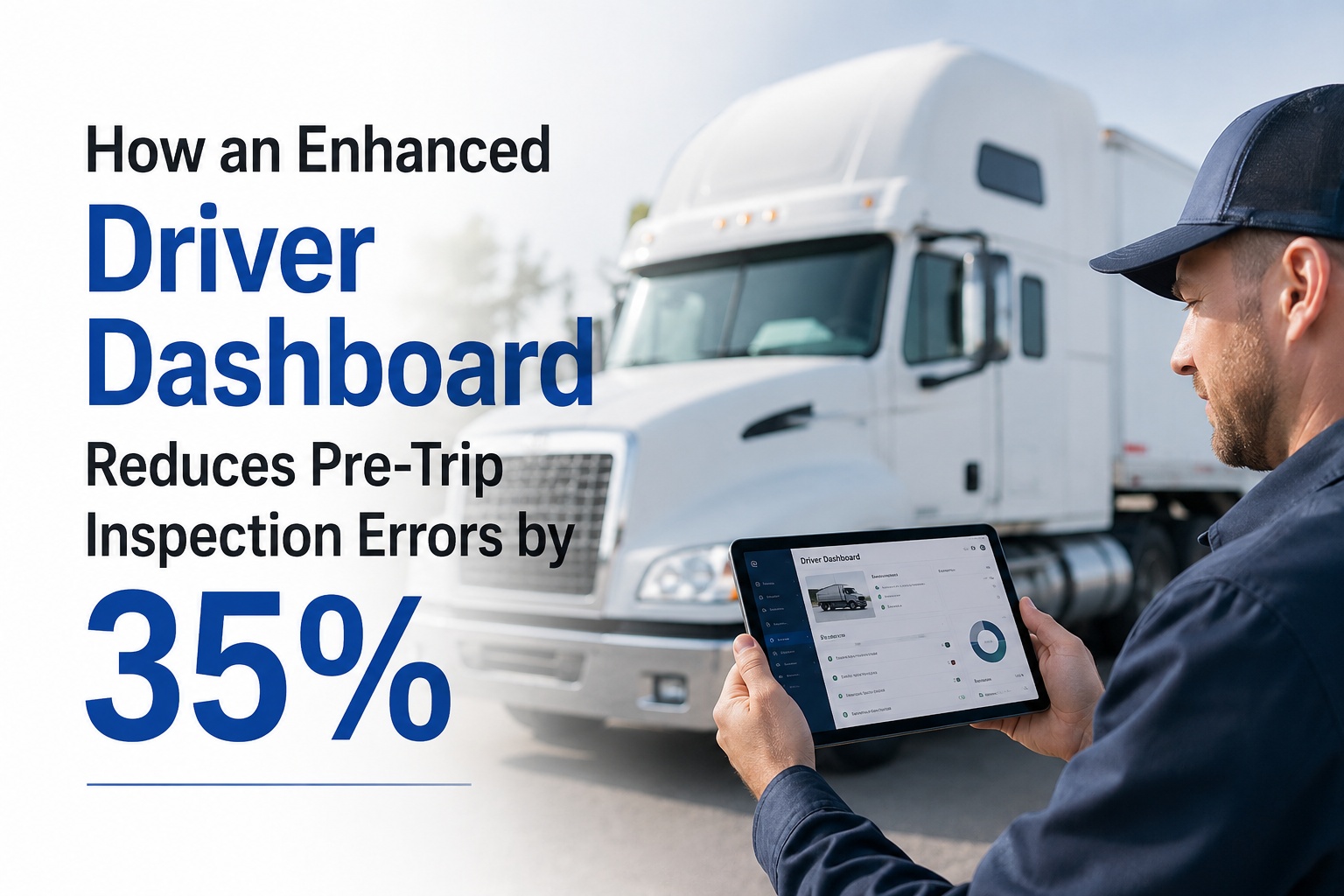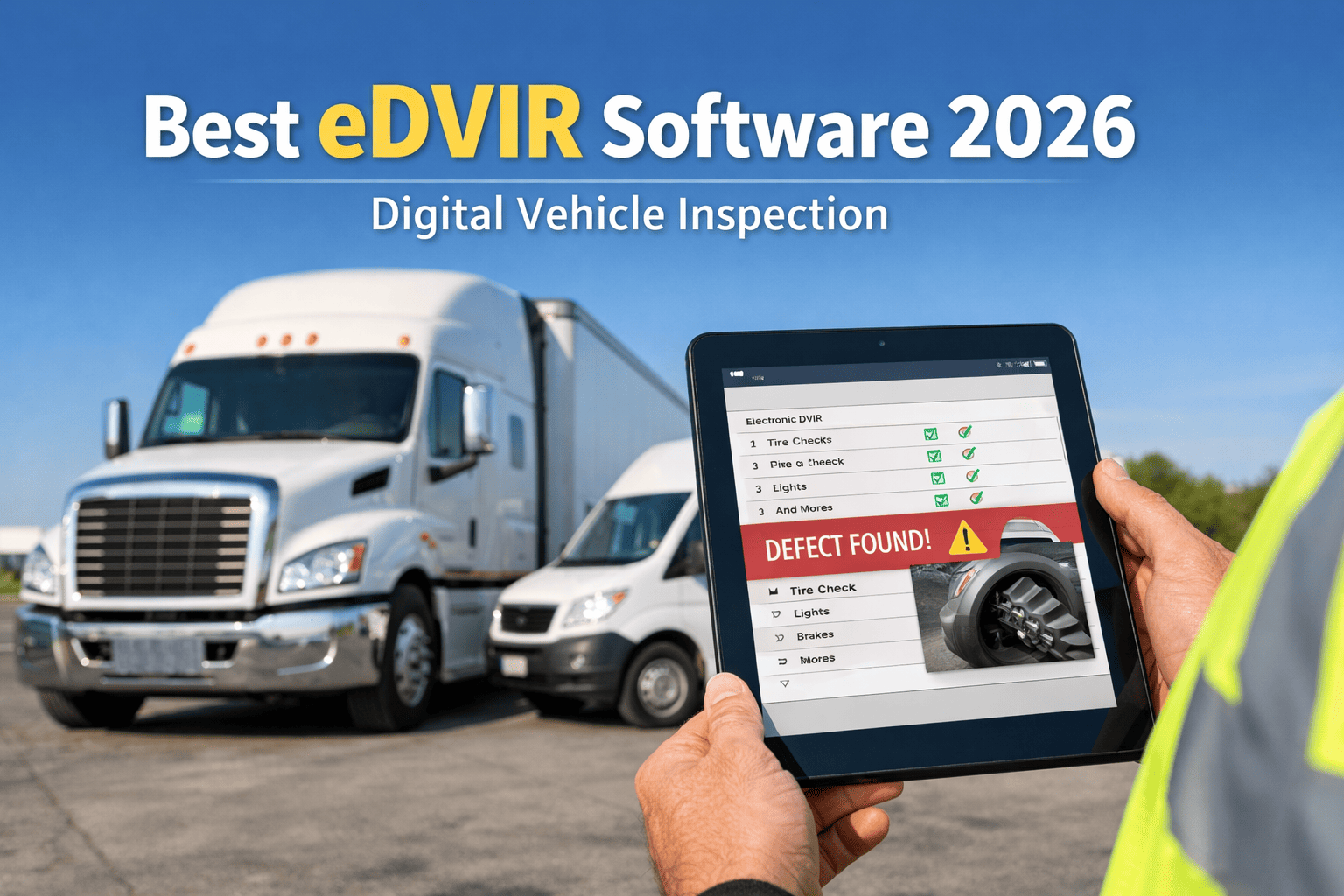
Ask any fleet manager why their drivers complain about pre-trip inspections, and the answer is almost never the inspection itself — it is the paperwork. A clipboard, a carbon-copy form, an illegible scrawl that no one will read until the auditor arrives. Meanwhile, the driver next door — running on HVI's mobile inspection and maintenance software — has already photographed a cracked mirror, auto-generated a work order, signed the eDVIR, and pulled out of the yard. That gap is what HVI's platform was built to close: a single inspection and maintenance system where every pre-trip flows directly into work orders, repair tracking, and audit-ready records. Start your free HVI trial and replace paper pre-trips with software drivers actually prefer, or book a demo to see HVI's inspection-to-maintenance workflow live.
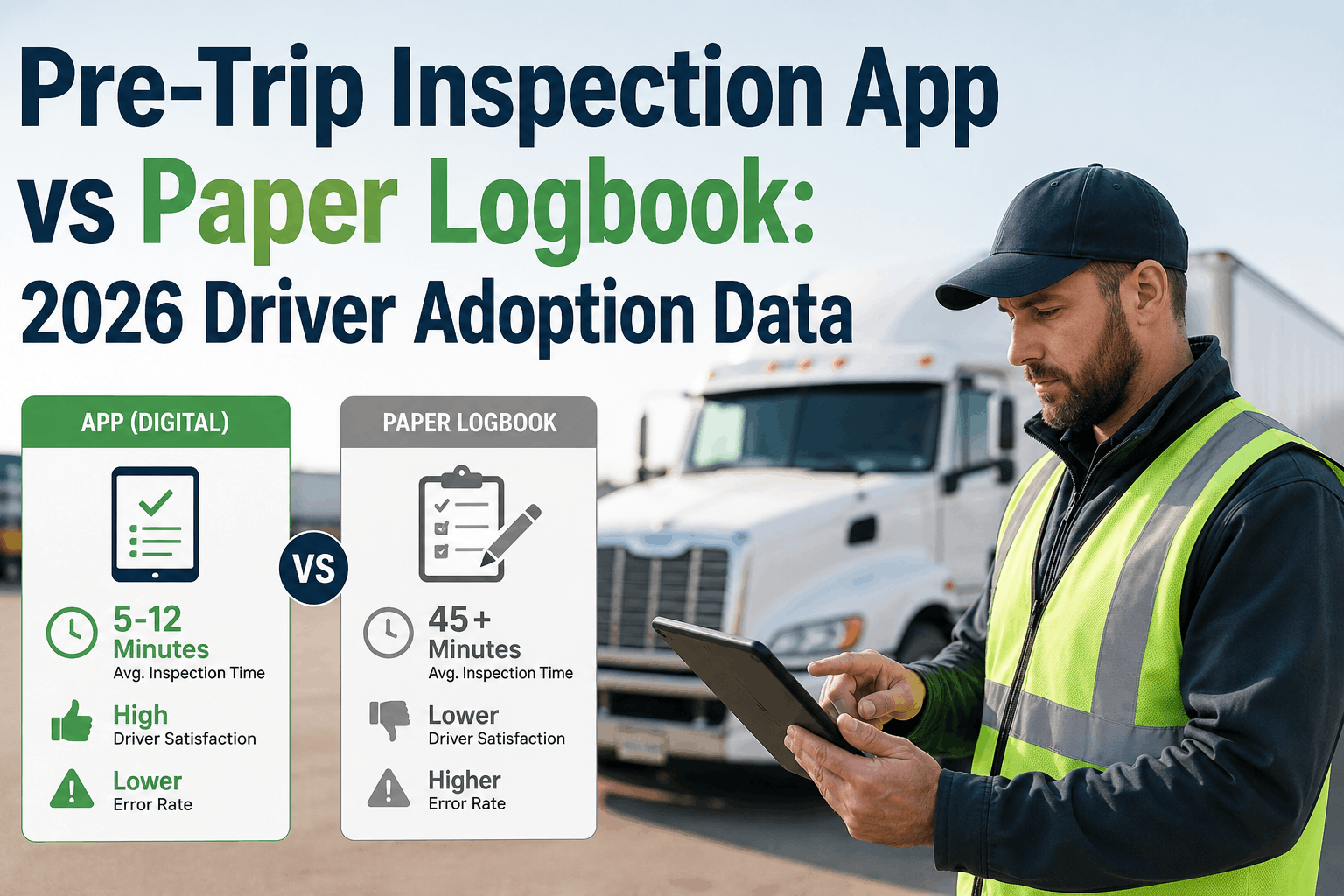
A pre-trip on HVI takes 5–12 minutes. Paper takes 45+.
- 15–30 min walk-around with clipboard
- 5–10 min writing legibly per form
- 5–10 min office data-entry per shift
- 2–4 min finding pen, finding form, finding clipboard
- Guided checklist, no items skippable
- Tap pass/fail, photograph defects
- Auto-sync to HVI maintenance module
- Driver signs on screen, work order fires
The 33-minute gap is not theoretical — it is exactly the difference HVI fleets measure on Day 1 vs Day 30. Sign up for a free HVI account and your first driver can complete a guided pre-trip on their own vehicle within 30 minutes of onboarding — no credit card, no IT setup, no hardware to ship.
Why this matters in 2026 — three forces HVI was built for
The shift from paper to mobile pre-trips is not a marketing preference. Three concrete changes in 2026 made digital the operationally rational choice — and made HVI's inspection and maintenance software the practical answer for fleets adapting to the new rules.
On February 19, 2026, FMCSA published a final rule explicitly authorizing electronic DVIRs under 49 CFR 396.11 and 396.13. HVI generates fully compliant eDVIR records with timestamped photos, GPS-verified location, and digital signatures — the exact format the new rule names.
The 2026 CSA methodology update scores driver-detectable defects separately. Paper fleets cannot prove driver-level detection in real time. HVI's inspection templates are pre-mapped to Driver Observed items, so every flagged defect creates exactly the documentation the new methodology rewards.
With the US facing an 80,000+ driver shortage, fleets win recruitment by respecting drivers' time. HVI returns 33 minutes per driver per shift — compounding into thousands of paid hours saved per year, plus a workflow drivers actually prefer over paper within two weeks.
A driver's morning, on paper vs. on HVI
This is the same driver, the same truck, the same DOT-required pre-trip — done two ways. The clock starts when the driver walks up to the cab.
The numbers HVI fleets are tracking in 2026
Across HVI deployments and the wider digital DVIR market, the same metrics keep showing up — and they are not subtle. Here is what fleets see in the first 60 days after switching from paper to HVI.
If your fleet is anywhere near the paper-side of these numbers, the cost of staying on clipboards is already higher than the cost of switching. Schedule a 30-minute HVI demo and a product specialist will walk through your current paper workflow, show where HVI closes each gap, and map out a 2–4 week migration plan tailored to your fleet size.
Driver adoption — how the curve actually looks on HVI
The biggest objection fleet managers raise before switching is driver pushback. HVI rollouts show a remarkably consistent adoption pattern, and the holdouts are not who you would expect. Research across thousands of mobile DVIR deployments shows zero correlation between driver age and digital adoption success when the implementation is done right — and HVI's onboarding playbook is built around exactly that.
Error rate: where paper breaks down — and how HVI fixes each one
Paper does not just take longer — it produces measurably worse records. Every break in a DVIR's chain of custody is a citable violation independent of whether the vehicle is actually roadworthy. In 2026, 61% of DVIR-related citations involve chain-of-custody failures rather than actual mechanical defects. HVI's inspection and maintenance software is built to eliminate each failure mode at the workflow level — not after the fact.
Every percentage you see in red above is an avoidable CSA violation hiding in plain sight. Start your free HVI trial today and the first inspection your driver submits — guided, photo-verified, signature-locked — closes every one of those gaps automatically. No retraining your maintenance team. No new paperwork. No credit card to start.
Paper vs. HVI — the full feature comparison
If you are still weighing the switch, here is the same workflow scored across the dimensions that actually move CSA scores and operational cost — paper logbooks against HVI's mobile inspection and maintenance platform.
| Capability | Paper logbook | HVI inspection & maintenance software |
|---|---|---|
| Inspection time | 45 minutes average | 5–12 minutes on HVI mobile |
| Completion rate | 55–71% | 99% within 60 days on HVI |
| Defect-to-work-order | 1.8 days average | Seconds — auto-routed inside HVI |
| Photo evidence | None | Required in HVI, GPS-timestamped |
| "Driver Observed" CSA evidence | Not documentable | Auto-mapped to BASIC by HVI |
| Skippable fields | Any item can be left blank | HVI blocks submission until complete |
| Audit retrieval | Hours of filing-cabinet search | Searchable in seconds in HVI |
| Office data-entry hours/week | 5–8 hours | Zero — HVI auto-logs at submission |
| Offline operation | Always offline — and always lost | HVI captures offline, syncs later |
| Driver satisfaction (Day 30) | Tolerated, never preferred | 95% prefer HVI to paper |
What HVI's inspection & maintenance software actually delivers
HVI is not just a digital form. It is a complete inspection and maintenance platform built around the three failure modes paper cannot fix — completion, defect routing, and audit-ready records — and it delivers all three on the smartphone every driver already carries.
HVI's DOT-mapped checklist adapts to tractor, trailer, straight truck, or specialty equipment. Every FMCSA-required category appears in sequence — drivers cannot skip components or submit a blank form on HVI.
HVI requires a photograph for every flagged defect with a GPS-tagged timestamp. Visual evidence attaches to the eDVIR automatically — a stronger audit trail than any paper form, and tamper-evident by default.
Any "Fail" tap inside HVI fires an instant work order to the maintenance team with the defect photo, vehicle ID, and DVIR reference attached. No paper handoff, no end-of-shift surprise, no 1.8-day delay.
HVI inspections at remote depots, rural yards, and cellular dead zones complete fully offline. Data syncs automatically when signal returns — no inspection is ever lost to a connectivity gap.
HVI enforces driver pre-trip, then mechanic certification, then next-driver acknowledgment as a workflow rule. A vehicle cannot return to service until the chain is complete — closing the gap that creates 61% of DVIR citations.
HVI's manager dashboard shows every inspection status live — submitted, in progress, missed. Automatic escalation alerts fire before missed inspections become violations. No more end-of-day surprises.
Want HVI's team to run these numbers for your exact fleet size and current paper workflow? Book a personalized HVI demo and we will build a 12-month ROI projection in 30 minutes — including driver hours returned, audit-pass-rate improvement, and a deployment timeline that fits around your dispatch schedule.
Frequently asked questions
Your drivers want their 33 minutes back. HVI gives it to them — and passes your next audit on the way.
HVI replaces paper pre-trips with a guided mobile workflow drivers actually prefer, an inspection-to-maintenance pipeline that routes defects to your shop in seconds, and an eDVIR archive that is audit-ready from day one. No hardware, no IT lift, no driver pushback within two weeks.
No credit card required · Drivers onboarded in 30 minutes · FMCSA-2025-0115 compliant out of the box