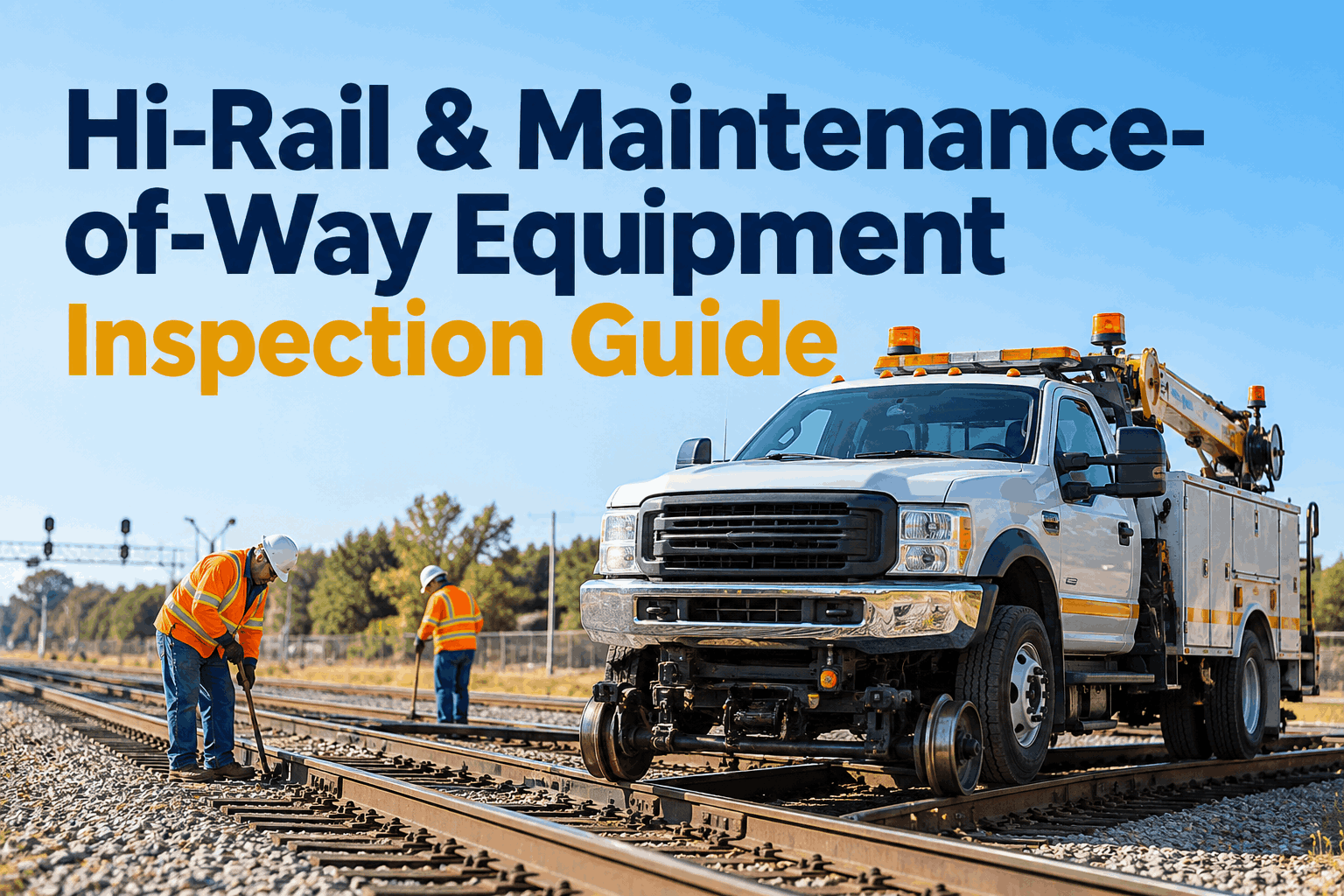
Maintenance-of-way equipment lives two lives — it drives the highway like a truck, then drops steel guide wheels onto the rails and runs the track. That dual nature is what makes it tricky to inspect: you're checking a road vehicle, the hi-rail gear that bridges the two, and the track machine on top. This guide covers what MOW equipment is, how each part gets inspected, and how to keep the records straight — or start a free trial to try it yourself.
One machine, two modes, two sets of checks.
A hi-rail vehicle is a road truck and an on-track machine in one — and each mode has its own inspection. HVI keeps the road check, the hi-rail gear check and the equipment PM on a single record, so nothing falls through the gap between them.
Most inspection tools were built for one kind of asset — a truck, or a piece of yellow iron, not both at once. Maintenance-of-way equipment breaks that assumption: the same unit needs a road inspection, a hi-rail gear check, and equipment PM, and if any one is missing the record is incomplete. Here's what the fleet is made of, where the critical checks sit, and how to keep it all in one place.
Types of maintenance of way equipmentthe MOW fleet is a category, not one machine
"MOW equipment" covers a whole family of track machines, each with a different job on the right-of-way. A maintenance team rarely runs just one — they run a mix, and each type needs its own inspection profile.
Tampers
Pack ballast under the ties to hold track geometry. Heavy vibration duty — tamping tools and workheads wear fast.
Ballast regulators
Shape and sweep ballast along the shoulder. Brooms, wings and blades take constant abrasive wear.
Rail grinders
Grind the rail head to remove defects and restore profile. Grinding stones, drives and dust control are the watch points.
Tie handlers & cranes
Pull and set ties, lift rail and material. Hydraulics, booms and lifting gear carry the inspection load.
Hi-rail trucks
Road trucks fitted with hi-rail gear to carry crews, tools and welders on and off the track. The most common MOW unit.
Hi-rail excavators
Excavators and backhoes on hi-rail gear for ditching, tie work and material handling along the line.
Because the fleet is this mixed, a one-size inspection form never fits. In HVI each machine type carries its own class-specific checklist, so a tamper check targets workheads while a hi-rail truck check targets the gear — all through the same digital equipment inspection flow. You can book a walkthrough to see a form per machine type set up on your fleet.
What hi-rail gear is & why it's inspectedthe part that makes a road vehicle run on track
The hi-rail gear is what turns a road vehicle into a track machine: retractable steel guide wheels that lower onto the rails and steer the unit down the line. It's also the one component that absolutely has to be checked before every on-track move — because if it fails, the vehicle can't stay on the rail.
A hi-rail gear check isn't a nice-to-have — it's the inspection that stands between a crew and a derailment, which is why it belongs on a documented, repeatable form rather than a quick glance. HVI makes the gear check a required step with a photo on any defect, so the record proves it was done. Book a walkthrough to see the hi-rail gear form →
The 3 layers of a hi-rail equipment inspectionroad, gear and machine — what a complete MOW check covers
A single hi-rail unit needs three separate inspections, and skipping any one leaves a gap in the record. Thinking of them as layers — road, gear, machine — keeps them all accounted for.
Road inspection (DVIR)
Brakes, tyres, lights, steering — the standard commercial vehicle check for highway travel between job sites, documented like any truck.
Hi-rail gear check
Guide wheels, deploy hydraulics, alignment, locks and insulation — the pre-track safety inspection before the unit goes on the rail.
Equipment / attachment PM
The work the machine actually does — tamper workheads, grinder stones, crane hydraulics — on its own preventive maintenance schedule.
Keeping these on three different paper systems is how records go missing before an audit. On one platform, all three live on the unit's record and roll up into preventive maintenance scheduling and reporting automatically. Book a walkthrough to see all three on one record →
MOW equipment inspection records in one placethe history an auditor can see in seconds
This is what pulls it together: every MOW unit, its last inspection across all three layers, and any open defect that became a work order — the history you'd want in hand when an auditor asks.
Each row is a full inspection with a timestamp, the inspector, and a photo on any defect — the kind of record that answers an audit in seconds instead of a scramble through binders. That proof-of-inspection trail is what daily operator reporting builds automatically. Book a walkthrough to see the record on your own fleet →
Hi-rail pre-track inspection checklistthe MOW check before every on-track move
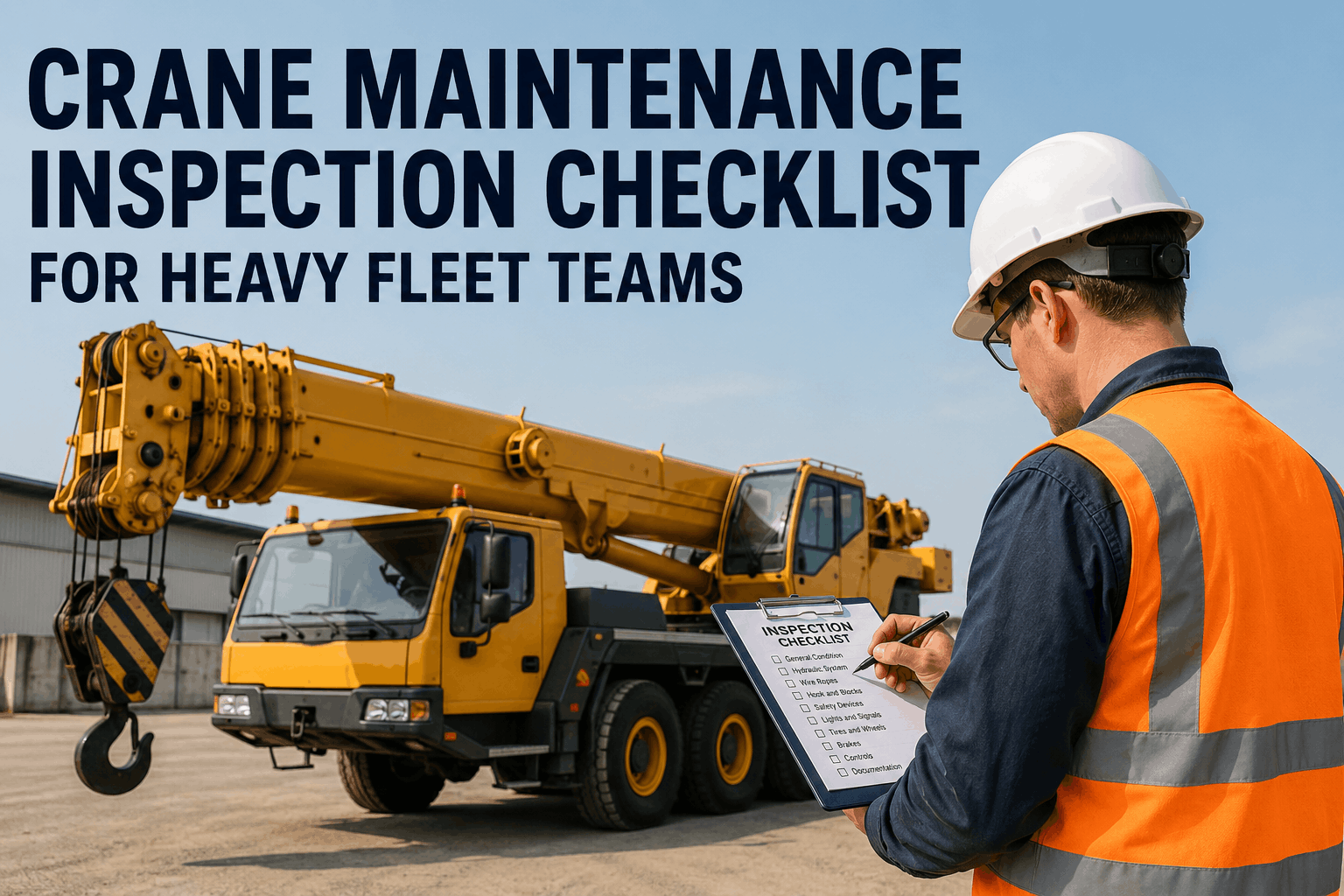
Before a hi-rail unit lowers onto the rail, the gear and the machine both get a fast, observable check. These are the items that keep a unit on the track and a crew safe — grouped the way HVI loads them on the inspector's phone.
- Guide wheels — no cracks, flat spots or flange wear
- Deploy hydraulics — no leaks, smooth raise and lower
- Alignment & gauge — gear square and set to gauge
- Locks engaged — gear holds down, insulation intact
- Brakes & air — pressure builds, holds, no leaks
- Tyres & lights — road-legal for the trip to site
- Steering & horn — responsive, working
- Leaks — no fluid under engine or driveline
- Workheads / tools — no cracks, wear within limit
- Hydraulics — booms and rams operate cleanly
- Guards & lighting — in place and working
- Warning devices — flags, lights, backup alarm
On paper this check gets rushed at a 5am on-track time; in HVI it's a tap-through that can't be closed with an item skipped, and a flagged gear or machine issue becomes a work order with a photo before the unit goes on the rail. Start free and load the hi-rail pre-track check on your units →
Maintenance of way equipment inspection — a supervisor's view
The headache was never the big machines — it was the paperwork spread across three places. The hi-rail gear check on one sheet, the truck DVIR in the cab, the tamper service log back at the shop. Come audit time we'd be digging for proof a gear inspection even happened.
Putting all three on the unit's record changed that overnight. Now a guide-wheel flag and its photo are right next to the DVIR and the PM history. When the FRA inspector asks, it's one screen, not an afternoon of binders.
Maintenance of way equipment — FAQs
What is maintenance-of-way (MOW) equipment?
It's the family of machines that build and maintain railroad track — tampers, ballast regulators, rail grinders, tie handlers, cranes, and hi-rail trucks and excavators. A maintenance team usually runs a mix, and each type needs its own inspection and PM profile rather than one shared form.
What is hi-rail gear and why is it inspected?
Hi-rail gear is the set of retractable steel guide wheels that let a road vehicle run on the rails. It's inspected before every on-track move because if the wheels, hydraulics or alignment fail, the unit can't stay on the track safely — making it the most safety-critical check on the machine.
How many inspections does a hi-rail unit need?
Three layers: a road/DVIR inspection for highway travel, a hi-rail gear check before going on-track, and equipment PM for whatever machine or attachment it carries. Skipping any one leaves a gap in the record, which is why keeping all three on a single asset record matters.
Why track MOW inspections digitally instead of on paper?
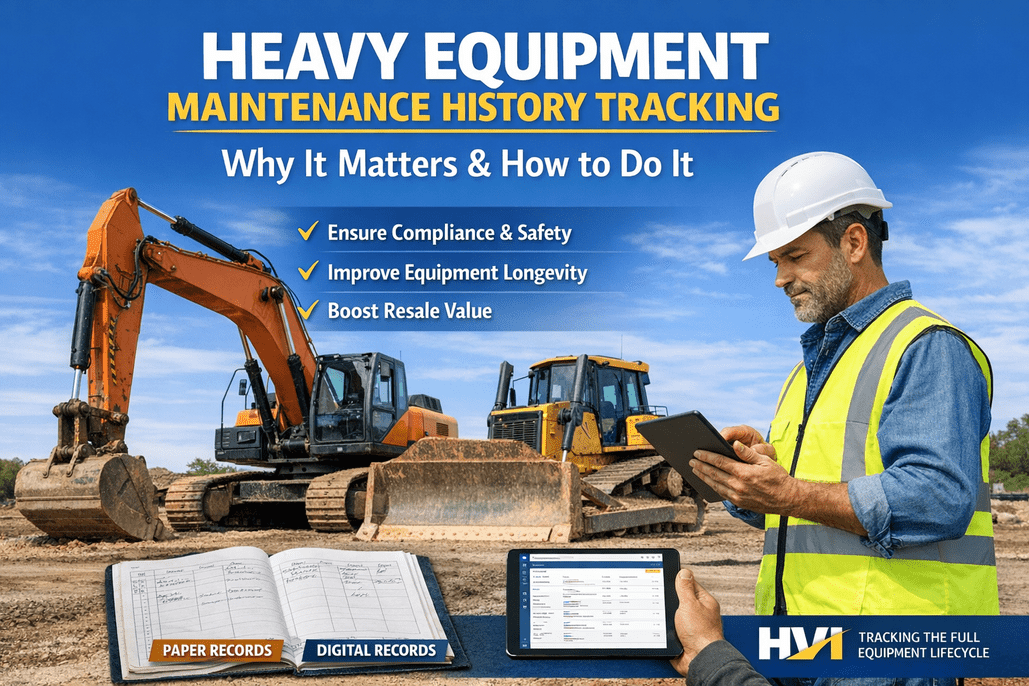
Paper records spread across cab sheets, gear forms and shop logs go missing before audits. A digital system keeps all three inspection layers on one record with timestamps and photos, so proof of inspection is one search away instead of an afternoon of binder-digging.
Can one system handle a mixed MOW fleet?
Yes. HVI runs tampers, regulators, grinders, hi-rail trucks and excavators in one register, each with its own class-specific checklist and PM schedule. The mobile app works offline out on the right-of-way and syncs later, so no check done trackside is lost.
Put every hi-rail and MOW inspection on one record
HVI tracks the road check, the hi-rail gear inspection and each machine's PM on a single asset record, with photos on every defect and a history ready for any audit. Try it on your own gear in minutes.
No credit card · Works offline on the right-of-way · Road, gear and machine on day one