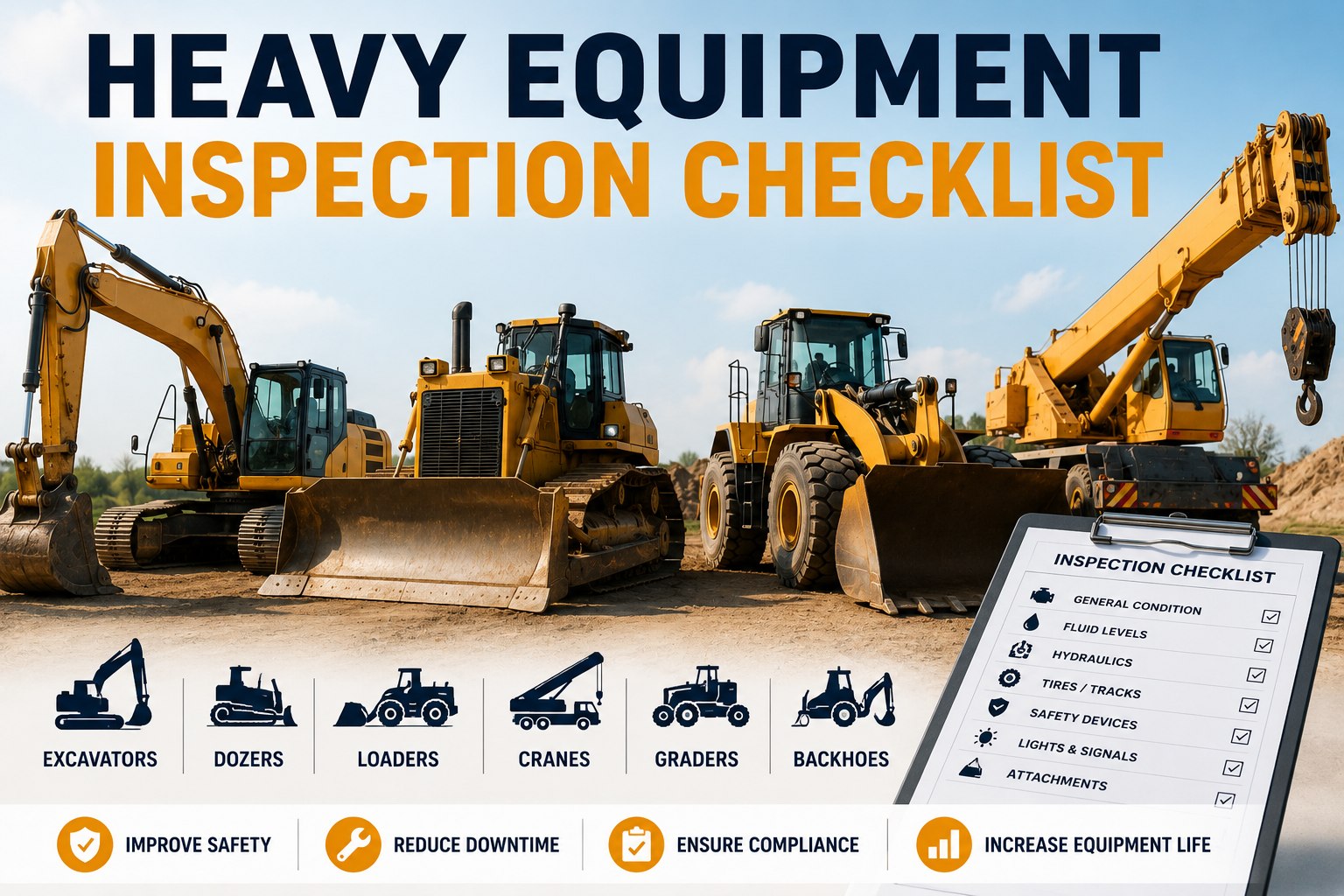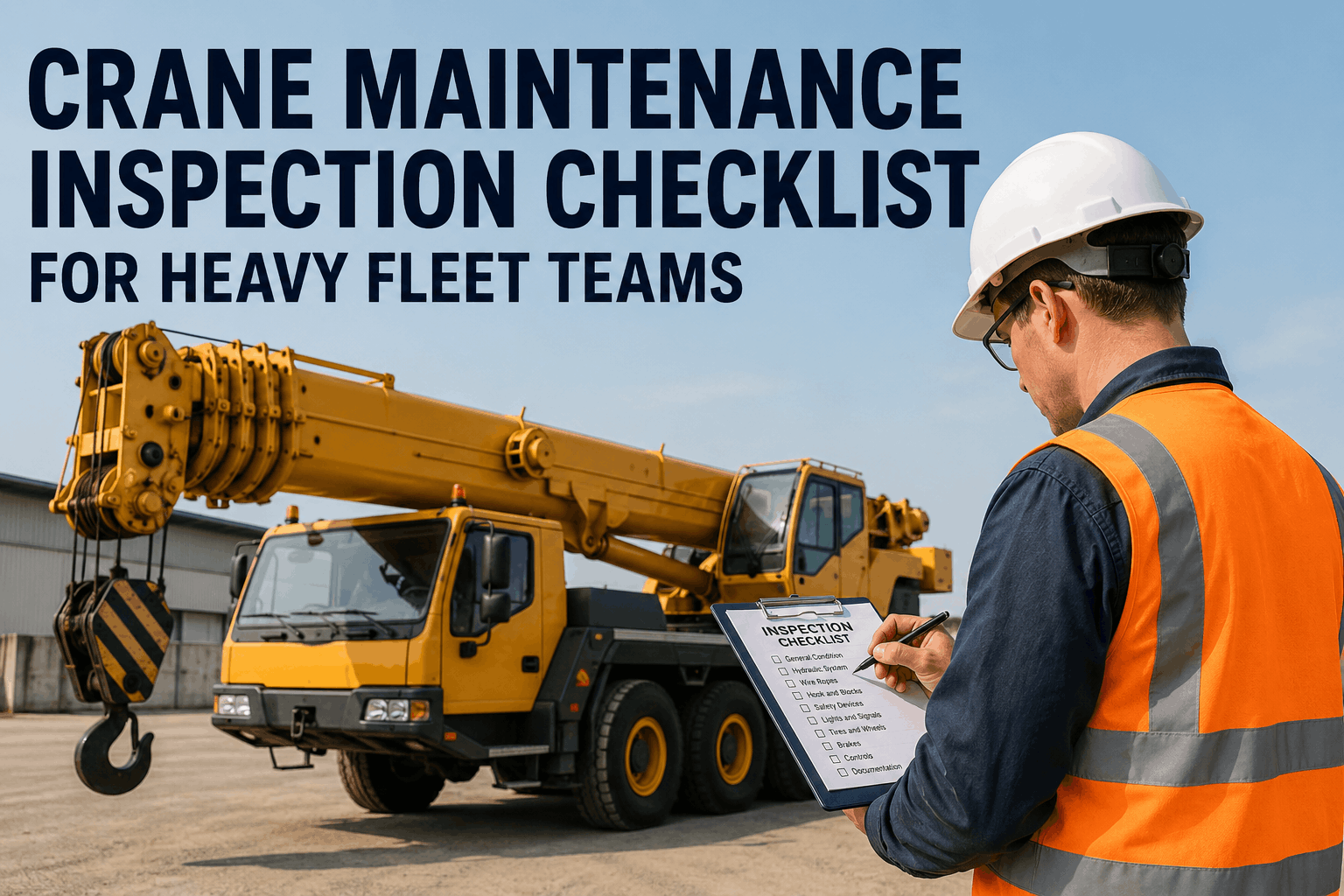
Construction fleet downtime rarely starts with a sudden breakdown. It starts weeks earlier — a minor fluid leak, a vibration change, a delayed inspection, a defect note that never reaches the shop — small things that compound until a machine fails on the job. The uncomfortable truth is that nearly every breakdown, accident, and surprise repair traces back to one root cause: a defect that went unnoticed, or got noticed and went nowhere. That's an inspection-process problem, not a bad-luck problem. And the gap between a fleet that catches those early signs and one that doesn't is measurable: contractors with structured inspection programs see 67% fewer roadside violations and 45% less unplanned downtime, and fleets running digital inspections catch 40% more defects internally before they cause failures. So how do you know if your process is quietly failing? The symptoms are recognizable. Here are eight signs your construction fleet has outgrown its inspection process — and what a better one looks like. If three or more sound familiar, the process is the problem. book a 30-minute walkthrough to see what fixing it looks like for your fleet.
Every breakdown starts with a defect that went unnoticed — or got noticed and went nowhere.
HVI replaces the paper checklist with photo-verified digital inspections, auto-routes every defect to a work order, fires PM on real engine hours, and turns inspection data into the early-warning system that keeps construction equipment working across every jobsite.
What a failing inspection process costs
A weak process doesn't announce itself with a single big failure. It bleeds out through violations, breakdowns, and missed defects — and the numbers show what's at stake.
Every one of these gaps shares a single root cause: an inspection process built for a regulatory checkbox instead of genuine verification. Paper forms, generic checklists, manual routing, no defect follow-through, no data — these aren't minor inconveniences. They're the difference between catching a problem in the yard and discovering it when a machine strands a crew. If the signs below sound like your operation, the process has outgrown its tools.
The 8 signs
Read these as a self-diagnostic. Each is a symptom contractors recognize the moment they see it — and each points at the same fix.
Breakdowns keep "coming out of nowhere"
If machines fail on the job with no warning, the warning was there — a leak, a vibration, a worn hose two to six weeks earlier — and the inspection missed it. Surprise breakdowns are the clearest sign the process isn't catching what it should.
Inspections take under three minutes
A pre-shift check tapped through in under three minutes isn't an inspection — it's pencil-whipping a "pass" down a list. A genuine walk-around takes longer, and the 2026 CSA Driver Observed category now makes that shortcut visible.
Defects get found but not fixed
A defect noted on a paper form that never reaches the shop is worse than no inspection — it's a documented problem you knew about and didn't act on. If found defects routinely die between the jobsite and the mechanic, the loop is broken.
Paper forms get lost or go unreadable
Lost sheets, incomplete signatures, unreadable handwriting, inconsistent filing — paper introduces errors at every step, and when an auditor asks for records you're digging through a filing cabinet that may not have them.
PM intervals drift across jobsites
When service is tracked on paper or memory, intervals become inconsistent across sites — one machine over-serviced, another running 200 hours past due. Inconsistent PM is a process gap that shows up as premature failure.
An audit means a frantic scramble
If a compliance review or DOT audit triggers days of assembling records, the documentation isn't there in usable form. A sound process produces the audit package — DVIRs, maintenance, defect-to-repair chains — on demand, not in a panic.
You can't spot your problem machines
If you can't name the unit that breaks down most or the failure that keeps recurring, you have no inspection data — just a stack of forms. Without the history, you fix symptoms forever and never the root cause.
Every defect report is a perfect "pass"
A machine that never reports a defect isn't flawless — its operator isn't inspecting or isn't reporting. Inspections that always come back clean are a red flag, not a gold star, and they hide the problems compounding underneath.
Every one of these eight traces to the same root: a process built for a checkbox, not for catching problems. sign up free and replace the checkbox with a real verification process, or book a demo to see the fix mapped onto your fleet.
How many apply to your fleet?
Use the count as a quick self-audit. The more that sound familiar, the more urgent the fix — and the more downtime and risk the process is silently generating.
Your process is largely solid. Digital tools optimize it and keep you ahead of the 2026 CSA changes — the goal here is staying sharp, not fixing a leak.
Significant gaps exist. Audit risk is elevated, roadside exposure is growing, and downtime is creeping up. Act within 30 days before the costs compound.
The process is fundamentally broken. Every day without a fix is another day of compounding risk, missed defects, and avoidable breakdowns. Start today.
Three or more signs is the line where the process itself — not any one machine or operator — becomes the problem. The good news is that all eight share one fix: moving from a paper checkbox to a digital inspection process that captures data, routes defects, and proves compliance. HVI is built for exactly that transition.
What "better" actually looks like
A better inspection process isn't more paperwork or stricter rules — it's a system where the inspection produces data, the defect produces a repair, and the record produces compliance. Here's the contrast.
The failing process
- Paper checklist, pencil-whipped in under 3 minutes
- Found defects die between jobsite and shop
- Forms lost, incomplete, or unreadable
- PM intervals drift across jobsites
- Audits trigger days of frantic record-hunting
- No data to spot the chronic-problem machine
The HVI process
- Photo-verified digital inspection, harder to fake
- Every defect auto-creates a tracked work order
- Records captured, timestamped, never lost
- PM fires on real engine hours per machine
- Full audit package exports in minutes
- Failure history reveals the patterns to fix
fewer violations in 12 months. Fleets that move from paper to digital inspections report 40% fewer violations within a year, 40% more defects caught internally before they fail, and the 67%-fewer-violations, 45%-less-downtime advantage of a structured program. The signs above are all symptoms of one fixable root cause — and the fix is a process where inspections become data, defects become repairs, and records become proof. HVI delivers all three in one platform.
Frequently asked questions
What are the warning signs of a bad fleet inspection process?
The clearest symptoms are recognizable on any jobsite. Breakdowns that seem to come out of nowhere — when in fact the warning signs appeared weeks earlier and the inspection missed them. Inspections completed in under three minutes, which is pencil-whipping a "pass" rather than genuinely checking. Defects that get found on a form but never reach the shop, so the known problem is never fixed. Paper forms that get lost, left incomplete, or are unreadable. Preventive-maintenance intervals that drift inconsistently across different jobsites. Audits that trigger a frantic scramble for records instead of a quick export. An inability to name your chronic-problem machines because there's no usable data. And inspections that always come back as a perfect "pass," which usually means operators aren't really inspecting or reporting. If three or more of these apply, the process itself is the problem, not any single machine. HVI's inspection and maintenance software is built to fix all of them. sign up free and fix the process.
Why is a three-minute inspection a problem?
Because a genuine pre-shift walk-around of heavy equipment simply can't be done that fast — checking fluids and leaks, hydraulic hoses, tracks and undercarriage, grease points, lights, and safety systems takes longer than three minutes when it's actually being done. An average completion time under three minutes is a strong indicator of pencil-whipping: operators tapping "pass" down a list without looking. The risk is twofold. First, the defects that a real inspection would catch — the weeping hose, the loosening track — slip through and become breakdowns. Second, the February 2026 CSA overhaul created a "Driver Observed" category that separately scores defects a driver should have caught on a walk-around, so chronic pencil-whipping now shows up directly on your safety profile and can be used against you in litigation. A digital inspection with photo verification makes the shortcut much harder and produces proof the check was genuine. HVI's inspection and maintenance software captures that verification on every inspection. book a demo to see photo-verified inspections.
How does a better inspection process reduce downtime?
By catching defects early and making sure they're actually fixed. Construction fleet downtime rarely starts with a sudden breakdown — it begins weeks earlier with small ignored problems like minor leaks, vibration changes, and delayed inspections that compound over time. A strong process catches those early signs on a structured pre-shift check, then closes the loop by routing every defect to a tracked work order so it gets repaired while it's small instead of dying on a paper form. It also fires preventive maintenance on real engine hours so predictable failures are prevented, and it builds a failure history that reveals which machines and components need attention. The measurable result is significant: fleets with structured inspection programs experience 45% less unplanned downtime, and digital inspections catch 40% more defects internally before they cause failures. HVI's inspection and maintenance software runs that whole loop in one platform. sign up free and cut downtime at the source.
Why are inspections that always pass a red flag?
Because no fleet of hard-working construction equipment is genuinely defect-free over time, so an inspection record that never flags anything almost always means the inspection isn't really happening. Either the operator isn't doing a thorough walk-around, or they're doing it but not reporting what they find — sometimes out of fear of being blamed for the defect or for the downtime it causes. That's why a healthy program treats a string of all-clear inspections as a signal to look closer, not as success, and why best-practice fleets never discipline operators for finding defects, only for hiding them. The goal is a culture where reporting a problem is valued, because an honest defect report on a pre-shift is a breakdown prevented. A digital system supports this by making inspections easy, capturing photos, and turning each reported defect into a fast, visible repair so operators see that reporting works. HVI's inspection and maintenance software is designed to build that transparency. book a demo to see defect-reporting workflows.
How does HVI fix a broken inspection process?
HVI is an inspection and maintenance software platform that addresses every sign of a failing process at once. It replaces paper checklists with photo-verified digital inspections that operators run from a phone or tablet using equipment-specific templates, which makes pencil-whipping much harder and ensures records are never lost, incomplete, or unreadable. Every defect found auto-creates a tracked, assigned work order, so found problems actually get fixed instead of dying between the jobsite and the shop. Preventive maintenance fires on each machine's real engine hours so intervals stay consistent across every jobsite, and the platform keeps a complete, timestamped inspection and repair history per asset — which both surfaces your chronic-problem machines and recurring failures and produces a full audit package, DVIRs and defect-to-repair chains included, in minutes rather than days. It works offline on remote sites and syncs when back in range. The result is the structured program that delivers 67% fewer violations and 45% less downtime. book a demo and we'll map the software onto your fleet on the call.
If three or more signs sound familiar, the process is the problem — and it's fixable.
HVI replaces the paper checkbox with photo-verified digital inspections, auto-routes every defect to a work order, fires PM on real engine hours, surfaces your chronic-problem machines, and exports a full audit package in minutes. Turn the inspection from a formality into the early-warning system that delivers 67% fewer violations and 45% less downtime.
No credit card required · Live in under two weeks · Photo-verified inspections + defect-to-repair loop + engine-hour PM + audit-ready records in one platform