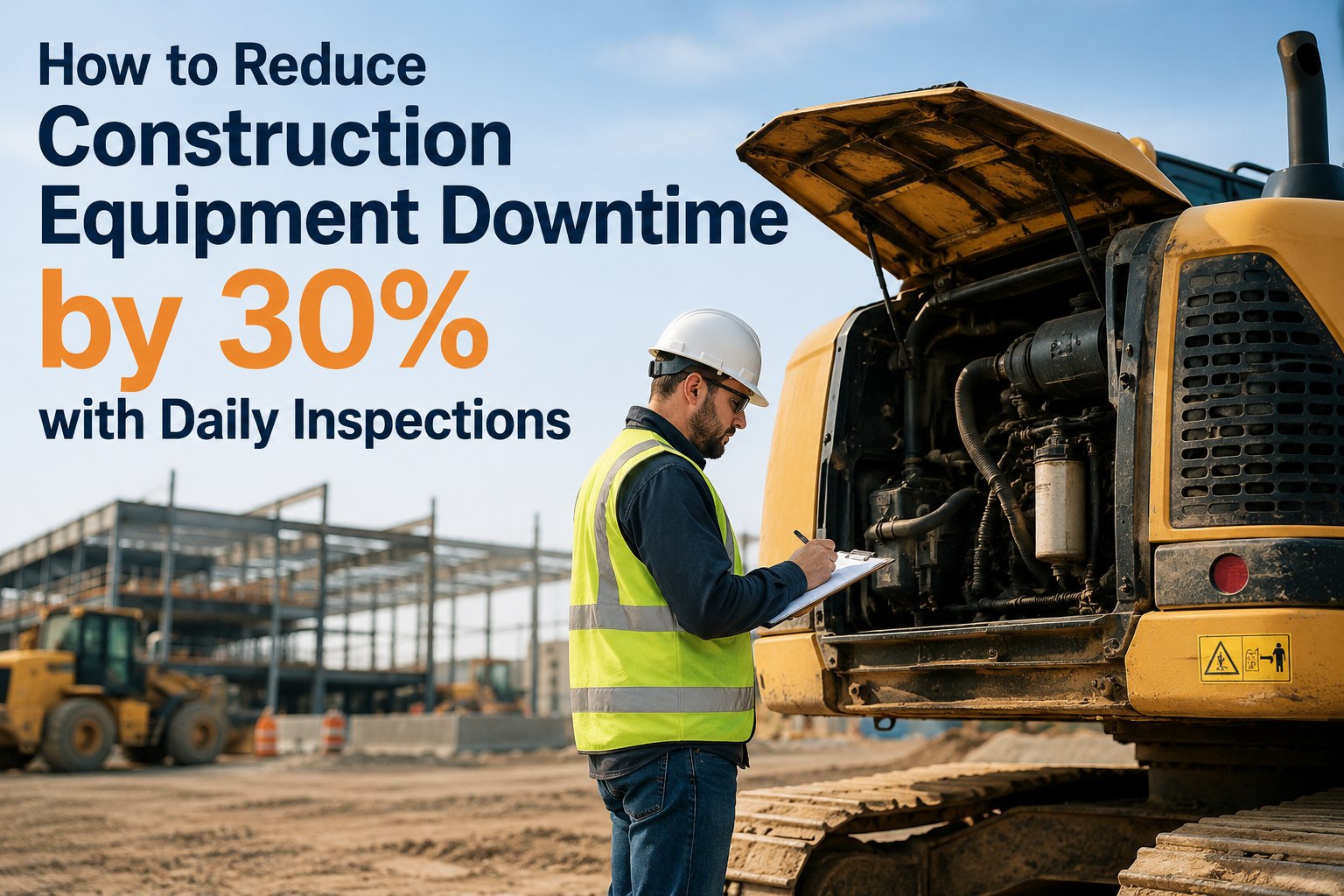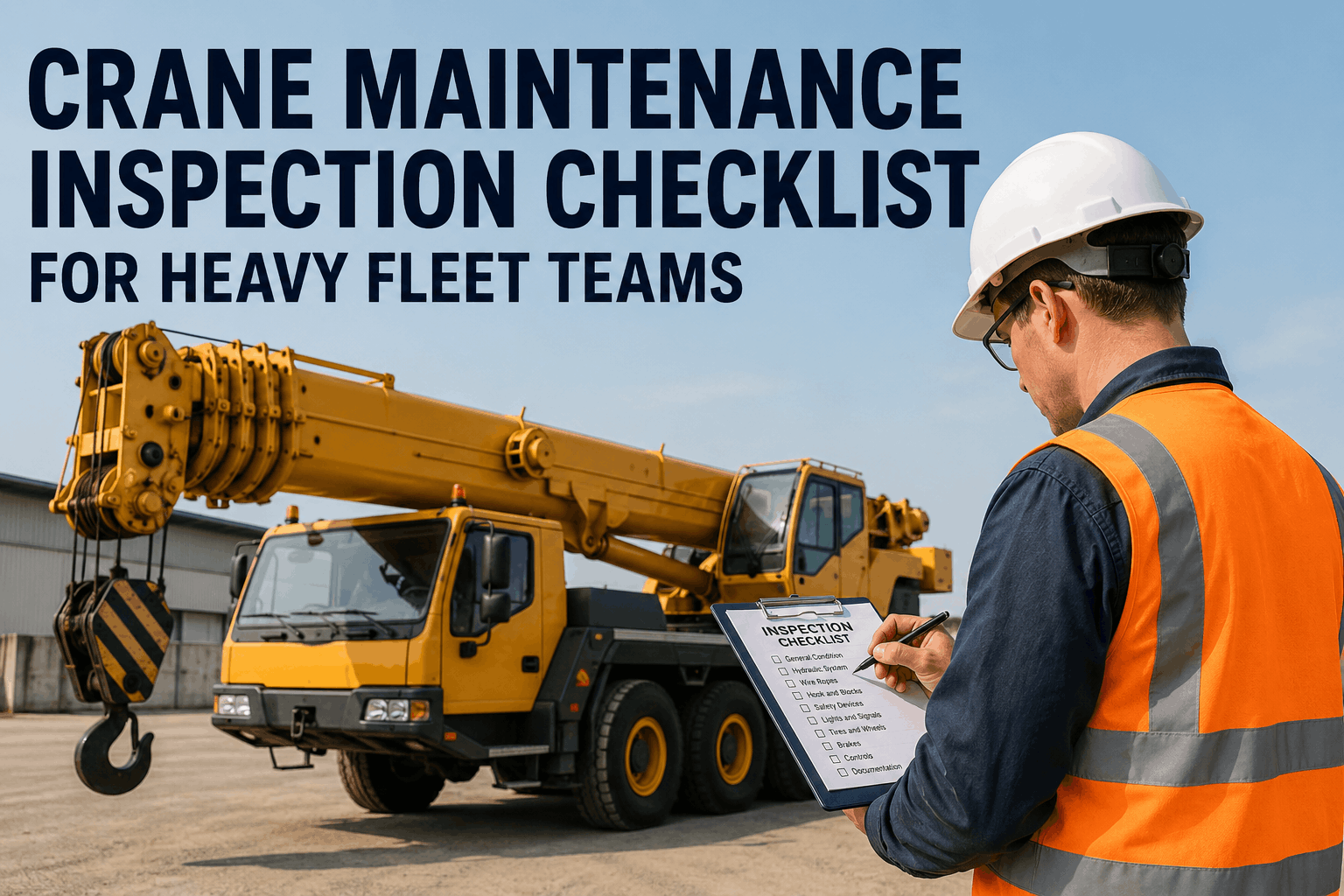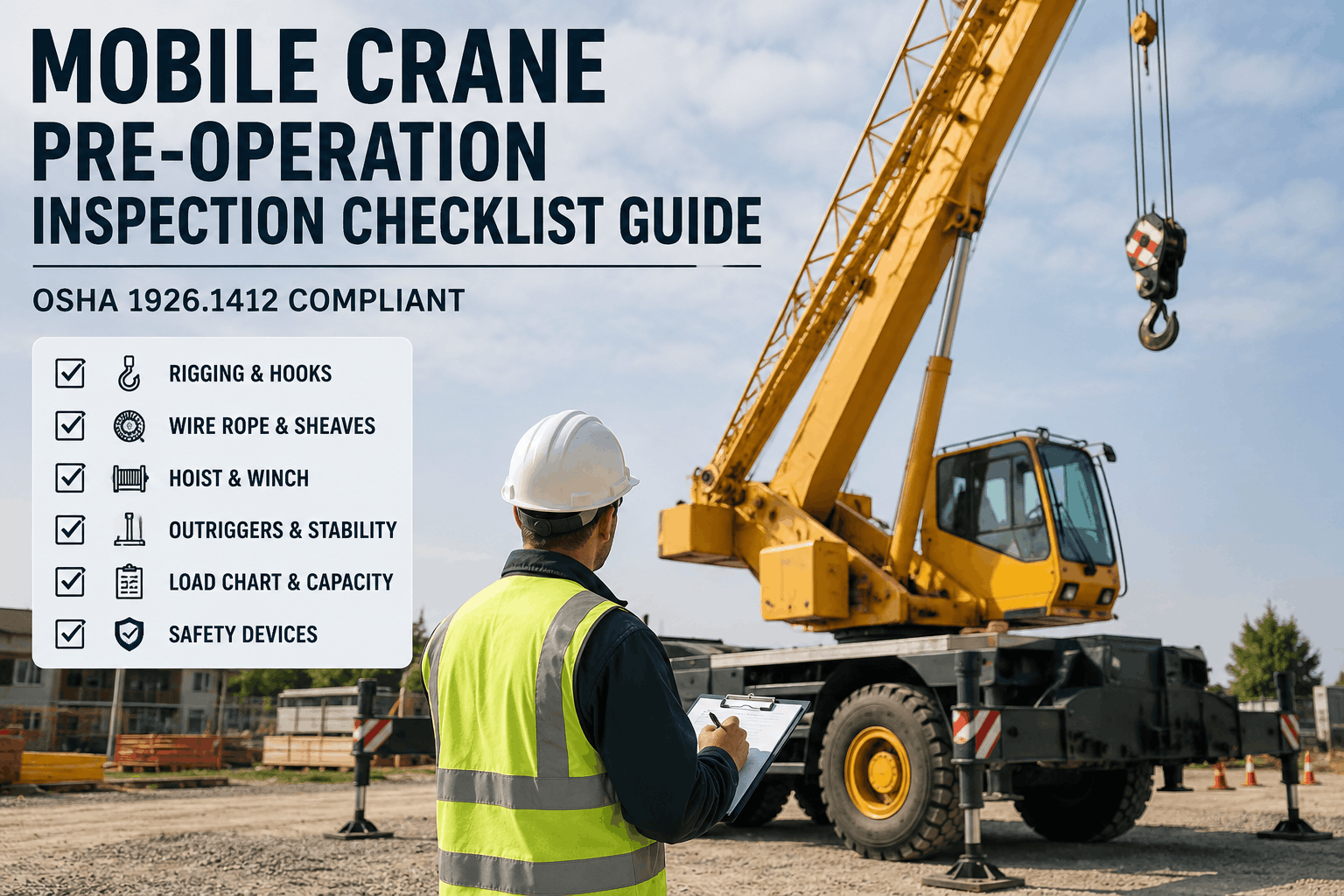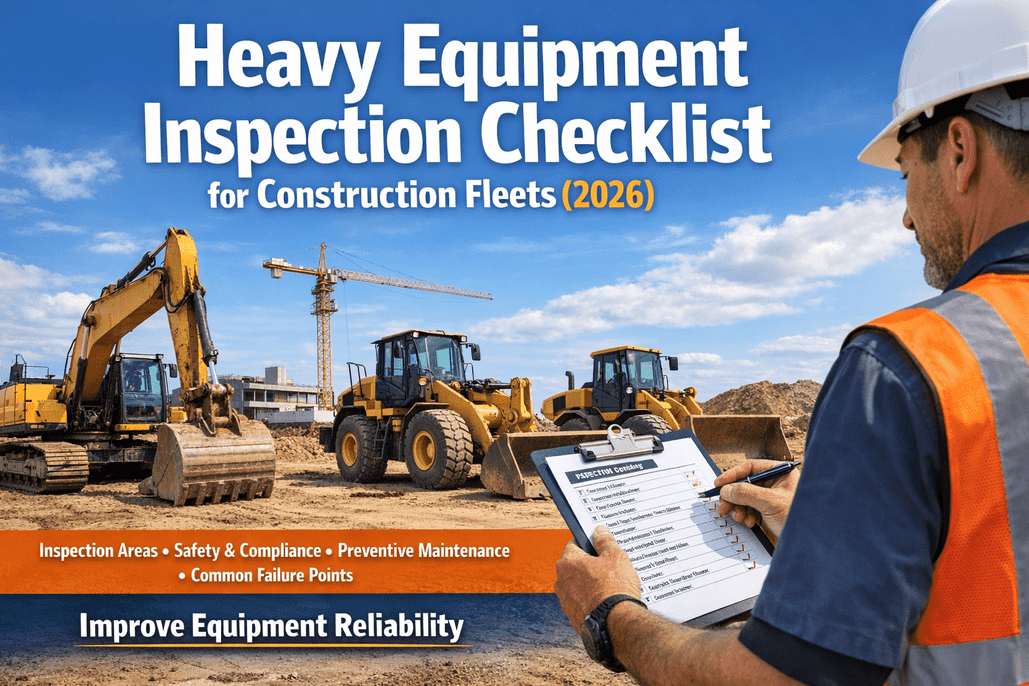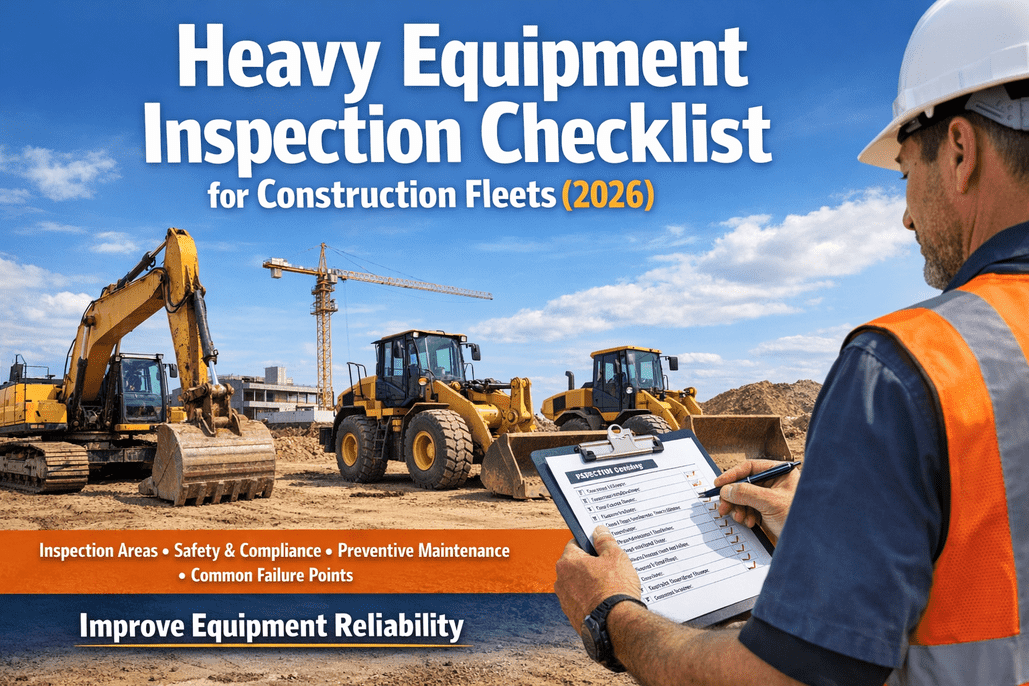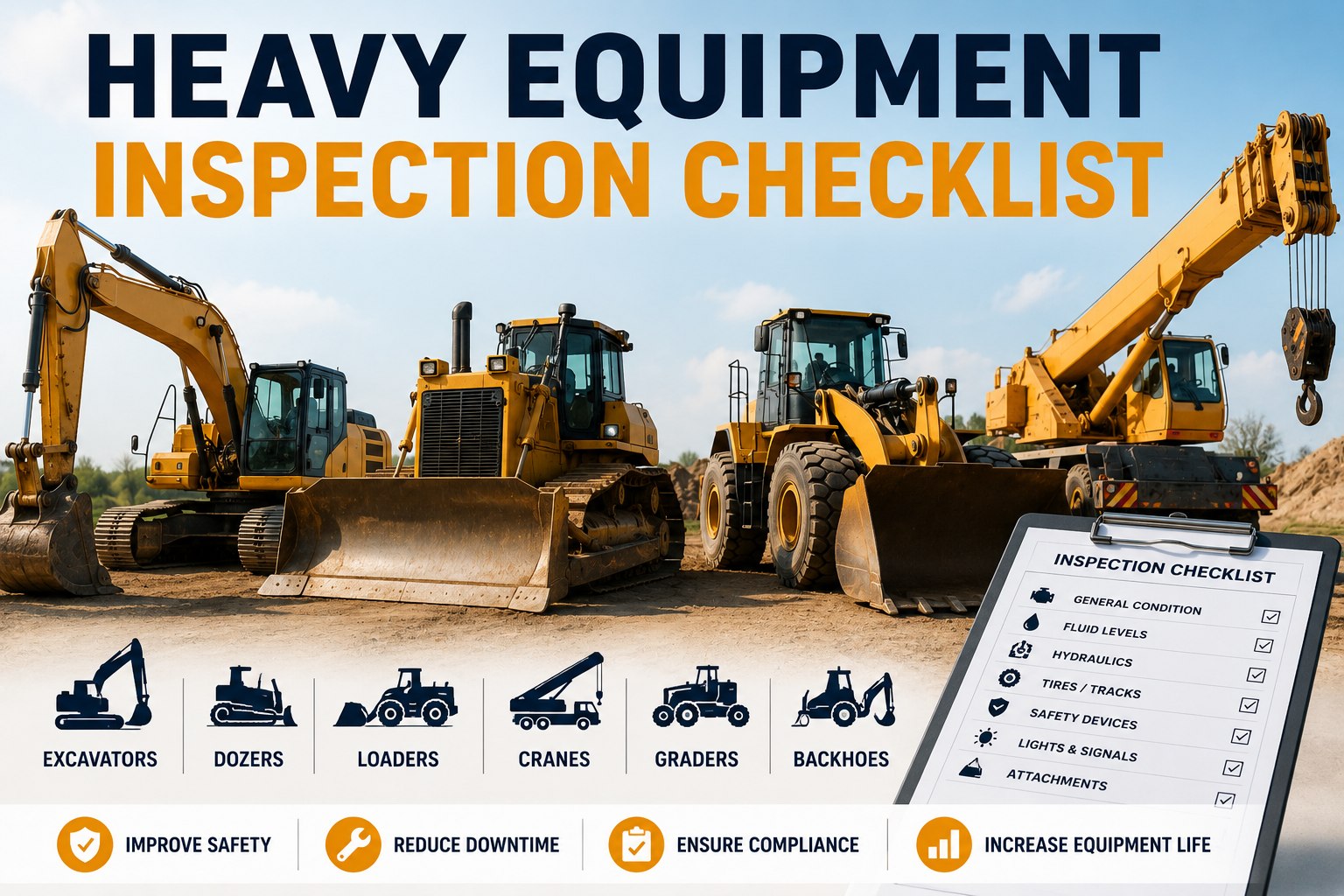
A generic inspection form is how a cracked excavator hose and a worn loader articulation pin end up on the same checkbox that says "hydraulics OK." They aren't the same machine, and they don't fail the same way. This heavy equipment inspection checklist is built the way inspections actually work on a jobsite — a shared walk-around every machine needs, then the specific items that matter for your excavator, dozer, loader, crane, backhoe, or skid steer. OSHA requires a pre-shift inspection for construction equipment under 29 CFR 1926, and undocumented inspections are one of the most common findings on a safety audit. Pick your machine below and run the checklist that fits it. Start free with HVI to load these onto every operator's phone.
Heavy Equipment Inspection Checklist, by Machine
One shared walk-around, then the checks specific to each machine — the boom and undercarriage on an excavator, the articulation joint on a loader, the anti-two-block on a crane. Built to the OSHA 29 CFR 1926 pre-shift requirement.
Every machine · Before every shift
- Required by
- OSHA 29 CFR 1926
- Performed by
- Competent person
- Time to run
- 10–20 min
- Record kept
- Documented
No inspection, no operation
-
1 in 5
construction fatalities involve equipment failure — and roughly 90% are preventable
construction safety data -
$16,550
OSHA penalty per serious violation — up to $165,514 for willful or repeated
OSHA 2025–26 penalties -
$2,000+/day
unplanned downtime when one machine fails mid-shift and stops the site
construction downtime estimates -
96% vs 73%
audit pass rate for digital inspection records versus paper
HVI reported data
The walk-around every machine shares
Before the machine-specific items, every piece of heavy equipment gets the same core pre-shift walk-around. It follows the physical path around the machine so nothing gets skipped, and it's the foundation the equipment-specific checks build on.
-
360° walk-aroundLeaks, damage, loose or missing parts, obstructions before entering the cab.
-
Fluid levelsEngine oil, hydraulic fluid, coolant, fuel — on level ground, engine cold.
-
Tires or tracksPressure and tread, or track tension and packed debris. Undercarriage condition.
-
Safety systemsHorn, backup alarm, lights, mirrors, seatbelt, ROPS/FOPS, E-stop.
-
Engine start & gaugesStart-up, warning lights out, gauges reading normal, no unusual noise or smoke.
-
Controls & brakesFunctional test of controls, service and parking brakes, steering before you leave staging.
That core takes about ten minutes and catches the majority of safety-critical defects. What it doesn't cover is the part of each machine that actually does the work — and that's where the equipment-specific checklist comes in. See the shared core built into every template
Pick your machine: the equipment-specific checklist
This is where a generic form falls apart. An excavator's undercarriage, a loader's articulation joint, and a crane's anti-two-block have nothing in common — each needs its own items. Tap your machine to see the checks that matter for it, on top of the shared core above.
Excavator
Tracked · 1926.20 / 1926.600Hydraulics and undercarriage are where excavators live and die — roughly 45% of major failures start in the hydraulic system and half of lifetime maintenance cost is the undercarriage.
- Boom, stick, and bucket for cracks, bent members, and worn pins
- Quick coupler engagement and safety lock — a top out-of-service item
- Hydraulic hoses, fittings, and cylinder rods for leaks, bulging, scoring
- Track tension and shoes — loose tracks damage sprockets, tight tracks wear rollers
- Sprockets, rollers, idlers, and packed debris in the undercarriage
- Swing bearing and slew function for play or noise
Bulldozer
Crawler · 1926.20 / 1926.600A dozer's undercarriage takes brutal, constant load, and the blade and ripper are the wear points. Cab and ROPS matter on the slopes these machines work.
- Blade, cutting edge, and end bits for wear, cracks, and secure mounting
- Ripper shank, tips, and mounting for wear and cracks
- Track tension, shoes, grousers, and packed mud or debris
- Sprockets, rollers, idlers, and final drives for leaks and wear
- Hydraulic lines to blade and ripper for leaks and abrasion
- Cab, ROPS/FOPS structure, and seatbelt integrity
Wheel loader
Articulated · 1926.20 / 1926.600The articulation joint is the loader's signature wear point, and bucket edges wear unevenly by material. Tires take heavy lateral stress on uneven ground.
- Bucket cutting edge, side cutters, and teeth for uneven wear
- Lift arms, pins, and bushings for cracks and play
- Articulation joint pins and bushings — check for play and grease
- Service and parking brakes, especially before working a grade
- Tires for sidewall damage, cuts, and correct pressure
- Hydraulic cylinders and hoses for the lift and tilt circuit
Crane
Lifting · 1926.1412 (stricter)Cranes carry the most prescriptive OSHA program of any machine here — shift, monthly, and annual inspections under 1926.1412, with safety devices that are non-negotiable.
- Boom sections, lattice or telescopic, for cracks and deformation
- Wire rope for broken wires, kinks, birdcaging, and corrosion
- Anti-two-block and load moment indicator function
- Outriggers, pads, and stabilizers for secure deployment
- Load chart present, legible, and matched to the configuration
- Hydraulics, hooks, latches, and structural welds
Backhoe loader
Two-ended · 1926.20 / 1926.600A backhoe is two machines in one — a loader up front and an excavator out back — so it needs both ends checked, plus the stabilizers that hold it steady to dig.
- Front loader bucket, edge, and lift arms for wear and cracks
- Rear boom, dipper, and bucket for cracks and worn pins
- Stabilizer legs, pads, and cylinders for leaks and secure lock
- Hydraulic hoses and cylinders on both front and rear circuits
- Swing mechanism and boom lock for the backhoe end
- Tires, brakes, and transmission for the road-and-dig cycle
Skid steer
Compact · 1926.602Skid steers swap attachments constantly, so the coupler is the critical safety item, and the ROPS/FOPS cage and interlocks protect an operator working in a tight cab.
- Attachment quick coupler engagement and locking pins
- Lift arms, arm pins, and the lift-arm support device
- ROPS/FOPS cage, door interlock, and seatbelt or bar
- Tires or tracks for wear, damage, and correct tension
- Hydraulic couplers and lines for the attachment circuit
- Control interlocks that disable functions when unbelted
Each machine's list rides on top of the shared core — run both and you've covered the walk-around and the working end. Get these as pre-built digital templates per machine
How often each machine must be inspected
OSHA sets a pre-shift baseline for all construction equipment, but the frequency and formality ramp up for cranes. Knowing which rule governs your machine is half of staying audit-ready.
Earthmoving equipment
1926.20 / 1926.600Excavators, dozers, loaders, backhoes, graders, skid steers
- Every shift: pre-operation inspection by a competent person
- Ongoing: "frequent and regular" inspections
- Periodic: manufacturer weekly/monthly service checks
Cranes
1926.1412Mobile, crawler, tower, and lattice-boom cranes
- Every shift: inspection by a competent person before use
- Monthly: documented inspection, records retained
- Annually: comprehensive inspection by a qualified person
Both categories require documented records — and on a construction audit, inadequate inspection documentation is a more common finding than any physical defect. See how HVI tracks each interval by machine automatically
The failures that show up across every machine
Whatever you're running, a handful of failure modes cause most of the accidents, citations, and downtime. These are where an inspection earns its ten minutes — catch them here and you've prevented the expensive ones.
-
1
Hydraulic system
Cracked hoses, weeping fittings, and scored cylinder rods are the number-one cause of equipment downtime. A pinhole leak under pressure can burst mid-operation, dropping a boom or bucket and causing fluid-injection injuries.
-
2
Undercarriage & tires
On tracked machines the undercarriage is up to half of lifetime maintenance cost; loose tracks wreck sprockets. On wheeled machines, sidewall damage from lateral stress is the quiet failure a fast glance misses.
-
3
Brakes on a grade
A heavy machine with failed brakes on a slope is an uncontrolled hazard. A functional brake test every shift — and verifying the parking brake holds on grade — is a non-negotiable, out-of-service-on-failure item.
-
4
Safety devices
Inaudible backup alarms, dead lights, damaged ROPS, and dead E-stops contribute directly to struck-by and rollover fatalities. Test every device every shift — don't assume it works because it worked yesterday.
Notice these cut across every machine in the selector above — the specific parts differ, but hydraulics, undercarriage, brakes, and safety devices are universal. Flag any of these as a defect and auto-open a work order
Paper checklist vs. digital inspection
A checklist you can download and print is a fine start. But the reason digital records hit far higher audit pass rates isn't the checklist itself — it's everything that happens after the box is ticked.
Paper checklist
- One generic form for every machine type
- A tick with no photo of the actual defect
- Defects noted on a page that gets lost before the shop sees it
- No proof of when or where the inspection happened
- Records scattered, hard to produce on an audit
HVI digital inspection
- Machine-specific templates per equipment type
- Photo verification on every defect and required point
- Defects auto-route to a work order, machine tagged out of service
- GPS and time stamp proving the inspection occurred
- Every record searchable and audit-ready in one place
The checklist tells the operator what to look at. The digital record proves it happened, catches the defect with a photo, and gets it fixed — which is what an OSHA auditor and your uptime both actually care about. Book a demo to see the defect-to-work-order flow
From the field
We used to run one laminated checklist for the whole yard — excavators, loaders, the crane, all of it. Operators would tick "undercarriage OK" on a machine that doesn't have an undercarriage. It was a formality, not an inspection.
Switching to a checklist that actually matches the machine changed how seriously the operators took it. The excavator guy gets excavator items, the crane operator gets the anti-two-block and load chart. Now when the auditor asks for records, I pull them up by machine in about thirty seconds.
Frequently asked questions
What should a heavy equipment inspection checklist include?
A heavy equipment inspection checklist should include a shared pre-shift core plus machine-specific items. The core, run on every machine, covers a 360-degree walk-around for leaks and damage, fluid levels (engine oil, hydraulic, coolant, fuel), tires or tracks and undercarriage, safety systems (horn, backup alarm, lights, seatbelt, ROPS/FOPS, E-stop), engine start-up and gauges, and a functional test of controls and brakes. On top of that, each machine needs its own items: an excavator needs boom, stick, bucket, quick coupler, and undercarriage checks; a wheel loader needs the articulation joint and bucket edges; a crane needs anti-two-block, wire rope, outriggers, and load chart; a backhoe needs both ends plus stabilizers; a skid steer needs the attachment coupler and ROPS. The whole inspection is required before each shift under OSHA 29 CFR 1926 and should be documented.
How often does OSHA require heavy equipment to be inspected?
OSHA requires a pre-shift inspection before each use for all construction equipment. Earthmoving equipment — excavators, loaders, dozers, backhoes, graders, and skid steers — falls under 29 CFR 1926.20 and 1926.600, which require "frequent and regular" inspections by a competent person, with a pre-operation check every shift. Cranes are governed by the stricter 29 CFR 1926.1412, which requires a shift inspection by a competent person, a documented monthly inspection, and a comprehensive annual inspection by a qualified person. Both categories require documented records. Most manufacturers also recommend weekly and monthly service checks beyond the OSHA minimum, and tracking those intervals by machine is part of a complete program.
Who is allowed to perform a heavy equipment inspection?
For the daily pre-shift inspection of earthmoving equipment, OSHA requires a "competent person" — someone capable of identifying existing and predictable hazards and authorized to take prompt corrective action to eliminate them. In practice this is usually the trained equipment operator or a qualified mechanic. Cranes have a higher bar: the shift inspection is done by a competent person, but the annual comprehensive inspection under 1926.1412 must be performed by a "qualified person," which is a more stringent designation involving recognized expertise. Whoever performs the inspection, their training records should be retained, and any defect affecting safety must be corrected before the machine is operated.
What happens if an operator finds a critical defect?
If an operator finds a critical defect — a hydraulic leak, brake failure, structural crack, ROPS damage, a quick-coupler problem, or a failed safety device — the machine must be tagged out of service immediately and not operated until the defect is repaired and the repair is documented. OSHA is explicit that equipment in need of repair must be tagged and taken out of use, and that defects affecting safety must be corrected promptly. Operating a machine with a known critical defect exposes the operator to danger and the company to serious or willful violation penalties. In a digital system, flagging the defect can automatically generate a work order and keep the machine marked out of service until the repair is certified, which closes the loop between finding a problem and fixing it.
Can I use one inspection checklist for all my equipment?
You can share the pre-shift core across machines, but a single generic checklist for every equipment type is a mistake — it's the most common reason inspections become a rubber-stamp formality. Different machines have genuinely different inspection points and failure modes: an excavator's undercarriage wears differently than a loader's tires, a crane's anti-two-block has no equivalent on a dozer, and a skid steer's attachment coupler is a safety-critical item unique to it. When operators tick items that don't apply to the machine in front of them, they stop reading the form. The better approach is a shared core plus a machine-specific section, so the excavator operator gets excavator items and the crane operator gets crane items — which also makes your records cleaner and faster to produce during an audit.
Run machine-specific inspections across your whole fleet
HVI gives you pre-built, OSHA-aligned inspection templates for excavators, dozers, loaders, cranes, backhoes, and skid steers — with photo verification, GPS and time stamps, automatic defect-to-work-order routing, and audit-ready records tracked per machine and per interval. Stop running one generic form for a yard full of different machines.
No credit card · No hardware · Live on your fleet in under two weeks