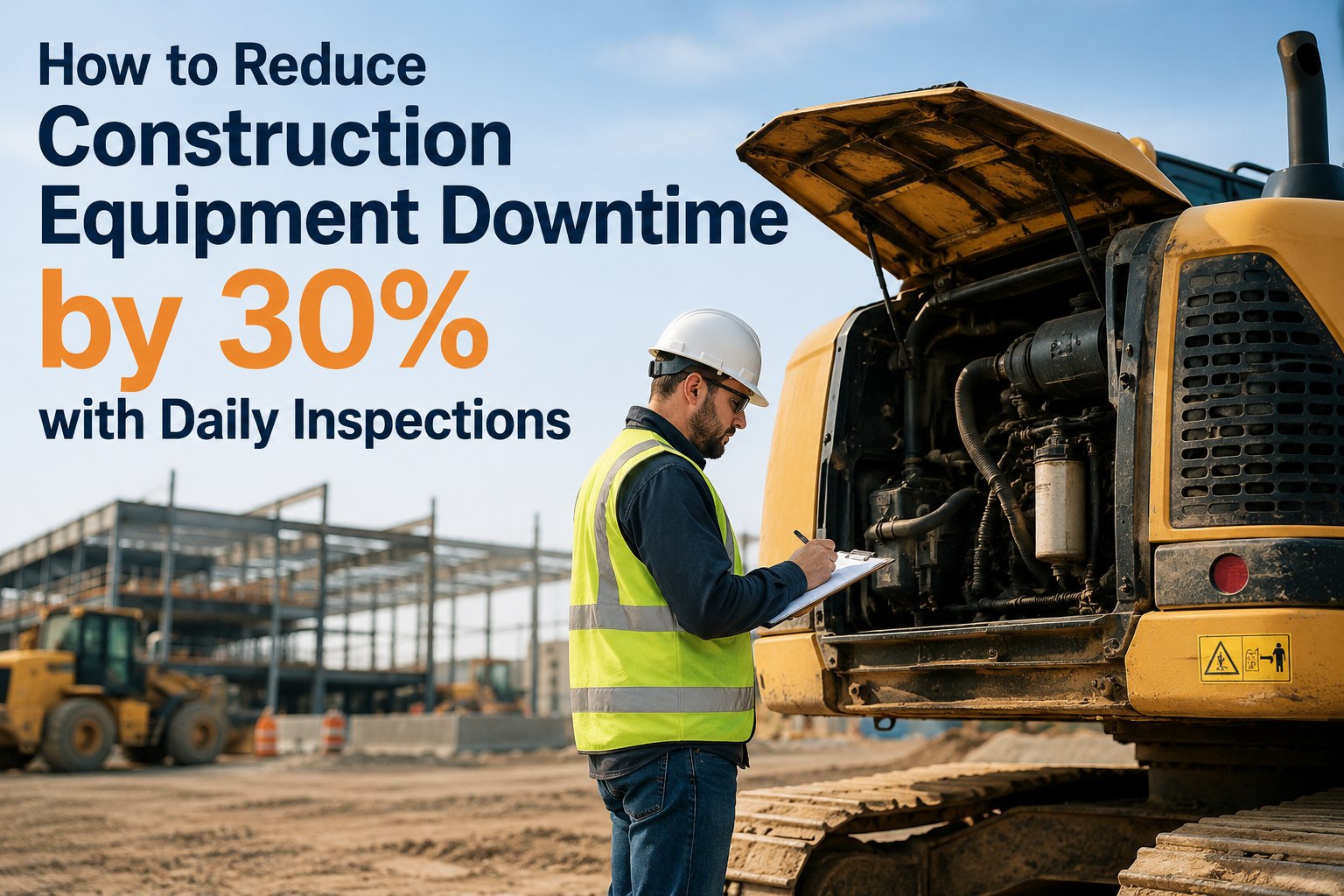
An excavator sitting idle on a job site isn't just one machine down — it's a stalled crew, a slipped schedule, and a per-day cost that dwarfs the repair itself. Industry data shows construction companies run 20–30% unplanned downtime on each piece of heavy equipment, and emergency repairs cost three to nine times more than the same work done on schedule. The frustrating part is how preventable most of it is: 78% of hydraulic failures — the leading cause of excavator breakdowns — show detectable warning signs two to six weeks before they fail, yet 72% of contractors have no systematic way to catch them. That gap is exactly where the daily inspection earns its keep. Contractors who implement daily inspections paired with disciplined preventive maintenance report a 30–50% reduction in unplanned downtime and the lever isn't expensive technology, it's the five-minute pre-shift walk-around done consistently and acted on. This guide breaks down why daily inspections are the highest-ROI move in equipment management, the pre-shift checklist that catches the failure, and the four-step method to hit a 30% downtime cut. book a 30-minute walkthrough to see it on your own fleet.
A 30% downtime cut doesn't take new machines. It takes the five-minute check, done every shift.
HVI turns the daily pre-shift inspection into structured data, catches the leak and the loose track before they strand a machine, auto-creates a work order from every defect, and fires PM on real engine hours — so your fleet runs instead of waiting on a mechanic.
What downtime really costs a contractor
The repair bill is the part you see. The lost productivity, the idle crew, and the slipped schedule are the part that actually hurts — and the numbers make the case for prevention.
Here's the gap that defines the opportunity: most failures announce themselves weeks in advance — a weeping hydraulic hose, a loosening track, a dropping fluid level — but the warning only matters if someone is looking and recording. A machine run until it breaks turns a $200 hose into a stranded excavator, an idle crew, and a 3-to-9× emergency bill. The daily inspection is where that warning gets caught.
Why the daily inspection is the highest-ROI move
Of every maintenance tactic available, the pre-shift inspection delivers the most downtime reduction per dollar — because it's nearly free and it's where developing failures first become visible.
It's where failures surface first
Leaks, low fluids, loose tracks, and worn hoses appear on the machine days or weeks before they fail. The daily walk-around is the first and cheapest place to catch them.
It costs five minutes, not a budget
No sensors, no telematics rollout — just the operator and a structured check. The lowest-cost intervention in equipment management, and among the highest-impact.
It builds the data trail
Done digitally, each inspection becomes a record — feeding the failure history, the work orders, and the PM schedule that compound the savings over time.
The catch is consistency and follow-through. A paper checklist that gets rubber-stamped, or a defect entered into a system three days late, prevents nothing — "the best system in the world is worthless if work orders sit on paper." The value is in the inspection actually being done and the defect actually being acted on. HVI makes both happen on a phone, in real time.
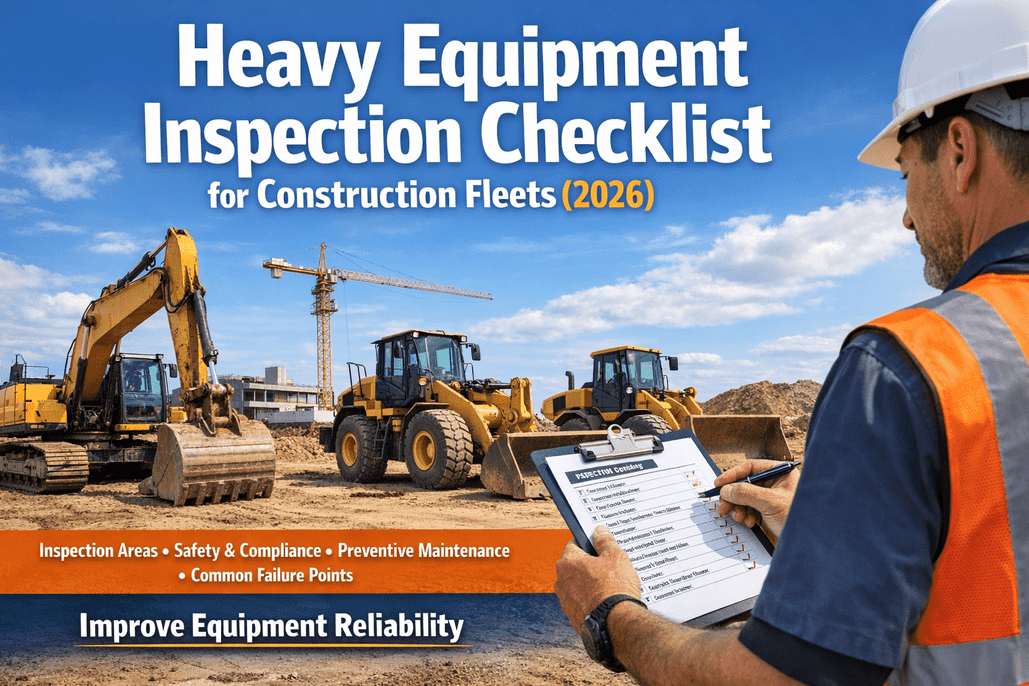
The daily pre-shift inspection checklist
This is the five-minute walk-around that catches the failure. It runs before the machine works, on every piece of equipment, every shift.
Each item is a stop-or-go decision, and each one is a place a developing failure shows itself first. sign up free and run the pre-shift check on a phone with photo capture, or book a demo to see equipment-specific inspection templates.
The four-step method to a 30% cut
Reducing downtime 30% isn't one big move — it's four disciplines working together, each building on the last. This is the path contractors actually follow.
Make the daily inspection non-negotiable
Every operator runs the pre-shift check on every machine, every shift, on a phone — so the leak and the loose track are caught at 6 a.m. in the yard, not at noon on the haul road.
Close every defect to a work order
A found defect that isn't fixed is a breakdown waiting to happen. Each one auto-creates a tracked, assigned work order so it's repaired while it's small — not discovered when it fails.
Fire PM on real engine hours
Service triggers on each machine's actual hours — not conservative calendar guesses — so heavily-used units get serviced on time and idle ones aren't over-serviced.
Track the data & act on patterns
Inspection and repair history reveals the chronic problem machine and the recurring failure — so you fix root causes and schedule PM where it hurts production least.
The compounding effect is what gets you to 30%: daily inspections catch the early warning, work orders ensure the fix, engine-hour PM prevents the predictable failure, and the data tells you where to focus next. Each alone helps; together they move the number. HVI runs all four in one platform.
Paper checklists vs. HVI
Both technically run a daily check. Only one turns it into data, closes every defect to a verified repair, and produces the failure history that drives the 30% cut.
Paper / reactive
- Daily check rubber-stamped or skipped
- Leaks and loose tracks found at breakdown
- Defects noted on paper, entered days late or never
- PM by calendar guess, not real engine hours
- Emergency repairs at 3–9× the planned cost
- No failure history to spot the chronic-problem machine
With HVI software
- Pre-shift check on a phone, photo-verified, every machine
- Developing failures caught weeks before they strand a unit
- Every defect auto-creates a tracked work order
- PM fires on real engine hours per machine
- Planned service replaces emergency breakdowns
- Inspection & repair history reveals the patterns
less unplanned downtime. Contractors who pair disciplined daily inspections with engine-hour PM and a closed defect-to-repair loop report cutting unplanned downtime 30–50% — while extending machine life up to 30% and slashing the 3-to-9× emergency-repair premium. The lever isn't a bigger budget or newer iron; it's the five-minute check, done every shift and actually acted on. HVI makes that routine, documented, and impossible to skip.
Frequently asked questions
How do daily inspections reduce construction equipment downtime?
By catching developing failures while they're still cheap fixes instead of breakdowns. Most equipment failures announce themselves weeks in advance — for example, 78% of hydraulic failures, the leading cause of excavator breakdowns, show detectable warning signs two to six weeks before they fail — but that warning only helps if someone is looking and recording. A five-minute pre-shift walk-around checking fluids, leaks, hoses, track tension, and grease points catches the weeping hose or loosening track in the yard at the start of shift, where it's a scheduled repair, rather than on the haul road where it's a stranded machine and an idle crew. Contractors who run disciplined daily inspections alongside preventive maintenance report cutting unplanned downtime 30–50%. The key is doing the check consistently and actually acting on what it finds. HVI's inspection and maintenance software runs the pre-shift check on a phone and turns every defect into a work order. sign up free and start catching failures early.
What should a daily heavy equipment inspection include?
A pre-shift inspection should cover the systems where failures start. Fluids and leaks — hydraulic, engine oil, and coolant levels, plus any puddle or weep under the machine. Hydraulic hoses for cracks, bulges, chafing, or weeping fittings, since hydraulic issues account for about 45% of excavator breakdowns. Tracks and undercarriage for tension, pad wear, and packed debris, because the undercarriage represents 40–50% of an excavator's lifetime maintenance cost. All daily grease and lube points, so pins and bushings don't wear prematurely. Tires or tracks, lights, alarms, and glass for condition and visibility. And safety systems — ROPS, seatbelt, horn, backup alarm, and fire extinguisher — confirmed functional. Each item is a stop-or-go decision and a place a developing failure shows itself first. The whole walk-around takes about five minutes per machine when it's structured. HVI's inspection and maintenance software provides equipment-specific templates so nothing is missed. book a demo to see the daily inspection template.
Can daily inspections really cut downtime by 30%?
Yes, when they're part of a disciplined program rather than a checkbox. Industry data shows contractors who implement daily inspections together with preventive maintenance report a 30–50% reduction in unplanned downtime, and proper maintenance can extend machine life by up to 30%. The reason the number is achievable is that construction equipment runs 20–30% unplanned downtime to begin with, and most of that traces to failures that gave weeks of warning. The 30% cut comes from four disciplines compounding: the daily inspection catches the early warning, a work order ensures the defect actually gets fixed, engine-hour-based PM prevents the predictable failures, and the accumulated data reveals the chronic-problem machines to address at the root. No single step does it alone, but together they move the number significantly. HVI's inspection and maintenance software runs all four in one platform. sign up free and build the program.
Why do paper inspection checklists fail to prevent breakdowns?
Because the value of an inspection is in the follow-through, and paper breaks the chain. A paper checklist is easy to rubber-stamp without actually looking, so the defect never gets recorded. Even when something is found, a paper defect often gets entered into a maintenance system days late — or never — so the repair doesn't happen and the small problem becomes a breakdown. As the industry saying goes, the best maintenance system in the world is worthless if work orders sit on paper and get entered three days late. Paper also produces no usable failure history, so you can't spot the machine that breaks down repeatedly or the recurring root cause. A digital inspection fixes all of this: it's harder to fake with photo capture, it auto-creates a work order the instant a defect is logged, and it builds the data trail that drives smarter decisions. HVI's inspection and maintenance software closes that loop from inspection to verified repair. book a demo to see the closed loop.
How does HVI help reduce construction equipment downtime?
HVI is an inspection and maintenance software platform built to turn daily inspections into real uptime. Operators run the pre-shift walk-around from a phone or tablet using equipment-specific templates — fluids, leaks, hydraulic hoses, undercarriage, grease points, and safety systems — with mandatory photo capture on defects, and it works offline on the jobsite and syncs when back in range. Every defect found auto-creates a tracked, assigned work order, so the weeping hose or loose track gets fixed while it's small rather than discovered when it strands the machine. Preventive maintenance fires on each machine's actual engine hours rather than calendar guesses, and the platform keeps a complete inspection and repair history per asset, surfacing the chronic-problem machines and recurring failures so you fix root causes and schedule PM where it hurts production least. Contractors using this approach report cutting unplanned downtime 30–50%. Because inspections, work orders, and PM all live in one place, the whole loop connects. book a demo and we'll map the software onto your fleet on the call.
Cut downtime 30% with the cheapest tool you already own — the daily inspection.
HVI turns the pre-shift walk-around into structured data, catches the leak and the loose track weeks before they strand a machine, auto-creates a work order from every defect, fires PM on real engine hours, and surfaces the patterns that drive the cut. No new iron, no sensor rollout — just the five-minute check, done every shift and acted on. Keep your fleet running and your crews working.
No credit card required · Live in under two weeks · Daily inspections + defect-to-work-order loop + engine-hour PM + failure analytics in one platform