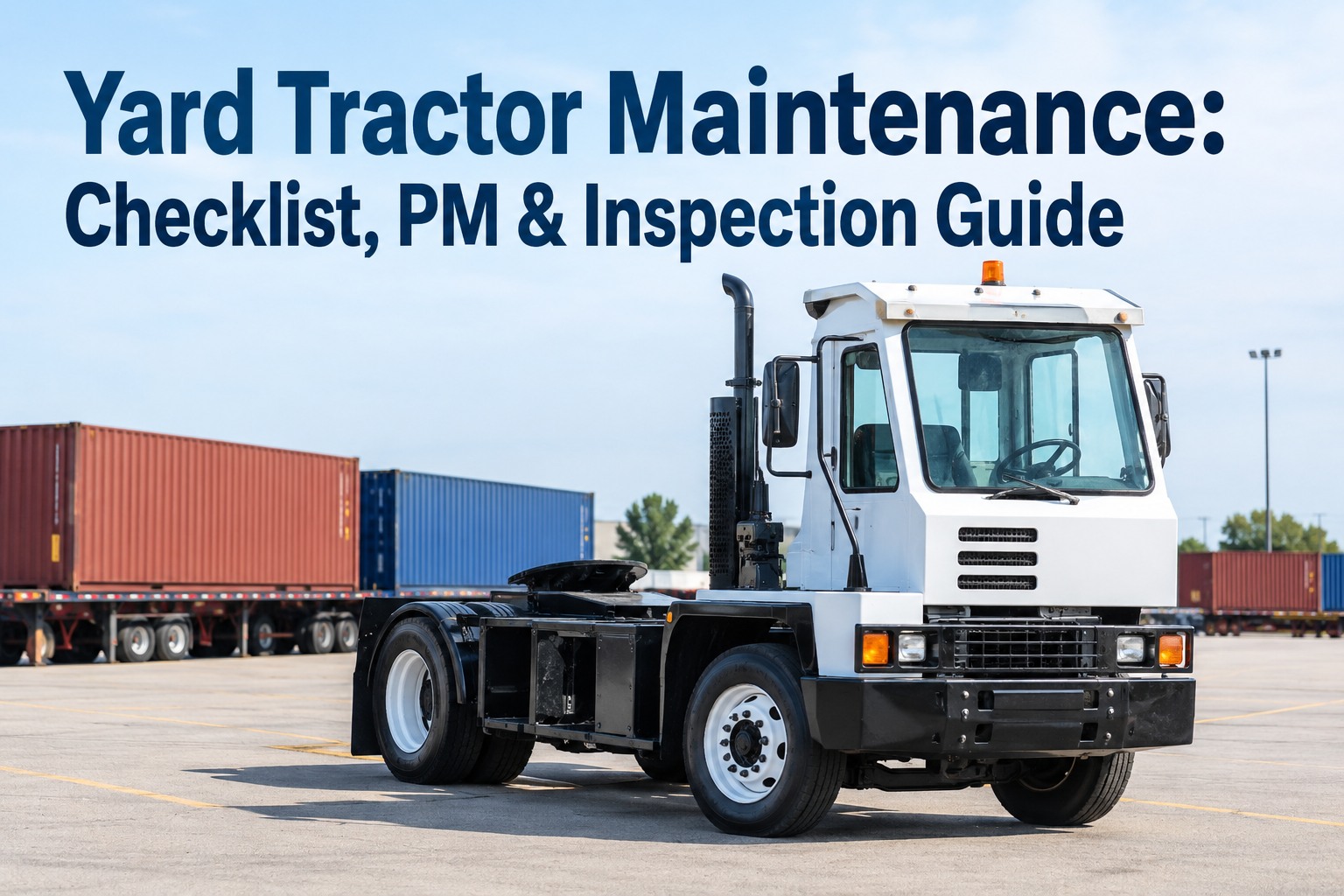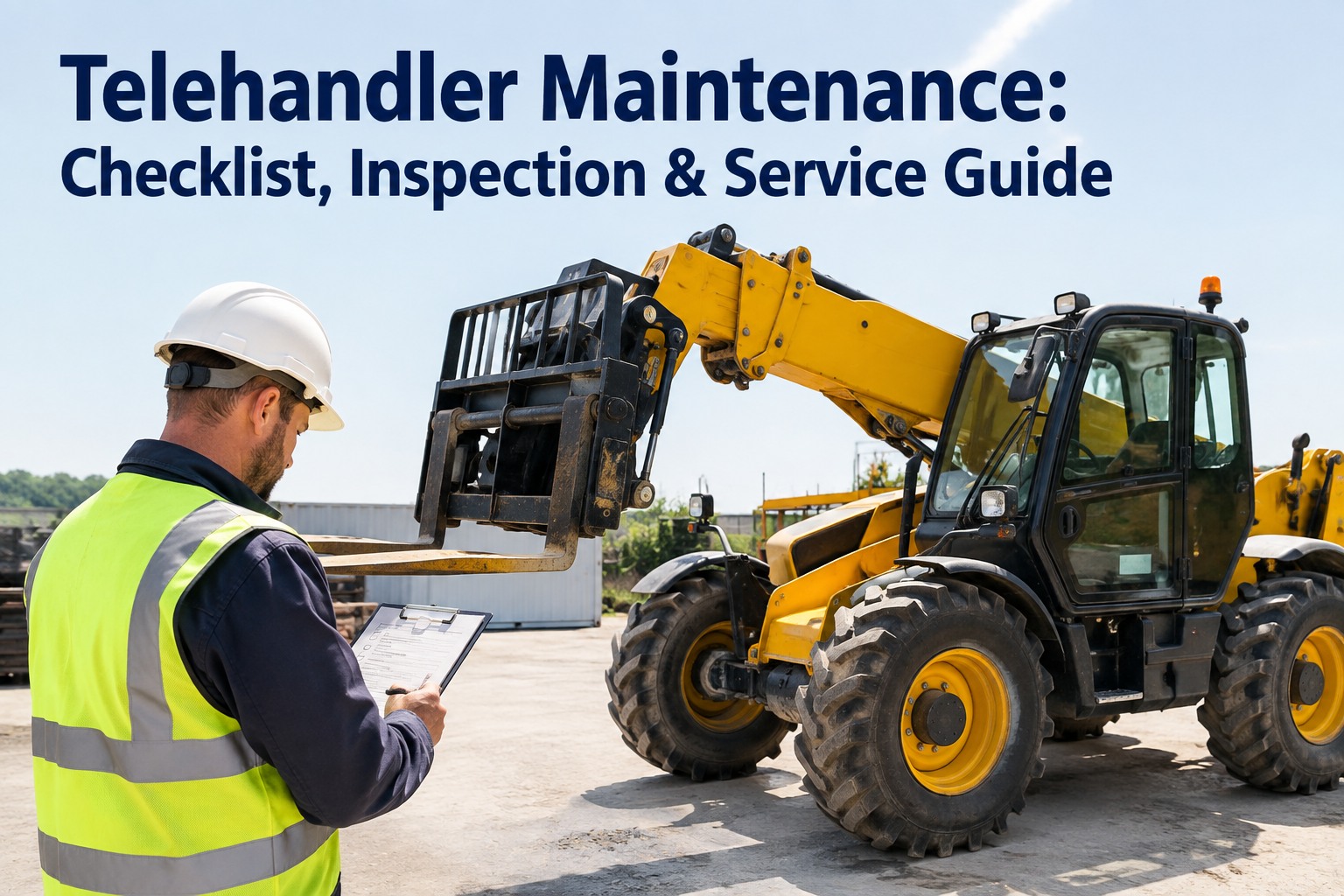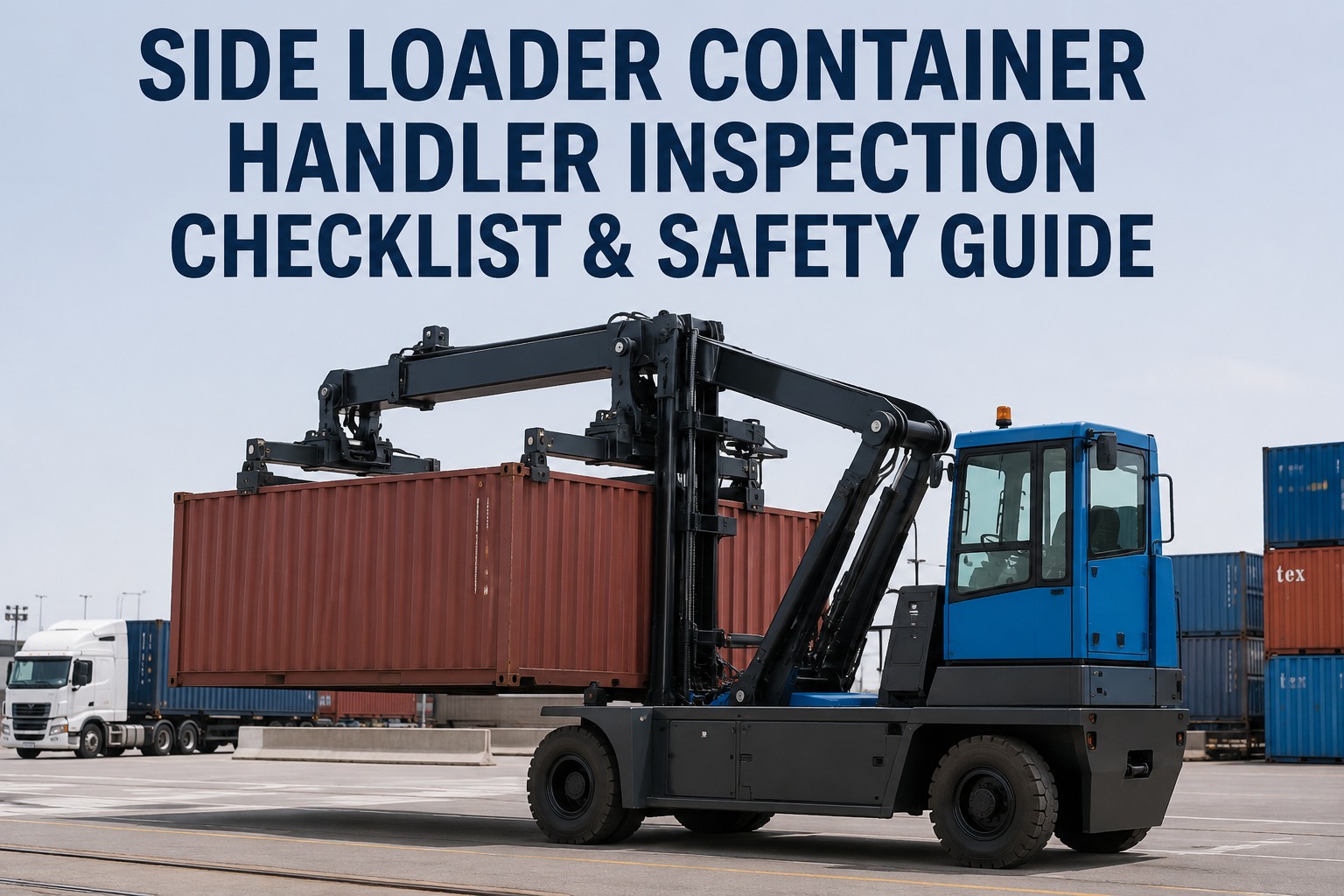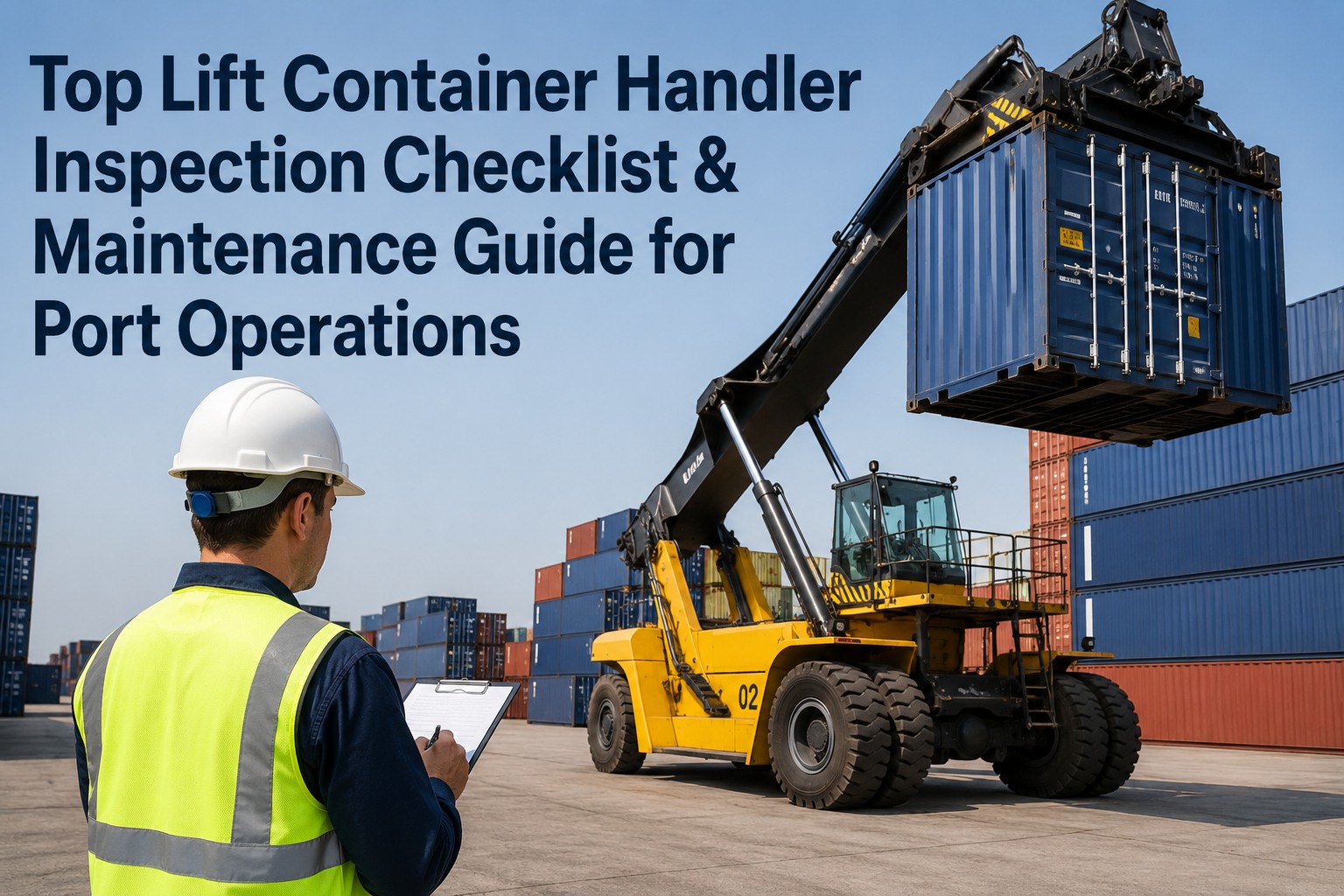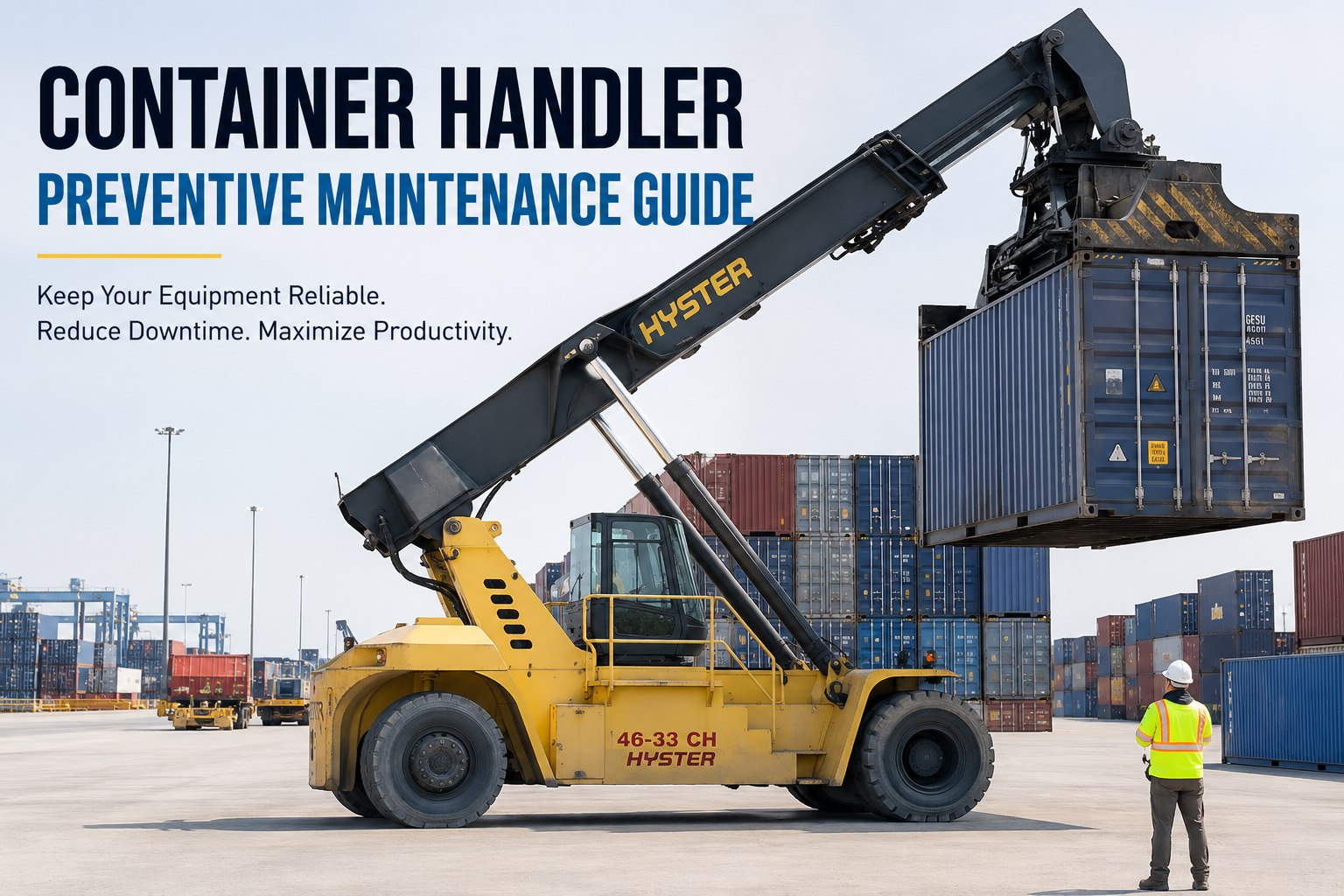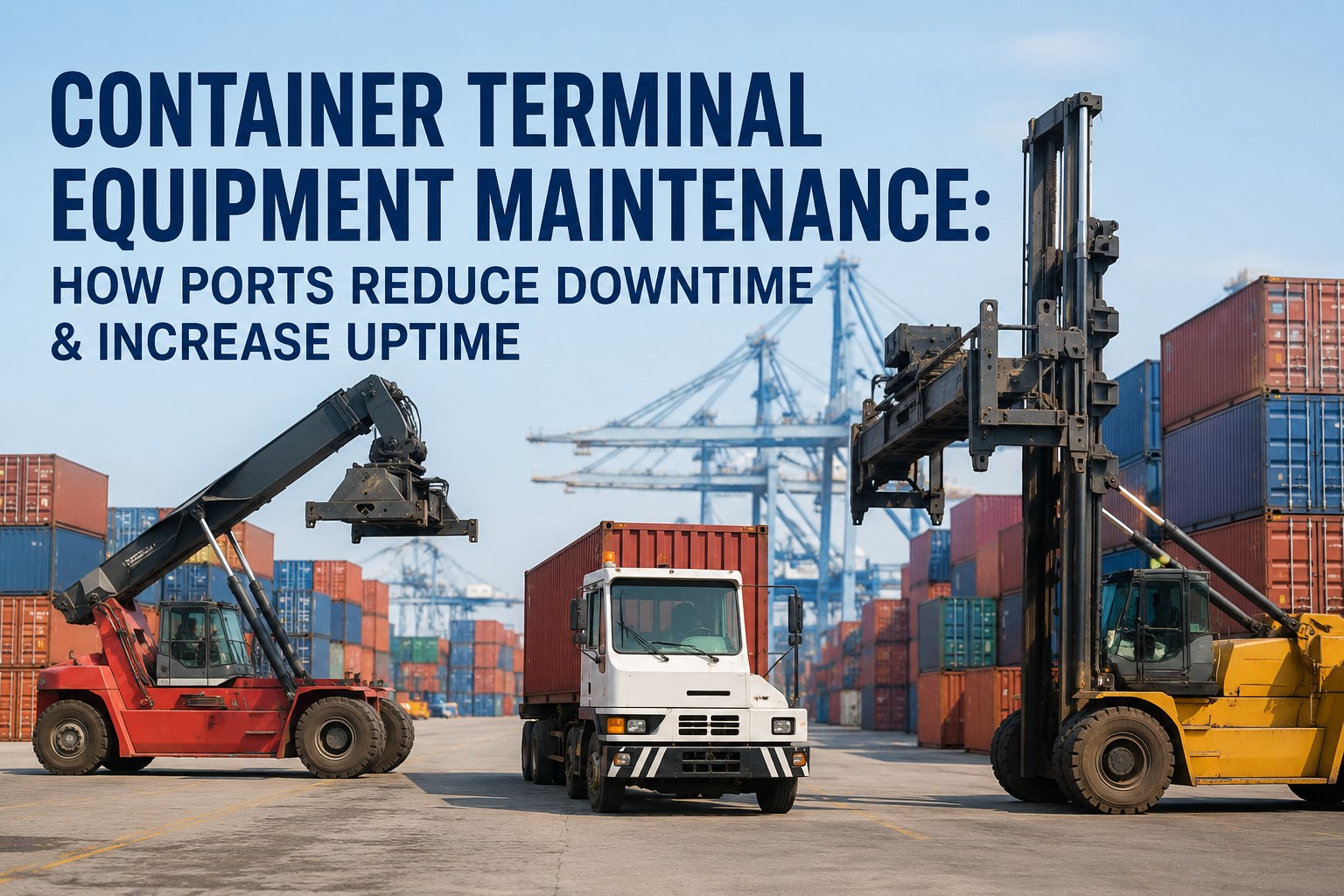
A container terminal runs at the speed of its slowest machine. When a reach stacker drops out of the rotation mid-shift, it doesn't just idle one operator — it backs up the truck lane, stalls the vessel-side handoff, and pushes every box behind it later into the day. With global container volumes climbing toward 189 million TEUs by 2034 and a single reach stacker costing $420,000–$480,000 to replace, terminals can't afford equipment that fails without warning. That's why the port equipment predictive-maintenance market is growing at 18.6% a year, and why over 60% of terminals worldwide have moved to some form of digital management. The machines that move your boxes — reach stackers, top-loading container handlers, terminal tractors, and empty handlers — each have their own failure points and their own inspection rhythm. This guide breaks down those four workhorses, the daily checks that catch trouble early, and how HVI's inspection and maintenance software turns every walkaround into a tracked, alert-driven workflow. Book a 30-minute walkthrough with our team to see it set up for your terminal fleet.
One stalled machine can back up the whole quay.
HVI runs daily inspections on the operator's phone, schedules PM by engine hours across every reach stacker and tractor, and routes defects straight to a work order — so a worn spreader twistlock or a soft brake never becomes the bottleneck that holds up a vessel.
The downtime math at a working terminal
Container handling equipment lasts 15–25 years if maintained — and fails far sooner if not. The numbers below are why terminals are shifting from fix-on-failure to fix-on-condition.
A reach stacker out of service during a vessel window doesn't cost one machine-hour — it cascades. Trucks queue at the gate, the yard plan slips, and the berth runs over. Planned maintenance converts that unpredictable cascade into a known, scheduled stop.
The four machines that move your boxes
Each piece of terminal equipment carries its own high-stress components and its own failure signature. In HVI, each gets its own checklist section and service schedule.
Reach stacker
The terminal's most versatile lifter — and most hydraulically complex. Watch the boom and extension cylinders for leaks, the spreader twistlocks and rotation for wear, and tire condition under heavy corner loads. Hydraulics and the spreader are where most faults begin.
Watch: boom hydraulics + spreaderTop loader / container handler
Built for stacking loaded boxes high. The mast, lift chains, and forks or top-spreader take repeated shock loading. Inspect chains for stretch and lubrication, mast rollers for wear, and the hydraulic lift circuit for creep or leaks every shift.
Watch: mast, chains + lift circuitTerminal / yard tractor
The yard's workhorse, running near-constant duty cycles. The fifth wheel, lift mechanism, brakes, and transmission see the heaviest wear. Check fifth-wheel play, brake response, hydraulic lift, and coolant and oil daily — these run hard, all shift.
Watch: fifth wheel, brakes + liftEmpty container handler
Handles empties fast and stacks them high, so stability and the top-lift spreader matter most. Inspect the spreader attachment and side-shift, mast and lift chains, and tire and counterweight condition — speed plus height makes wear add up quickly.
Watch: spreader, side-shift + mastReach stackers and tractors carry the bulk of a terminal's moves — and almost every failure on them shows early on a disciplined walkaround. Sign up for a free HVI account and build an inspection checklist for each machine type, or book a live demo to see a worn twistlock flagged into a work order before it drops a box.
The pre-shift walkaround
Before a machine enters the rotation, the operator works it from the ground up and into the cab. In HVI, each stage is a checklist section completed on a phone, with a photo required on any flagged item.
Lift system
- Spreader twistlocks, rotation, and side-shift for wear and free movement
- Boom, mast, and lift chains for stretch, cracks, or damage
- Hydraulic cylinders, hoses, and fittings for leaks
- Load and lift indicators reading correctly
Drive & ground
- Tires, rims, and lug nuts; counterweight secure
- Engine oil and coolant levels; no leaks under the machine
- Brakes and parking brake firm and responsive
- Fifth wheel and lift mechanism (tractors) for play or damage
Cab & safety
- Seat belt, mirrors, and windows secure and clean
- Horn, reverse alarm, beacons, and work lights working
- Gauges, warning lamps, and camera display functioning
- Fire extinguisher present and charged
Critical defects — a failing brake, leaking lift cylinder, cracked chain or boom, worn twistlock, inoperative reverse alarm, or missing fire extinguisher — take the machine out of the rotation until repaired. In HVI, flagging one as critical tags the machine out automatically — book a demo and we will build your critical-defect list around your fleet on the call.
The PM cadence that keeps machines in rotation
Terminal equipment follows a tiered PM schedule in engine hours. Service on whichever comes first — hours or calendar — and tighten intervals for the constant duty of a busy quay. HVI fires each tier automatically.
Pre-shift walkaround
Run the lift, drive, and cab checks; verify fluids, brakes, and safety gear; grease the spreader and lift points per the lube chart. The single most effective downtime defense.
Basic PM service
Engine oil and filter change, full grease, fluid checks, spreader and twistlock inspection, chain and mast review, tire checks, and electrical and safety review.
Intermediate service
All 250-hour tasks plus fuel, air, and hydraulic filter changes, transmission and axle oil, full brake inspection, hydraulic oil sampling, and lift-chain measurement. Plan real downtime.
Major service & analysis
Deeper hydraulic, transmission, and final-drive service per OEM spec, with oil analysis to catch internal wear early and safely extend intervals on your highest-value machines.
From clipboard to one tracked system with HVI
A terminal checklist only protects throughput if it's actually done, logged, and acted on — every machine, every shift. That's the gap paper leaves open and HVI closes.
Paper checklists
- Spreader greasing skipped under vessel-window pressure
- Operator notices a soft brake, mentions it, it's forgotten
- 250 and 500-hour services tracked on a shop whiteboard
- Hydraulic oil condition never trended across the fleet
- No proof of inspection when a safety auditor asks
- A twistlock or chain failure discovered as a dropped box
With HVI software
- Daily walkaround logged with photos and hour reading
- A worn twistlock becomes a photo-backed work order instantly
- Every PM tier fires automatically by engine hours per machine
- Fluid and wear findings trended over time per asset
- Full inspection and service history exports in seconds
- Wear caught at inspection, not as a failure on the quay
a dropped box or stalled lifter stops more than one machine — it backs up the truck lane and pushes the berth window over. HVI's inspection and maintenance software makes sure every check and every grease point happens, on every machine, every shift, so the bottleneck never starts.
Frequently asked questions
What equipment needs the most maintenance attention at a container terminal?
Four machines do most of the work and need the most attention. Reach stackers are the most hydraulically complex — the boom cylinders, spreader twistlocks, and rotation are where faults start. Top loaders and container handlers stress the mast, lift chains, and forks under repeated shock loading. Terminal and yard tractors run near-constant duty, so the fifth wheel, brakes, and transmission wear fastest. Empty handlers stack high and fast, making the spreader, side-shift, and stability the priorities. Each has a distinct failure signature, which is why HVI's inspection and maintenance software gives every machine type its own checklist section and service schedule rather than a one-size-fits-all form.
How often should terminal equipment be serviced?
Terminal equipment follows a tiered PM schedule by engine hours, serviced on whichever comes first — hours or calendar time. A pre-shift walkaround and greasing comes first and is the highest-value habit. The 250-hour basic service covers engine oil and filter, full grease, fluid checks, and spreader, chain, and tire inspection. The 500-hour intermediate service adds fuel, air, and hydraulic filters, transmission and axle oil, full brake inspection, and oil sampling. Major services at 1,000 hours and beyond go deeper per OEM spec. Constant-duty machines on a busy quay, plus salt-air and dust exposure, often warrant tightening these intervals. With a free HVI account you can set each tier per machine and have it fire automatically by hour reading.
Why does one machine failure cause so much disruption at a terminal?
Because a container terminal is a tightly coupled system working against vessel windows. When a reach stacker or tractor drops out mid-shift, the work it was doing doesn't pause — it queues. Trucks back up at the gate, the yard plan slips, the vessel-side handoff stalls, and the berth runs over its scheduled window, which carries real penalties. A single machine-hour of unplanned downtime can cascade into hours of terminal-wide delay. That's the core argument for preventive maintenance: a planned 500-hour service is a known, scheduled stop you plan around, while a mid-vessel failure is an unknown disruption that ripples across the whole operation.
Is digital inspection really better than a paper checklist?
The difference is whether a finding turns into action. On paper, a soft brake or worn twistlock gets noted, mentioned, and often forgotten under vessel-window pressure, and there's no proof of inspection when a safety auditor asks. HVI's inspection and maintenance software closes that gap: operators run the walkaround on a phone with photos and hour readings required on flagged items, any flagged defect becomes a work order automatically, critical defects tag the machine out of the rotation, and findings trend per asset so wear is visible before it fails. Full inspection and service history then exports in seconds for audits. Over 60% of terminals have already moved to digital systems for exactly this reason.
How does HVI help a container terminal reduce downtime?
HVI brings the whole maintenance program into one place. Operators run the pre-shift lift, drive, and cab walkaround from a phone, with photos and hour-meter logging built in. Critical defects — a failing brake, leaking cylinder, cracked chain, or worn twistlock — automatically tag the machine out of service and create a work order. All PM tiers (daily, 250, 500, 1,000-hour) fire automatically by engine hours for each machine, and fluid and wear findings trend over time so a developing hydraulic or chain issue is visible early. The full inspection and service history exports in seconds for audits or warranty. It works the same across reach stackers, top loaders, tractors, and mixed terminal fleets from Kalmar, Konecranes, Hyster, and others. Schedule a demo and we will set it up around your specific equipment and intervals on the call.
Keep every machine in the rotation and off the bottleneck.
HVI runs your pre-shift walkarounds, spreader and chain wear tracking, tiered PM scheduling, and defect work orders in one platform built for terminal fleets. Catch the worn twistlock and the soft brake at inspection — not as a dropped box or a stalled lifter that backs up the quay. Sign up free and turn predictable PM into protected throughput.
No credit card required · Live in under two weeks · Walkaround + spreader/chain tracking + tiered PM + work orders in one platform