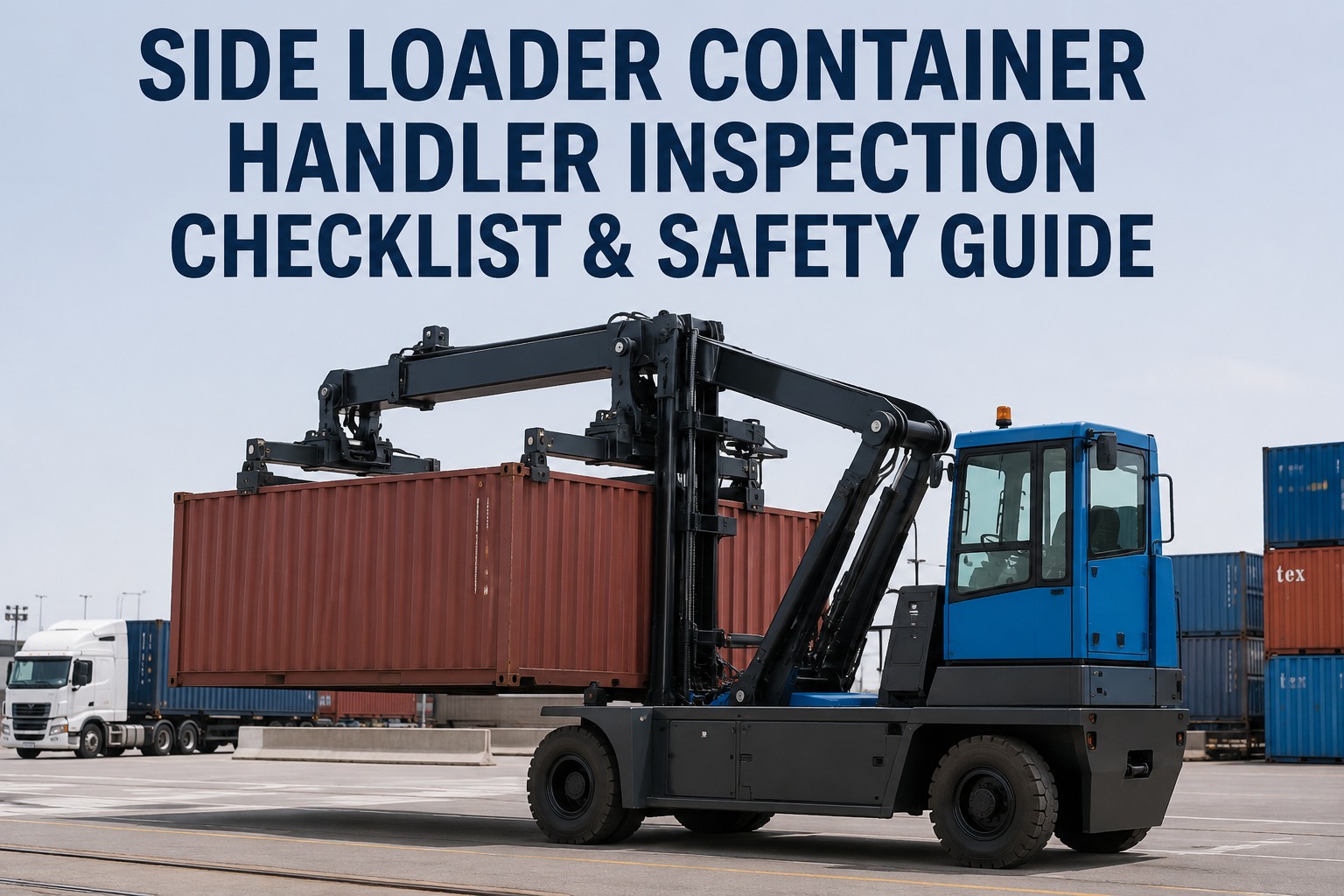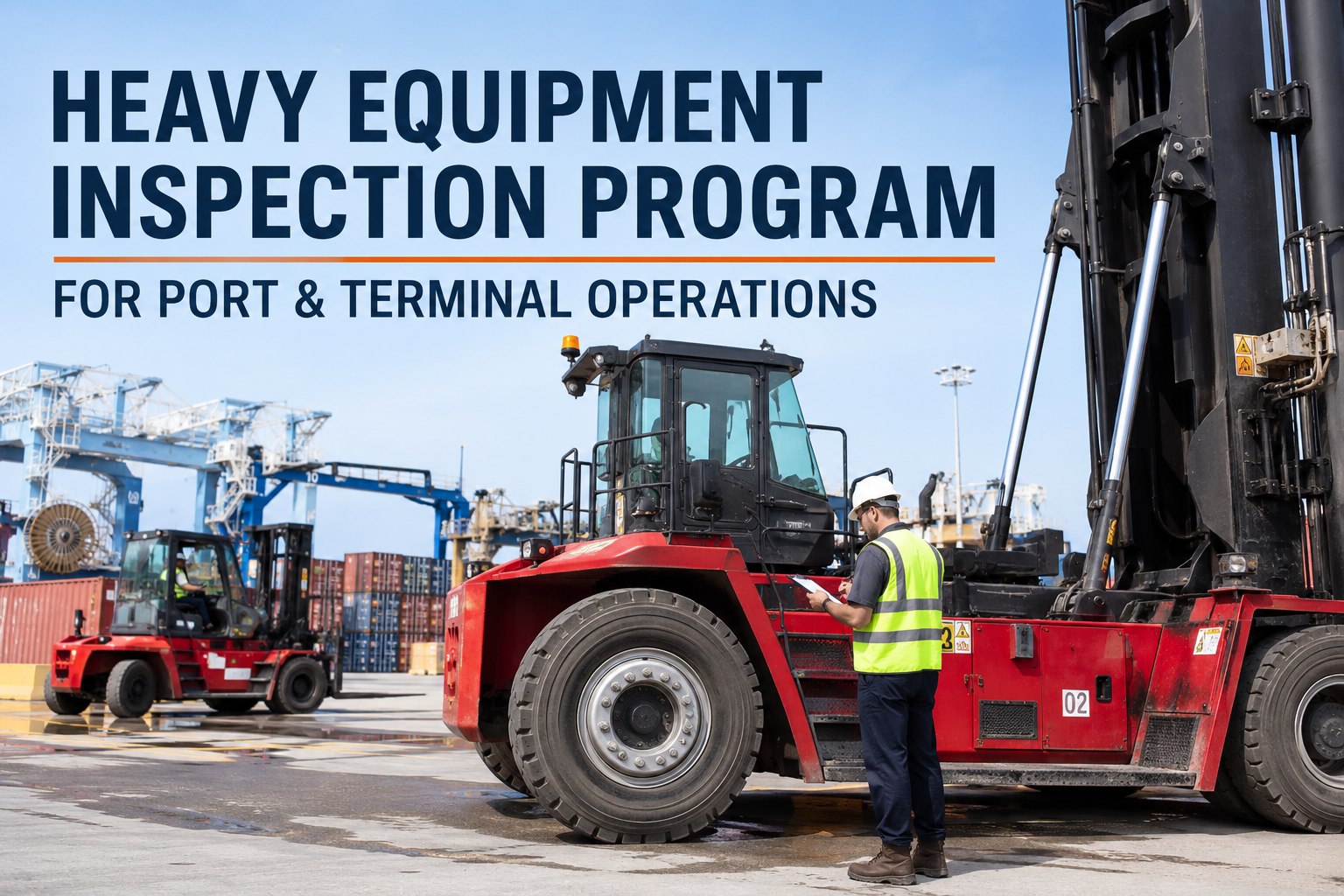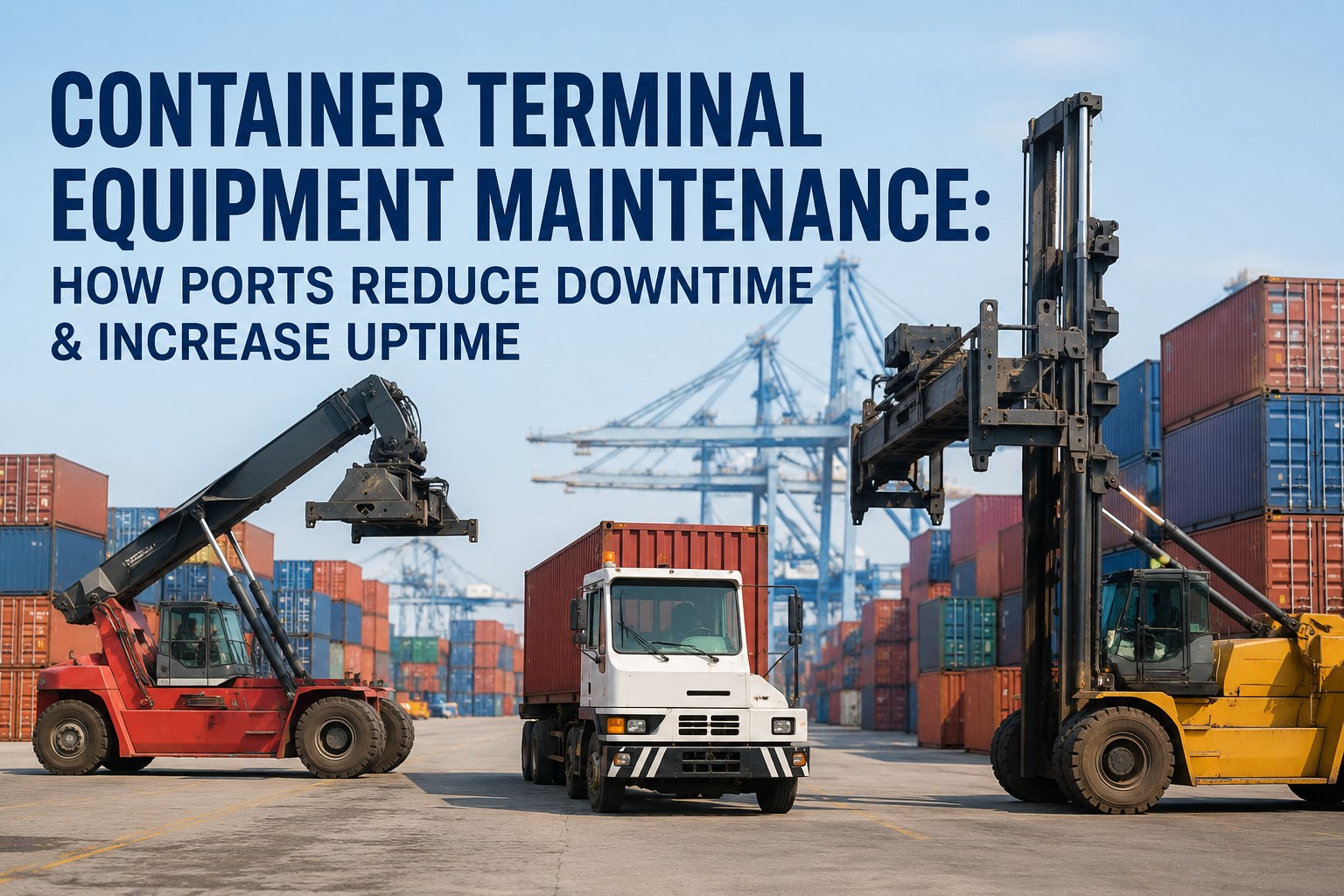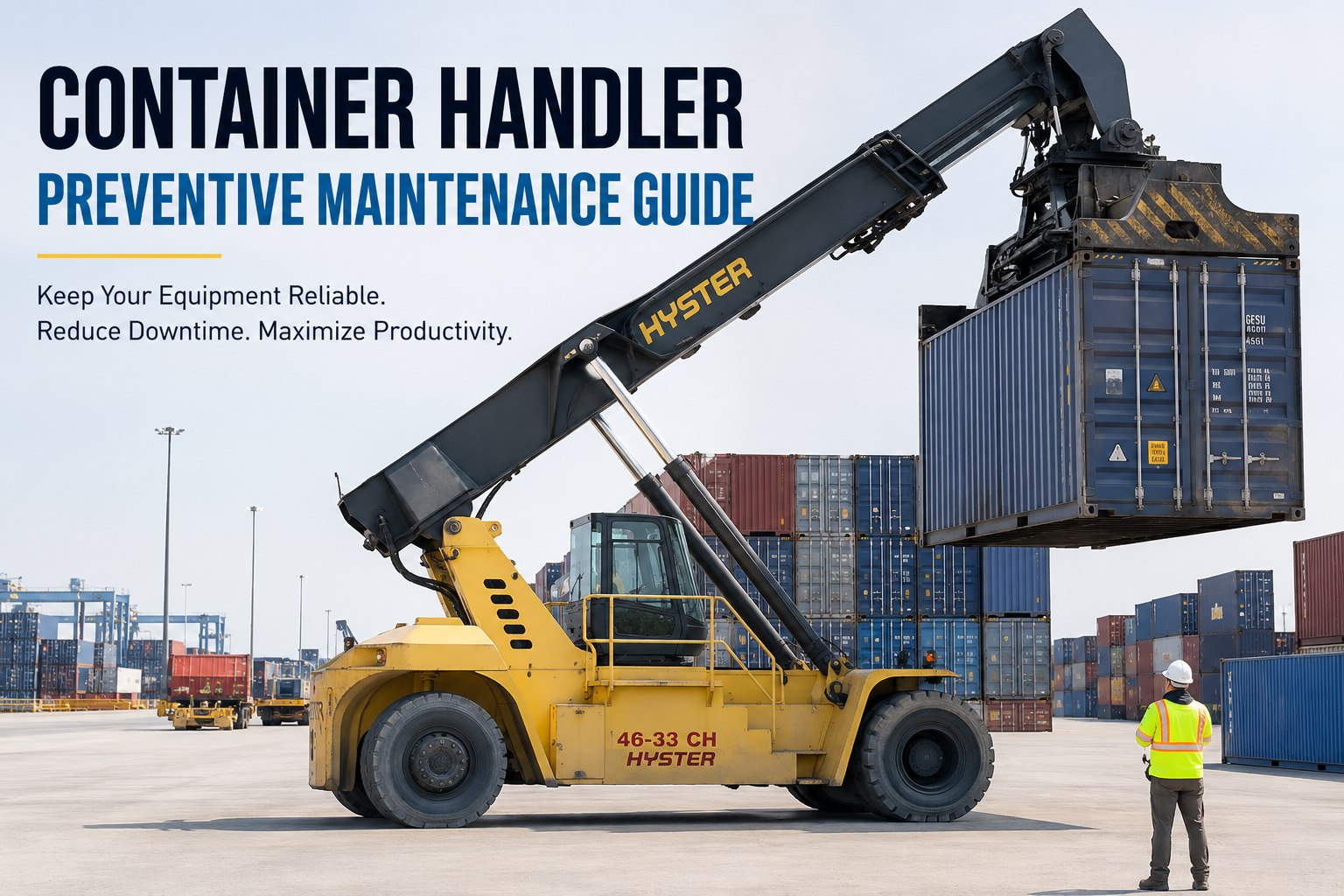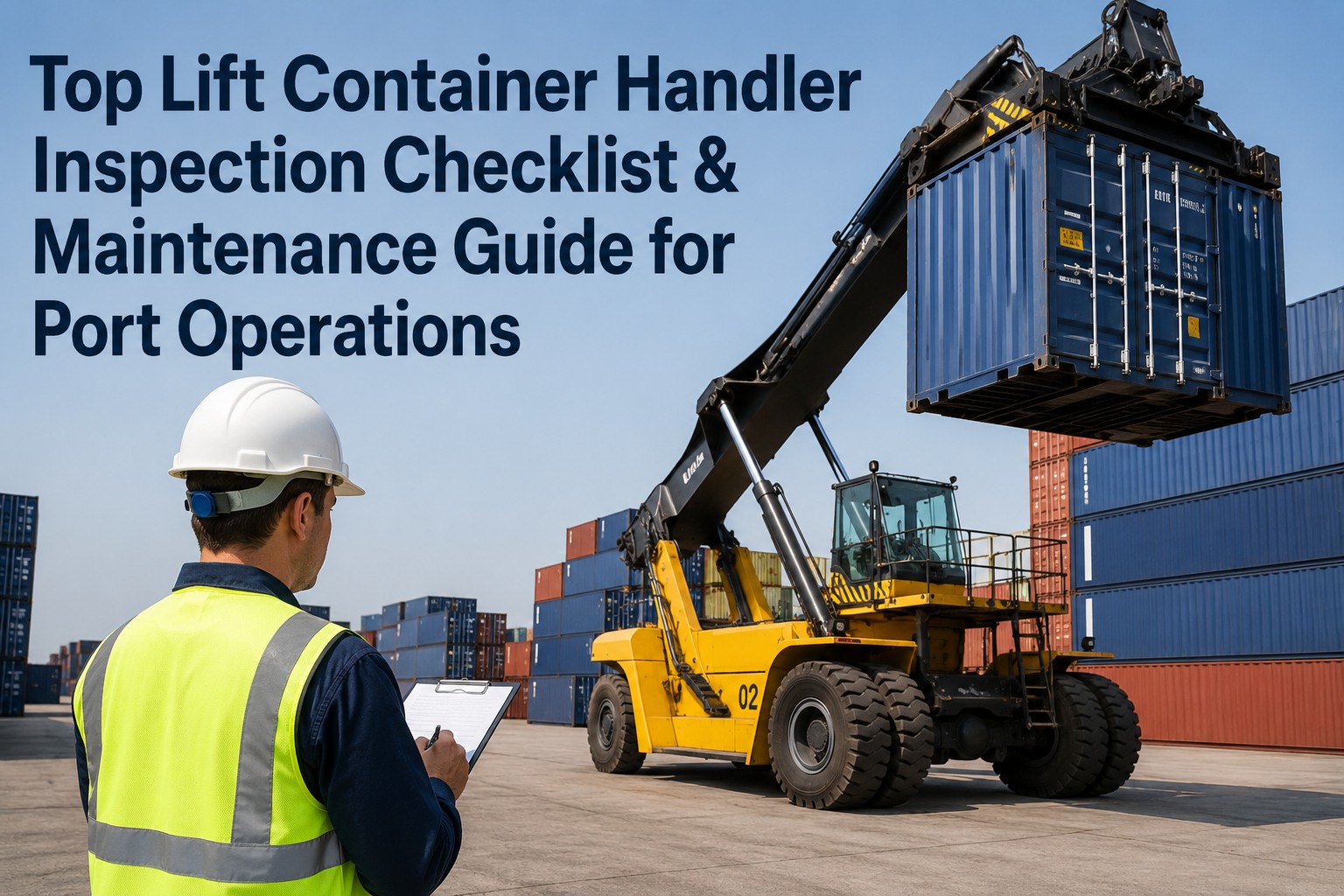
A top lift container handler — the "top loader" or laden lift truck of a marine terminal — grips a fully-loaded container from above with a telescopic top-lift spreader and stacks it several high, at laden capacities reaching 90,000 lbs. Everything about that job concentrates the risk in one place: the spreader and its four twistlocks, suspended over the load on a mast, are the single connection between a 30-ton box and the ground. When they're maintained, the machine is the throughput backbone of the yard; when they're not, you're one unlocked twistlock away from a dropped container. That's why a top loader needs more than a generic forklift check. The mast, the telescopic spreader, the pendular twistlocks, the lift-interrupt interlock, and the load-sensing hydraulics all need their own inspection points — and the machines are built for it, with quick-disconnect service deck plates and sight gauges designed for fast daily checks and less downtime. This guide is your top lift container handler inspection checklist and maintenance reference: the anatomy, the daily pre-shift check, the spreader and twistlock deep-dive, the safety interlocks, and the service cadence that keeps a top loader working the stack. book a 30-minute walkthrough to see it set up for your terminal fleet.
The top-lift spreader is the only thing between a 30-ton container and the ground. Inspect it like it.
HVI runs the top loader inspection from a phone — mast, telescopic spreader, four pendular twistlocks, lift-interrupt interlock, load-sensing hydraulics, and oil-immersed brakes — flags any defect, tags an unsafe unit out of service, and fires PM on real engine hours for every top loader in the yard.
Why the top loader demands its own checklist
A top lift handler isn't a big forklift — it's a precision lifting machine where the failure modes concentrate at the spreader. The stakes shape the inspection.
Suspended, not cradled
The defining difference of a top loader: the container hangs from the spreader above it, held only by four twistlocks engaging the corner castings. A reach stacker or empty handler shares the same principle, but on a laden top loader the load is at maximum weight and stacked at height. There's no cradle, no fork under the box — if a twistlock doesn't fully engage or the lift-interrupt fails, the only thing catching the container is the ground. Every inspection priority flows from that fact.
Top loader anatomy: what you're inspecting
The inspection follows the load path from the mast down to the twistlocks. Knowing each component's job is knowing why it gets checked.
Mast & lift chains
A high-strength variable-lap or F-type mast raises the laden spreader and resists shaking and twisting under load. Inspect chains for stretch and lubrication, rollers and rails for wear, and the mast for alignment and cracks.
Telescopic top-lift spreader
The spreader telescopes from 20' to 40' and provides power slewing, gantry sideshift, and powered or mechanical pile sloping. Check the telescoping structure, sideshift, slew, and the lifting eyes on the corners.
Four pendular twistlocks
The four twistlocks engage the container's corner castings with automatic locking. Inspect each for wear, deformation, and full rotation — the single most critical check on the machine.
Load-sensing hydraulics
A variable, load-sensing lifting system delivers exactly the lift power the load needs. Check the lift, tilt, and spreader cylinders, hoses, and the on-demand hydraulic system for leaks and pressure.
Oil-immersed drive brakes
Oil-cooled, oil-immersed drive-axle brakes are durable but not maintenance-free under heavy laden duty. Verify holding and response, and check the axle and service-brake circuit.
Tires, frame & cab
Large drive tires under maximum load, frame and counterweight integrity, and cab visibility, cameras, and alarms — the foundation that keeps the laden lift stable.
Every component on that load path matters, but the spreader and twistlocks carry the consequence — a powertrain fault is downtime, a twistlock fault is a dropped box. sign up free and inspect the full top-loader load path on every shift, or book a demo to see top-loader templates.
The daily pre-shift checklist
This is the walk-around before the first lift, working the load path from spreader to chassis. Each item is a pass-or-pull decision.
Modern top loaders make this faster than it sounds — quick-disconnect service deck plates and well-positioned sight gauges are designed for exactly these daily checks. The point isn't time; it's consistency, and capturing what's found. HVI builds the full load-path checklist into one top-loader template with photo capture.
The spreader & twistlocks: where it lives or dies
The spreader is the business end of a top loader, and the twistlocks are the business end of the spreader. These get the closest watch on every inspection.
Twistlock wear & rotation
Each of the four pendular twistlocks must engage the corner casting and rotate fully to lock. Inspect for wear, deformation, and cracking — a twistlock that doesn't fully turn is a dropped-container risk on every lift.
Telescoping & movement
The 20'–40' telescoping structure, power slew, gantry sideshift, and pile slope must move smoothly and seat positively. Wear or binding here means inaccurate, unsafe container placement at height.
Indicators & lifting eyes
Twistlock indicator lights confirm lock status to the operator, and the corner lifting eyes for general cargo must be sound. Verify both so the operator can trust what the cab tells them.
Automatic twistlock locking makes the machine fast, but it doesn't remove the inspection — automatic locking only helps if the mechanism underneath is maintained and the indicators are honest. The daily twistlock check is what keeps the automation trustworthy. HVI makes twistlock condition a required, photo-verified item.
Safety interlocks: confirm them every shift
Top loaders carry built-in interlocks that prevent the worst outcomes. Like any safety device, they only protect if they work — so confirming them is a non-negotiable part of the pre-shift check.
Lift-interrupt system
Prevents the machine from lifting a container with partially turned twistlocks — the interlock that stops a half-engaged box from ever leaving the stack. Verify it blocks the lift when locks aren't fully set.
Mast-clamping alarm
Detects obstructions and can lock operation to prevent accidents or damage during lifting. Confirm the alarm and any auto-stop respond as designed.
Tip-over & capacity protection
Intelligent control monitors load and capacity in real time and can shut the unit down if a load is over capacity. Verify the capacity monitoring and stability systems are active.
is the last line of defense. The lift-interrupt interlock exists precisely because a partially turned twistlock looks fine until the container is in the air. It blocks the lift before that happens — but a silently failed interlock is more dangerous than none, because the operator trusts it. Confirming the lift-interrupt, mast-clamping alarm, and capacity protection every shift is what keeps the automation a safety net instead of a liability. HVI makes interlock verification a tracked item on every inspection.
The maintenance cadence
Daily inspection layers over scheduled preventive maintenance fired by operating hours. Each tier protects the machine at a different depth.
Pre-shift inspection
The operator walk-around — spreader, twistlocks, mast, hydraulics, brakes, interlocks, cab — using sight gauges and quick-access service points before the first lift.
Hour-based service
Engine, driveline, and hydraulic service, spreader and twistlock servicing, mast-chain inspection and lube, and brake checks at the OEM interval, fired on real engine hours.
Comprehensive service
Deep structural inspection of mast and spreader, chain wear measurement, twistlock and spreader overhaul, full hydraulic service, and load-system verification.
Extended service intervals and easy access make modern top loaders faster to maintain — but only if PM is actually triggered on time across a busy yard. sign up free and fire top-loader PM automatically off real operating hours.
Paper checklists vs. HVI
Both technically run a pre-shift check. Only one covers the top-lift spreader and twistlocks, verifies the lift-interrupt, tags an unsafe unit out of service, and fires PM on real hours.
Paper / generic
- Generic forklift check skips the spreader system
- Twistlock wear noticed too late
- Lift-interrupt & capacity alarms never verified
- Hour-based service slips as hours go untracked
- Defects on paper, repairs unverified
- No maintenance history at resale or audit
With HVI software
- Top-loader template covers mast, spreader & twistlocks
- Twistlock condition tracked & photo-verified
- Lift-interrupt & safety interlocks checked every shift
- PM fires on real operating hours per machine
- Every defect auto-creates an assigned work order
- Complete maintenance history per unit, export-ready
safely. A top loader's whole value is lifting laden containers fast and stacking them high — and its whole risk lives in the spreader and twistlocks that suspend the load. A checklist built for the top-lift system, run every shift with the interlocks verified and PM fired on real hours, is what keeps every lift safe and every machine working the stack. HVI makes that the routine across your terminal fleet.
Frequently asked questions
What should a top lift container handler inspection cover?
A top loader inspection follows the load path from the mast down to the twistlocks. The four pendular twistlocks are the most critical item — each must engage the container's corner casting and rotate fully to lock, with no wear, deformation, or cracking. The telescopic top-lift spreader is checked for smooth telescoping from 20' to 40', power slew, gantry sideshift, pile slope, and the corner lifting eyes. The high-strength mast and lift chains are inspected for stretch, lubrication, roller wear, and alignment. The load-sensing hydraulic system — lift, tilt, and spreader cylinders and hoses — is checked for leaks and pressure, and the oil-immersed drive brakes for holding and response. Finally, the safety interlocks (lift-interrupt, mast-clamping alarm, tip-over and capacity protection) and the cab visibility, cameras, and alarms are confirmed. A generic forklift checklist misses the spreader and twistlock system entirely, which is exactly where a top loader's catastrophic failures live. HVI's inspection and maintenance software provides a top-loader-specific template covering the full load path. sign up free and run the full top-loader check.
What is the lift-interrupt system and why does it matter?
The lift-interrupt system is a safety interlock that prevents the machine from lifting a container when the twistlocks are only partially turned — it blocks the lift until all four locks are fully engaged. It matters enormously because a partially turned twistlock can look fine from the cab, and without the interlock the operator could raise a 30-ton container that's only partly secured, with nothing but the ground to catch it if it releases. The interlock is the last line of defense against exactly that scenario. The catch is that a silently failed interlock is more dangerous than none at all, because the operator has learned to trust it — so verifying that the lift-interrupt actually blocks a lift when the locks aren't set is a non-negotiable part of the pre-shift check, alongside the mast-clamping alarm and the tip-over and over-capacity protection. HVI's inspection and maintenance software makes interlock verification a tracked, required item on every top-loader inspection. book a demo to see interlock verification.
How is a top loader different from a reach stacker or empty handler?
All three lift containers from above with a spreader and twistlocks, but they differ in duty and configuration. A top loader, or laden top lift truck, has a top-lift spreader mounted on a mast and is built to handle fully-loaded containers at high capacity — up to around 90,000 lbs — stacking the first row or two high. An empty container handler also uses a mast-mounted spreader but is built for lightweight empties stacked many high, often handling two at once, so its wear driver is high-cycle repetition rather than load. A reach stacker uses a telescopic boom rather than a mast, which lets it reach over rows to access containers further back, trading some lifting height and capacity for that reach. The inspection priorities shift accordingly: the top loader's heavy laden duty puts maximum stress on the mast, twistlocks, and load-sensing hydraulics, so those get the closest watch. HVI's inspection and maintenance software provides distinct templates for top loaders, empty handlers, and reach stackers. sign up free and set type-specific templates.
How often should a top lift container handler be serviced?
A top loader runs on a layered schedule. A daily pre-shift inspection by the operator covers the spreader, twistlocks, mast, hydraulics, brakes, and safety interlocks before the first lift — modern machines make this fast with quick-disconnect service deck plates and sight gauges designed for daily checks. Scheduled preventive maintenance, fired on the machine's actual operating hours, handles engine, driveline, and hydraulic service plus spreader, twistlock, and mast-chain servicing at the OEM interval. And an annual comprehensive service does deep structural inspection of the mast and spreader, chain-wear measurement, twistlock and spreader overhaul, and full hydraulic and load-system verification. The critical point is firing the scheduled service off real engine hours rather than calendar guesses, because a busy terminal machine accumulates hours fast and a missed interval on a laden lift machine is a serious risk. HVI's inspection and maintenance software tracks each machine's hours and fires PM automatically. book a demo to see hour-based PM scheduling.
How does HVI help with top loader inspection and maintenance?
HVI is an inspection and maintenance software platform built for port and terminal fleets, including top lift container handlers. Operators run the daily pre-shift inspection from a phone or tablet using a top-loader-specific template that follows the load path — the four pendular twistlocks, the telescopic top-lift spreader and its slew, sideshift and pile slope, the mast and lift chains, the load-sensing hydraulics, the oil-immersed brakes, and the safety interlocks — with mandatory photo capture on defects. The lift-interrupt, mast-clamping, and tip-over interlocks are tracked, required items, and a safety-critical fault can tag the machine out of service until it's verified repaired. Every defect auto-creates an assigned work order routed to the right technician, preventive maintenance fires on each machine's real operating hours so the OEM interval is never missed, and the platform keeps a complete maintenance history per unit for resale and audits. Because the same platform runs your whole terminal fleet, the inspection, defect, and repair all connect. book a demo and we'll map the software onto your terminal fleet on the call.
Inspect the spreader like the only thing holding the container — because it is.
HVI runs the top loader inspection from a phone — mast, telescopic spreader, four pendular twistlocks, lift-interrupt interlock, load-sensing hydraulics, and oil-immersed brakes — verifies the safety interlocks, tags an unsafe unit out of service, auto-creates a work order from every defect, and fires PM on real engine hours. Keep every laden lift safe and every top loader working the stack.
No credit card required · Live in under two weeks · Top-loader inspection + twistlock & interlock checks + hour-based PM + work orders in one platform