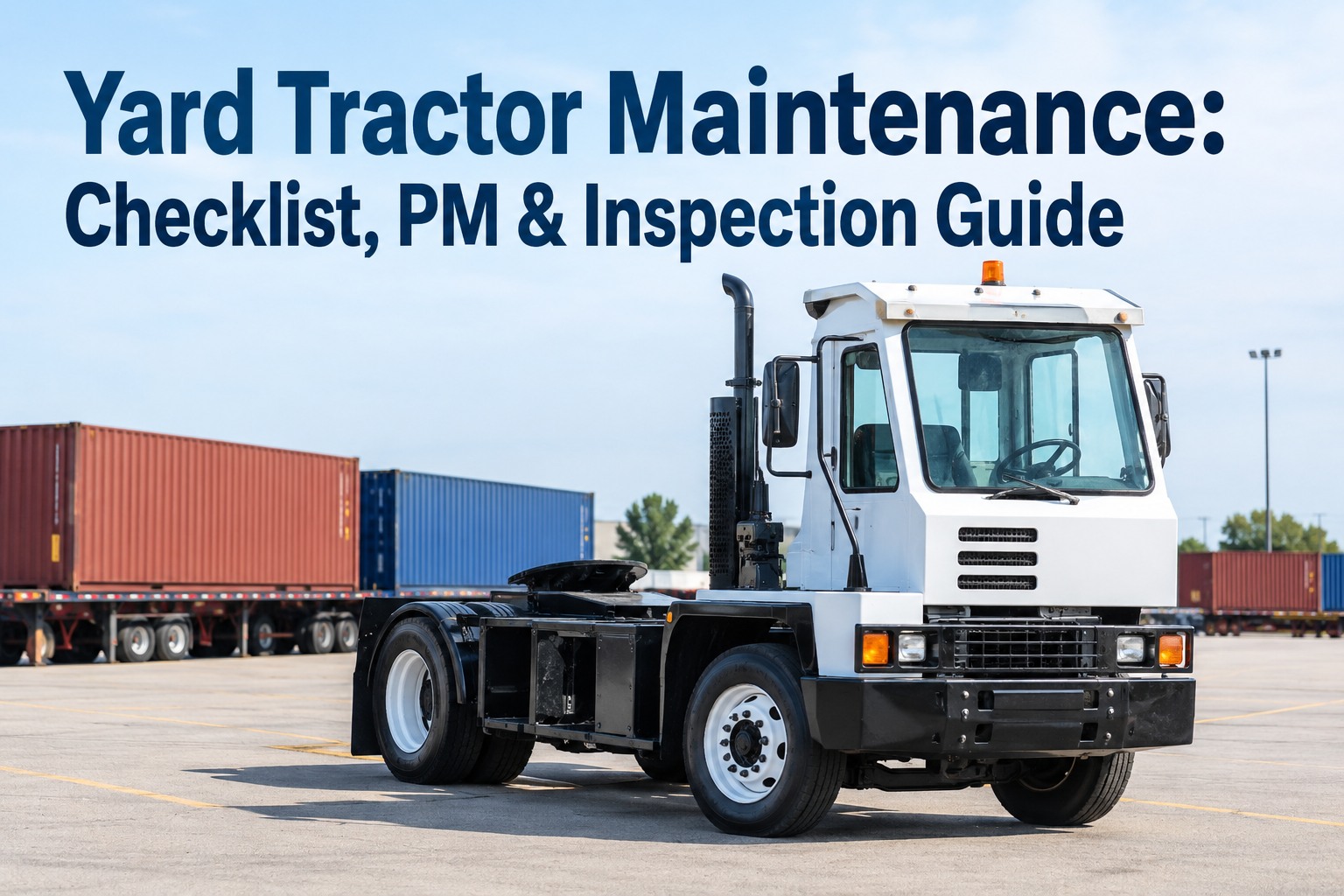
Look at a yard tractor's odometer and you'd think it barely works — a few thousand miles a year, never leaving the yard. Look at what it actually does and you'll find one of the hardest-worked machines in any fleet: hundreds of hitch, lift, and dump cycles a shift, a hydraulic fifth wheel coupling loaded trailers all day, and constant stop-start shunting. That mismatch is the whole problem with yard tractor maintenance — the odometer says lightly used while the engine hours say hammered, so any PM tied to miles will always under-service it. See terminal tractors tracked by engine hours per unit
Why the odometer lies about a yard tractor
Switch how you judge the machine's workload. The odometer barely moves — but the work it did tells a completely different story.
On a mileage or calendar schedule, a spotter looks like it's hardly working. It creeps toward its service interval at a snail's pace — so brakes, hydraulics, and the fifth wheel get looked at far too rarely for what they're actually enduring. This is how yard tractors get chronically under-serviced.
The same shift, measured by what the machine did: hundreds of fifth-wheel couplings and boom lifts of loaded trailers, constant stop-start braking, a full run of engine hours. This is the real workload — and engine hours plus cycle count are the only clocks that reflect it. Service the spotter to this, not the odometer.
A yard tractor looks like a truck but wears like a press. Judge it by miles and you'll always be late; judge it by engine hours and cycles and you'll catch the wear that's actually happening.
A terminal tractor — spotter, shunt truck, yard goat, hostler, whatever your yard calls it — exists to do one thing at brutal volume: move trailers and containers fast, coupling and uncoupling all day without the driver leaving the cab. That relentless cycle count is what defines its maintenance. The engine and driveline are conventional truck systems, but the hydraulic fifth wheel, the boom, and the brakes take punishment no road tractor ever sees. Get the clock right and prioritise those systems, and a spotter is cheap and reliable. Get it wrong and it becomes the single most disruptive machine on the yard when it goes down.
The fifth wheel and boom: the spotter's signature wear system
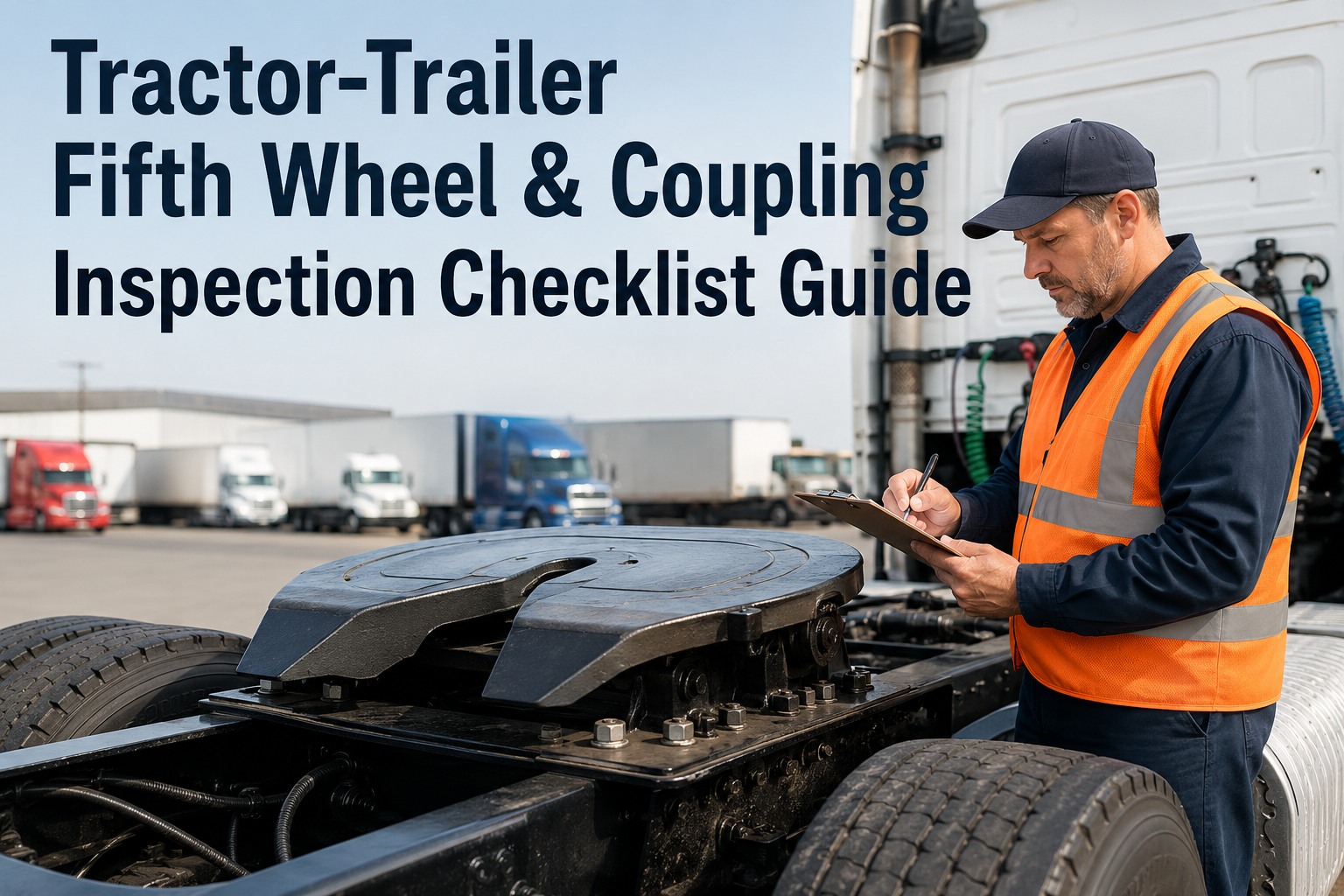
The hydraulic lifting fifth wheel is what makes a yard tractor a yard tractor — it lets the operator raise a trailer off its landing gear and move it without cranking anything by hand. It's also the system that takes the most abuse, because it's cycled under load every single hitch. On a road tractor the fifth wheel is a static plate; on a spotter it's a hydraulic lift doing hundreds of loaded cycles a shift. That's a different maintenance problem entirely.
Fifth-wheel plate & jaws
The locking jaws and plate wear with every coupling. Check jaw wear and the lock mechanism for a positive, tight engagement — a worn or sloppy lock risks a trailer dropping. Grease the plate on schedule; a dry plate accelerates wear and strains the hitch.
Lift boom & hydraulics
The boom that raises the fifth wheel is a hydraulic system worked constantly under load. Watch the lift cylinder, hoses, and fittings for leaks and seepage, the boom rails and pivots for wear and cracks, and fluid level and condition — a weak lift is a spotter that can't do its job.
Brakes
A spotter stops and starts constantly — brake wear is driven by cycles, not distance, so pads and drums wear far faster than the low mileage suggests. Check pad and drum condition against wear limits and the air system for leaks; the yard's tight spaces leave no room for a soft brake.
Air & electrical lines
The trailer air lines and electrical cables get connected and disconnected all day, so the glad-hands, gladhand seals, and connectors wear and get damaged. Inspect for cuts, abrasion, and leaks — a leaking air line or a dead trailer connection strands the machine mid-move.
The pattern is cycle-driven wear: every one of these systems is worn by the number of moves, not the miles travelled, which is exactly why a spotter needs a maintenance clock that counts what it does. Tracking fifth-wheel and boom condition per machine over time turns "it feels loose" into a measured trend you can plan a repair around. Book a demo and log fifth-wheel, boom, and brake condition against each terminal tractor.
The per-shift inspection: the cab, the view, and the safety net
A spotter runs continuously across shifts and drivers, so each operator taking over should run their own quick check — it catches the acute failures a scheduled service can't predict. On a machine that reverses toward trailers all day, the visibility items matter as much as the mechanical ones. Use this per-shift checklist online free, so a defect is visible to the next driver, not lost on a clipboard.
Book a demo to see per-shift checks and camera items captured per operator
The engine-hour service schedule
Underneath the daily check sits the scheduled PM, and this is where the clock choice matters most. A yard tractor runs on engine hours — a common cadence puts a core service around every 500 hours, with the exact tasks and intervals set by the manufacturer. Because a spotter can rack up hours fast running multiple shifts, those hours accumulate quickly even as the odometer barely moves.
Operator inspection
Fluids, tyres, lights, brakes, steering, fifth-wheel lock, boom function, air and electrical lines, cameras and mirrors. Each operator on a shared unit runs their own before taking control.
~500-hour service
Engine oil and filters, lubrication of steering and fifth-wheel components, hydraulic checks, brake and air-system inspection, and a fifth-wheel and boom wear check. The workhorse interval for a spotter.
Deeper service
Transmission and axle fluids, full brake overhaul check, hydraulic oil and filter change, deeper fifth-wheel and boom inspection, and cooling-system service — the larger interval that keeps the driveline healthy under continuous duty.
For duty & shifts
High-volume, multi-shift, or heavy-container operations wear faster — tighten intervals accordingly. A single-shift light yard and a 24/7 intermodal terminal shouldn't run the same schedule.
The scheduling trap is the same one that catches the odometer: a spotter on a 24/7 intermodal yard hits its 500-hour service in a few weeks, while a light single-shift unit takes months — so triggering the service off actual engine hours, not a wall calendar, is the only way both stay on time. Always confirm the specific intervals and tasks for your model against the manufacturer's manual and tighten them for hard duty. Book a demo to see engine-hour PM fire off each spotter's meter
One down stops the yard: why the record matters
A yard tractor moves three trailers in the time a road tractor moves one — which means when a spotter goes down, the whole yard's flow backs up behind it. That leverage is why the maintenance record on a terminal tractor earns its keep so quickly: catching the wear before the failure is worth far more here than on a machine whose downtime affects only itself.
On a mixed yard fleet, the record does three jobs at once: it keeps every spotter on its correct engine-hour schedule regardless of how little it drives, it makes a shared machine's defects visible to the next operator instead of lost between shifts, and it rolls cost and downtime up per unit so the spotter that keeps eating brakes or fifth-wheel parts stops hiding in the fleet average. Managing terminal tractors on the same system as the rest of the yard's assets — each on its right clock — is what turns the most disruptive possible breakdown into a planned repair. Start a free trial and give every spotter a record that keeps the yard moving.
From a yard operations manager who runs spotters hard
We nearly retired a spotter early because the paperwork made it look barely used — couple thousand miles on the clock. Then it started dropping trailers because the fifth-wheel lock was worn out, and we realised the thing had done more actual work than half our road fleet. We'd been servicing it on a mileage schedule that was completely wrong for what it does.
Switched every terminal tractor to engine-hour PM and started logging fifth-wheel and brake condition every service. Now the hardest-working unit gets serviced like the hardest-working unit. Shared-shift defects show up for the next driver instead of dying on a clipboard, and when one spotter kept chewing brakes I could see it in the cost per unit and fix the root cause. On a yard, a down spotter stops everything — so seeing the wear coming is the whole game.
Yard tractor maintenance FAQs
Should yard tractor maintenance be scheduled by miles or engine hours?
Engine hours, not miles or the calendar. A spotter covers very little distance — a few miles a shift — but runs its engine and coupling all day, so mileage badly understates the wear. Scheduling PM off engine hours (with cycle counts for the fifth wheel and brakes) catches what's actually happening instead of servicing a machine that looks lightly used on paper.
What maintenance does a yard tractor fifth wheel need?
The hydraulic lifting fifth wheel is the spotter's defining, highest-wear system, because unlike a road tractor's static one it's cycled under load hundreds of times a shift. Watch the lift cylinder and hoses for leaks, the locking jaws for wear and full engagement, and the pivot and mounting for play. It's a cycle-count service, not a mileage one.
Why do yard tractor brakes wear so fast?
Because braking on a spotter is driven by the number of stops, not the distance. In near-constant stop-start shunting, a yard tractor racks up more brake cycles in a shift than a road truck does in a week — so pads, drums, and air components wear on a schedule tied to hours and cycles, not odometer miles.
What should be on a daily yard tractor inspection?
Because a spotter runs continuously across shifts and drivers, each operator should complete a pre-shift check before taking control: fifth wheel function and lock, hydraulic leaks, brakes and lights, tires, and the cab visibility aids (mirrors, camera, beacon) that make tight-yard work safe. Log any defect with a photo so it becomes a work order, not a verbal note.
How do you manage terminal tractors alongside a mixed fleet?
Put terminal tractors on the same system as the rest of the fleet, but on a different clock. Where road trucks schedule by miles, spotters schedule by engine hours and cycle counts — all in one place so nothing gets managed on a sticky note. That way the yard's hardest-working, easiest-to-overlook machine gets serviced for what it actually does.
Keep the hardest-working machine on the yard from taking the yard down
HVI triggers each terminal tractor's PM off its engine hours, tracks fifth-wheel, boom, and brake wear against limits with photo evidence, carries per-shift defects across driver changes, works offline on the yard, and rolls cost and downtime into a per-unit picture across your whole mixed fleet — so the spotter that looks lightly used but works like a press gets serviced for what it really does. See it on your own yard tractors.
No credit card · Engine-hour PM from day one · Works offline on the yard