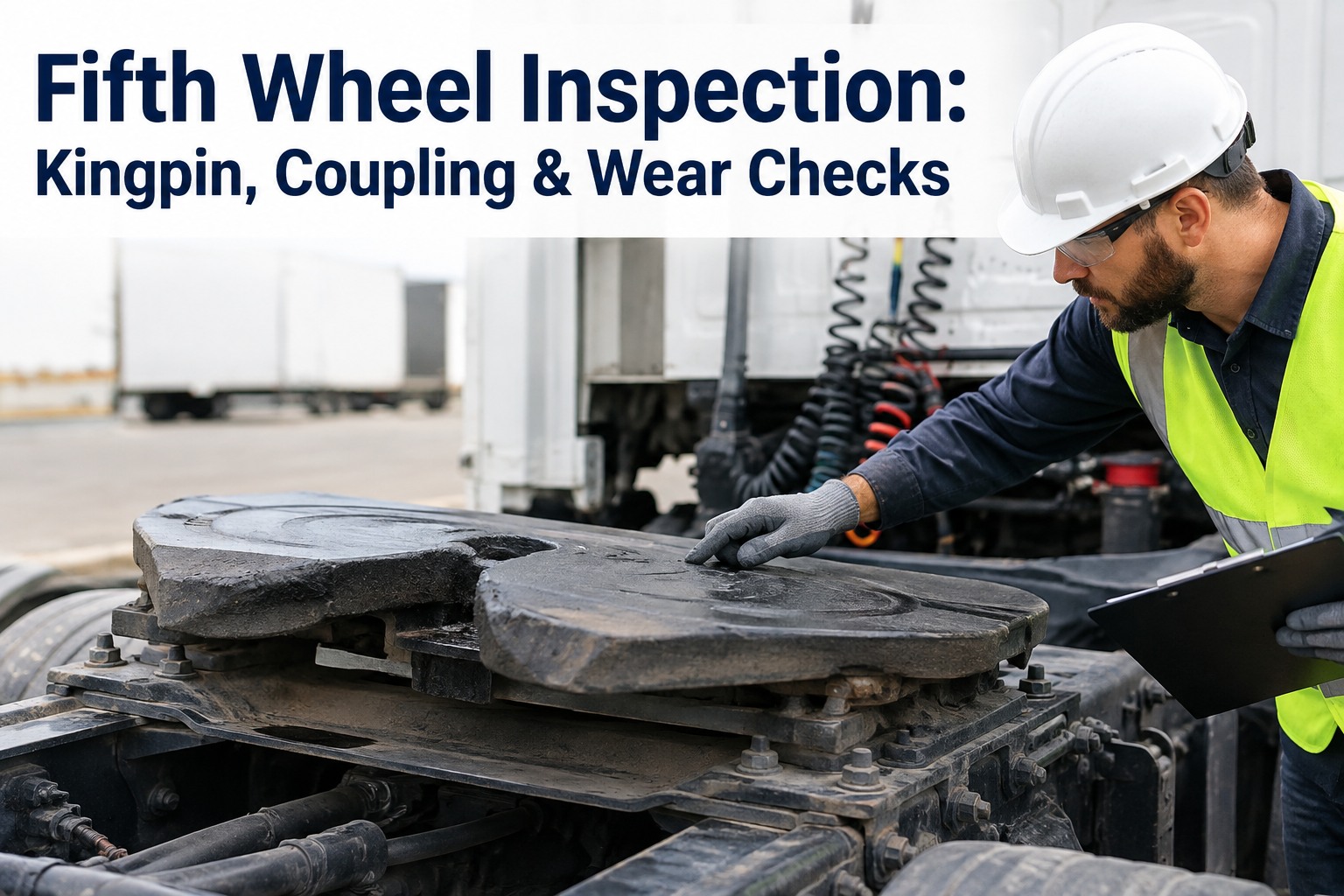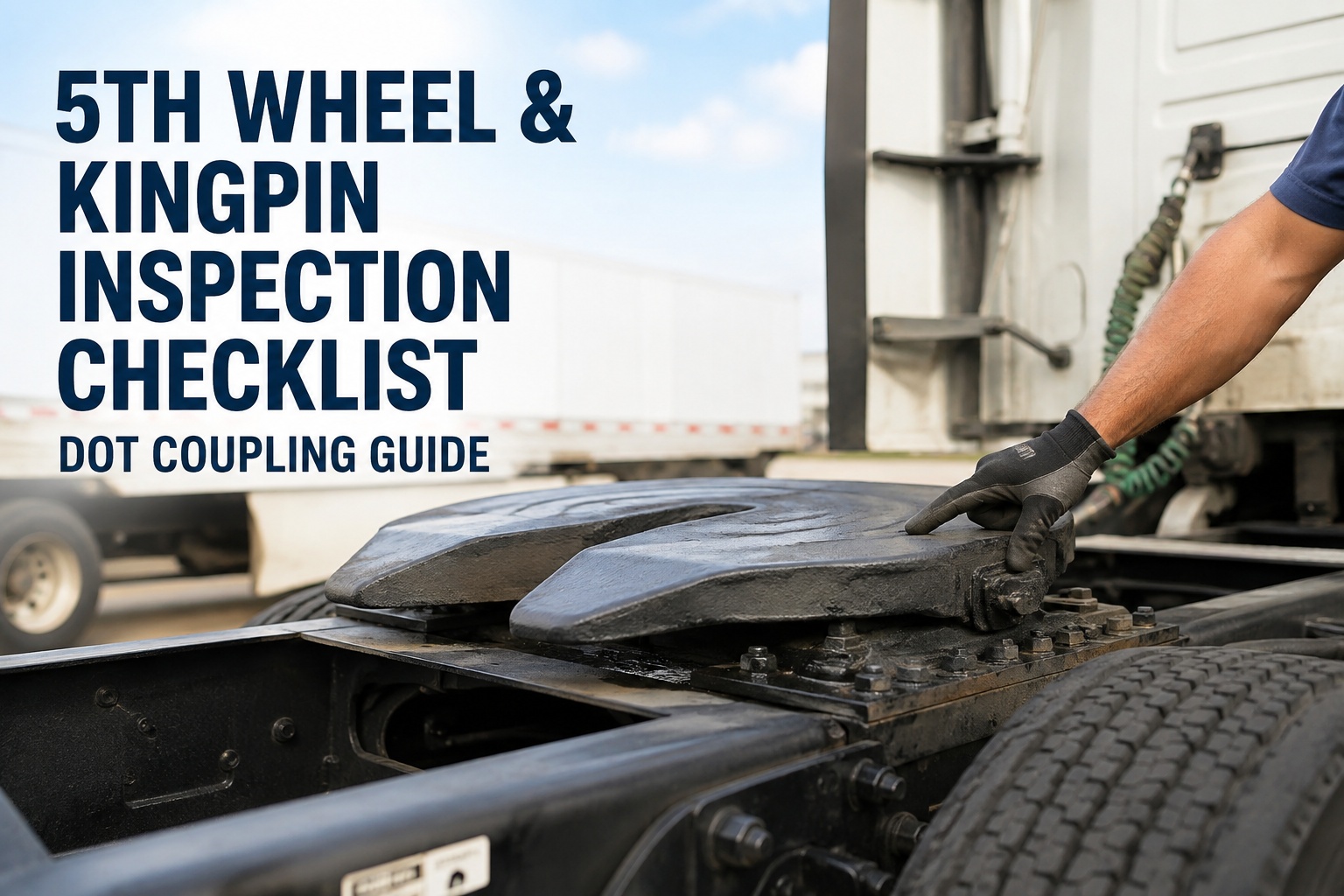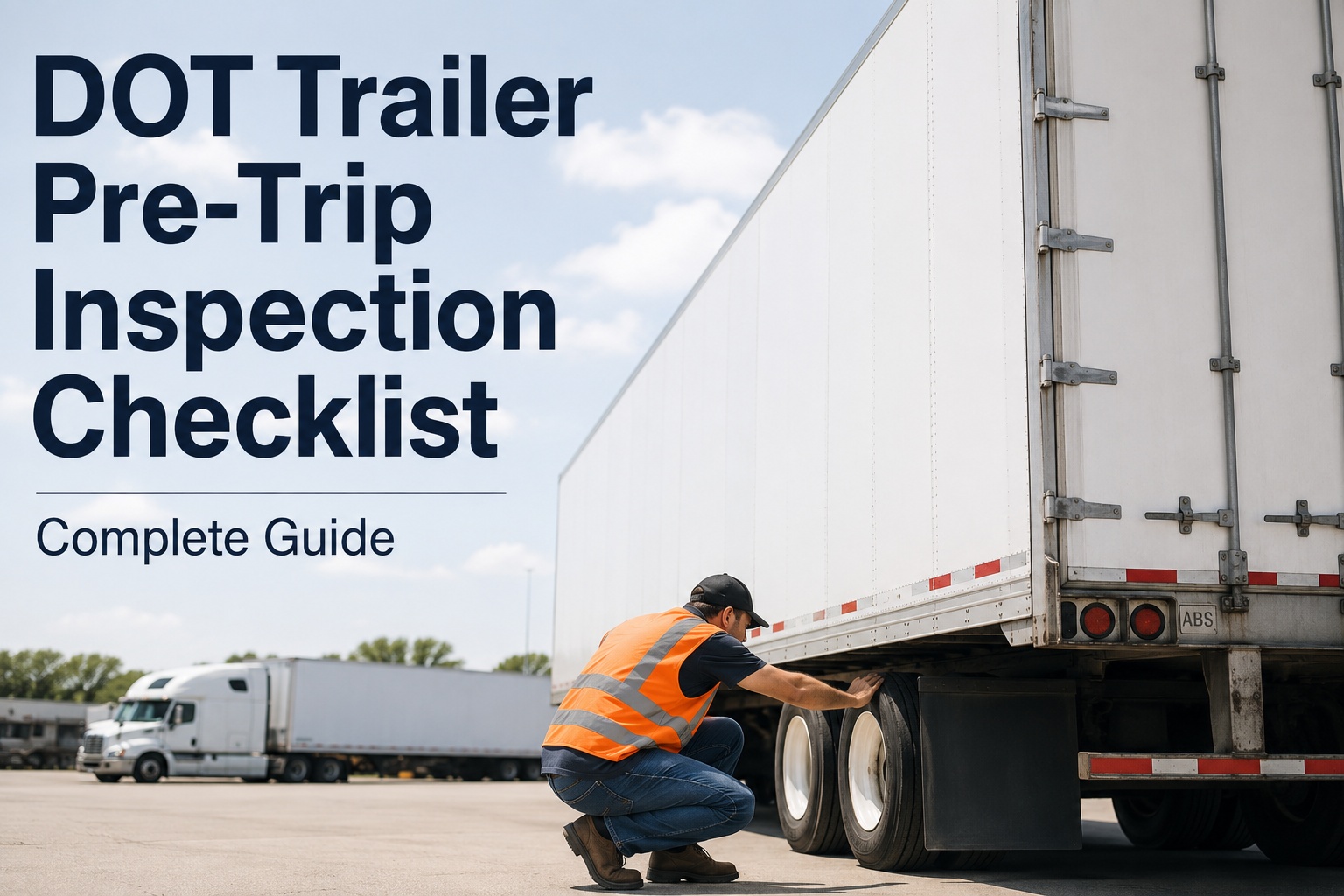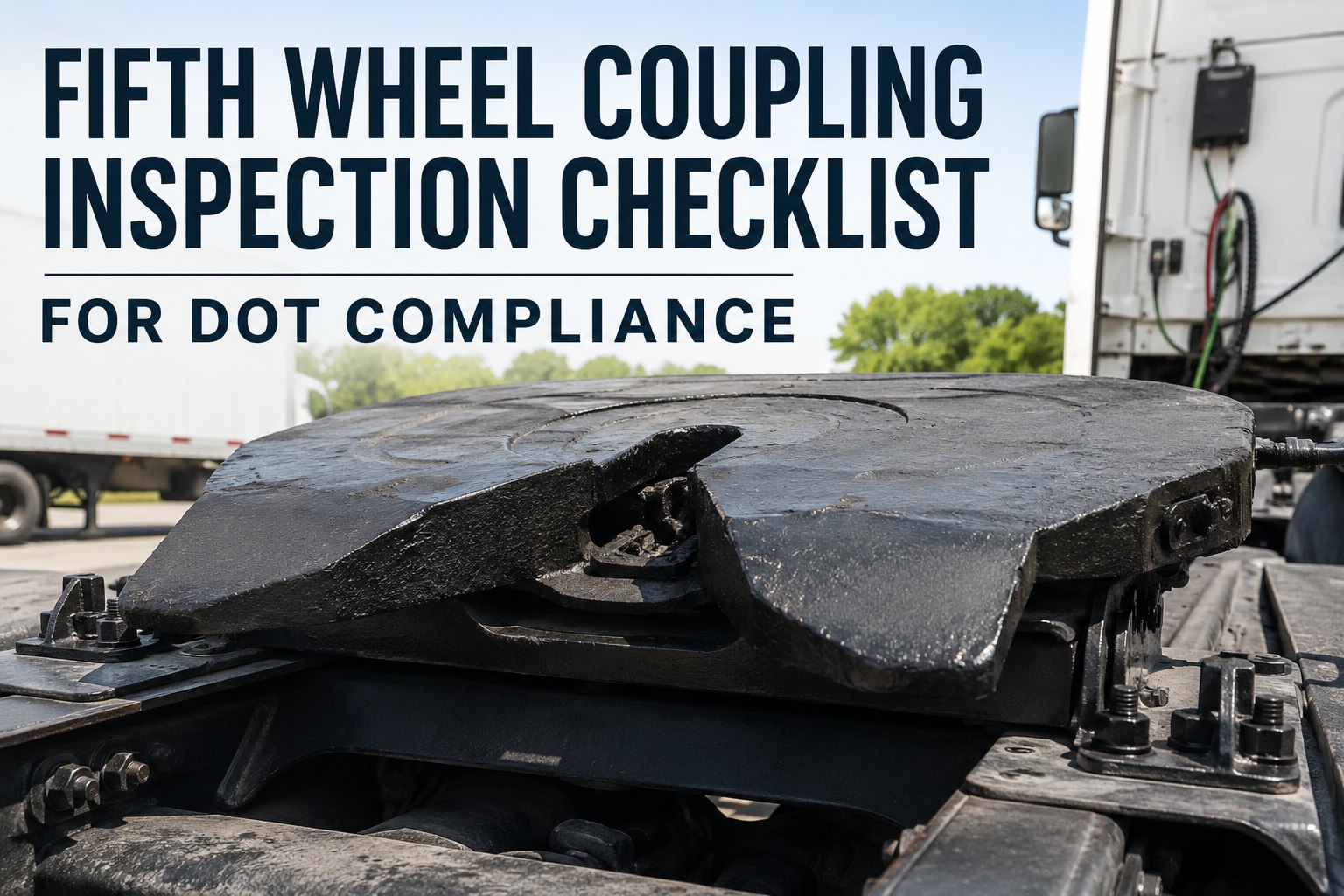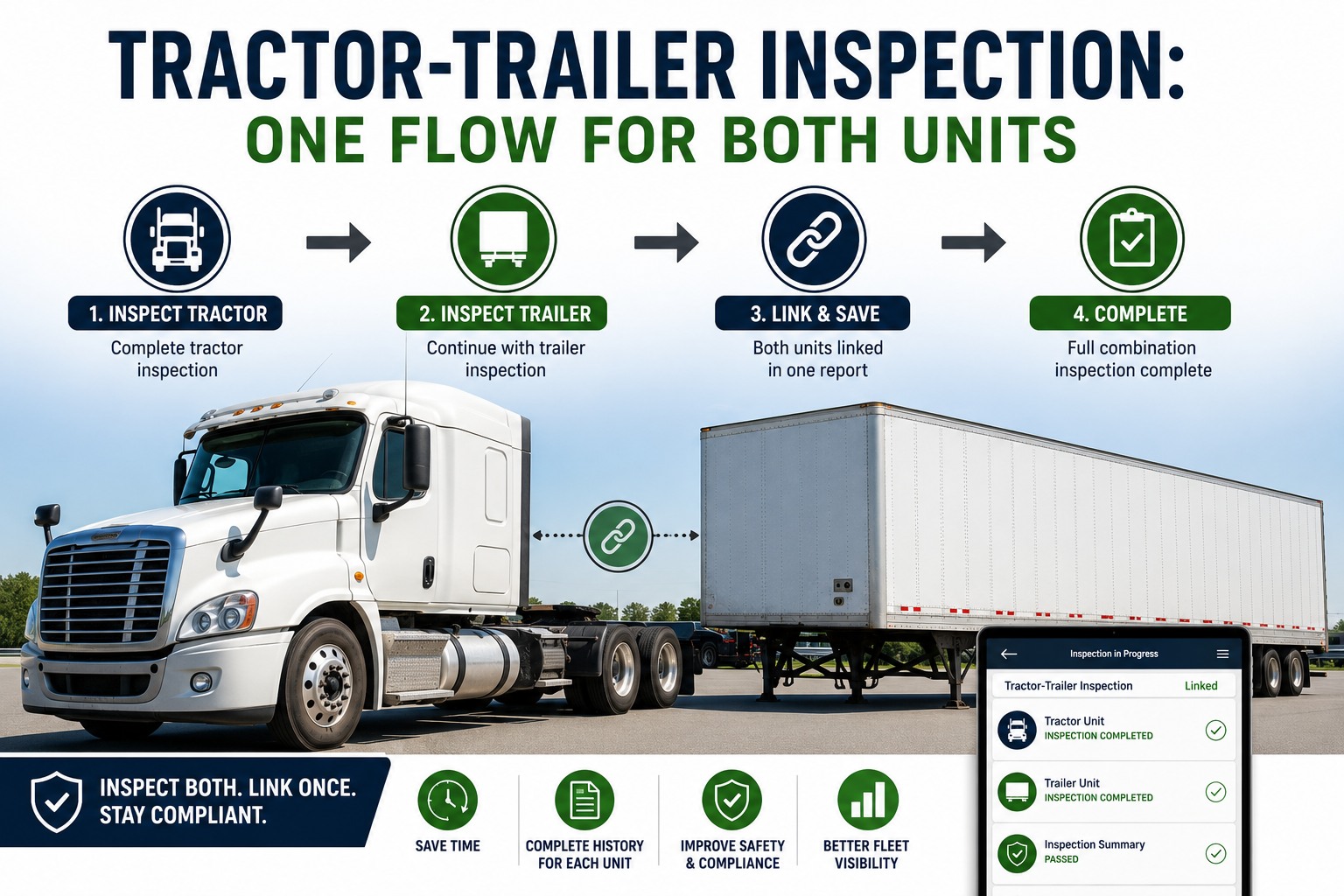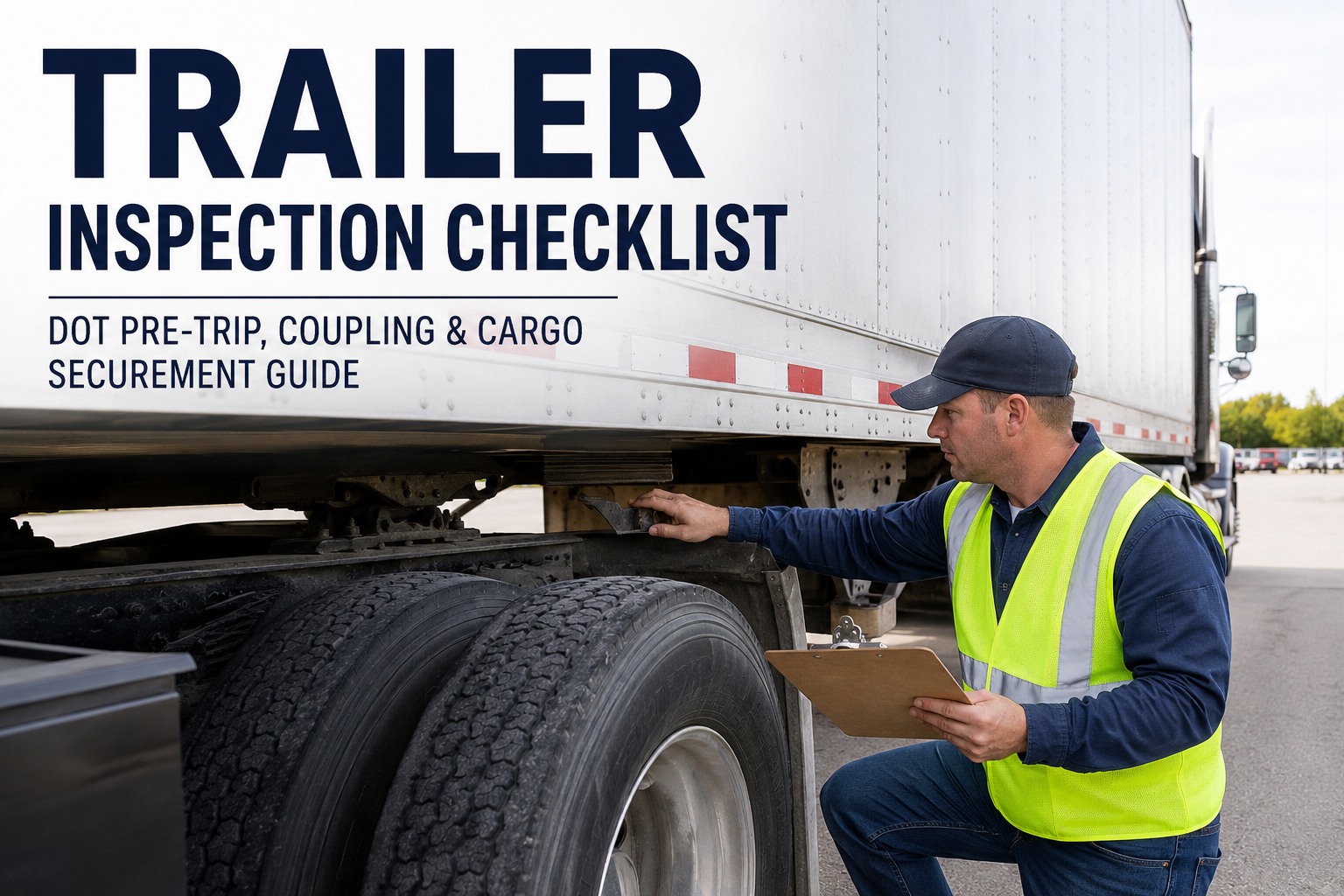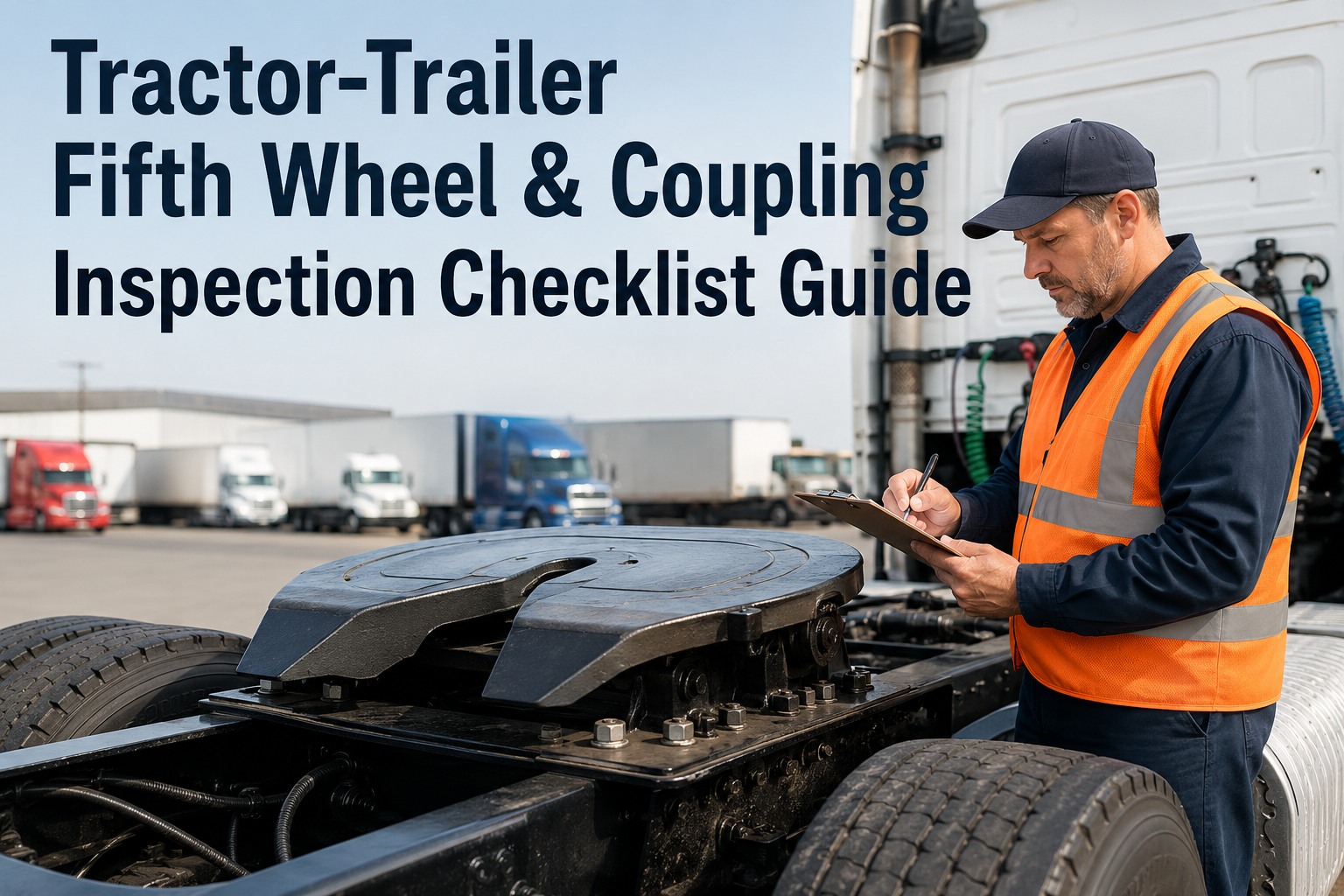
The fifth wheel is the single connection holding a loaded trailer to the tractor pulling it — and when it fails, the trailer comes loose at highway speed. That's why coupling-device failures are a top-tier safety violation: a fifth wheel that isn't securely locked or a kingpin that isn't properly engaged is an immediate out-of-service order under CVSA criteria, with a significant CSA score impact. FMCSA lists coupling devices as one of the eleven required pre-trip inspection items for exactly this reason. The reassuring part is that a thorough coupling check is fast and entirely visual-plus-functional: look into the gap to confirm the jaws are closed around the kingpin, verify there's no daylight between the apron and the plate, confirm the release handle is locked, and pull a tug test. Miss it and you risk the worst outcome on the road; do it and you've closed the most dangerous failure mode in trucking. This guide is your fifth wheel and coupling inspection checklist — the components, the visual checks, the functional tug test, the out-of-service criteria, and how to document every coupling so it holds up at a roadside inspection. book a 30-minute walkthrough to see it set up for your fleet.
One connection holds the trailer on. The coupling check is the only thing that confirms it.
HVI runs the fifth wheel and coupling inspection from a phone — kingpin, locking jaws, release handle, mounting bolts, tug test, glad hands — flags any defect, tags an unsafe coupling out of service, and keeps the DOT-ready record for every tractor and trailer.
Why the coupling check is non-negotiable
Of all the items on a pre-trip, the coupling carries the most catastrophic failure mode and the harshest enforcement. The consequences make the two-minute check mandatory.
The "kill zone" rule
You cannot verify a coupling from the cab. The locking jaws are under the trailer, and the only way to confirm they're fully closed around the shank of the kingpin is to look — get under with a flashlight and visually confirm. "If I don't see anything wrong, it must be fine" is exactly the assumption that puts a trailer on the road with an unlocked jaw. Visual checks must be backed by the functional tug test.
The coupling components
A complete coupling inspection walks the same parts every time, from the kingpin up through the mounting. Knowing what each does is knowing why each gets checked.
Kingpin
The trailer's locking pin that seats into the fifth wheel. Check it's not bent, cracked, deformed, or worn beyond limits — and that it's fully seated, with no daylight between the trailer apron and the fifth wheel plate.
Locking jaws
The mechanism that grips the kingpin. Look into the fifth wheel gap and confirm the jaws are fully closed around the shank of the kingpin — the single most critical visual check on the coupling.
Release handle / arm
The lever that opens the jaws to uncouple. Confirm it's fully in the engaged, locked position with the safety latch in place — never partway out.
Skid plate & platform
The greased plate the trailer rides on and the platform supporting it. Check for cracks, breaks, or questionable welds, and that the skid plate is properly lubricated to control friction and load transfer.
Mounting bolts & rails
Inspect mounting clamps, bolts, nuts, brackets, and rails for looseness, corrosion, or missing hardware — caught early, it's a torque; ignored, it's a rail or bracket replacement.
Sliding fifth wheel pins
On adjustable units, confirm the slide locking pins are fully engaged in the selected position, and if air-powered, check for leaks in the slide mechanism.
Don't forget the connections that ride alongside the coupling: glad hands sealed with no leaks, air lines not kinked or rubbing, electrical cord connected, and safety chains in place. sign up free and run a complete coupling check on every trip, or book a demo to see the coupling inspection template.
The visual inspection checklist
This is the look-and-confirm sequence, in order. Every item is a pass-or-pull decision — a failure here means the truck doesn't roll until it's fixed.
A visual pass alone isn't enough — hardened grease, dirt, or a rough spot can let a kingpin look seated when it isn't. That's why the inspection always ends with a functional test, not just a look. HVI builds the full visual sequence and the tug test into one coupling checklist.
The functional test: tug, then confirm
The visual check tells you it looks coupled. The tug test proves it. This is the step that catches the coupling that passed inspection by eye but isn't actually locked.
Set the trailer brakes
With the trailer air brakes locked, the trailer can't move — so any pull tests the coupling itself, not the brakes.
Pull gently forward
Ease the tractor forward against the locked trailer brakes. A properly coupled kingpin holds firm with no separation.
Confirm it held
The trailer should not move away from the tractor. If it shifts or separates, the coupling failed — stop and re-couple.
Re-verify the lock
After the tug, confirm the release handle is still locked and the jaws remain closed before pulling out onto the road.
The tug test is the difference between assuming the coupling is good and knowing it is. A coupling that passes the eye but fails the tug is exactly the one that would have separated on the highway. HVI's checklist makes the tug test a required, logged step on every coupling.
Out-of-service criteria: know the line
These are the coupling conditions that trigger an immediate out-of-service order at a roadside inspection. They're also the exact things your own check should catch first.
Jaws not locked
A fifth wheel whose jaws aren't securely closed and locked around the kingpin is an automatic out-of-service condition — the highest-priority coupling failure.
Kingpin not engaged
A kingpin not properly engaged in the fifth wheel, or visible separation between apron and plate, is an immediate OOS order — no daylight allowed.
Missing safety devices
Missing or disconnected safety chains, a glad-hand failure disabling trailer brakes, or unsecured landing gear each trigger an out-of-service order.
Every OOS criterion is something a documented pre-trip catches in the yard — turning a roadside violation and CSA hit into a quick re-couple. sign up free and catch coupling defects before an inspector does.
Paper checklists vs. HVI
Both technically record a coupling check. Only one makes the tug test mandatory, tags an unsafe coupling out of service, and produces the documented record DOT and CSA demand.
Paper / reactive
- Coupling "checked" from the cab, jaws never seen
- Tug test skipped under time pressure
- A loose mounting bolt noted but never tightened
- No proof the coupling was inspected for DOT
- An unlocked jaw rolls out as a roadside OOS
- Coupling records scattered or missing at audit
With HVI software
- Jaws-closed and no-daylight checks required, photo-verified
- Tug test a mandatory, logged step
- Every coupling defect becomes a tracked work order
- Timestamped record proves every coupling inspection
- An unsafe coupling tagged out of service first
- DOT-ready coupling history exports in minutes
violation, prevented. A coupling failure is both the most catastrophic mechanical event in trucking and an automatic out-of-service order with a heavy CSA hit. The fix is the same two-minute discipline either way: look into the gap, confirm no daylight, lock the handle, pull the tug test — and document it. HVI makes that routine, photo-verified, and impossible to skip across every tractor and trailer.
Frequently asked questions
What does a fifth wheel coupling inspection check?
A complete coupling inspection walks the same components every time. The kingpin must be sound — not bent, cracked, or worn beyond limits — and fully seated, with no daylight between the trailer apron and the fifth wheel plate. The locking jaws must be visually confirmed fully closed around the shank of the kingpin, which means looking into the fifth wheel gap, ideally with a flashlight from under the trailer. The release handle must be in the fully engaged, locked position with its safety latch in place. The skid plate and platform must be free of cracks or bad welds and properly greased, and the mounting bolts, clamps, and rails must be tight with no missing hardware. On a sliding fifth wheel, the slide locking pins must be fully engaged. Finally, the glad hands, air and electrical lines, and safety chains are checked, and the whole thing is confirmed with a functional tug test. HVI's inspection and maintenance software builds all of this into one documented coupling checklist. sign up free and run a complete coupling check.
How do you perform a fifth wheel tug test?
The tug test is the functional verification that proves the coupling is actually locked, not just that it looks locked. With the trailer coupled, set the trailer air brakes so the trailer can't move — that way any pull tests the coupling itself rather than the brakes. Then ease the tractor gently forward against the locked trailer brakes. A properly coupled kingpin and locking jaws will hold firm with no separation; the trailer should not move away from the tractor. If the trailer shifts or pulls free, the coupling failed and you stop and re-couple immediately. After a successful tug, re-verify that the release handle is still in the locked position and the jaws remain closed before pulling onto the road. The tug test matters because hardened grease, dirt, or a rough spot can let a kingpin look seated when it isn't — the pull is what catches the coupling that would have separated at speed. HVI's inspection and maintenance software makes the tug test a required, logged step. book a demo to see coupling verification.
What coupling problems put a truck out of service?
Coupling-device failures are a top-tier safety violation, and several conditions trigger an immediate out-of-service order under CVSA criteria. The most critical is a fifth wheel whose jaws are not securely locked around the kingpin. A kingpin not properly engaged in the fifth wheel — or visible separation, any daylight, between the trailer apron and the fifth wheel plate — is also an automatic OOS. So are missing or disconnected safety devices: absent safety chains, a glad-hand failure that disables the trailer brakes, or landing gear that isn't secured. Because coupling violations carry both the OOS order and a significant CSA score impact, they're among the most consequential findings at a roadside inspection. The good news is that every one of these is something your own documented pre-trip catches in the yard, turning a roadside violation into a quick re-couple. HVI's inspection and maintenance software flags these conditions and can tag the coupling out of service until fixed. sign up free and catch OOS conditions first.
Why can't you inspect the coupling from the cab?
Because the most critical part of the coupling — the locking jaws gripping the kingpin — is underneath the trailer and simply cannot be seen from the driver's seat. The only way to confirm the jaws are fully closed around the shank of the kingpin is to physically look into the fifth wheel gap, ideally getting under the trailer with a flashlight. This is sometimes called the "kill zone" check precisely because skipping it is what puts a trailer on the road with an unlocked or partially engaged jaw. The dangerous assumption is "if I don't see anything wrong from up here, it must be fine" — but a coupling can look connected from the cab while the jaws never closed. That's also why a visual check alone isn't sufficient and must be backed by the functional tug test. A documented inspection that requires the under-trailer look and the tug test removes the temptation to shortcut it. HVI's inspection and maintenance software requires both steps and captures photo verification. book a demo to see the required-steps checklist.
How does HVI help with coupling and pre-trip inspections?
HVI is an inspection and maintenance software platform that turns the life-critical coupling check into a documented, repeatable routine. Drivers run the fifth wheel and coupling inspection from a phone or tablet using a template that requires the under-trailer jaws-closed look, the no-daylight gap check, the locked release handle, the kingpin and skid-plate condition, the mounting bolts, and the sliding-pin engagement — plus the glad hands, electrical, and safety chains — with the functional tug test as a mandatory, logged step and photo capture on any defect. An unsafe coupling can be tagged out of service until it's fixed, and every defect auto-creates a tracked work order so a loose bolt actually gets torqued rather than just noted. The platform keeps a timestamped record of every coupling inspection per tractor and trailer, giving you DOT-ready documentation that defends against the out-of-service orders and CSA hits that coupling violations carry. It works offline and syncs when back in range. book a demo and we'll map the software onto your fleet on the call.
Confirm the one connection that holds the trailer on — every trip, documented.
HVI runs the fifth wheel and coupling inspection from a phone — jaws closed, no daylight, release handle locked, kingpin sound, mounting bolts tight, tug test — flags any defect, tags an unsafe coupling out of service, and keeps the DOT-ready record for every tractor and trailer. Turn a top-tier out-of-service risk into a two-minute, impossible-to-skip routine.
No credit card required · Live in under two weeks · Coupling checklist + mandatory tug test + out-of-service tag-out + DOT records in one platform