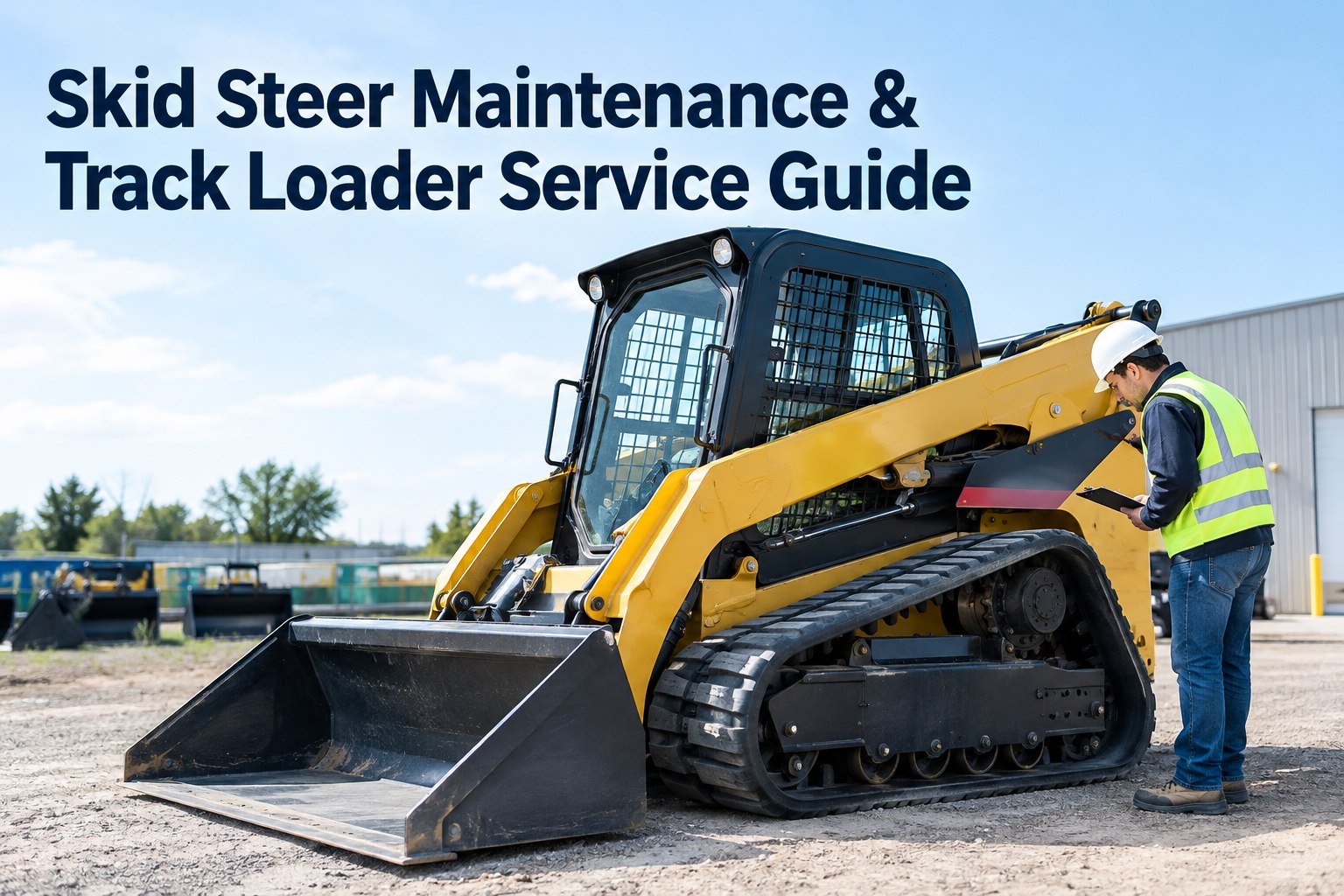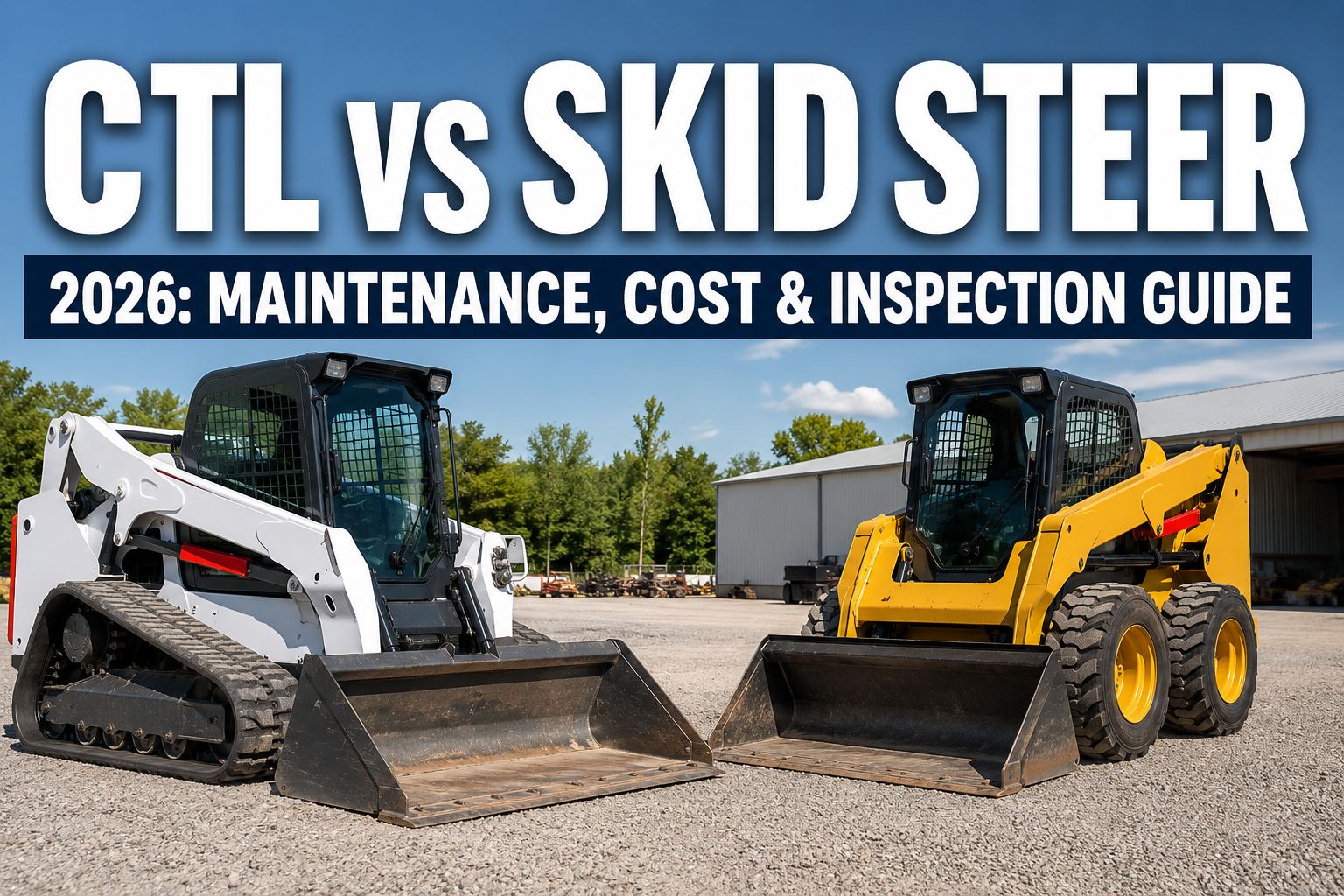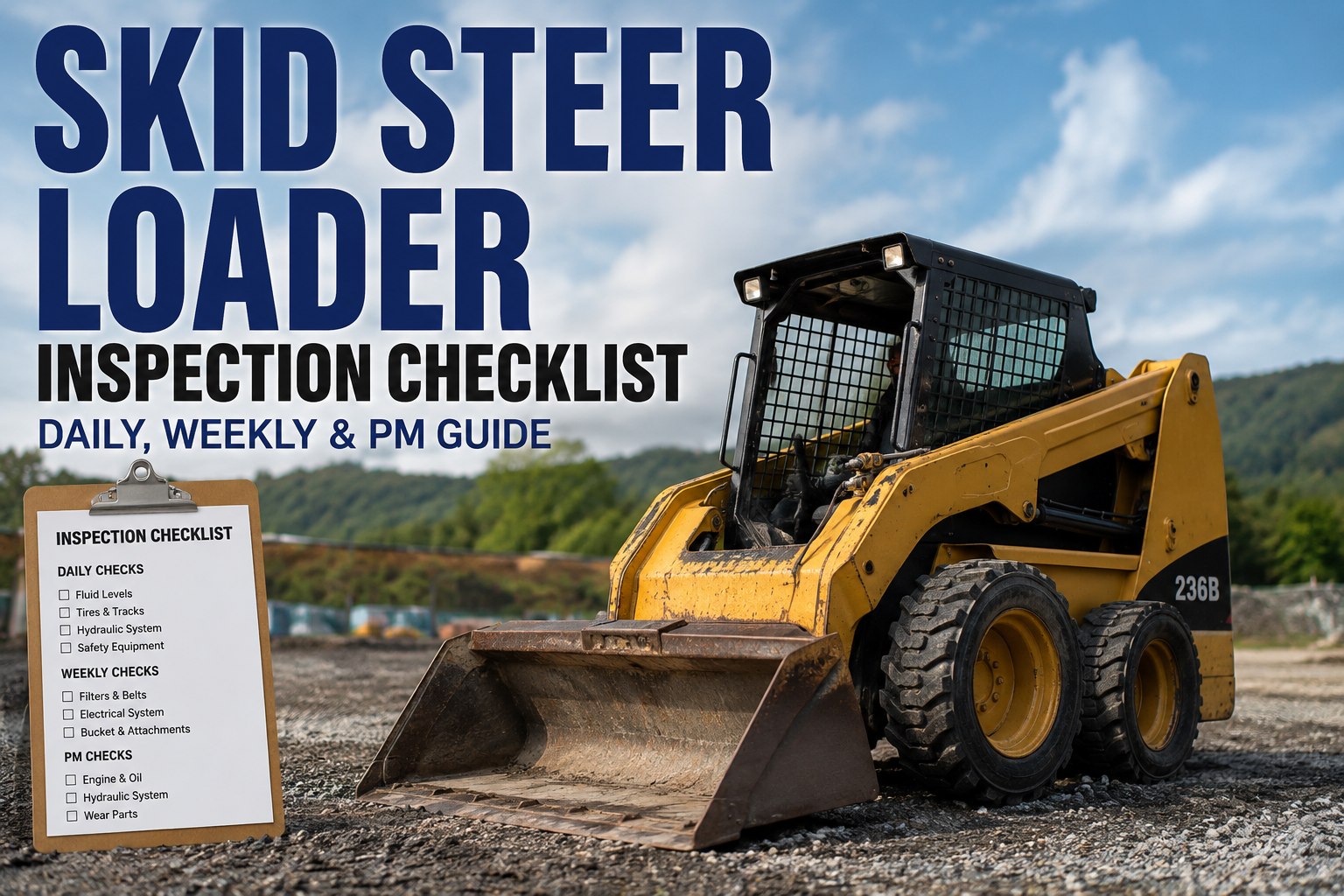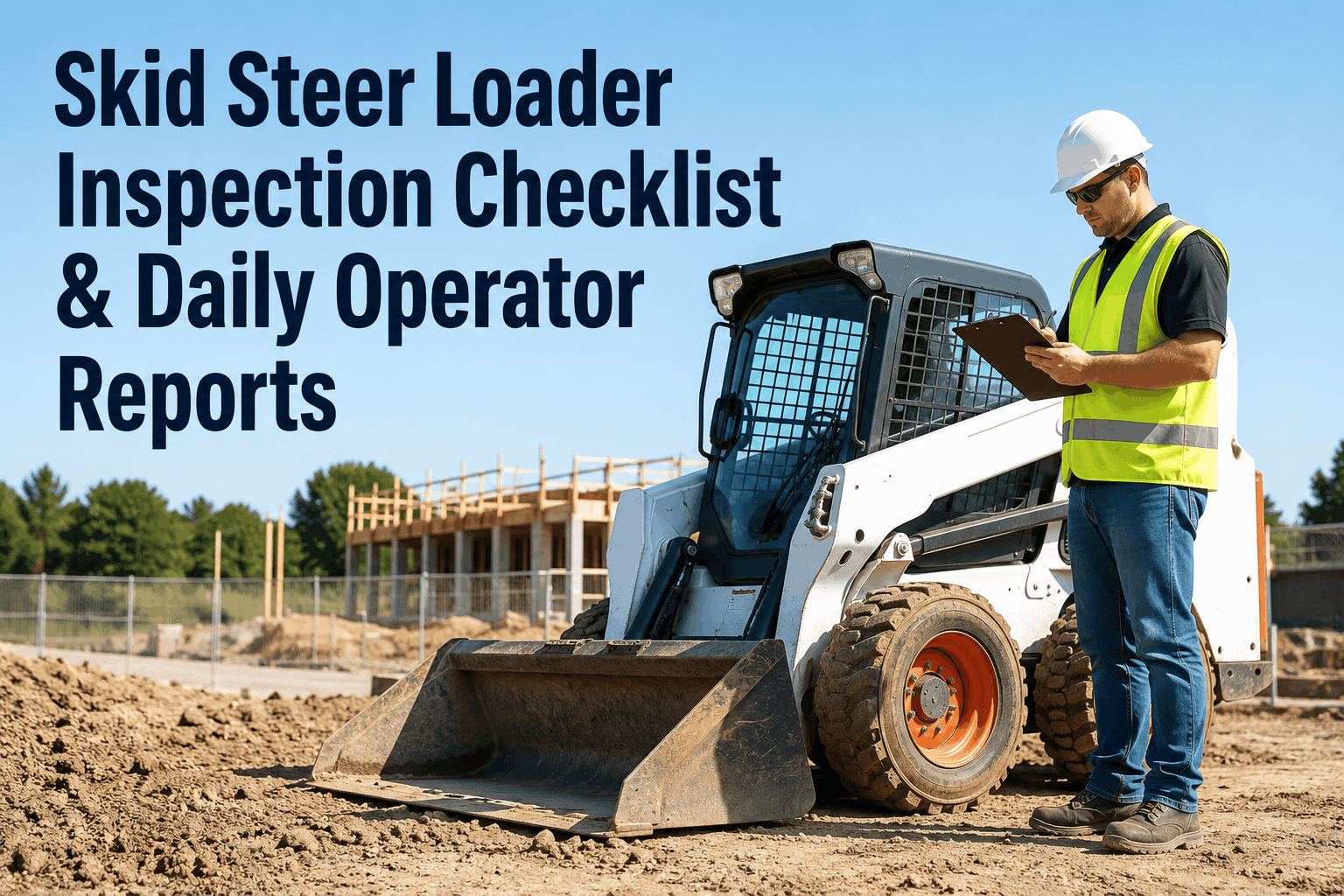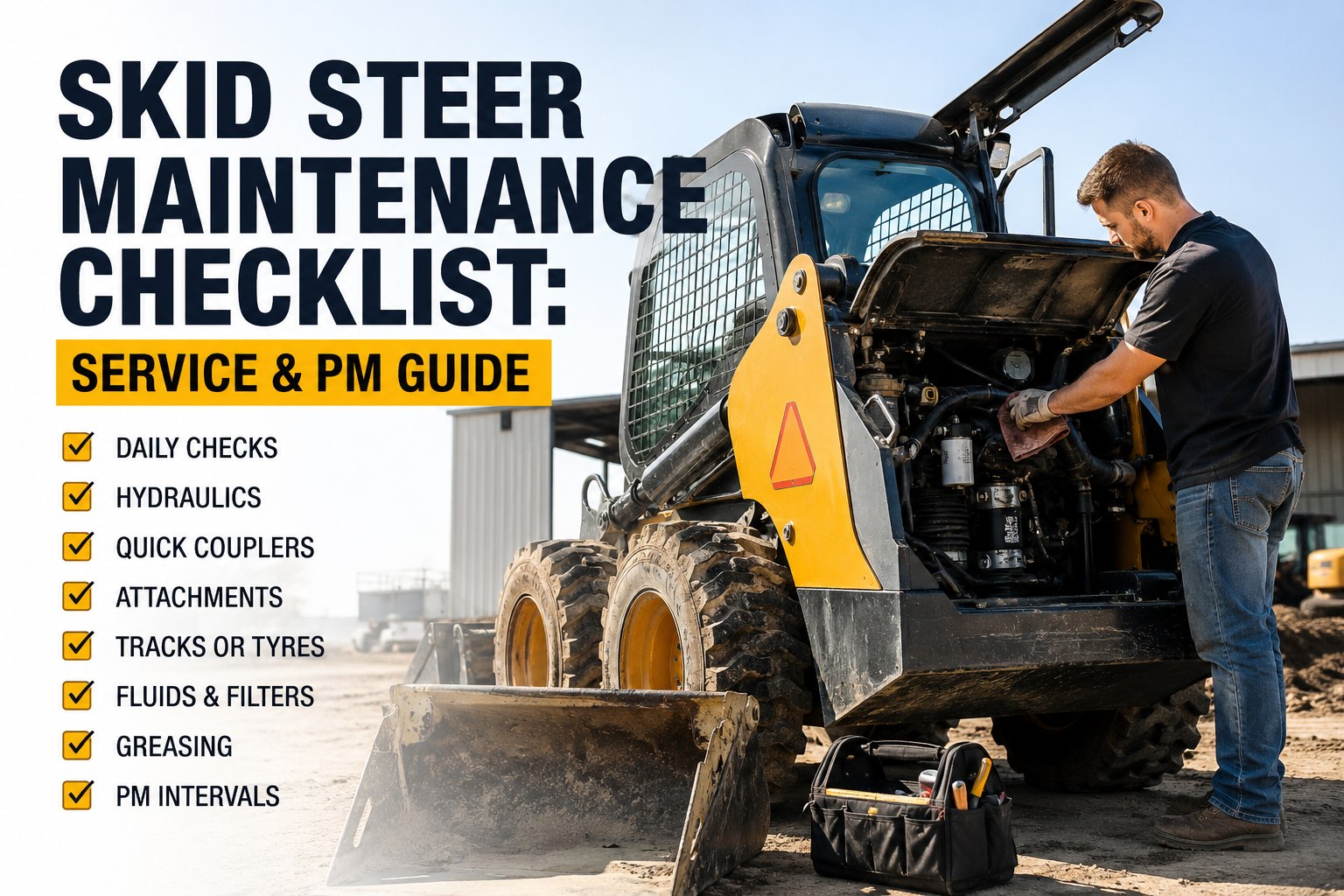
A skid steer maintenance checklist that only covers engine oil, hydraulics, and undercarriage is missing the failure point that separates most incidents on the machine: the quick-attach coupler. The universal plate accepts 100+ attachments, each going on and off hundreds of times — every change a chance for a locking pin to be forgotten or a coupler to be contaminated. A $1,500 coupler rebuild is small next to the dropped bucket that follows. Below: the walkaround, PM tiers, and coupler-first mindset — book a demo to manage in HVI.
The Coupler Plate Is Where Most Skid Steer Incidents Start
Six items on the quick-attach system need to be verified every time an attachment is fitted. Miss one and the attachment isn't secured — the operator just doesn't know it yet.
Every attachment change is an inspection. The universal plate looks simple — two upper hooks, two lower catches, two locking pins, and (on hydraulic attachments) two to four flat-face couplers plus the case-drain. Simplicity hides the failure modes. The pin has to be fully through the receiver hole visible from the front. The couplers have to be clean. The hoses have to be pressure-relieved. Miss any one and the operator finds out during the first lift.
The rest of this page walks the daily inspection every operator owes the machine, the engine-hour PM tiers Bobcat / Cat / Kubota / Case set, the flat-face coupler contamination problem that ruins hydraulic systems, and the tracking discipline that keeps a mixed skid steer & CTL fleet honest. Book a 30-minute demo to see engine-hour PM combined with per-attachment inspection templates.
The daily pre-start inspection — 10 minutes, every shift
OSHA 29 CFR 1926.602 requires a pre-shift inspection of earthmoving equipment before use. On a skid steer or compact track loader the daily walkaround is short but non-negotiable, and the shape of it differs between wheeled and tracked machines. Universal safety systems (ROPS, seat-bar interlock, brakes) get checked on both.
Fluids & leaks
- Engine oil, coolant, hydraulic reservoir in operating range
- Fuel level, fuel/water separator drain
- Ground scan for fresh oil, coolant, or hydraulic drips
- Hoses and fittings visible from ground for wet spots
Tyres, wheels
- Tyre pressure per OEM spec (typically 35–50 PSI ± 2%)
- Sidewall cuts, embedded debris, chunking
- Tread depth measurement against replacement threshold
- Wheel lug torque and matching tyre sizes across axles
Undercarriage
- Track tension — typical target 1–2 inch deflection at midspan
- Debris removed from between track and rollers
- Rollers, idlers, sprocket teeth for wear or damage
- Drive motor mounting, no cracks or missing hardware
Interlocks & controls
- Seat-bar operator interlock functional — NEVER bypassed
- ROPS structure and seat belt operational
- Horn, backup alarm, work & road lights functional
- Startup fault codes on controller display cleared
- Full boom / bucket function test in every axis
Every defect gets documented with photo, not verbally reported at shift change. The photo is the compliance evidence and the trend data. Bobcat's Bob-Tach system, Cat's Advanced Display, Kubota's controller, and Case's Alpha series each present slightly different fault codes and interlock cues, but the underlying daily discipline is the same across every OEM on the pad. Book a demo to see HVI capture per-item pre-start observations with photos and defect flow to the shop.
Engine-hour PM tiers — whichever comes first
Scheduled maintenance runs on engine hours from the machine's meter, with a calendar backstop for machines that don't accumulate hours quickly. Exact intervals vary by OEM and model, but the baseline shape holds across most skid steers and compact track loaders currently in service.
| Service item | Typical interval | Notes |
|---|---|---|
| Engine oil & filter | 250 hrs (or 500 hrs with premium OEM filter) | Reduce 25–50% for dusty, hot, or high-load duty cycles |
| Air filter (primary) | Inspect every 250 hrs, replace per restriction indicator | Dusty environments may require weekly cleaning |
| Air filter (secondary / safety) | Replace with every 3rd primary or per OEM | Never clean the secondary element — replace only |
| Fuel filter & water separator | 500 hrs (drain water daily) | Diesel bug and water are top fuel-system failure modes |
| Hydraulic oil & filter | 500–1,000 hrs depending on OEM & conditions | Sample analysis at each interval catches internal pump wear early |
| Chain case oil (older chain-drive skid steers only) | Check every 250 hrs, change per OEM (typically 500 hrs) | Not applicable to hydrostatic drive machines — verify before checking |
| Final drive oil (CTL / newer skid steers) | 500–1,000 hrs per OEM | Contamination or metal in the oil is a rebuild warning |
| Coolant service | Every 2,000–3,000 hrs (or annual) | Radiator and cooler fins cleaned monthly — especially in dusty duty |
| All grease points | Every 8–10 hrs (daily) or per OEM chart | Bucket pins, lift arm pins, cylinder pins — every fitting, every day |
The two intervals fleets most commonly miss: hydraulic oil sample analysis (catches pump wear at $50 that would otherwise be a $6,000–$12,000 pump replacement) and the daily grease routine (chronic missed greasing accelerates pin and bushing wear across the whole loader arm). Both are cheap; both compound faster than any other item on the schedule when neglected.
Flat-face hydraulic couplers — contamination is the #1 failure mode
Flat-face hydraulic couplers (also called flat-face quick disconnects, or FFQD) are the standard for skid steer attachment hydraulics. They connect cleanly with almost no fluid spill and disconnect the same way — when they're clean. The failure mode is not the coupler itself; it's what gets into the coupler between disconnection and reconnection.
Disconnect properly
Relieve auxiliary hydraulic pressure at the coupler relief before separating. Cat and most OEMs provide a pressure-relief pull for exactly this. Skip it and the coupler is under trapped pressure — hard to disconnect, faster to wear seals.
Cap both ends immediately
Dust caps on machine-side and attachment-side couplers, every time they're disconnected. Fitted dust caps are the difference between clean reconnection and dirt ingressing into a $12,000 hydraulic system.
Clean before reconnecting
Wipe the faces of both couplers with a lint-free cloth before reconnecting. Any grit on the flat face gets pushed into the hydraulic circuit at first pressurization — contaminated fluid, pump wear, cylinder seal damage downstream.
Verify positive lock
Press male end firmly into the coupling until it clicks and locks. Rotate the collar until it doesn't move. Pull the hose to confirm it's positively secured. Every hose. Every attachment change. No exceptions.
The pattern separating fleets that avoid hydraulic contamination from fleets that live with chronic pump wear: dust caps stored on the machine (not on the workbench), a wipe-cloth kept in the attachment locker, and a documented per-attachment inspection that logs the coupler condition at each change. Attachment inspection is not a nice-to-have — it's the primary hydraulic contamination control. Book a demo to see HVI enforce per-attachment coupler inspection with photo evidence, or start a free trial to load the coupler inspection template against your fleet.
The bypassed seat-bar interlock — the item that turns near-misses into fatalities
Interlocks exist because the machine cannot see the operator
Every skid steer and compact track loader ships with a seat-bar operator interlock (also called the operator restraint bar, seat-bar restraint system, or SBI on Bobcat units). The interlock disables the loader arm hydraulics and, on most units, the drive controls whenever the seat bar is up or the operator is out of the seat. It exists because skid steers have a small operator envelope with the loader arms directly above the cab entry — an operator entering or exiting under a raised, live loader is at risk of being crushed if the boom drifts, and the interlock is what prevents that. Bypassing the interlock — taping the seat sensor, wedging the seat bar down, defeating the sensor wiring — is one of the most cited unsafe practices on skid steer operations and one of the most consistent contributors to serious injury and fatality on the machine. OSHA treats defeat of an operator restraint device as a serious violation with per-instance penalties, and manufacturer warranty coverage typically voids on any machine where the interlock has been altered. The pre-start check must include a functional interlock test: seat bar raised or operator out of seat, boom controls should not respond, drive controls should not engage. Every shift. Every operator. If the interlock is inoperative, the machine goes out of service until repaired — not "we'll fix it next week." Digital pre-start inspection with the interlock test as a required, photographed step is the compliance record that demonstrates the check was actually performed, not just claimed on paper afterwards.
A landscape contractor on the switch from paper to per-attachment inspection
We run six Bobcats and four Cat CTLs across landscape and site-prep jobs. Between them we've got maybe 45 attachments — buckets, grapples, brush cutters, augers, augured planers, a couple of trenchers, snow blades in winter. Attachment changes multiple times a day, sometimes multiple times per hour. Old paper inspection covered the machine at start of shift and that was it. Attachment condition, coupler condition, hydraulic hose condition on the attachment side — nowhere in the record.
Went digital last spring. Per-attachment inspection template pops up whenever an attachment gets logged onto a machine. Operator has to photograph the coupler engagement and hydraulic connections before the attachment is marked as "in use." Six months in, we've caught two coupler pin wear issues before they failed, three attachment-side hose problems, and one hydraulic system contamination we traced back to a brush cutter that had been used without dust caps on a dusty job. The savings on the contamination alone paid for the year of software. The compliance file for OSHA is genuinely audit-ready now, which it wasn't before.
Frequently asked questions
What should be in a daily skid steer maintenance checklist?
A complete daily pre-start inspection covers four areas. Universal fluids and leaks: engine oil, coolant, hydraulic reservoir in operating range; fuel level and water separator drain; ground scan for fresh oil, coolant, or hydraulic drips; hoses and fittings for wet spots. Wheeled machines (skid steers): tyre pressure per OEM spec (typically 35–50 PSI within ± 2%); sidewall cuts, embedded debris, chunking; tread depth against replacement threshold; wheel lug torque and matched tyres across axles. Tracked machines (compact track loaders): track tension with 1–2 inch deflection target; debris removed from between track and rollers; rollers, idlers, and sprocket teeth for wear; drive motor mounting for cracks. Safety and controls (universal): seat-bar operator interlock functional and never bypassed; ROPS structure and seat belt operational; horn, backup alarm, work and road lights; startup fault codes on controller cleared; full boom and bucket function test. Every defect photo-documented at inspection, not verbally reported later. Required daily under OSHA 29 CFR 1926.602. The universal skid-steer plate carries a wide attachment ecosystem, so an attachment-specific inspection is added at each attachment change.
How often should I service a skid steer or compact track loader?
Scheduled maintenance runs on engine hours with a calendar backstop. Baseline intervals across major OEMs (Bobcat, Cat, Kubota, Case, John Deere): engine oil and filter every 250 hours, or every 500 hours if using an OEM premium filter (verify against your service manual). Air filter primary inspected every 250 hours, replaced per restriction indicator; secondary/safety element replaced with every third primary. Fuel filter and water separator every 500 hours with daily water drain. Hydraulic oil and filter every 500–1,000 hours depending on OEM and duty. Chain case oil (older chain-drive skid steers only, not hydrostatic units) checked every 250 hours, changed per OEM (typically 500 hours). Final drive oil on CTLs and newer skid steers every 500–1,000 hours per OEM. Coolant service every 2,000–3,000 hours or annually. Grease every 8–10 operating hours or per OEM chart. Reduce intervals 25–50% for dusty, hot, or high-load duty cycles. The two intervals most commonly missed and most expensive when missed: hydraulic oil sample analysis and daily greasing routine.
How do I inspect a skid steer quick-attach coupler?
The universal skid-steer coupler plate has six critical inspection points that need verification at every attachment change. First, upper hooks: check for wear grooves, deformation, or metal fatigue on the two upper hooks that engage the attachment. Second, coupler plate: inspect for cracks in welds, bent or distorted structure. Third, locking pins: after the attachment is engaged, the two locking pins must be fully through the receiver holes on the attachment — visible from the front of the machine. This is the single most consequential check on the machine. Fourth, auxiliary hydraulic line: pressure must be relieved before connecting or disconnecting flat-face hydraulic couplers. Fifth, flat-face couplers: clean, no debris, no visible damage; dust caps in place when not connected. Sixth, lower catches: not worn beyond OEM specification. On Bobcat units, the Bob-Tach system has additional visual indicators; on Cat and other OEMs, the process is functionally similar but the indicator language differs. Coupler rebuild cost is $600–$1,500 and the attachment damage from a failed coupler can multiply that several times. Documented per-attachment inspection with photo evidence of pin engagement is the operational discipline that prevents this.
Why is flat-face hydraulic coupler contamination so damaging?
Flat-face hydraulic couplers (FFQD) are the standard for skid steer and compact track loader attachment hydraulics because they disconnect with minimal fluid spill and reconnect cleanly — when they are clean. The problem is what gets onto the coupler face during the time it's disconnected. Any dirt, dust, sand, or debris on the flat face gets pushed directly into the hydraulic circuit at first pressurization when the coupler is reconnected. Contaminated hydraulic fluid then circulates through the pump, valves, cylinders, and every hose and fitting in the system. The consequences accumulate: pump wear (metal on metal at high pressure), valve spool damage (silting), cylinder seal failure (abrasion), and eventually pump or motor replacement in the $6,000–$12,000 range on top of full system flush and refill. The prevention is inexpensive: dust caps on both machine-side and attachment-side couplers every time they are disconnected, a lint-free wipe cloth kept with the attachment, and a per-attachment inspection that logs the coupler condition before use. Cat, Bobcat, Kubota, and every other major OEM specify this in their operations and maintenance manuals — it's often the most-skipped step on the shop floor.
Can I bypass the seat-bar interlock on a skid steer?
No, under any circumstances. The seat-bar operator interlock (called SBI on Bobcat, operator restraint on Cat, and similar on other OEMs) disables loader arm hydraulics and drive controls whenever the seat bar is up or the operator is out of the seat. It exists because skid steers and compact track loaders have a small operator envelope with the loader arms directly above the cab entry — an operator entering or exiting under a raised, live loader is at risk of being crushed if the boom drifts due to hydraulic seal leak-down. The interlock is what prevents that from happening. Bypassing it — taping the seat sensor, wedging the seat bar down, defeating the sensor wiring — is a serious safety violation. OSHA treats defeat of an operator restraint device as a serious violation with per-instance penalties, manufacturer warranty coverage typically voids on any machine where the interlock has been altered, and the practice is one of the most consistent contributors to serious injury and fatality on skid steer operations. Any machine with an inoperative interlock must be taken out of service until repaired, not scheduled for repair "later." The pre-start check must include a functional interlock test every shift.
Turn skid steer maintenance from a paper file into a running dashboard
HVI holds each skid steer's engine hours, calendar backstop intervals, PM tier templates, per-attachment inspection records, coupler photo evidence, hydraulic oil sample history, and complete work-order history in one asset record. When the tier is due, the template opens on the technician's phone. When an attachment goes on, the per-attachment inspection launches with mandatory photo capture. When the OSHA inspector or fleet auditor arrives, the compliance record for every machine and every attachment is one screen away. Live in under two weeks. No hardware. No credit card.
Trusted by construction, landscape & site-prep fleets across the USA, Canada, UK, & Australia · Ready on day one