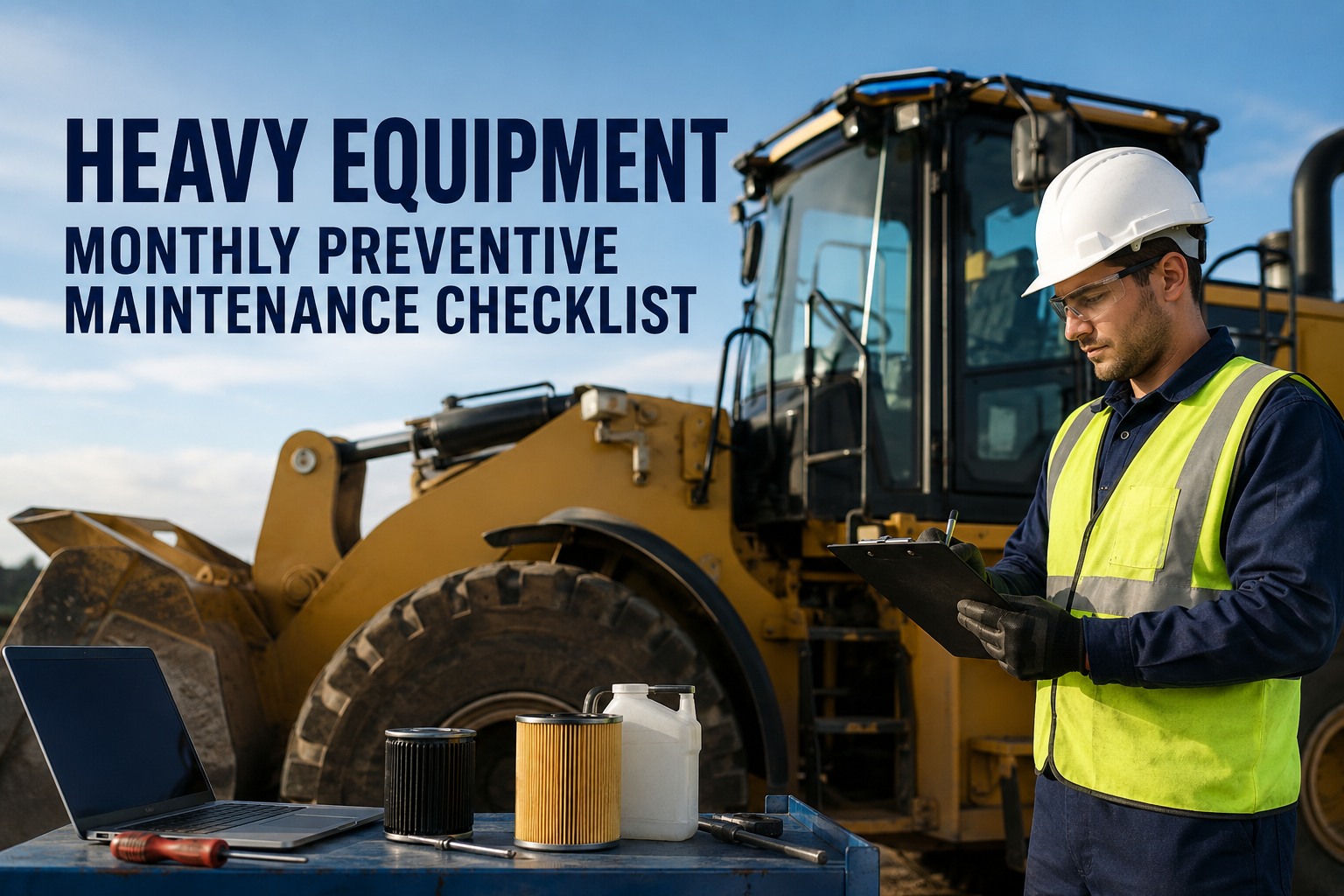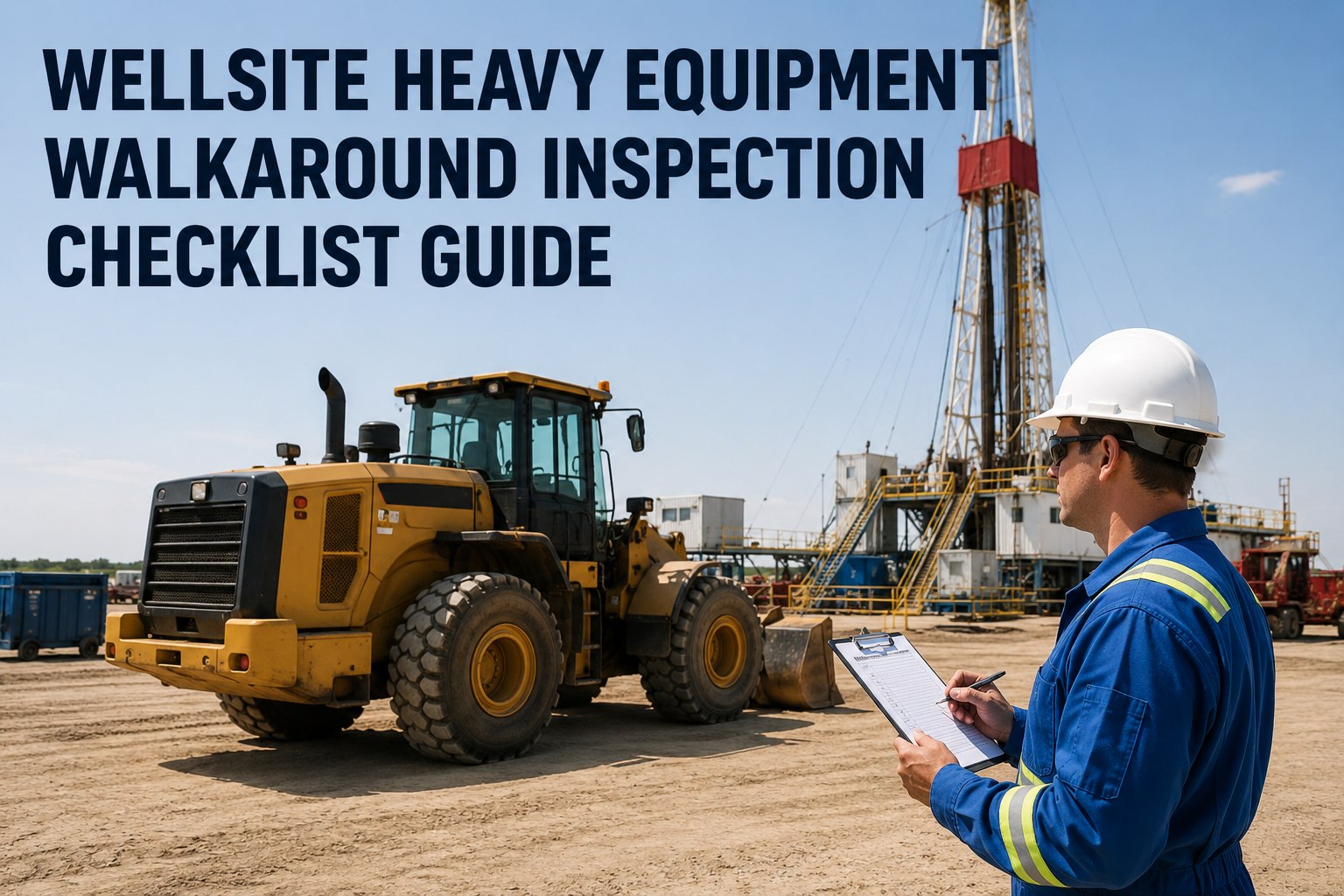
On a wellsite, the heavy equipment doesn't get the courtesy of a quiet morning. Excavators, dozers, loaders, service rigs, and haul trucks fire up at shift change and work hard in dust, heat, and vibration until they're shut down — and the ten minutes before that first start is the single highest-leverage safety check on the lease. The reason is stark: roughly 75% of struck-by fatalities involve heavy equipment, and a daily walkaround is the control that catches the failed brake, the seeping hydraulic line, or the cracked boom weld before it becomes an incident. The stakes are regulatory too OSHA requires a pre-shift inspection every time equipment is used, with serious-violation fines past $16,000, and in oil & gas that inspection feeds the operator's SEMS mechanical-integrity obligations under API RP 75. This guide lays out the walkaround as a 360° flow — ground inspection, fluids, engine, cab and controls, attachments, and safety systems — the way an operator actually circles the machine. HVI's inspection & maintenance software runs the whole walkaround on a phone, turns any defect into a work order, and keeps an audit-ready record per asset. Book a 30-minute walkthrough to see it on your fleet.
Ten minutes circling the machine. The cheapest insurance on the whole lease.
A complete 360° walkaround inspection checklist for wellsite heavy equipment — ground and undercarriage, fluids, engine bay, cab and controls, attachments, and safety systems. HVI inspection & maintenance software runs it on a phone or tablet, raises a work order on any defect, schedules preventive maintenance by run hours, and keeps SEMS- and OSHA-ready records for every machine — fully offline at the wellsite.
Why the walkaround matters before every shift
A pre-shift walkaround isn't busywork — it's the documented control that stands between a developing fault and a struck-by incident, a blown hydraulic line, or an OSHA citation. The numbers make the case on their own.
OSHA mandates the pre-shift inspection (29 CFR 1910.178, 1926.602) and in oil & gas the same check feeds API RP 75 SEMS mechanical integrity — meaning the operator has to prove, with records, that equipment was verified fit for service. The inspection prevents the incident; the record proves diligence if one ever happens. You need both.
The 360° walkaround, station by station
Work the machine the same way every time — start at the ground, circle the body, climb into the cab, then run the functional tests. The starred stations are the ones where a defect grounds the machine, not flags it for later.
Ground inspection & undercarriage
Walk the perimeter- No fresh fluid puddles under the machine
- Tires: tread, cuts, bulges, correct pressure
- Tracks: tension in spec, no cracked pads or links
- Undercarriage rollers and idlers free of damage
- Ground around the machine firm, level, clear
- Ladders, grab rails, and steps secure
Fluids & leaks
Critical- Engine oil at correct level, not milky or contaminated
- Hydraulic fluid level and condition correct
- Coolant level and concentration in range
- Fuel and DEF topped, caps secure
- No active leaks at lines, fittings, or seals
- Transmission and brake fluid within range
Engine bay & hydraulics
Critical- Hoses free of chafing, cracking, bulging, or seeping
- Belts not cracked, glazed, or loose
- Hydraulic cylinders and seals not weeping
- Battery terminals clean and tight
- Wiring free of chafing or heat damage
- Air filter and radiator clear of debris
Cab, ROPS & visibility
Climb in- ROPS/FOPS intact, unmodified, no cracks
- Seatbelt latches firmly; seat secure
- Glass, mirrors, and cameras clean and intact
- Wipers and washers functional
- Cab clear of loose tools and debris
- Fire extinguisher charged and in date
Attachments & ground tools
Critical- Bucket teeth, cutting edge, or blade not cracked or worn
- Pins, bushings, and pivot points within wear limits
- Quick-attach coupler fully locked and verified
- Lift chains, booms, and forks free of damage
- Welds and load-bearing joints free of fractures
- Grease coverage at all zerk points
Startup & safety-system tests
Critical- Gauges and warning lights read normal at startup
- Service and parking brakes hold and respond
- Steering responsive with no excessive play
- Horn, backup alarm, and beacon all working
- Lights and turn signals functional
- Emergency shutdown / E-stop verified
Six stations, around forty checkpoints, on every machine before every shift across a whole lease — production pressure is exactly what makes operators skip the walkaround, and a skipped check is where struck-by incidents and citations begin. sign up free and run this walkaround in HVI's inspection & maintenance software, or book a demo to see a failed brake check auto-raise a work order and tag the machine out.
When a check fails: the next 30 minutes
The inspection itself isn't where compliance lives or dies — the gap between finding a defect and fixing it is. A found defect needs a defined path, every time, with no shortcuts.
Document with photo
Capture the defect with a photo and a severity rating so there's an objective record, not a one-line note that's easy to dispute later.
Hold or LOTO
If the defect affects safe operation, the machine is held — locked and tagged out where it poses an immediate hazard — and not used until resolved.
Work order & repair
The defect becomes a tracked work order assigned to a qualified tech — so it can't be noted and forgotten in the gap where most failures slip through.
Re-inspect & release
A re-inspection verifies the fix before the machine returns to service — the step skipped operations most often miss, and the one auditors look for.
Three failures sink most programs: skipped walkarounds under production pressure, incomplete records with no dates or signatures, and no re-inspection after repair. HVI closes all three — checks can't be skipped without an alert, every record is timestamped and signed, and a work order stays open until the fix is verified.
Paper walkaround vs. HVI inspection & maintenance software
Both record the same checks. Only one makes the critical stations impossible to skip, photographs every defect, raises the repair as a work order, and produces the SEMS- and OSHA-ready record an auditor expects.
Paper / clipboard
- Walkaround skipped under production pressure
- No proof the brakes or E-stop were tested
- Defects noted on paper, lost before repair
- No re-inspection logged after the fix
- Records scattered across leases and trucks
- Nothing to hand a BSEE or OSHA auditor fast
With HVI software
- Critical stations must be answered before sign-off
- Missed-inspection alerts when a machine isn't checked
- Mandatory photo capture on any defect
- Failed checks auto-raise a tracked work order
- PM scheduled by run hours, history per asset
- Timestamped SEMS/OSHA-ready records, offline-capable
Make every walkaround provable, photographed, and impossible to skip.
Put the full 360° walkaround on every operator's phone — critical stations that can't be bypassed, defect photos, instant work orders, and SEMS/OSHA-ready records that export in minutes.
Frequently asked questions
What should a wellsite heavy equipment walkaround cover?
A complete 360° walkaround circles the machine the way an operator actually moves: start with the ground inspection and undercarriage (no leaks under the machine, tires/tracks in spec, rollers and idlers sound, ladders and grab rails secure); then fluids and leaks (engine oil, hydraulic, coolant, fuel/DEF levels and condition, no active leaks); the engine bay and hydraulics (hoses, belts, cylinder seals, battery, wiring, filters); the cab, ROPS/FOPS, and visibility (seatbelt, glass, mirrors, cameras, fire extinguisher); attachments and ground-engaging tools (bucket teeth, pins, quick-attach lock, booms, welds, grease points); and finally the startup and safety-system tests (gauges, brakes, steering, horn, backup alarm, lights, emergency shutdown). The fluids/leaks, engine/hydraulics, attachments, and safety-system stations are the ones where a defect grounds the machine. HVI delivers all six as a phone checklist where critical stations must be answered before sign-off.
How often is a heavy equipment inspection required?
OSHA requires a pre-shift inspection every time equipment is used (under standards including 29 CFR 1910.178 for powered industrial trucks and 1926.602 for material-handling equipment), so the daily walkaround happens before the first start of every shift. Beyond the daily check, weekly and monthly periodic inspections go deeper into wear items that don't change shift-to-shift — undercarriage components, brake lining thickness, hydraulic pressure, wire rope, cylinder seals, and structural integrity — typically performed by a qualified technician. Annual inspections form the compliance and condition baseline against manufacturer and regulatory standards. Manufacturer service intervals drive the preventive-maintenance schedule on top of all that. HVI handles every layer in one place: daily walkarounds on a phone, with weekly, monthly, and run-hour-based PM scheduled and tracked per machine.
What standards apply to oilfield equipment inspections?
Several overlap on a wellsite. OSHA sets the pre-shift inspection requirement for mobile and material-handling equipment (29 CFR 1910.178, 1926.601/602) and specific rules for cranes and forklifts. In oil & gas, API RP 54 calls for inspection programs in drilling and well-servicing operations, and API RP 75 establishes the Safety and Environmental Management System (SEMS) — a performance-based framework that BSEE incorporates into federal regulation. Under SEMS, equipment inspection feeds the mechanical-integrity element: the operator must demonstrate with documentation that machines were verified fit for service and that defects were tracked to closure, and the 4th edition explicitly extends that to contractor and subcontractor equipment on the lease. A single digital inspection program satisfies the OSHA requirement and the SEMS documentation burden at once, where a stack of paper satisfies neither well. HVI is built to produce exactly those records.
What happens if the walkaround finds a defect?
The next 30 minutes matter more than the inspection itself. The correct path is consistent: document the deficiency with a photo and severity rating; if it affects safe operation, hold the machine — applying lockout/tagout where it poses an immediate hazard — and do not use it; raise a tracked work order assigned to a qualified technician so the fix doesn't get lost; and re-inspect to verify the repair before the machine returns to service. That last step, re-inspection after repair, is the one operations skip most and the one auditors specifically look for. The whole risk lives in the gap between finding a defect and certifying its repair — most compliance failures take root there. On HVI, a failed critical check tags the machine out and opens a work order that stays open until the fix is verified, closing that gap by design.
How does HVI's inspection & maintenance software help a wellsite fleet?
HVI runs the whole inspection and maintenance program for a wellsite fleet in one platform built for remote sites. Operators complete the 360° walkaround on a phone or tablet that works fully offline and syncs when back in range — with mandatory photo capture on defects and GPS-stamped, timestamped records. Critical stations like brakes, fluids, and the emergency shutdown must be answered before sign-off, and a missed-inspection alert fires when a machine isn't checked. Any failed check instantly becomes a tracked work order that tags the machine out and stays open until the repair is verified, closing the defect-to-repair gap where failures and citations originate. Preventive maintenance is scheduled per asset by run hours, failure history builds over time, and every record is SEMS- and OSHA-ready — exportable as an audit package in minutes for a BSEE or OSHA review, including contractor equipment on the lease. book a demo and we'll set it up around your specific fleet and wellsites on the call.
Protect your crews, your machines, and your compliance — one walkaround at a time.
HVI inspection & maintenance software turns the 360° walkaround into a digital pre-shift inspection — critical stations that can't be skipped, defect photos, auto work orders that tag machines out, run-hour PM, and SEMS/OSHA-ready records, all working offline at the wellsite. Stop letting a skipped ten-minute check turn into a struck-by incident or a five-figure citation.
No credit card required · Live in under two weeks · Digital walkarounds + critical-station stops + defect photos + work orders + run-hour PM, fully offline