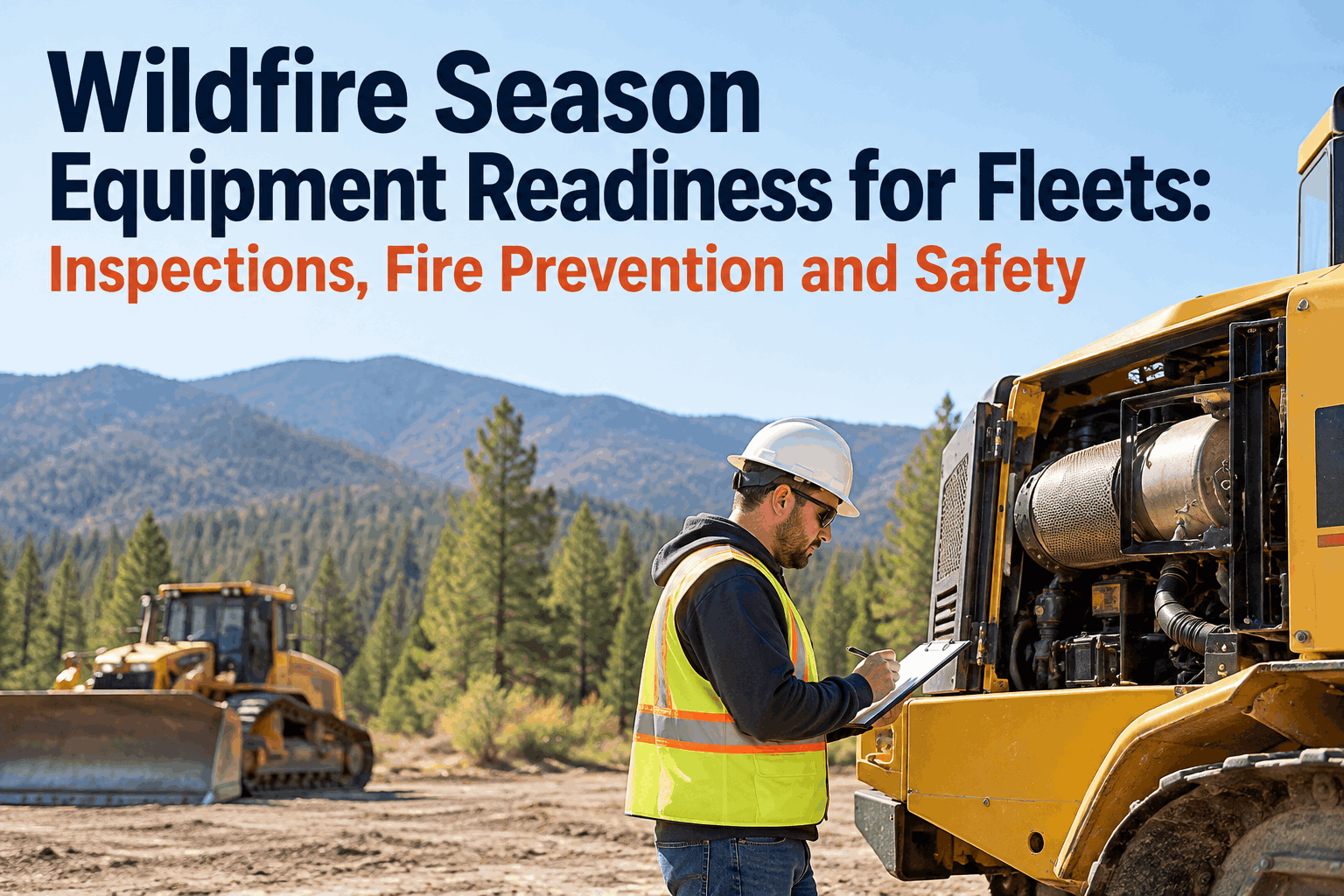
Wildfire equipment readiness is the uncomfortable truth most fleets skip: your own machines are one of the top ways a wildfire starts. A hot exhaust, a clogged spark arrestor, a track edge striking rock on a dry, windy afternoon — that's all it takes. Getting a fleet genuinely ready for wildfire season means inspecting for ignition risk, carrying the right fire gear, and proving it. Here's the readiness checklist, and how to track it — or start a free trial.
Your equipment doesn't just work near the fire risk — it can be the spark.
On a dry, windy day, a hot manifold, a worn-out spark arrestor or a blade clipping a rock is enough to start a wildfire you'll own. Readiness starts with knowing exactly where your machines ignite — and inspecting for it.
Where HVI fits, plainly: HVI doesn't fit spark arrestors, clear debris or put out fires — your crew and service team do the physical work. What HVI does is make the readiness inspection happen and prove it. It builds the wildfire checks into your daily operator reports, puts them on a phone, tracks the condition of the spark arrestor, extinguishers and leak points, raises a defect the moment something fails, and keeps a dated readiness record for every machine. So on a red-flag day, "is the fleet fire-ready?" is a dashboard, not a hope. Start a free trial to set it up.
Where heavy equipment starts firesthe ignition sources a wildfire readiness inspection targets
Equipment and vehicle use is one of the leading human causes of wildfires — and it almost always traces to the same handful of hotspots. Know them, and the inspection writes itself.
Hot exhaust & turbo
Watch for: exhaust surfaces run far hotter than fine fuels need to ignite — a wad of dry grass on a manifold can smolder and catch. Keep shields intact and surfaces clear.
Missing or clogged spark arrestor
Watch for: a carbon-blocked or absent spark arrestor lets burning particles out the stack. Many wildland areas require a working one — confirm it's fitted and clean.
Metal on rock — tracks, blades, chains
Watch for: a steel edge or dragging chain striking rock throws sparks straight into dry fuel. Check worn edges and never let chains drag on hard ground.
Overheated brakes & bearings
Watch for: a dragging brake or failing wheel bearing gets hot enough to ignite nearby grass or the machine itself. Watch for drag, smell and heat.
Hydraulic & fuel leaks
Watch for: atomized fluid from a weeping line spraying onto a hot manifold can flash instantly. Chase every weep and loose fitting before the season.
Debris & vegetation buildup
Watch for: grass and chaff packed around the engine bay, belly pan and undercarriage is fuel sitting on your hottest parts. Clean it out daily in fire season.
Every one of these is a visual check an operator can make before start-up — if it's on the list. Start a free trial to put the ignition checks on the daily report.
Your wildfire readiness checklistthe wildfire equipment inspection checklist, in three parts
Readiness is three things together: the right fire gear on board, the machine in a non-igniting condition, and the discipline to operate safely on a high-danger day.
On-board fire gear
- Spark arrestor fitted and clean
- Charged, in-date fire extinguisher(s)
- Shovel and water on the machine
Equipment condition
- No fuel, oil or hydraulic leaks
- Engine bay & undercarriage clear of debris
- Exhaust shields intact, no hot-surface buildup
Operating precautions
- Heavy work scheduled to cooler hours on red-flag days
- Fire watch posted after high-risk operations
- No parking or idling on dry grass
Run from a phone, each check is signed and time-stamped — proof the machine left the yard fire-ready. Book a demo of the wildfire readiness checklist.
Where HVI keeps fleets wildfire-readythe fleet inspection features behind wildfire equipment readiness
HVI runs the inspection program that proves a fleet is fire-ready — and flags the one machine that isn't. Five features carry it.
Fleet inspection / DVIR
Wildfire ignition and fire-gear checks built into the daily pre-start inspection, done on a phone before the machine runs.
Digital inspection checklists
A wildfire checklist built to your machines and local code — spark arrestor, extinguisher, leaks, debris — the same every operator.
Safety management
Run wildfire readiness as a managed safety program across every crew, site and season — not a memo that fades by July.
Equipment maintenance records
Spark arrestor service, extinguisher dates and leak repairs kept per machine — the readiness history in one lookup.
Defect tracking
A clogged arrestor or a weeping line becomes a tracked work order — the machine tagged out until it's fixed.
It's the same inspection and safety management backbone HVI runs across heavy fleets. Book a demo of the readiness workflow.
From a fleet safety manager
We always thought of wildfire as something that happened to us, not something our machines could cause — until a grinder threw a spark on a red-flag day and we spent a very bad afternoon with fire crews. Now a wildfire pre-start check is just part of the DVIR: spark arrestor, extinguisher, leaks, debris, cleared before the key turns. The operators actually do it because it's three taps on a phone, and I can pull up every machine's status before I let a crew work on a high-danger day. It turned a vague worry into something I can actually manage.
Wildfire equipment readiness — FAQs
How does heavy equipment cause wildfires?
Equipment and vehicle use is one of the leading human causes of wildfires. The usual mechanisms are hot exhaust and turbo surfaces that run well above the ignition temperature of dry grass, a missing or carbon-clogged spark arrestor letting burning particles out the stack, metal tracks, blades or dragging chains striking rock and throwing sparks, overheated brakes or wheel bearings, hydraulic or fuel leaks spraying onto a hot manifold, and grass or chaff packed around hot components. Almost all of these are catchable on a pre-start inspection.
What is a spark arrestor and is it required?
A spark arrestor is a screen or device in the exhaust that traps and cools burning carbon particles before they leave the stack, so they can't land in dry fuel and start a fire. In many wildland and fire-prone areas, a qualified, working spark arrestor is required on internal-combustion engines by fire code. It only works if it's maintained — a clogged or damaged arrestor can be as dangerous as none at all — so checking and cleaning it is a core part of wildfire equipment readiness.
What should be on a wildfire equipment inspection checklist?
Three groups: on-board fire gear (a fitted, clean spark arrestor, charged and in-date fire extinguishers, a shovel and water), equipment condition (no fuel, oil or hydraulic leaks, engine bay and undercarriage clear of debris, exhaust shields intact), and operating precautions (scheduling heavy work to cooler hours on red-flag days, posting a fire watch after high-risk operations, and never parking or idling on dry grass). Running it as a daily pre-start check keeps it consistent and recorded.
How often should fire extinguishers on equipment be inspected?
Portable fire extinguishers are typically given a quick visual check monthly — pressure gauge in the green, pin and seal intact, no damage — and a more thorough professional inspection annually, following standards such as NFPA 10 in the US. On equipment working in fire-prone conditions, a fast visual check as part of the daily pre-start is good practice too. A digital checklist makes the monthly and daily checks easy to capture and keeps the service dates on record.
Does HVI install fire equipment or fight fires?
No. HVI doesn't fit spark arrestors, clear debris, service extinguishers or respond to fires — that work belongs to your crew and service team. HVI manages the readiness program around it: it builds the wildfire checks into your daily inspections and DVIR, delivers them to a phone, tracks the condition of fire-prevention gear, raises defects when something fails, and keeps a dated readiness record and status view for every machine, so you can prove the fleet was fire-ready.
Go into wildfire season knowing every machine is ready
Leave the spark arrestors and extinguishers to your team — and put the ignition checks, the fire gear and the readiness record on one system. When the red-flag warning lands, wildfire equipment readiness is already a dashboard you can stand behind, not a scramble in the smoke.
Ignition checks · fire gear tracked · signed readiness records