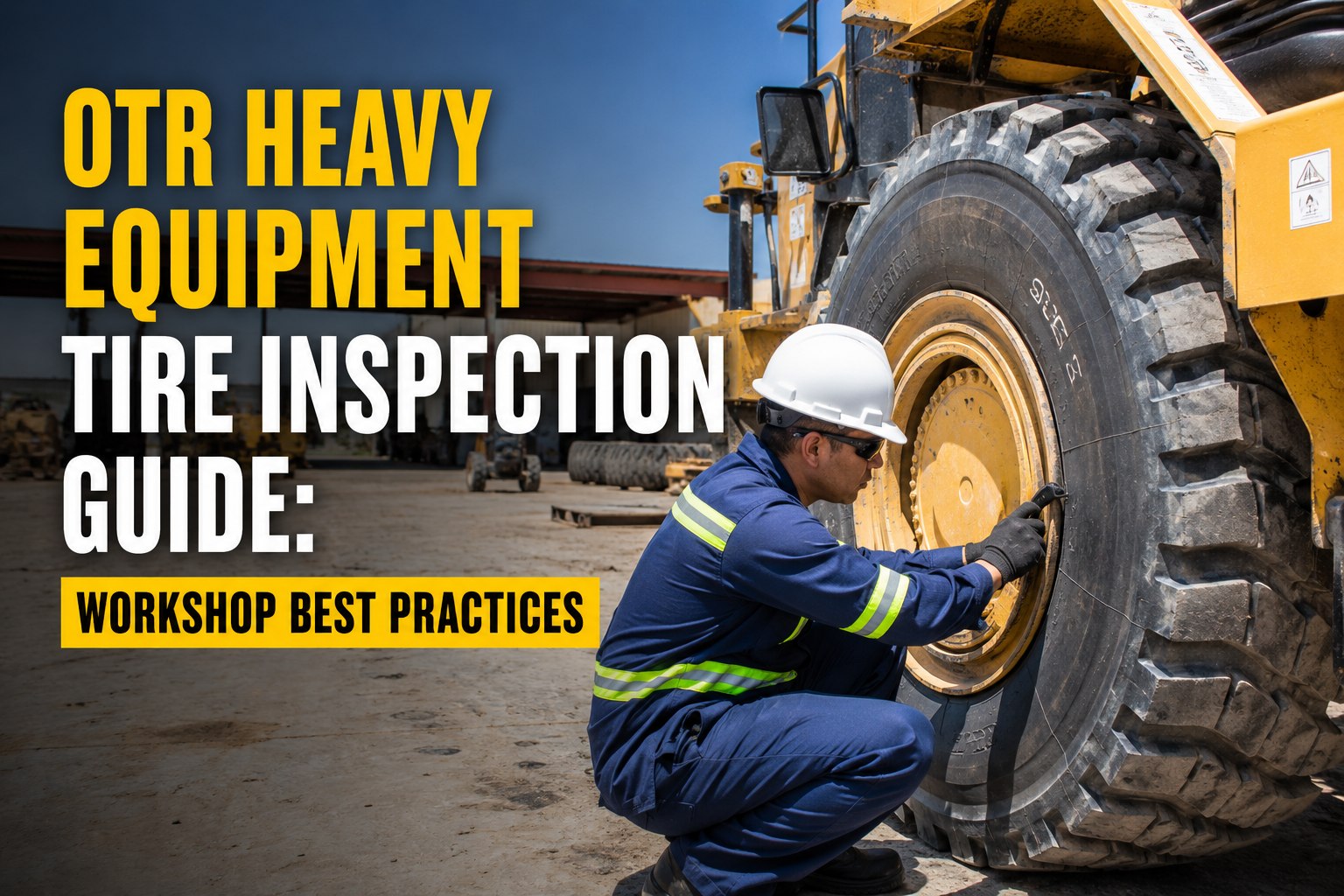
An off-the-road tire on an earthmover or haul truck is one of the most expensive consumables in the whole workshop — a single large loader or rigid-dump tire can cost as much as a small car, and a fleet's tire spend often rivals its fuel bill. Yet most OTR tires never wear out. They fail early, from a cut that opened up, a slow leak that ran them hot, or a wear pattern that told a story nobody read. That's the good news for a workshop: the failures are legible. A tire's tread, sidewall, and shoulder record exactly how the machine is being run and inflated, and a technician who knows how to read them can catch a problem while it's still a repair and not a scrapped casing. This guide walks through the anatomy of an OTR tire, how to inspect it zone by zone, the pressure math that quietly governs its life, the RPM best-practice framework the big manufacturers teach, and when a tire has to come out of service. HVI's workshop inspection & maintenance software turns all of it into a per-position tire record that flags the tire drifting toward failure before it strands a machine. Book a 30-minute walkthrough to see it on your fleet.
Most OTR tires don't wear out. They fail early — and the tire tells you why, if you know how to read it.
A workshop guide to inspecting off-the-road heavy equipment tires — anatomy, zone-by-zone inspection, the pressure math that governs tire life, the Rotation-Pressure-Matching framework, and retirement criteria. HVI inspection & maintenance software tracks tread depth, pressure, and condition per tire position, schedules rotation by run hours, and flags a tire drifting toward failure — for every machine in the yard.
Know the anatomy before you inspect
You can't read wear you don't understand. An OTR tire is five working parts, and every inspection finding maps to one of them — so a technician's eye should move through them deliberately.
The outer layer meeting the ground — provides traction and wear resistance. Deep block patterns on loader and dump tires self-clean in mud and gravel. Tread depth is the primary wear metric, always measured at the center.
Where tread meets sidewall — it governs handling and takes the brunt of cornering and scrubbing loads. Scalloping or one-sided shoulder wear is an early alignment or inflation signal.
The flexible vertical wall that absorbs shock and protects the casing. Cuts, bulges, "golf balls," and fatigue cracking show here first — and a sidewall injury exposing cords is usually terminal.
The inner edge that locks the tire to the rim and seals it. Check the seat all the way around for leaks, and the valve stem and core for slow air loss with soapy water.
The carcass of steel or fabric plies carrying the load. A sound casing is what makes a tire a retreading candidate — protecting it is the whole point of catching cuts and heat early.
The single most useful idea in OTR tire work: air carries the weight, not the tire. The casing just holds the air in shape. Almost every early failure — heat, uneven wear, sidewall fatigue — traces back to the air pressure being wrong for the load. Keep that in mind and half the inspection interprets itself.
The zone-by-zone inspection
A workshop inspection goes deeper than the operator's pre-shift glance. Work each zone in order, and let the wear pattern point you to the root cause rather than just logging the symptom.
Tread & wear pattern
Measure tread depth at the center against the original new depth, taking several readings around the tire to catch irregular wear. Center-heavy wear points to overinflation; shoulder or uneven wear points to underinflation or misalignment; scalloping and bald spots flag imbalance.
Sidewall & shoulder
Inspect inside and out for cuts, gouges, bulges, "golf ball" bumps (impact damage), and fatigue cracking or dry rot. Minor abrasion is expected on-site; anything exposing internal belts or cords is serious and pulls the tire from service.
Penetrations & the face
Hunt for embedded rocks, rebar, nails, and metal in the tread face, and for missing or torn-off lugs. Rocky and scrap-heavy sites cause most cuts and punctures — clearing an embedded stone before it works deeper can save the casing.
Bead, valve & rim
Run a hand around where the tire meets the wheel — it should be consistent all the way around. Spray the valve stem and core with soapy water; bubbles mean a leak. Check for a tight, capped, properly seated stem and for pitted, bent, or cracked rims and missing lug nuts.
A wear pattern only helps if it's captured and trended over time — one bald reading is a symptom, but three readings across three inspections reveal a machine that's chronically under-inflated. sign up free and log tread depth and condition per tire position in HVI, or book a demo to see how the software trends wear and flags a failing tire early.
The pressure math nobody skips twice
If air carries the weight, pressure is the whole game. The relationships are precise enough that manufacturers publish them — and the penalties for getting them wrong are steep and specific.
Underinflation
The sidewall flexes too much, builds internal heat, and cooks the casing toward a blowout. It also wears the shoulders unevenly and raises fuel burn.
Overinflation
The tread goes rigid, contact concentrates in the center, and the casing loses its ability to absorb impacts — leaving the tire vulnerable to impact breaks and sudden air loss.
Two rules make pressure checks reliable: always read cold, because heat inflates the number and hides a low tire, and always match pressure to the load — heavier loads need more air, per the manufacturer's chart. Log the pressure at the same time each day and the rate of loss between checks reveals a slow leak long before it strands a machine.
RPM: the workshop best-practice framework
The major OTR manufacturers teach the same three levers for getting maximum life and lowest cost per hour out of a tire program. Together they're known as RPM — Rotation, Pressure, Matching.
Rotation
Tires wear at different rates by position, so rotating them spreads wear evenly and extends total service life — commonly every 50–100 hours, but the real trigger is wear rate and scrap point, not habit. Track it by hours, not guesswork.
Pressure
Correct, load-matched, cold-checked inflation is the biggest single lever on tire life. A formal pressure-check program — with logged readings and leak detection — is what keeps every tire in its safe operating window.
Matching
On duals, even small differences in tread depth or diameter make one tire slip and scrub while the other overheats — stressing the drivetrain and pulling both out early. Match duals on size, depth, and pattern, and check both sides when replacing one.
Add a repair program and disciplined haul-road, loading, and dump-area maintenance on top of RPM, and a workshop protects the casing so tires reach their full life — and qualify for retreading, which recovers a large share of a new tire's value from a sound casing.
When a tire comes out of service
Some findings are judgment calls; these are not. When any of the following shows up, the tire is done — repaired only by a qualified specialist, or scrapped.
Exposed cords or steel belts anywhere on the tire
Sidewall cut, bulge, or separation reaching the casing
Repeated, unexplained air loss the workshop can't seal
Tread worn past the manufacturer or company scrap point
Impact break, ply separation, or internal structural damage
Age or dry rot, even if tread and appearance still look fine
Paper tire log vs. HVI inspection & maintenance software
Every workshop tracks tires somehow. The difference is whether that tracking trends wear per position, catches the slow leak, and schedules the rotation — or lives on a clipboard that forgets.
Paper / spreadsheet
- Tread readings jotted down, never trended
- A slow leak invisible until the tire's flat
- Rotation tracked by habit, not wear rate
- Duals mismatched with no cross-check
- No photo record of a cut or impact break
- Tire cost per hour per machine unknown
With HVI software
- Tread depth & pressure trended per tire position
- Daily pressure logs surface an abnormal loss rate
- Rotation scheduled by run hours, flagged when due
- Dual matching checked and recorded on fitment
- Mandatory photo capture on cuts and damage
- Tire cost and life tracked per position and machine
Stop scrapping casings you could have saved.
Put every OTR tire on a per-position record — trended tread and pressure, run-hour rotation scheduling, dual-match checks, and photo-documented damage — so a failing tire gets flagged before it strands a machine.
Frequently asked questions
How do you inspect an OTR heavy equipment tire?
Work it zone by zone. Start with the tread: measure depth at the center against the original new depth, taking several readings around the tire to catch irregular wear, and read the pattern — center-heavy wear signals overinflation, shoulder or uneven wear signals underinflation or misalignment, scalloping signals imbalance. Then the sidewall and shoulder, inside and out, for cuts, bulges, "golf ball" impact bumps, and fatigue cracking, treating anything that exposes cords as terminal. Next the face, for embedded rocks, rebar, nails, and torn lugs. Finally the bead, valve, and rim: run a hand around the tire-to-wheel seat, spray the valve with soapy water to find leaks, and check for pitted or bent rims and missing lug nuts. Underpinning all of it, verify cold pressure against the load. HVI captures each of these as a logged, photo-backed record per tire position so wear can be trended over time, not just noted once.
What causes OTR tires to fail early?
Most early OTR failures trace back to air pressure, because air carries the weight and the casing only holds it in shape. Underinflation lets the sidewall flex excessively, building internal heat that weakens the casing toward a blowout while wearing the shoulders and raising fuel burn — a drop of just 5 psi can cost about 10% of load capacity, and 10 psi about 10% of total tire life. Overinflation makes the tread rigid, concentrates wear in the center, and leaves the casing prone to impact breaks and rapid air loss. The other big causes are cuts and punctures from rocks, rebar, and scrap on-site; overloading, which overheats and deforms the tire; mismatched duals that slip, scrub, and overheat; and simple age and dry rot. Nearly all of these are catchable in a careful workshop inspection before the tire is lost. HVI flags the pressure drift and wear trend that precede these failures.
How often should OTR tires be rotated and pressure-checked?
Pressure should be checked frequently — at least weekly with a calibrated gauge, and more often the harder the machine works — always when the tires are cold, since heat inflates the reading and can hide a low tire. Logging pressure at the same time each day turns the checks into a leak detector: an abnormal loss rate between readings reveals a slow leak early. Rotation is commonly done every 50–100 hours, but the better trigger is wear rate and scrap point rather than a fixed habit, since tires wear at different rates by position. The point of rotation is to spread that uneven wear and extend total service life. Because both are driven by machine hours and conditions, they're ideal to schedule and track in software. HVI schedules rotation by run hours and flags it when due, and trends the pressure logs that expose a leak.
What is the RPM framework for OTR tire management?
RPM stands for Rotation, Pressure, and Matching — the three core levers OTR tire manufacturers teach for maximizing tire performance and lowering cost per hour. Rotation spreads uneven position-based wear to extend total service life, triggered by wear rate and scrap point rather than habit. Pressure — correct, load-matched, and cold-checked — is the single biggest lever on tire life and is best run as a formal program with logged readings and leak detection. Matching applies to duals: even slight differences in tread depth, diameter, or pattern between paired tires cause one to slip and scrub while the other overheats, stressing the drivetrain and pulling both out early, so duals must be matched on size, depth, and pattern with both sides checked when one is replaced. Layered on top of RPM, a repair program and good haul-road, loading, and dump-area maintenance protect the casing so tires reach full life and qualify for retreading. HVI operationalizes all three levers in one system.
How does HVI's inspection & maintenance software help a workshop manage tires?
HVI runs the whole OTR tire program as part of a workshop's inspection and maintenance system. Technicians log tread depth, pressure, and condition per individual tire position on a phone or tablet — with mandatory photo capture on cuts, impact breaks, and sidewall damage — and the software trends those readings over time so a chronically under-inflated machine or a tire drifting toward its scrap point gets flagged before it fails, rather than showing up as one isolated note on paper. Rotation is scheduled by run hours and flagged when due, dual matching is checked and recorded at fitment, and daily pressure logs surface an abnormal loss rate that signals a slow leak. Any finding that requires action becomes a tracked work order, and tire cost and life are tracked per position and per machine so the workshop can see cost per hour and spot the machines eating tires. Everything is timestamped and audit-ready, and it works offline in the yard. book a demo and we'll set it up around your specific fleet and workshop on the call.
Read every tire, trend every reading, save every casing you can.
HVI inspection & maintenance software turns OTR tire inspection into a per-position record — trended tread and pressure, run-hour rotation scheduling, dual-match checks, photo-documented damage, and cost-per-machine tracking, all working offline in the yard. Stop losing expensive casings to leaks and wear patterns you could have caught weeks earlier.
No credit card required · Live in under two weeks · Per-position tire tracking + trended wear + run-hour rotation + photo damage records, fully offline