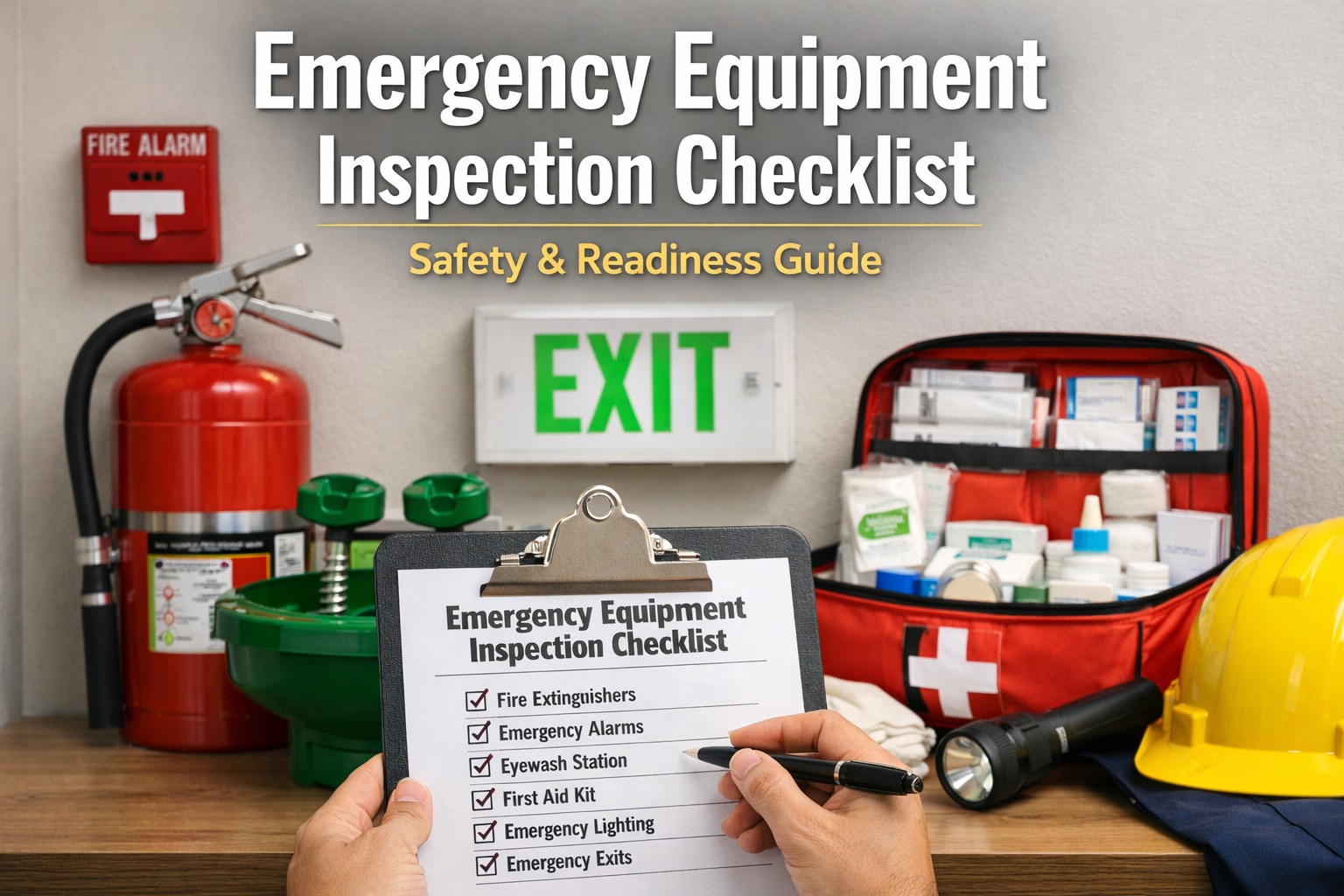
Importance of Emergency Equipment Inspections
Life Safety
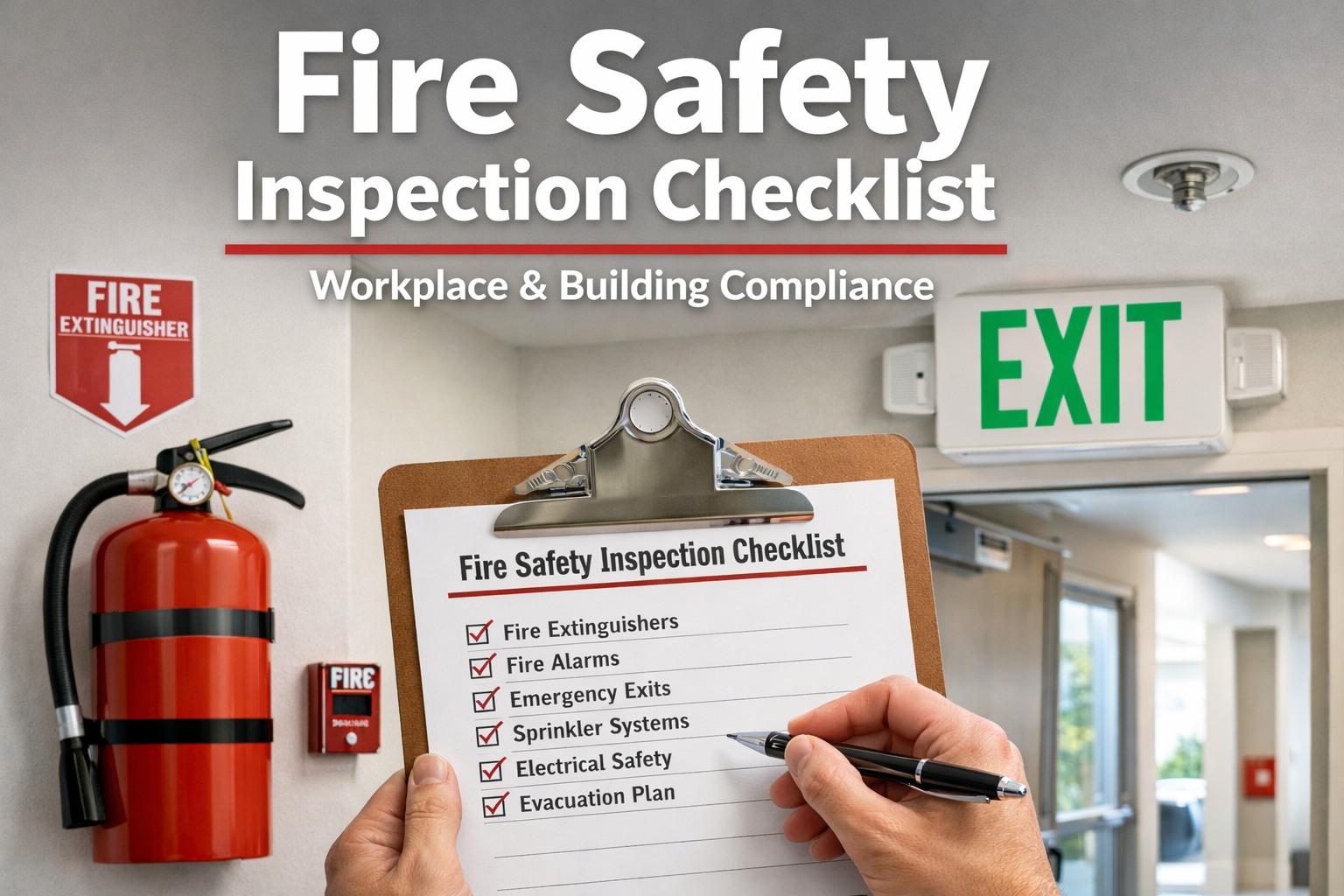
- Regular emergency equipment inspections ensure fire extinguishers, eyewash stations, emergency lighting, and exit routes are functional and accessible when needed, protecting lives during critical emergencies.
Regulatory Compliance
- Documented emergency equipment inspections meet OSHA, NFPA, and local fire code requirements, protecting your organization from citations, fines, and liability during safety audits.
Emergency Readiness
- Systematic inspection programs verify that all emergency response equipment is properly maintained, fully charged, clearly marked, and ready for immediate use during workplace emergencies.
Incident Prevention
- Proactive emergency equipment maintenance identifies and corrects deficiencies before they compromise worker safety, preventing equipment failures during fire, chemical exposure, or evacuation situations.
Sign up to track emergency equipment inspections automatically
Emergency Equipment Inspection
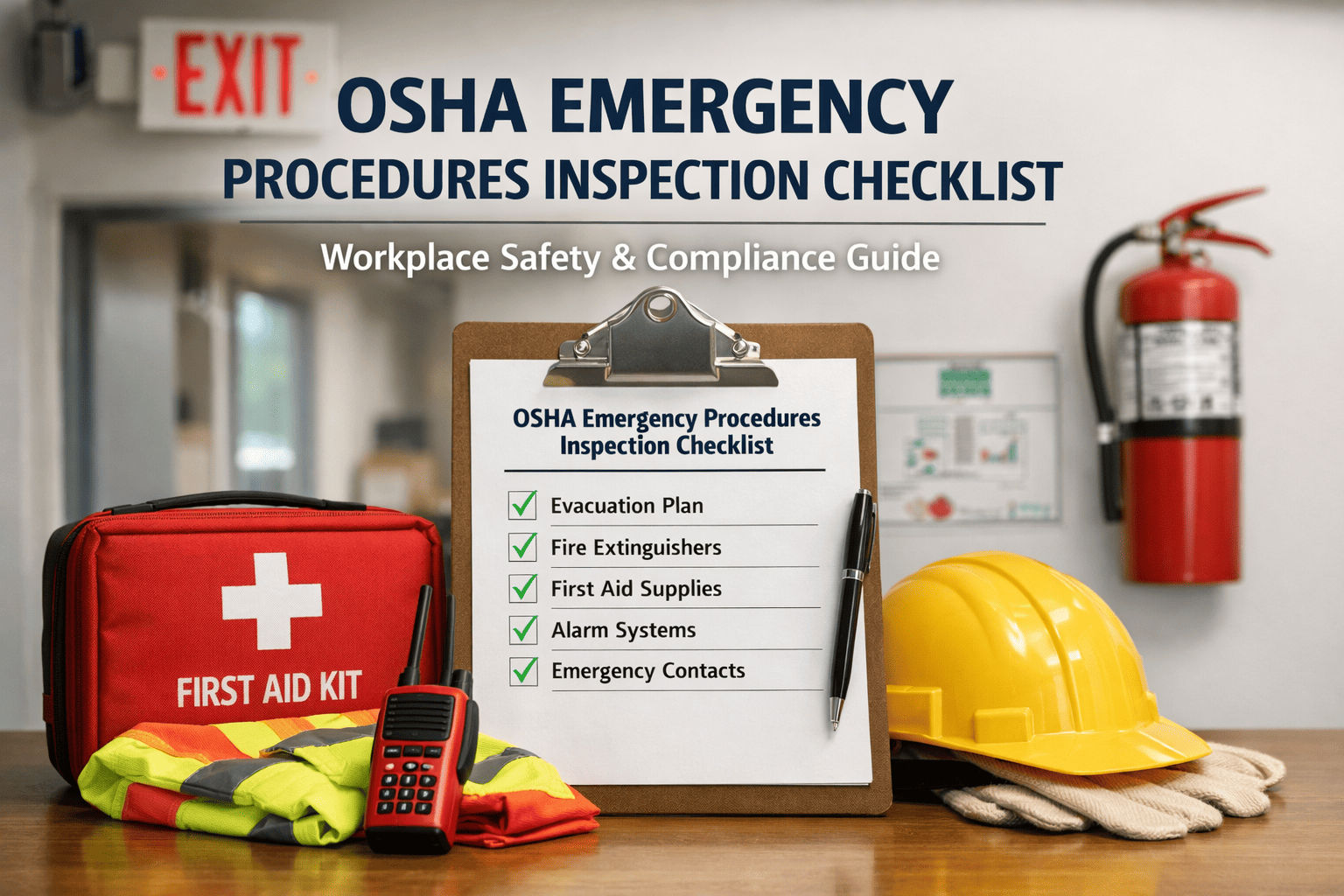
Critical emergency equipment inspection items for workplace safety:
Why Use Digital Emergency Equipment Management?
HVI App Benefits for Emergency Equipment:
- ✓ Automate monthly fire extinguisher and eyewash station inspections
- ✓ Schedule emergency lighting functional tests and annual battery tests
- ✓ Track inspection records for Authority Having Jurisdiction (AHJ) audits
- ✓ Document fire extinguisher maintenance, recharging, and service tags
- ✓ Generate compliance-ready reports for OSHA and fire code inspections
- ✓ Alert teams to deficiencies requiring immediate corrective action
Frequently Asked Questions About Emergency Equipment Inspections
1. Why are emergency equipment inspections important?
Emergency equipment inspections ensure that fire extinguishers, eyewash stations, emergency lighting, and exit routes are functional and accessible during critical situations. Regular inspections prevent equipment failures, maintain regulatory compliance, and protect lives by ensuring emergency response equipment works when needed most.
2. How often should fire extinguishers be inspected?
OSHA and NFPA require monthly visual inspections to verify fire extinguishers are in place, fully charged, undamaged, and not tampered with. Annual inspections by a certified fire protection specialist or contractor must also be performed, including maintenance and recharging as needed. Each service must be documented with tags showing the date and service provider.
3. What are the testing requirements for emergency lighting?
Emergency lighting units (EXIT lights and emergency lights) must be functionally tested monthly by pushing the test button for 30 seconds and recording results. Battery-powered emergency lighting systems require annual testing for a minimum of 1 hour. All testing records must be available for inspection by the Authority Having Jurisdiction (AHJ).
4. How often should eyewash stations be inspected?
ANSI Z358.1 requires weekly activation of eyewash and emergency shower stations to verify proper operation and flush out stagnant water. Testing should confirm water temperature is between 60-100°F, covers are functional, there's no chemical contamination, and the unit is within 10 seconds of travel from potential contamination points. Records must be maintained for AHJ inspection.
5. What is the 10-second rule for eyewash stations?
ANSI Z358.1 requires emergency eyewash and shower stations to be located within 10 seconds of unobstructed travel from any point where chemical exposure could occur. This ensures workers can reach decontamination equipment immediately to minimize injury from chemical splashes or exposures.
6. Can exit routes be blocked by storage or equipment?
No. OSHA strictly prohibits storage of materials or equipment in exit route hallways and corridors. Exit routes must remain clear and unobstructed at all times to ensure safe emergency egress. Additionally, all exit doors must be unlocked from the inside while the building is occupied.
7. Who can perform fire extinguisher inspections?
Monthly visual inspections can be performed by designated employees who are trained to check that extinguishers are in place, charged, and undamaged. However, annual inspections, maintenance, and recharging must be performed by certified fire protection specialists or contractors who attach service tags documenting the work.
8. Is fire extinguisher training required for employees?
OSHA requires training for employees who are expected to use fire extinguishers. Training must cover the general principles of fire extinguisher use and the hazards involved with incipient stage firefighting. If employees are expected to evacuate rather than fight fires, this training may not be required.
9. How does the HVI App help manage emergency equipment compliance?
The HVI App automates inspection scheduling for fire extinguishers, eyewash stations, and emergency lighting, tracks all testing records and service documentation, sends reminders for monthly and annual inspections, generates AHJ-ready compliance reports, documents deficiencies with photos, and alerts teams to equipment requiring immediate attention or corrective action.
Take Action: Ensure Emergency Equipment Readiness
Download our FREE Emergency Equipment Inspection Checklist and start implementing systematic emergency preparedness inspections. Integrating digital emergency equipment management with your safety program ensures compliance, protects lives, and guarantees that critical safety equipment is functional when needed most. Experience the power of automated inspection tracking to enhance your emergency response capabilities.
Keep Emergency Equipment Ready for Critical Moments
Follow proven emergency equipment inspection protocols: fire extinguishers, eyewash stations, emergency lighting, exit routes, and compliance records—all tracked automatically with digital safety management.