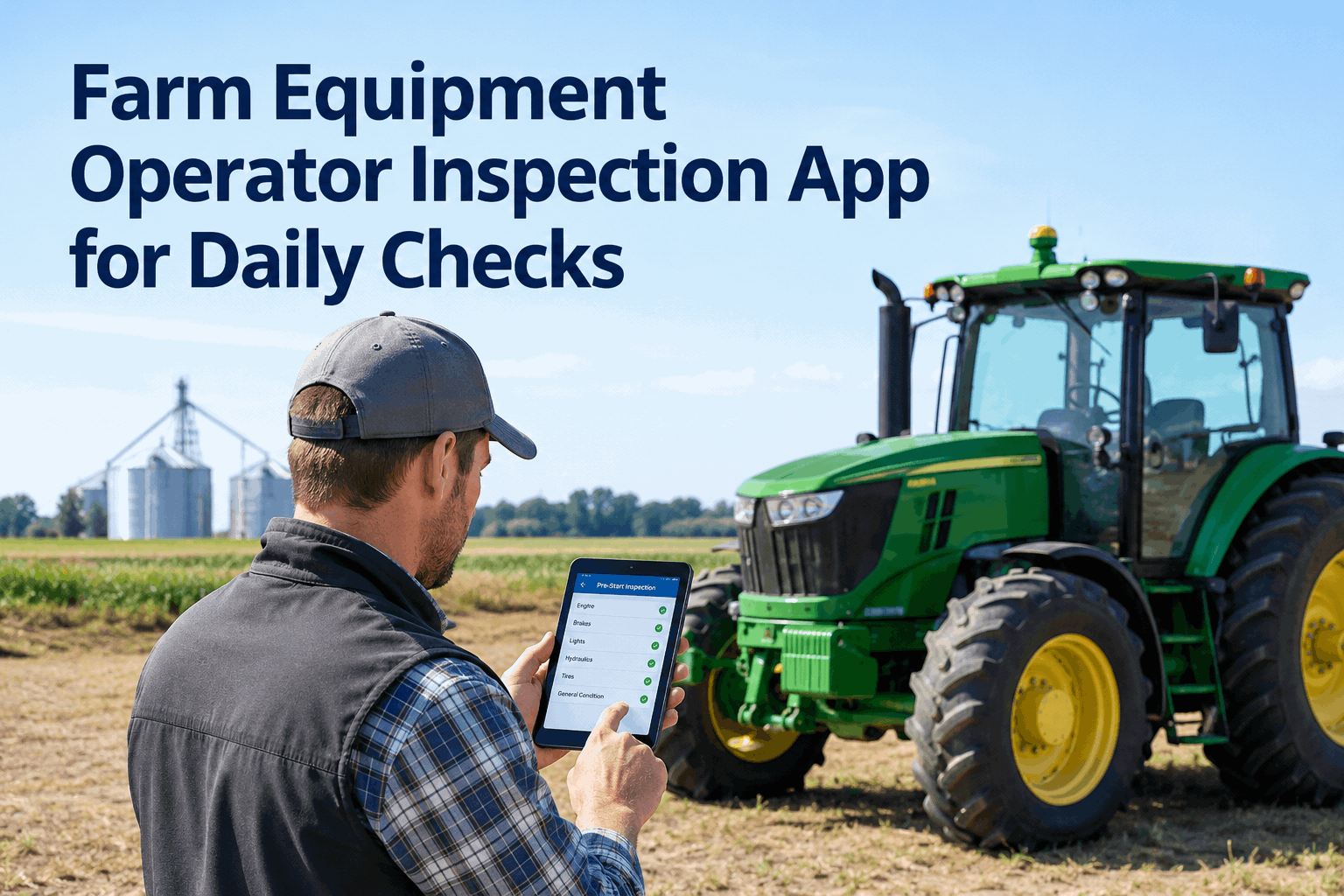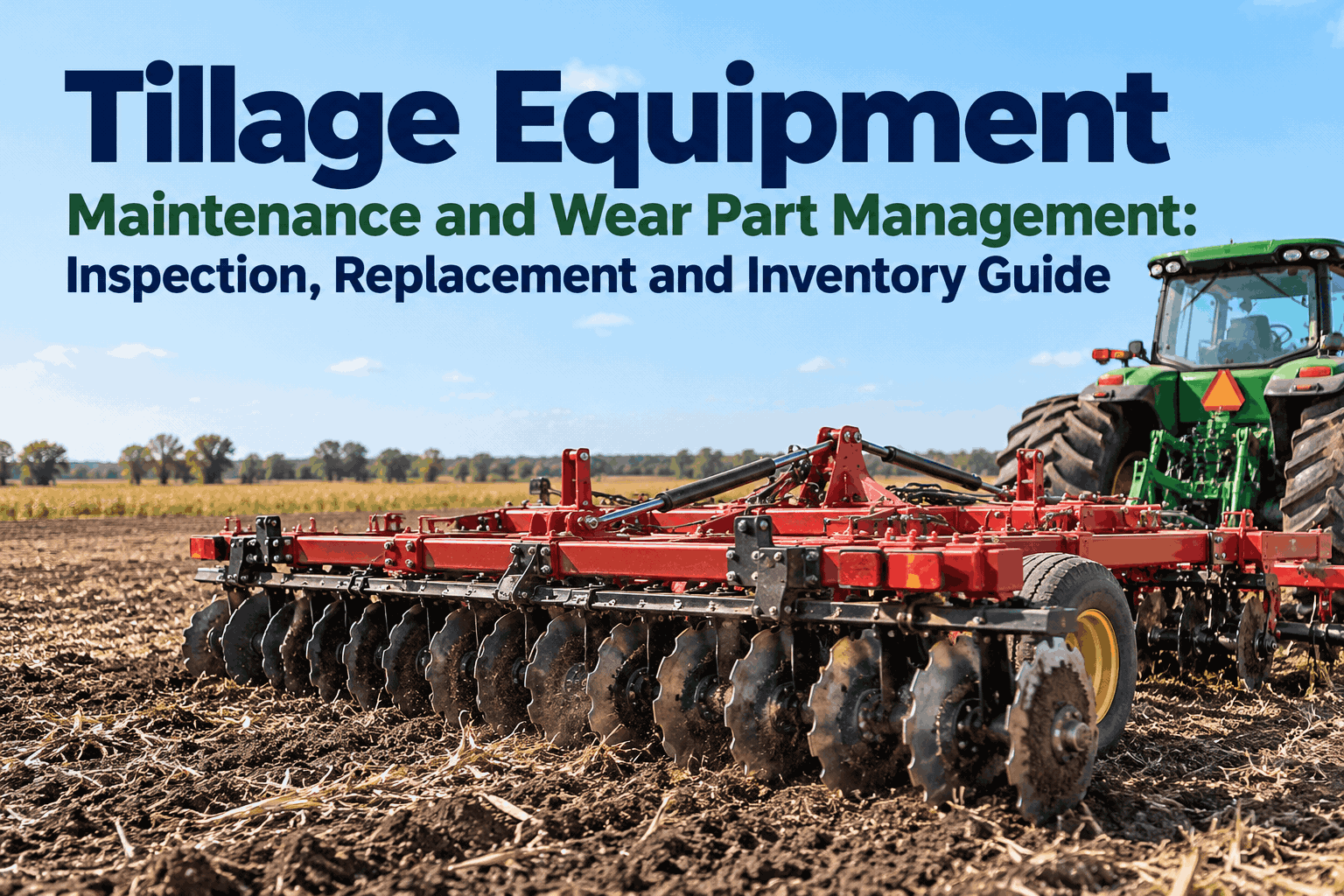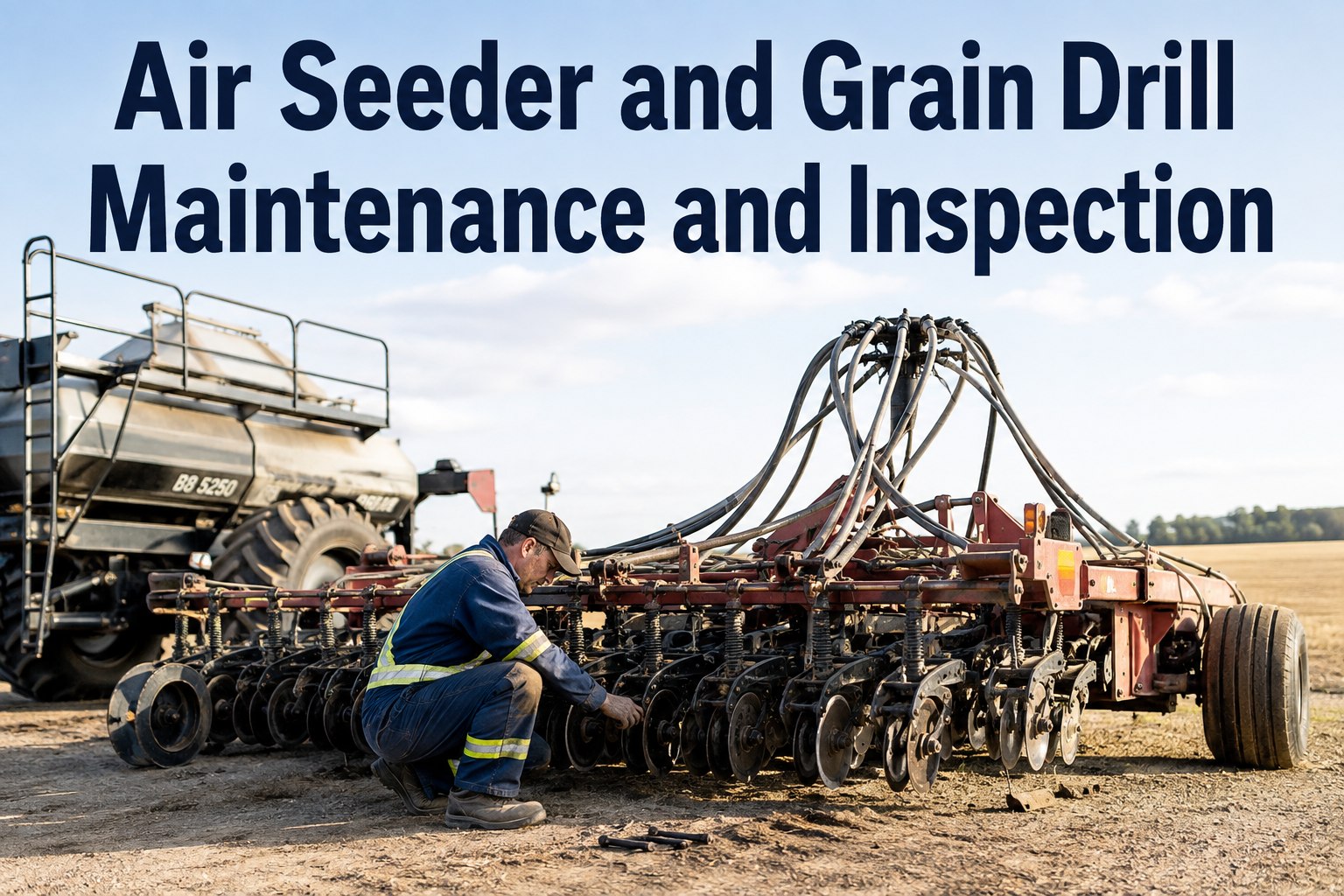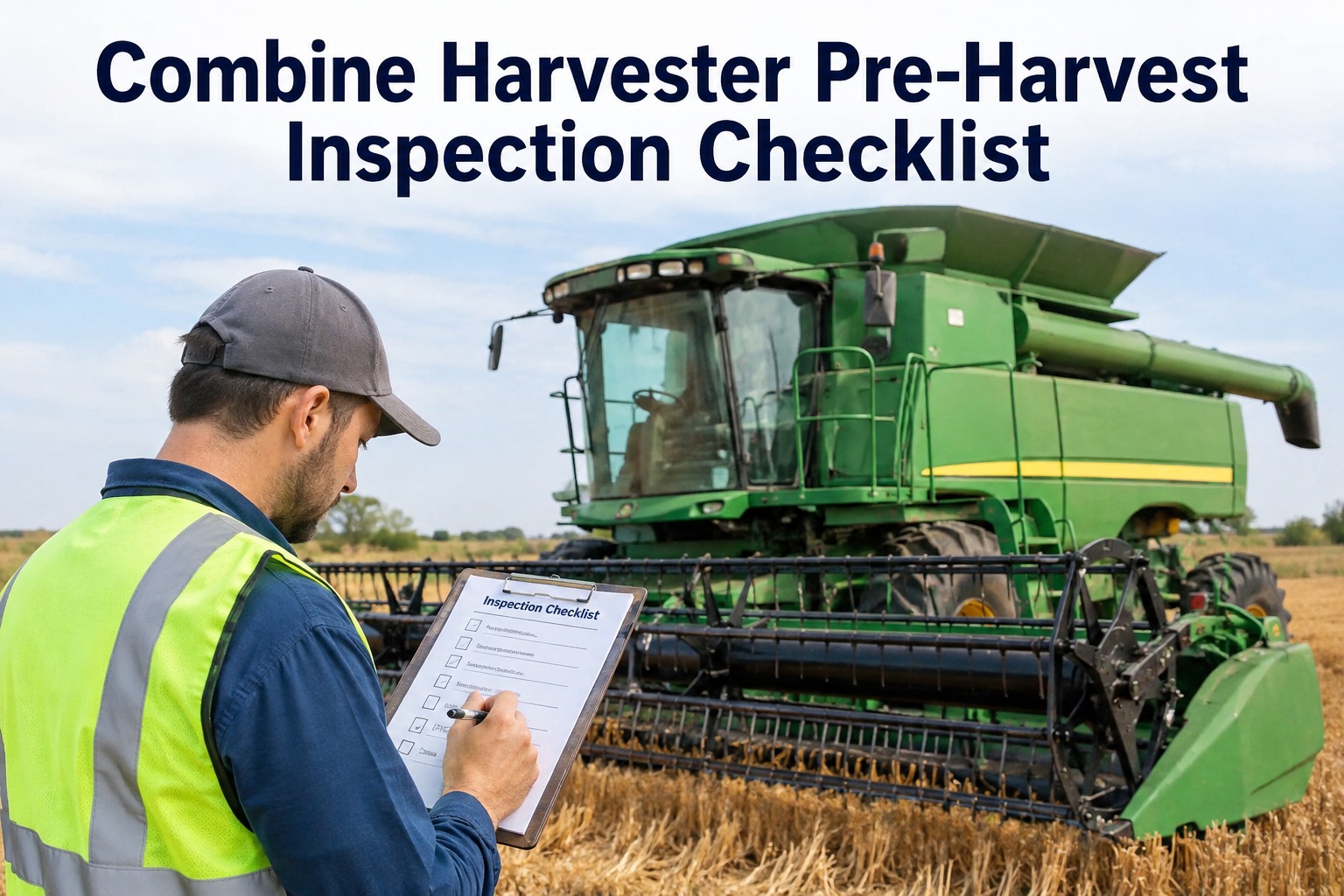
Grain cart maintenance should begin before the first harvest load, when worn auger flighting, damaged PTO guards and leaking hydraulic hoses can still be repaired without delaying field work. This pre-harvest checklist helps farm managers inspect grain carts and portable augers, record defects and prepare parts before harvest pressure builds.
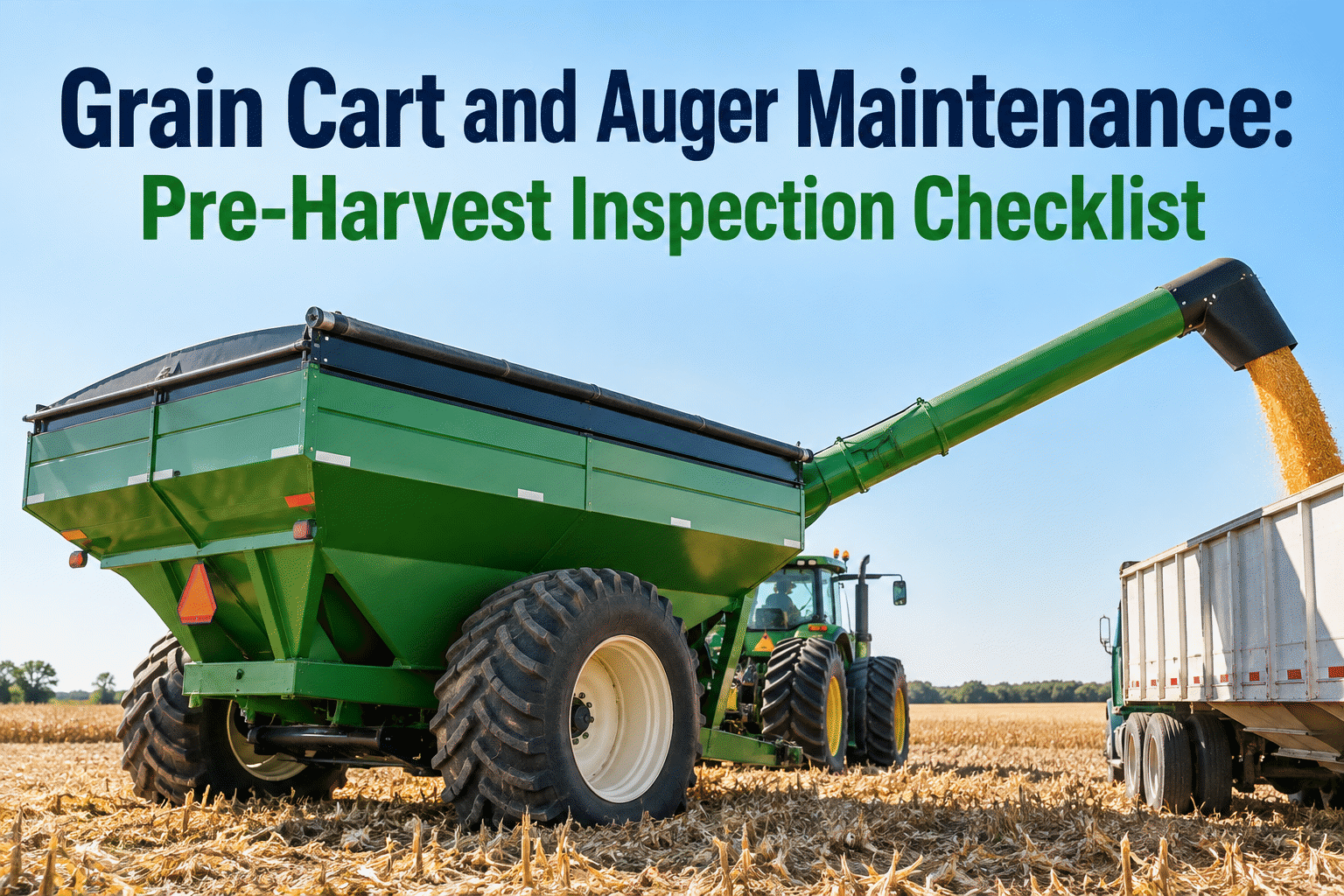
Grain Cart and Auger Maintenance: Pre-Harvest Inspection Checklist
Inspect the transfer system, protect operators around moving parts and capture repairs before equipment is needed in the field.
What should a pre-harvest grain cart inspection cover?
A grain cart and its auger are one operating system. Check the machine's ability to move, unload and stop safely—not just whether it starts.
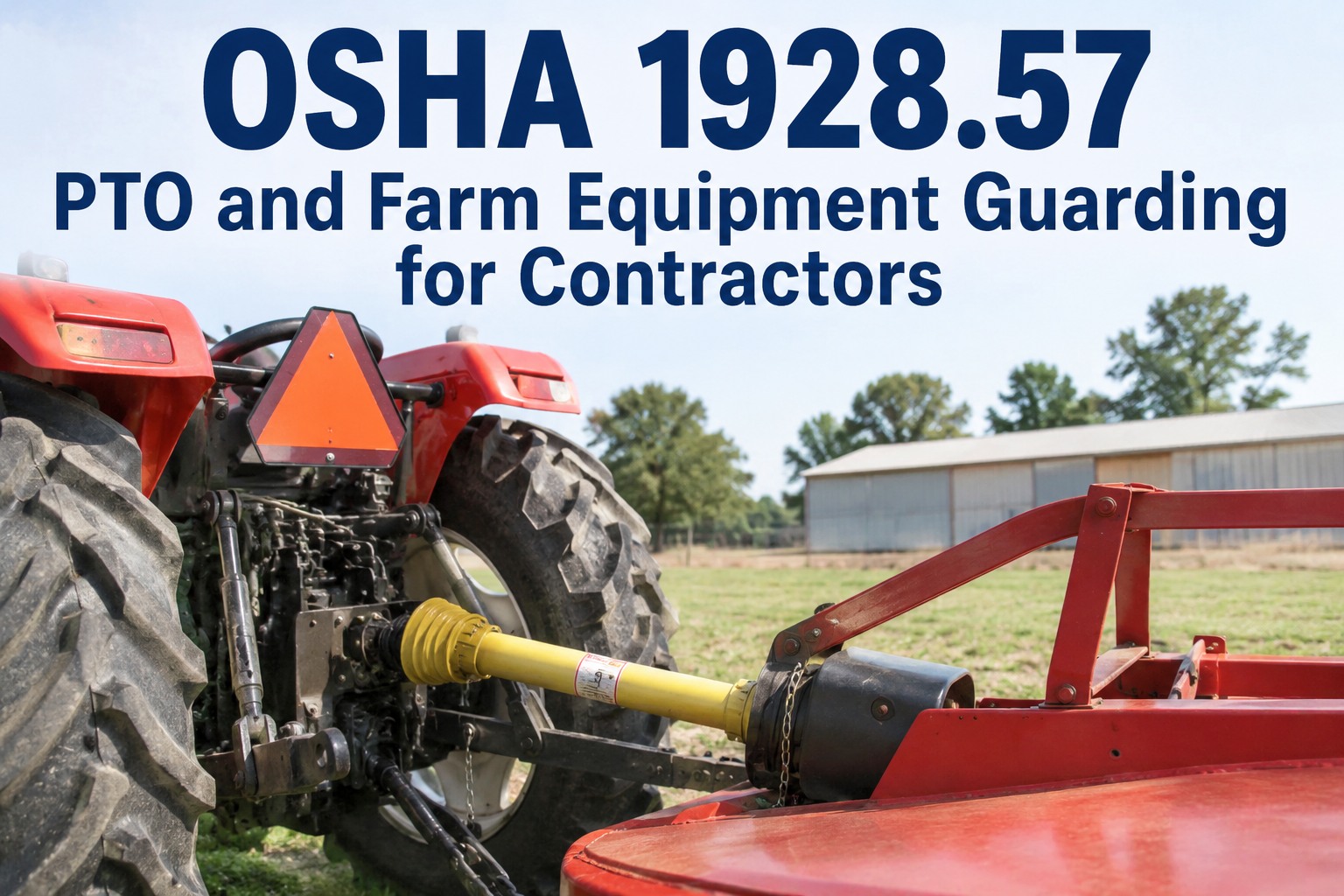
PTO shafts and guarding
Inspect guards, restraint chains, shaft condition and attachment points. Missing or damaged guards are a stop-work issue.
Auger flighting and tube
Look for thinning, bent flighting, rubbing, cracked welds and accumulated material. Check folding and locking mechanisms.
Gearboxes and bearings
Check lubricant level and condition to the OEM specification. Investigate leaks, play, vibration and unusual noises.
Tires, hubs and running gear
Check tire condition and inflation to the manufacturer's guidance, wheel fasteners, hubs, bearings and frame integrity.
Hydraulics and hitch
Inspect hose abrasion, couplers, cylinders, pins, safety retainers and drawbar components for damage or leakage.
Scale, tarp and controls
Verify scale operation where fitted, tarp movement, lights, visibility and all unloading controls before harvest.
Make the checks repeatable with a free HVI digital grain cart inspection checklist that keeps observations with the equipment record.
Follow the grain path, then inspect the support systems
This sequence reduces missed inspection points and keeps the inspection organized around how grain moves through the equipment.
Hopper and intake
Inspect sheet metal, cleanout points, gates and any remaining grain or obstructions.
Auger and flighting
Examine wear, alignment, guards and the folding mechanism while isolated.
Discharge and controls
Confirm outlet condition and controlled operation after all guards are restored.
Support check: lubrication
Use the model-specific service schedule for bearings, gearboxes and grease points; do not assume a universal interval.
Support check: structure
Inspect frames, hitch, tires and hydraulic lines before the cart travels loaded.
Decide what must be repaired before the machine returns to service
Record the finding, isolate unsafe equipment and assign a repair owner. A checklist is useful only when defects lead to action.
Use Book a Demo to see how HVI inspection findings and maintenance work orders can be organized for your harvest fleet.
Keep pre-harvest defects from becoming harvest downtime
Build inspection records, schedule maintenance and track parts needed to get grain handling equipment ready.
A simple grain cart maintenance record crews can actually use
Keep each inspection tied to the correct machine, date and repair outcome. This sample shows the information worth capturing.
For parts and maintenance history in one place, sign up for HVI to organize grain cart service records across your equipment.
When to inspect grain carts and augers
Adapt the timing to the machine's manual, operating conditions and local farm procedures.
Full condition review
Inspect the entire cart, order wear parts and schedule repairs with adequate lead time.
Operator walkaround
Check guards, tires, leaks, couplers, visible damage and safe operation.
Monitor developing wear
Investigate unusual sounds, heating, slow unloading and recurring defects promptly.
Clean and preserve
Follow OEM cleaning, storage and lubrication instructions; log repairs for next season.
For portable augers, also inspect support stands, lifting systems, stability, electrical or engine power systems as fitted, and guarding. Keep clear of grain entrapment hazards and never enter bins or clear blockages without required safety procedures.
Connect grain cart inspections to HVI maintenance records
Use HVI digital inspections to document defects, maintenance records to preserve repair history, and parts inventory to support pre-harvest planning. This creates a consistent handoff between operators and the maintenance team.
Book a Demo to review an HVI pre-harvest inspection and repair workflow for carts, augers and other farm equipment.
Grain cart and auger maintenance FAQs
What should I check on a grain cart before harvest?
Inspect PTO shafts and guards, auger flighting, bearings, gearbox lubrication, hydraulic hoses, tires, hubs, hitch, frame, unloading controls and scales if equipped. Follow the manufacturer’s inspection and maintenance instructions.
How often should a grain auger be inspected?
Complete a thorough pre-season inspection and perform operator checks before use. Increase checks when operating in dusty conditions or when vibration, noise or wear appears. Use the OEM schedule for lubrication and component service intervals.
What are signs of worn auger flighting?
Reduced unloading performance, visible thinning, bent edges, contact with the tube or abnormal vibration can indicate wear. Shut down, isolate power and inspect using the manufacturer’s procedure before attempting repair.
Can a grain cart operate with a damaged PTO shield?
No. A damaged or missing PTO guard exposes operators to severe entanglement hazards. Remove the equipment from service until the guard is repaired or replaced and verified.
How can HVI help with grain cart maintenance?
HVI can help teams document digital inspections, keep maintenance records and organize parts information. Equipment-specific repair decisions and safe operating procedures must still follow OEM guidance and site requirements.
Make every grain cart inspection count
Start recording pre-harvest checks, repairs and equipment history before the busy season begins.