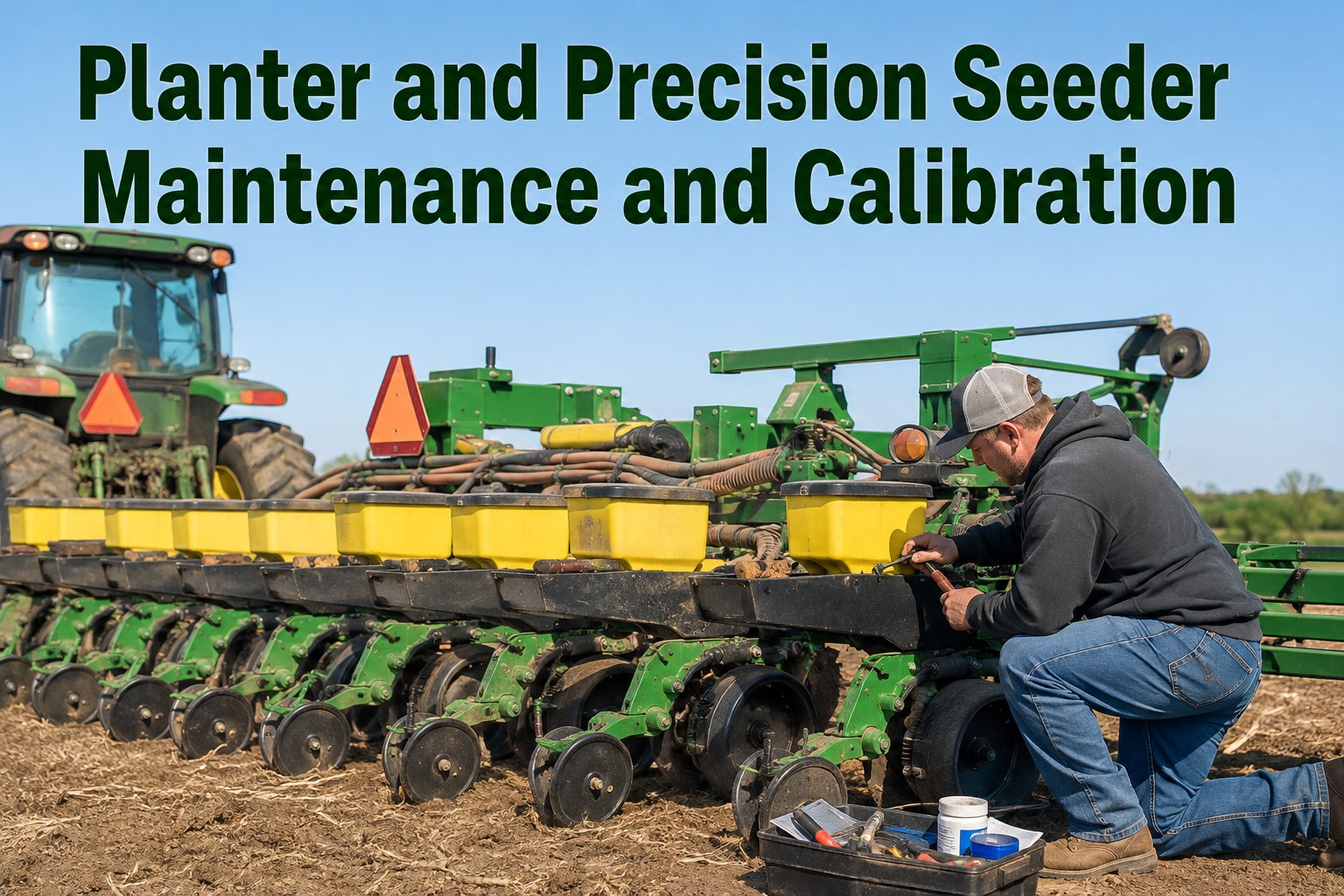
The planter that rolled out of the shed in February looking fine is the same one that leaves skips and doubles across 2,000 acres in April - and by the time emergence shows the problem, the yield ceiling is already set. A solid planter maintenance checklist, run before the window opens, is the highest-return service work on a grain farm because no in-season pass can buy back lost singulation or uneven depth. Worn seed meters, thin opener discs, sloppy parallel arm bushings and tired closing wheels each shave stand quality a few percent at a time, and those percentages compound across every row and every acre. This guide walks through the row-unit wear points that matter most, the calibration checks that prove the machine is ready, and how to keep wear parts on the shelf instead of on backorder - or book a 30-minute demo to see it scheduled on your own planters.
Pre-Season Planter Service
Is your planter ready to set this year's yield ceiling - or quietly lowering it?
Every worn meter, thin disc and loose bushing caps emergence before the seed is even covered. Fix it in the shop, where it costs hours - not in the field, where it costs bushels.
What Wear Actually Costs
Four numbers that decide whether service pays for itself
Planter Maintenance Checklist
The row-unit service list, in the order failures cost you most
Work top to bottom. Meter condition and opener discs move yield the most; chains, tubes and sensors protect the monitoring you rely on in the cab.
Seed meter condition and calibration
Pull every meter and run it on a stand with your actual seed lot and plate or disc. Target 99%+ singulation with skips and multiples under 1% each. Check finger pickups for worn or stiff fingers, vacuum discs for groove wear and seals for leaks. A meter at 95% accuracy plants that error on every acre you cover.
Opener disc diameter and contact
Measure disc diameter against the new-spec minimum - most 15-inch discs are done around 14.5 inches. Check that the pair contacts at the front for 1.5 to 2 inches of blade. Worn discs cut a W-shaped trench, drop seed shallow and leave the vee open at the bottom.
Parallel arm bushings
Grab the row unit and shake it. Any side-to-side play at the parallel arms means worn bushings, and a row unit that wanders cannot hold depth. This is the most skipped check on the list and one of the cheapest parts on the planter - replace in sets, not one at a time.
Closing wheels and alignment
Check closing wheel bearings for play, springs for tension and alignment so the wheels close over the seed slot, not beside it. A misaligned closing system leaves an open slot that dries out shallow-planted seed - the classic cause of uneven emergence in dry springs.
Downforce system function
Springs, air bags or hydraulic - verify the system actually delivers and holds the set downforce row to row. Too little and the unit rides up in tough ground; too much and you compact the trench and restrict root growth. Cycle pneumatic and hydraulic systems through their full range and check for slow leaks.
Seed tubes, sensors and drive
Inspect seed tubes for wear at the bottom curve where seed exits - a worn tube scatters spacing the meter worked to create. Clean every sensor eye, verify the monitor counts against a hand check, and service chains, idlers and bearings so drive speed stays smooth across the bar.
Wear Limits and Triggers
Opener disc wear, bushings and tubes: replace or run one more season?
Every wear part has a line where "still runs" turns into "costing stand." These are the shop-floor triggers that keep the decision objective instead of a guess in March.
| Component | Check | Replace when | Cost of running worn |
|---|---|---|---|
| Opener discs | Diameter + front contact | Below spec diameter or under 1.5 in contact | Shallow, uneven depth; open trench bottom |
| Parallel arm bushings | Side play at row unit | Any visible movement by hand | Row unit wander; depth varies inch to inch |
| Seed meter parts | Stand test with your seed | Singulation below 98-99% after adjustment | Skips and doubles on every acre |
| Closing wheels | Bearing play + alignment | Loose bearings or wheels off the slot | Open slot, dry seed zone, gappy emergence |
| Seed tubes | Wear at lower curve | Visible thinning or flap damage | Scattered spacing; false monitor readings |
| Drive chains and idlers | Stretch, stiff links, sprocket hook | Stiff links or hooked sprocket teeth | Population surges; meter speed spikes |
Log each measurement per row unit, not per planter. Row 7's discs and row 12's bushings wear at different rates, and a single "planter serviced" note hides the unit that needed parts. If you want to see what per-row records look like in practice, walk through a row-unit inspection template in a live demo.
Pre-Season Timing
A pre season planter service timeline that beats the parts backlog
The work itself takes days. The calendar is what kills you - meter stand bookings and wear-part shelves empty out fast once every farm in the county wakes up at once.
Inspect and measure everything
Full row-unit teardown inspection: disc diameters, bushing play, meter condition, tube wear, chain stretch. Record per-row findings with photos so the parts order is exact, not approximate.
Order wear parts and book the meter stand
Order discs, bushings, tubes, closing wheel kits and meter wear parts now - spring lead times run 10-14 days and stretch longer in a tight year. Reserve meter stand time before the rush.
Rebuild row units and calibrate meters
Install parts, set disc contact and closing wheel alignment, then run every meter on the stand with this year's seed lots. Record singulation results per meter so a weak unit gets rebuilt, not excused.
Field-check depth, downforce and monitors
Short test pass in real ground: dig behind several rows, confirm depth consistency, verify downforce response and cross-check monitor counts against actual seed drop. Then the planter is genuinely ready - not assumed ready.
Run this year's pre-season overhaul on a schedule, not a memory
HVI turns your planter maintenance checklist into a recurring PM with per-row inspection templates, photo records and a parts list that orders itself before the spring rush.
How HVI Helps
Precision planter service, tracked like the yield-critical work it is
Paper checklists in the shop drawer do not order parts or prove what was done. HVI does both, on any phone or tablet in the shed.
Templates per equipment type
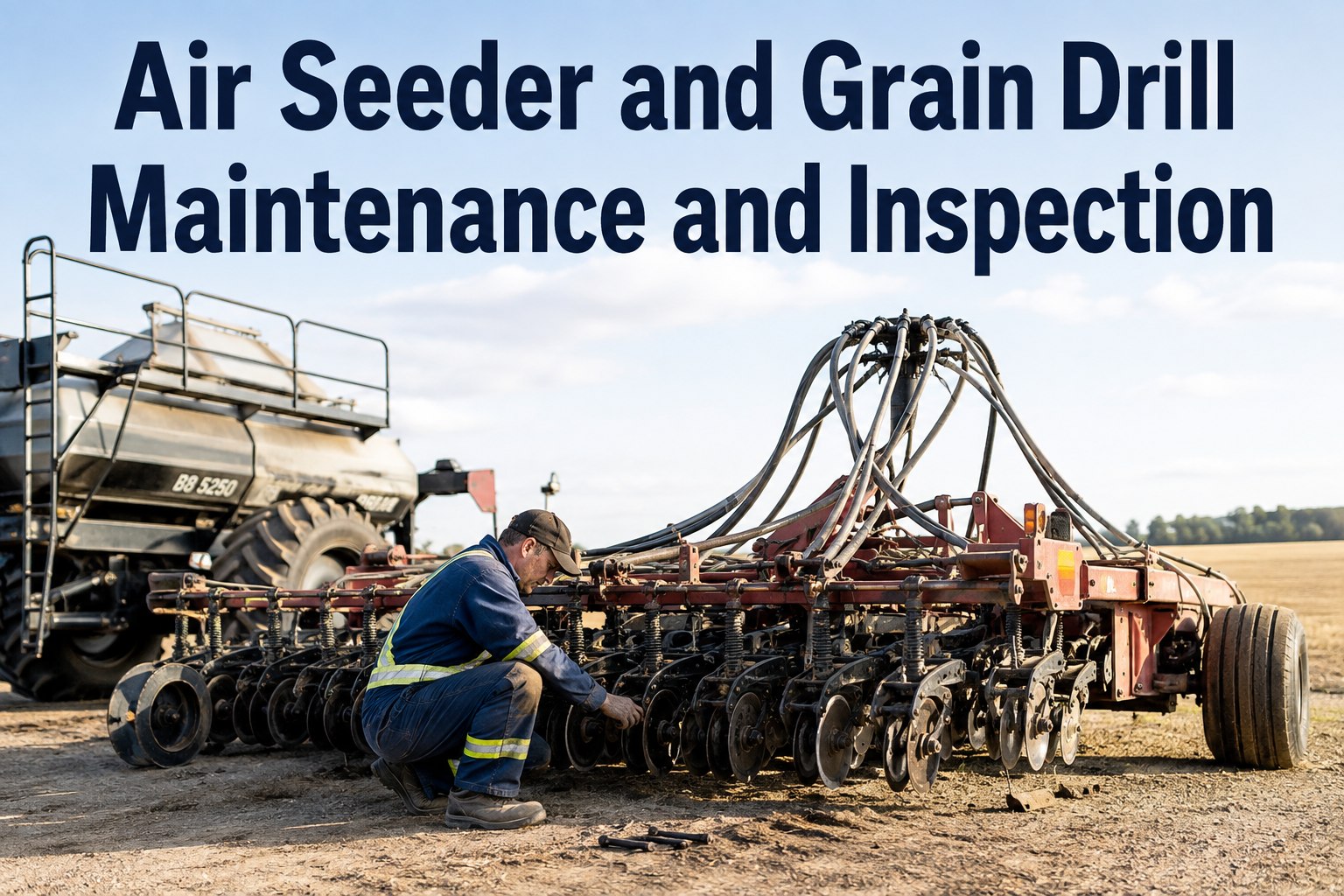
Build planter, air seeder and drill checklists with per-row fields for disc diameter, bushing play and meter results. Defects convert to work orders instantly - no re-writing findings at the office.
Annual overhaul in the PM structure
The pre-season overhaul sits in preventive maintenance scheduling alongside in-season grease intervals, with due and overdue alerts. The planter surfaces on the work list in winter - not when the seed truck arrives.
Parts and inventory for wear parts
Track discs, bushings, tubes and meter parts across shops with reorder points. When the inspection flags twelve worn disc pairs, you know immediately whether the shelf covers it or a purchase order goes out that day.
History and cost per machine
Every overhaul, part and hour lands on the asset record. Compare row-unit rebuild cost year over year and decide with numbers when a planter is cheaper to replace than to keep patching.
Mixed operation? The same platform covers trucks, sprayers, combines and shop equipment, so the whole fleet lives in one maintenance system. You can start logging inspections free and build your first planter template today.
Worked Example
What one worn meter costs across a season
The setup
A 24-row planter covering 2,000 corn acres. One meter tests at 94% singulation on the stand - five points below target - but the calendar is tight and it goes to the field anyway.
The math
That meter plants 1/24 of the acres - about 83 acres. At a commonly cited 3 bushels per acre lost per 1% stand drop, a 5% gap means roughly 15 bushels per acre on those rows: about 1,250 bushels across the season.
The comparison
A meter rebuild runs a few hundred dollars in parts and a couple of shop hours. The grain it quietly costs is worth several times that - and the same logic applies to worn discs and bushings, just spread wider.
The fix is not more effort - it is catching the number early enough to act on it. Book a demo and see how meter test results become tracked work orders instead of notes on the shop whiteboard.
Key Takeaways
Planter condition is a yield decision made in the shop
- Singulation is the headline number. Test every meter on a stand with your own seed and hold the 99% line - a weak meter plants its error on every acre.
- Disc diameter and bushing play set depth consistency. Measure both per row; a row unit that wanders or cuts shallow undoes perfect meter work.
- Timing is the real constraint. Inspect 8-10 weeks out, order parts at 6-8, rebuild and calibrate at 3-4 - spring lead times punish late starts.
- Records turn service into a system. Per-row findings, photo-backed work orders and parts inventory mean next year's overhaul starts from data, not memory.
If your planter service still lives in a notebook, sign up free and put the checklist on your phone before this winter's teardown.
My rule is simple: no meter goes to the field under 99 on the stand, and I shake every row unit by hand before I sign the sheet. The year we skipped bushing checks, we chased depth complaints for two weeks and I still found the play in June. Now the inspection lives on my phone, the photos are attached per row, and the parts order goes out the same afternoon. It is the cheapest yield I buy all year.
Dale Merritt - Maintenance Manager, 6,500-acre grain and forage operation
Common Questions
Planter maintenance and calibration FAQs
How often should a seed meter be calibrated?
When should opener discs be replaced?
What does downforce actually do for emergence?
How do I keep track of per-row wear parts without paperwork chaos?
Does the same system work for air seeders and drills?
Set this year's yield ceiling in the shop, not the field
Put your planter and seeder overhauls on a real schedule - per-row inspections, photo records, parts that arrive before the rush. See it on your own equipment in a 30-minute demo.
Free to start - Works on any phone - No card needed