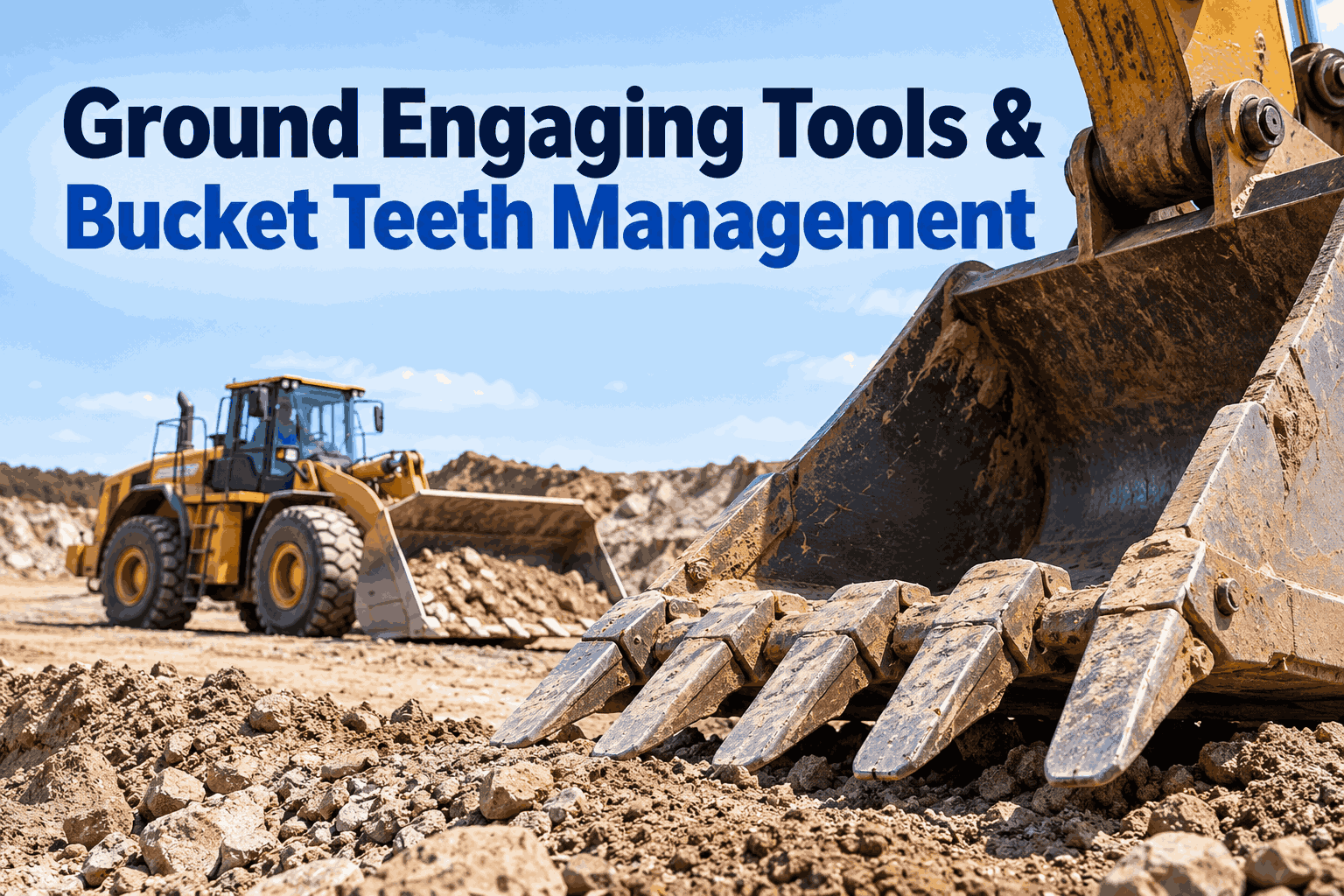
Ground engaging tools take the direct punishment of digging, loading and moving abrasive material. Managing bucket teeth, tips, adapters, retainers and other GET as measurable wear parts helps you catch damage earlier, plan replacements and understand what each machine is actually consuming. See how HVI can turn GET inspections into trackable maintenance records.
Your Bucket Teeth Are Consumables.
Your GET Costs Shouldn't Be Invisible.
Track wear, defects, replacements, parts usage and service history by machine so ground engaging tools become a managed maintenance cost instead of an unpredictable jobsite expense.
Illustrative condition view — use the applicable OEM criteria for actual service decisions.
What counts as a ground engaging tool?
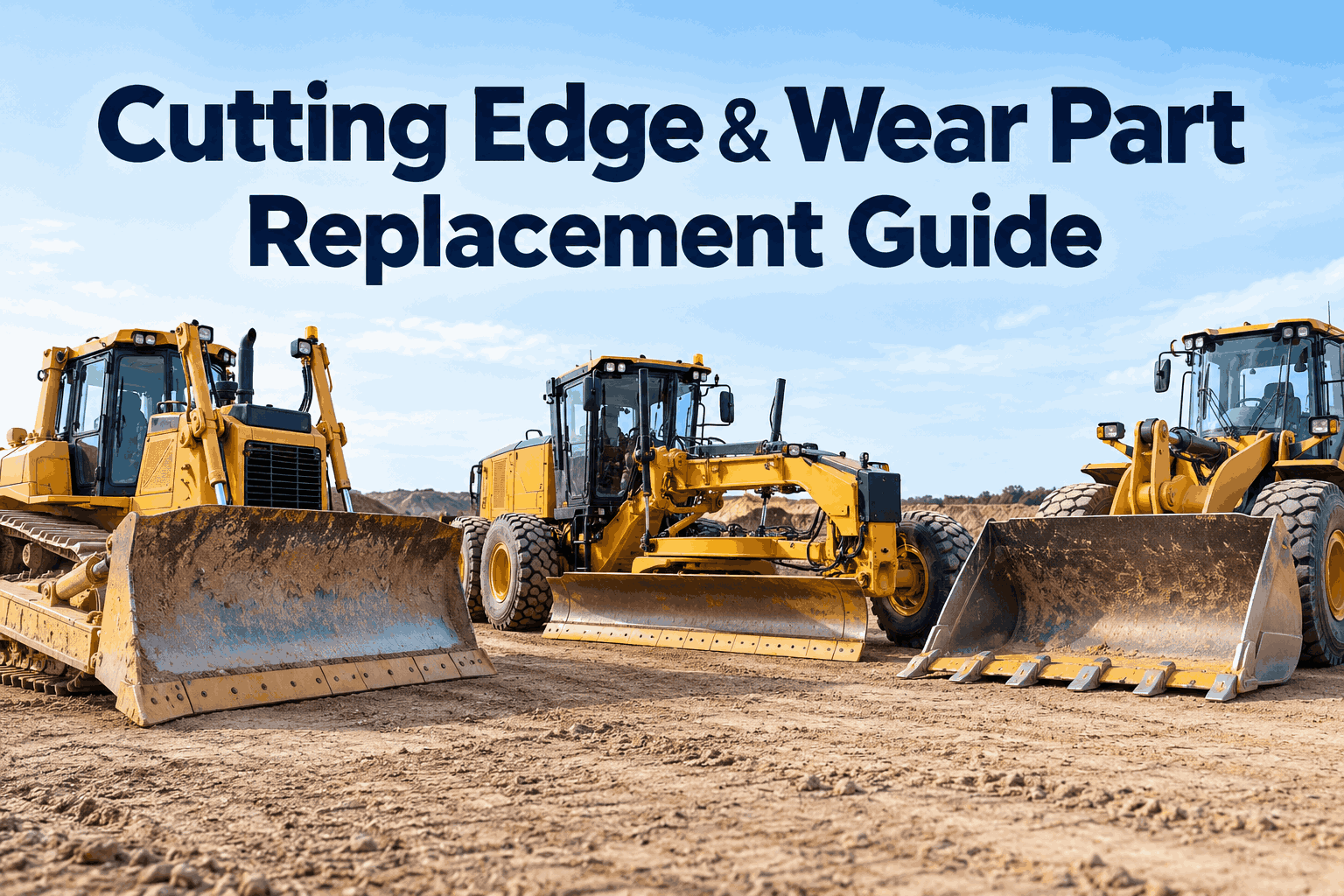
Ground engaging tools are replaceable wear components positioned where a bucket, blade or work tool meets the material. They help the machine penetrate, cut, load or move material while protecting more expensive structures behind them.
Bucket teeth / tips
Replaceable contact points that penetrate material and experience direct abrasion and impact.
Adapters
Support the tooth or tip system and should be inspected before wear progresses into the adapter body or mounting area.
Retainers & locking hardware
Keep replaceable tips secured. Missing, loose or damaged retaining components require attention.
Edges, side cutters & protection
Protect bucket edges and high-wear areas while supporting cutting and loading performance.
GET configuration varies by equipment and application. Caterpillar, for example, lists tips, adapters, side cutters, sidebar protectors, cutting edges, shrouds and other protection components within its GET systems. The right combination depends on the bucket, machine, material and work being performed.
Inspect wear before it becomes an unplanned parts run
A practical ground engaging tools maintenance program connects what the operator sees at the bucket with what maintenance and the parts room need to do next.
Check teeth, adapters, retainers, edges and protected bucket areas.
Capture condition, position, measurements, photos and defects.
Turn approaching wear or defects into scheduled maintenance.
Complete the changeout using the applicable manufacturer procedure.
Compare replacement frequency and parts consumption by machine.
Still moving bucket-tooth findings between paper forms and spreadsheets? Start a digital GET inspection and maintenance record with HVI.
A five-minute look can reveal more than “tooth present”
Caterpillar recommends including GET in pre-shift inspections and checking for wear and damage. A useful fleet checklist goes beyond presence or absence and records the condition of the wear system around each tooth.
Tip wear
Look for excessive or uneven bucket tooth wear and compare condition with the applicable GET service criteria.
Missing teeth
A missing tip changes the protection available to the adapter and bucket edge. Record it as an actionable defect.
Adapter condition
Check adapters and their mounting areas for excessive wear, cracking or damage before a consumable-tip problem reaches a more expensive component.
Retainers
Confirm retainers and locking components are present and secure according to the specific GET system.
Base edge & welds
Inspect the areas around adapters and bucket edges for cracking, excessive wear or evidence that protection is being lost.
Side & bottom protection
Include side cutters, wear plates, protectors and other fitted GET in the same inspection routine.
Cat recommends inspecting GET before the shift and checking areas including bucket tips, adapters, retainer pins, wear plates and cracks around adapter or corner welds. The exact inspection and replacement criteria should still come from the applicable machine and GET documentation.
Bucket teeth wear can tell you more than how much metal is left
Repeated wear patterns can help a maintenance team decide what deserves investigation. Preserve the pattern in the inspection history instead of recording every changeout simply as “tooth replaced.”
Relatively even wear
Useful baseline data. Record service life and compare it with similar machines doing comparable work.
One-sided wear
Document position and operating context. Repeated uneven wear may justify checking the application, setup or operating conditions.
Accelerated consumption
If the same machine consumes GET faster than expected, compare its application, material and replacement history.
Damage or missing tip
Treat damage differently from normal wear and inspect the adapter and surrounding components before installing a replacement.
Don't just count how many bucket teeth you bought. Record which machine consumed them, where they were fitted, why they were changed and how long they stayed in service.
Practical GET management principleThe longest-lasting tooth is not automatically the best tooth
GET selection is a tradeoff between penetration, strength and wear life. A fleet working loose material does not necessarily need the same tooth profile as a machine breaking compacted or highly abrasive material. Caterpillar similarly recommends matching the bucket and GET to the application and material rather than treating one configuration as universal.
How effectively the GET enters and moves the working material.
How the tool resists abrasive wear through its intended service life.
Ability to withstand digging forces, impact and the demands of the application.
Stop measuring GET spend only at the parts counter
Total GET purchases tell you what the fleet spent. They do not tell you which machine, application or jobsite consumed the parts.
Tips, adapters, retainers, edges and other wear components.
Record which asset received each replacement.
Keep application or jobsite context when it explains wear.
Know when and why each replacement occurred.
GET Cost by Machine
Illustrative comparison — not fleet benchmark data.
Once parts usage is attached to individual assets, maintenance managers can investigate questions that a purchase total cannot answer: Is one excavator replacing teeth unusually often? Is a specific jobsite consuming more GET? Did a change in application alter the wear rate? Are adapters being replaced because tips are staying in service too long?
Caterpillar also describes data-driven GET programs that use inspection reports and bucket-cycle information to plan maintenance, manage inventory and understand cost per ton. That reinforces the broader principle: GET wear management becomes more useful when condition, usage, maintenance and cost are connected.
Know what is wearing out before the bin is empty
Multiple machines are approaching planned GET work.
Expected changeouts create an upcoming requirement.
Confirm the correct tips, retainers and related components.
Parts and maintenance can be ready for the same window.
If parts usage is still disconnected from machine history, book a demo to see how HVI connects inspections, maintenance and parts records.
What to capture for every GET changeout
Add useful context
Inspection photo or wear measurement
Machine hours when relevant
Jobsite or material context
Technician and completed work
Parts quantity and cost
This history creates a much stronger foundation for GET management than a standalone purchase order. You can connect the part to the machine that used it and preserve the reason it left service. Start building machine-level GET service records with HVI.
Questions your GET data should help you answer
Which machines consume the most bucket teeth and GET parts?
Are replacements caused by normal wear, damage or missing components?
Are adapters being protected, or are tips staying in service too long?
Does one application or material correspond with shorter GET life?
Which replacement parts should be available before the next service window?
Is GET consumption changing after a component or application change?
Connect the bucket, technician, parts room and maintenance history
Document bucket teeth, GET condition and wear-related defects.
Schedule required GET work instead of waiting for an operational failure.
Track the components consumed during maintenance and keep stock visible.
Keep replacement events tied to the machine for later analysis.
Ground Engaging Tools FAQs
What are ground engaging tools?
Ground engaging tools, commonly called GET, are replaceable wear components that directly interact with soil, rock and other working material. Depending on the equipment, they can include bucket teeth or tips, adapters, cutting edges, side cutters, protectors, shrouds and related components. They support digging, penetration, cutting and material handling while helping protect more expensive bucket and blade structures.
How often should bucket teeth and GET be inspected?
Inspection frequency should follow the equipment and GET manufacturer's guidance and account for the application. Caterpillar recommends inspecting GET during the daily or pre-shift walk-around. Severe impact or abrasive applications may justify closer monitoring. A fleet should define its checklist and escalation rules around the equipment it actually operates.
When should bucket teeth be replaced?
Bucket teeth should be replaced according to the service limits and condition criteria for the specific GET system. Excessive wear, cracking, missing tips or other damage can require action. Inspect the adapter, retainer and surrounding bucket structure as well rather than treating the tooth as an isolated component.
How can fleets track ground engaging tool costs?
Record each GET replacement against the machine that consumed the part, including component type, position, quantity, cost, replacement reason and relevant operating context. Machine-level history makes it possible to compare consumption rather than relying only on total parts purchases.
How does HVI support ground engaging tools maintenance?
HVI can connect digital equipment inspections with preventive maintenance, parts and inventory records, and machine service history. Construction teams can document GET wear and defects, plan maintenance, record replacement parts and retain completed service activity against individual assets.
Manage the wear part. Protect the expensive part behind it.
A strong ground engaging tools program does more than replace worn bucket teeth. It creates a repeatable process for inspection, GET maintenance, parts planning, replacement history and machine-level cost tracking. When those records stay connected, your team can identify abnormal consumption, prepare parts earlier and make better maintenance decisions across construction equipment and jobsites.