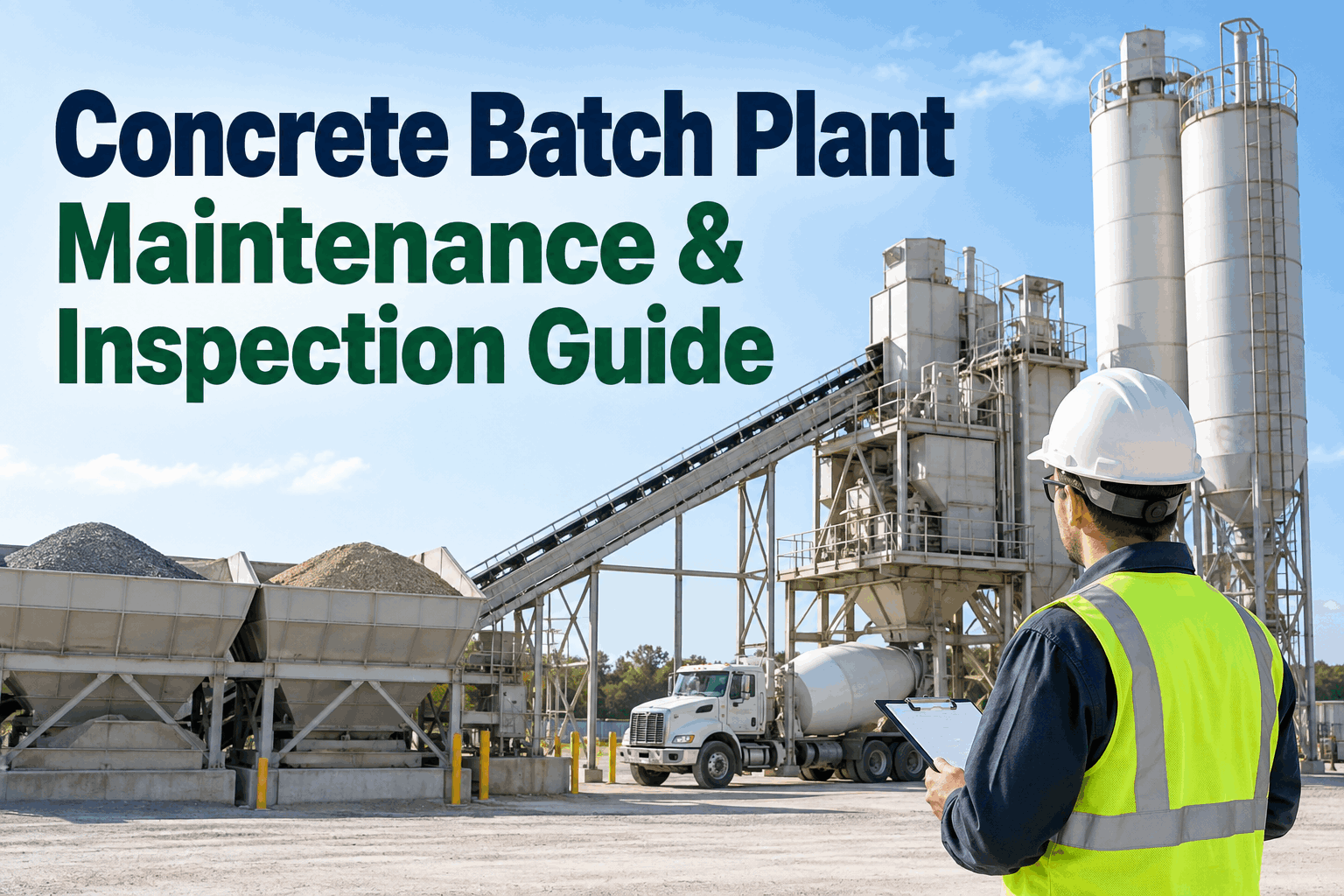
A concrete batch plant doesn't give you a second chance on a pour. The mixer, the bins, the conveyors, the silo and the dust system all have to fire in sequence, and the day one load cell drifts or a gate seal fails, the trucks are lined up and the slump is wrong. Batch plant maintenance is what keeps a chain of subsystems from stopping the whole pour over one neglected part. See batch plant PM scheduled subsystem by subsystem.
Batch plant maintenance that keeps the pour moving
Mixer, bins, conveyors, silo, dust and weighing — every subsystem on a schedule, calibrated and inspected, so one worn liner or drifting load cell doesn't hold up a truck line.
A screen or a crusher can limp for a shift. A batch plant can't — if the weighing drifts or the mixer jams, every load after it is either wrong or waiting, and the ready-mix clock is already running on the trucks.
Why batch plant maintenance is a chain problem, not a part problem
The plant is only as reliable as its weakest subsystem. Each one has a different failure mode, and any single one stops concrete going out the gate.
So the job isn't babysitting one machine — it's keeping six subsystems on schedule at once — see every subsystem on one maintenance schedule.
The six subsystems and what actually fails on each
Know the failure mode for each subsystem and most unplanned stops become scheduled jobs. Here's where to look and what to catch.
Six subsystems, each inspectable before it bites — see each subsystem as its own inspection and PM line.
The drift nobody sees: when the plant runs but the mix is wrong
Most failures stop the plant. The expensive one doesn't — it keeps running and quietly batches out of spec until a cylinder breaks or a slab cracks.
Load cells drift, nobody checks
A sensor reads a few percent off and the cement or water dose creeps. Every batch looks fine on the panel — until field results come back short and a pour gets rejected.
Weighing verified on a cadence
Calibration is a scheduled task with a record. Drift shows up as a trend before it leaves the yard, and the mix stays in spec load after load.
The weighing system is the one subsystem that fails without stopping — which is exactly why it needs a schedule, not a hunch — put batching calibration on a tracked schedule free.
The maintenance intervals that keep a batch plant pouring
Batch plant reliability is a rhythm — small checks daily, deeper ones weekly and monthly. These are the intervals the plants with the least downtime run.
- Drain air system & check pressure
- Mixer discharge door & seals
- Clear bin & conveyor buildup
- Dust system running clean
- Belt tension & alignment
- Weighing accuracy check
- Silo aeration & humidity
- Fastener & structure walk
- Mixer blade & liner wear
- Baghouse filter assessment
- Recalibration verification
- Water & admixture lines
- Full mixer overhaul
- Qualified calibration with records
- Conveyor bearings & pulleys
- Structural survey
Remembering them across subsystems and shifts is the hard part — not the intervals themselves — see these intervals auto-scheduled per subsystem.
Planned versus unplanned: where the 3–9× comes from
The same seal failure costs completely differently depending on whether it was caught on a round or blew during a pour.
Fails during a pour
- Pour held, trucks waiting with a running clock
- Loads wasted or rejected on spec
- Emergency parts and overtime
- Crew and customer schedule blown
Caught on a round
- Worn part flagged, fixed between pours
- Part on the shelf because the trend was visible
- No wasted material, no rejected loads
- Plant ready before the first truck
That multiple is the whole case for a maintenance program — see a worn part caught between pours, not during one.
How HVI runs batch plant maintenance across every subsystem
Inspection, PM schedule, calibration records and work orders live on one platform, so a flagged subsystem moves to a fix instead of a sticky note.
PM per subsystem, by hours or calendar
Mixer, bins, conveyors, silo, dust and weighing each get their own schedule, raised automatically when due — across one plant or every plant you run.
Inspection & calibration with records
Run each subsystem check on a phone with photos, and keep calibration records so weighing accuracy is proven and traceable, not remembered.
Defects into work orders & parts
A flagged liner or load cell becomes an assigned work order with the part attached, and repeat failures by subsystem point to the real root cause.
It's the same platform behind your preventive maintenance scheduling and your maintenance management, so the whole plant lives in one record.
We lost a full morning of pours once because a load cell had drifted and nobody had checked it in months. Half a dozen loads came back short, one slab got torn out. That one sensor cost us more than the whole plant's maintenance budget that month.
Now calibration is a scheduled task with a record, and every subsystem has its own PM line. We catch the worn stuff between pours now, not in the middle of one. The trucks stopped waiting on us.
Frequently asked questions
What does batch plant maintenance involve?
Keeping every subsystem in spec: the mixer (blades, liners, seals), aggregate bins and gates, belt and screw conveyors, cement silo and screw feeder, dust collector or baghouse, and the weighing and batching system. It runs on intervals — daily air and discharge checks, weekly belts and calibration, monthly liners and filters, annual overhaul and full calibration.
What causes the most concrete batch plant downtime?
Air pressure and pneumatics issues, belt slip or misalignment, discharge valve and seal failures, cement caking in the silo, and worn mixer blades are the common stops. The costliest is often weighing drift, because the plant keeps running while batching out of spec.
How often should a concrete batch plant be inspected?
Daily for air drain, mixer discharge, bin and conveyor buildup and the dust system; weekly for belt tension, weighing accuracy and silo aeration; monthly for mixer blades, baghouse filters and recalibration; and annually for a full mixer overhaul and qualified calibration with records.
Why does preventive maintenance matter so much on a batch plant?
Because unplanned maintenance runs three to nine times the cost of planned once you count held pours, idle trucks, wasted material and rejected loads. One subsystem down stops the whole plant, so catching wear early is the difference between a scheduled fix and a blown pour.
How does HVI help with batch plant maintenance?
HVI schedules PM per subsystem by hours or calendar, runs each inspection with photo and calibration records, and turns flagged defects into work orders with parts attached. Repeat failures by subsystem surface the root cause, so maintenance shifts from reactive to planned.
Make batch plant maintenance the reason the trucks never wait on you
PM scheduled per subsystem by hours and calendar, inspections and calibration with records, and defects routed to work orders before a worn part holds up a pour. Keep every subsystem ready and the concrete moving.