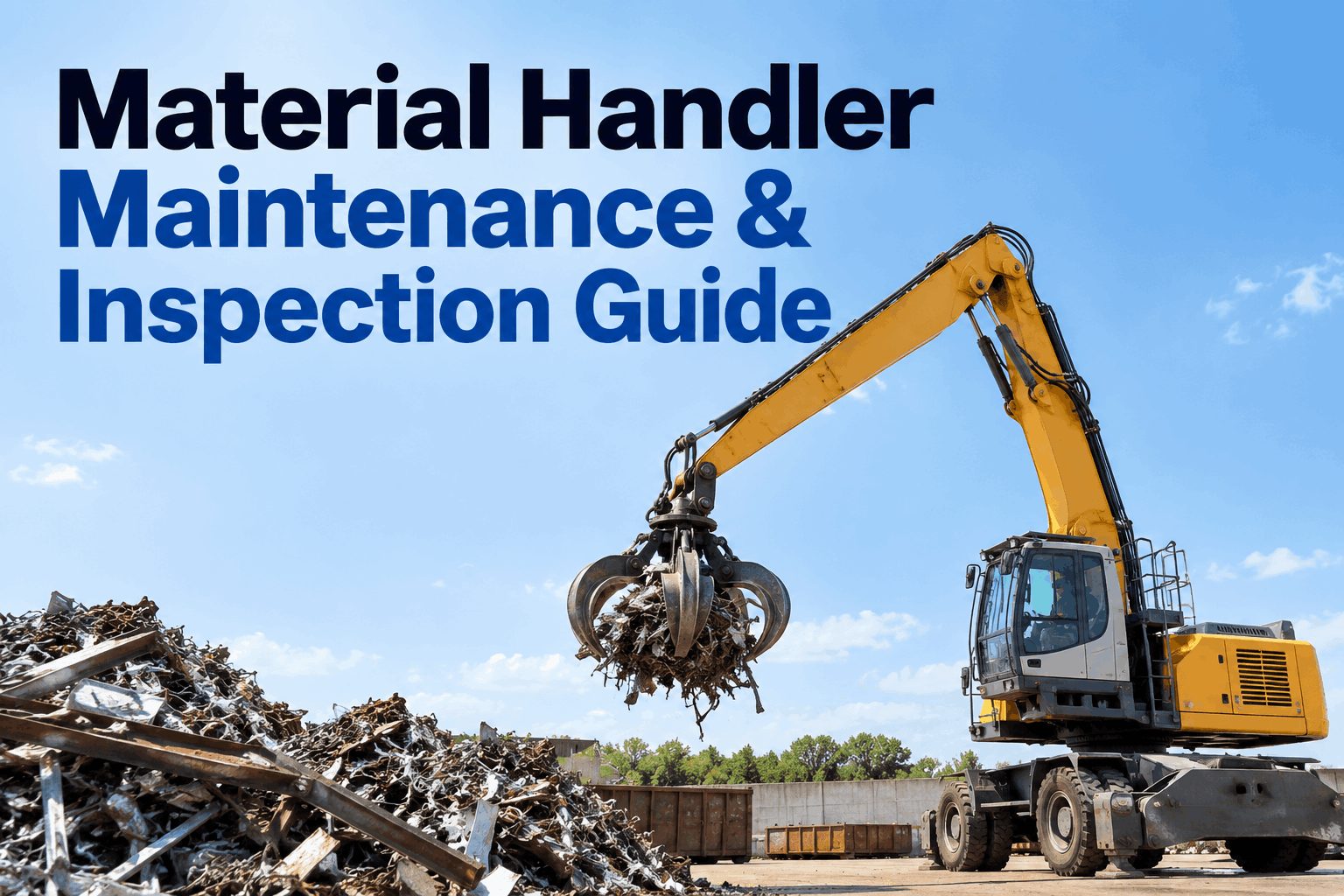
A material handler doesn't get an easy day. It sits in a scrap yard or on a dock and cycles a grapple or magnet thousands of times a shift, every shift, loading, sorting, feeding a shear. That nonstop duty is what makes material handler maintenance its own discipline — the wear, the heat and the hydraulic contamination pile up far faster than on a machine that stops to think. See material handler PM built around the duty cycle.
Material handler maintenance that keeps up with the duty cycle
Grapple, cab, hydraulics and undercarriage — the systems a continuous-cycle machine punishes hardest, inspected and serviced on a schedule that matches how hard it actually runs.
An excavator digs in bursts and moves on. A material handler runs the same grab-swing-release loop all day in dust, heat and sharp scrap — so its maintenance isn't about reach or stability, it's about keeping up with relentless cycles.
Why duty cycle drives material handler maintenance
The number that matters isn't horsepower — it's cycles. A handler that grabs and swings thousands of times a shift ages on hours and heat, not calendar months.
So the schedule runs on machine hours and condition, not the standard monthly checklist — see PM intervals set to real run hours.
The systems a material handler inspection has to cover
Four systems take almost all the duty-cycle punishment. Each wears its own way, and each gets its own line on the inspection.
Four systems, each a logged line instead of a once-over — see each system captured against the machine.
The silent killer: oil you can't see going bad
Most handler failures announce themselves. The expensive one doesn't — the hydraulic oil quietly cooks and contaminates until a pump or valve lets go mid-shift.
Change oil on a guess
Oil gets swapped on a rough schedule or when something fails. Heat and scrap-dust contamination build invisibly until a pump or main valve goes — and takes the shift with it.
Sample and trend the oil
Routine fluid analysis reads wear metals and contamination before they bite. A rising particle count flags the problem as a filter change, not a pump replacement.
On a machine running this hard, the oil is a gauge — reading it is the cheapest insurance there is — put fluid analysis on a tracked schedule free.
How HVI runs material handler maintenance
Inspection, hour-based PM, fluid schedules and work orders live on one platform, so a flagged tine or a due oil sample becomes an action instead of a note on the cab glass.
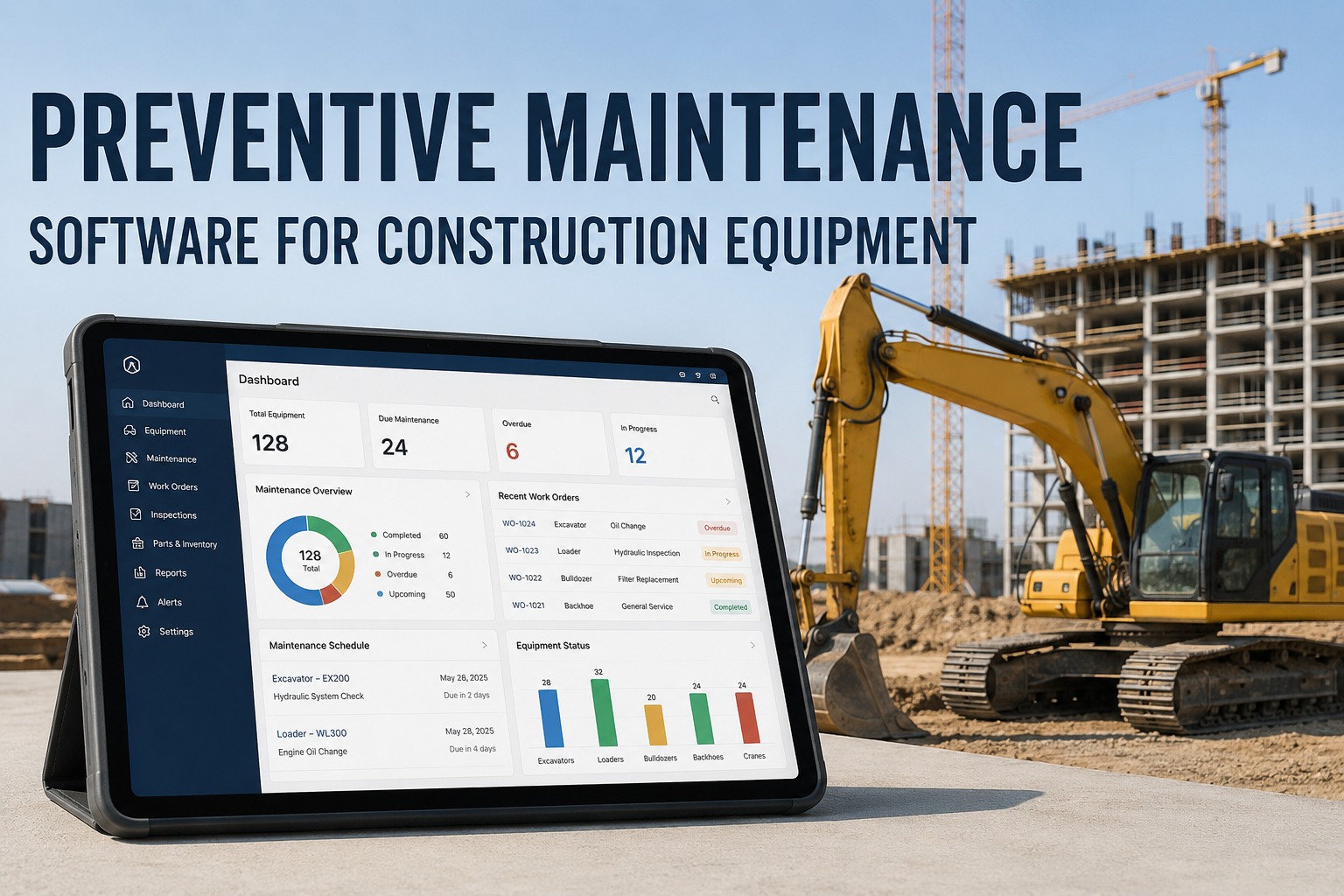
PM by machine hours, not the calendar
Greasing, filter changes, fluid samples and pin checks scheduled off the hour meter, so a hard-running handler gets serviced on how much it worked, not what month it is.
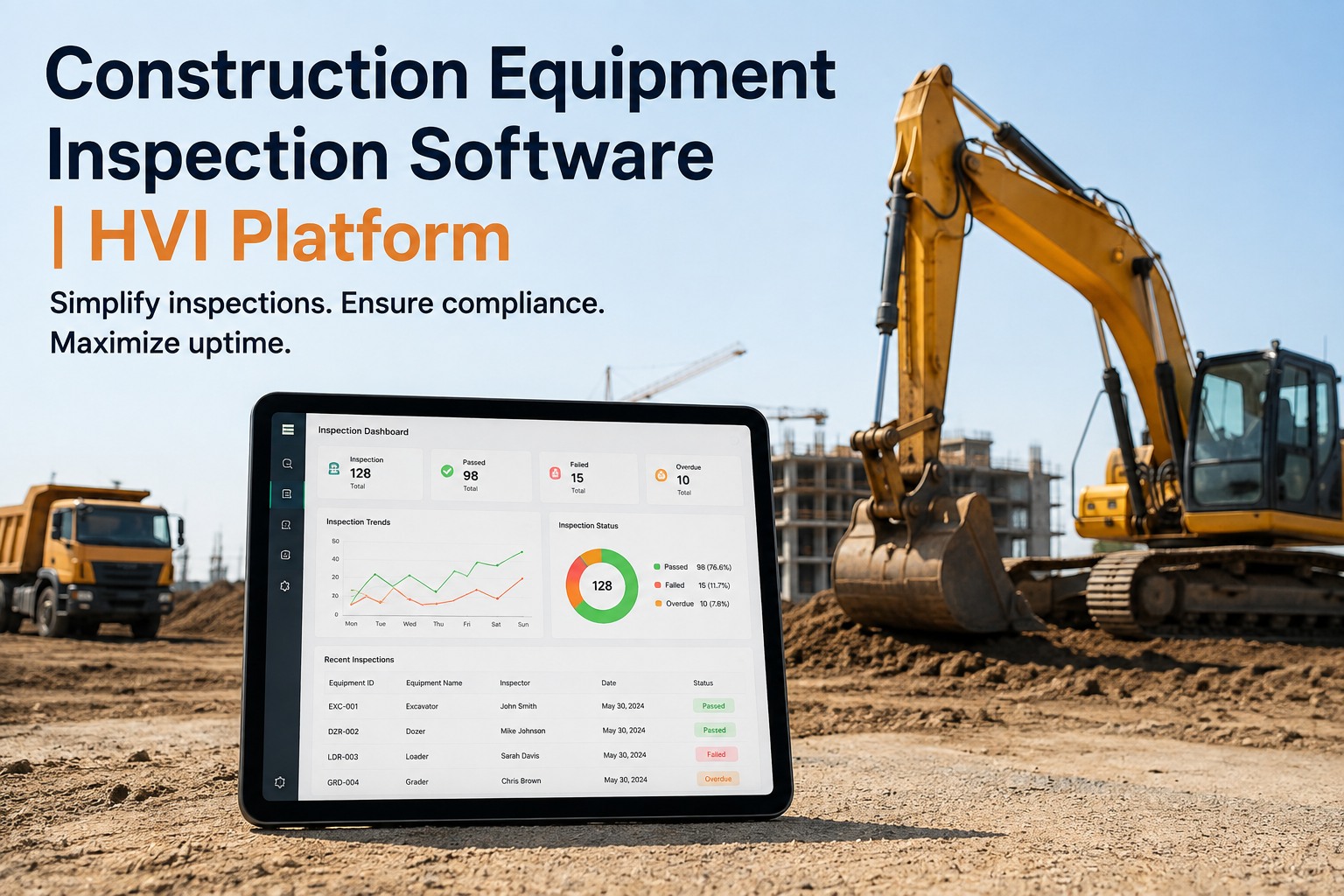
System inspection with proof
Grapple, hydraulics, cab and undercarriage run as a checklist on a phone with photos, so a cracked tine or a packed track is logged against the unit, not missed.
Defects into work orders & parts
A worn tine or a failing filter becomes an assigned work order with the part attached, and repeat wear by system points to the cause instead of another quick swap.
It runs on the same platform as your general daily machine inspection and your wider preventive maintenance scheduling, so the whole yard fleet lives in one record.
Our handlers run twelve, fourteen hours a day on scrap. We were maintaining them like regular excavators and kept getting blindsided — a pump one month, a grapple rotator the next, always mid-shift.
Once we moved to hour-based PM with fluid sampling and ran the grapple and undercarriage checks daily, the surprise failures dropped off. The oil analysis alone caught two pumps before they let go. On a machine that never stops, that's real money.
Frequently asked questions
What makes material handler maintenance different from an excavator?
Duty cycle. A material handler runs a continuous grab-swing-release loop for whole shifts, so wear, heat and hydraulic contamination accumulate much faster. It also carries systems an excavator doesn't — a grapple or magnet, an elevating cab, and heavier hydraulic and cooling demands.
What should a material handler inspection cover?
The grapple or magnet (tines, rotation, hoses, and magnet coil resistance), the hydraulics and filters, the elevating cab and boom pins, and the undercarriage. Each is checked more often than on a standard machine because continuous duty loads them harder.
How often should a material handler be serviced?
By machine hours, not the calendar. Grease and visual checks daily, filters and fluid samples on hour-based intervals, and more frequently in harsh scrap or dusty environments. A hard-running handler needs tighter intervals than the base spec assumes.
Why does hydraulic oil analysis matter on a material handler?
Because continuous duty cooks and contaminates the oil invisibly. Fluid analysis reads wear metals and particle counts before a pump or valve fails, turning a looming breakdown into a scheduled filter or oil change. It's the cheapest insurance on a nonstop machine.
How does HVI help with material handler maintenance?
HVI schedules PM and fluid samples by machine hours, runs the grapple, hydraulic, cab and undercarriage inspection with photo proof, and turns flagged defects into work orders with parts attached. Repeat wear by system surfaces the cause, so a hard-run handler stays ahead of failure.
Make material handler maintenance keep pace with the duty cycle
Hour-based PM and fluid sampling, grapple and undercarriage inspections with photo proof, and defects routed to work orders before continuous duty turns wear into a breakdown. Keep a nonstop machine running.