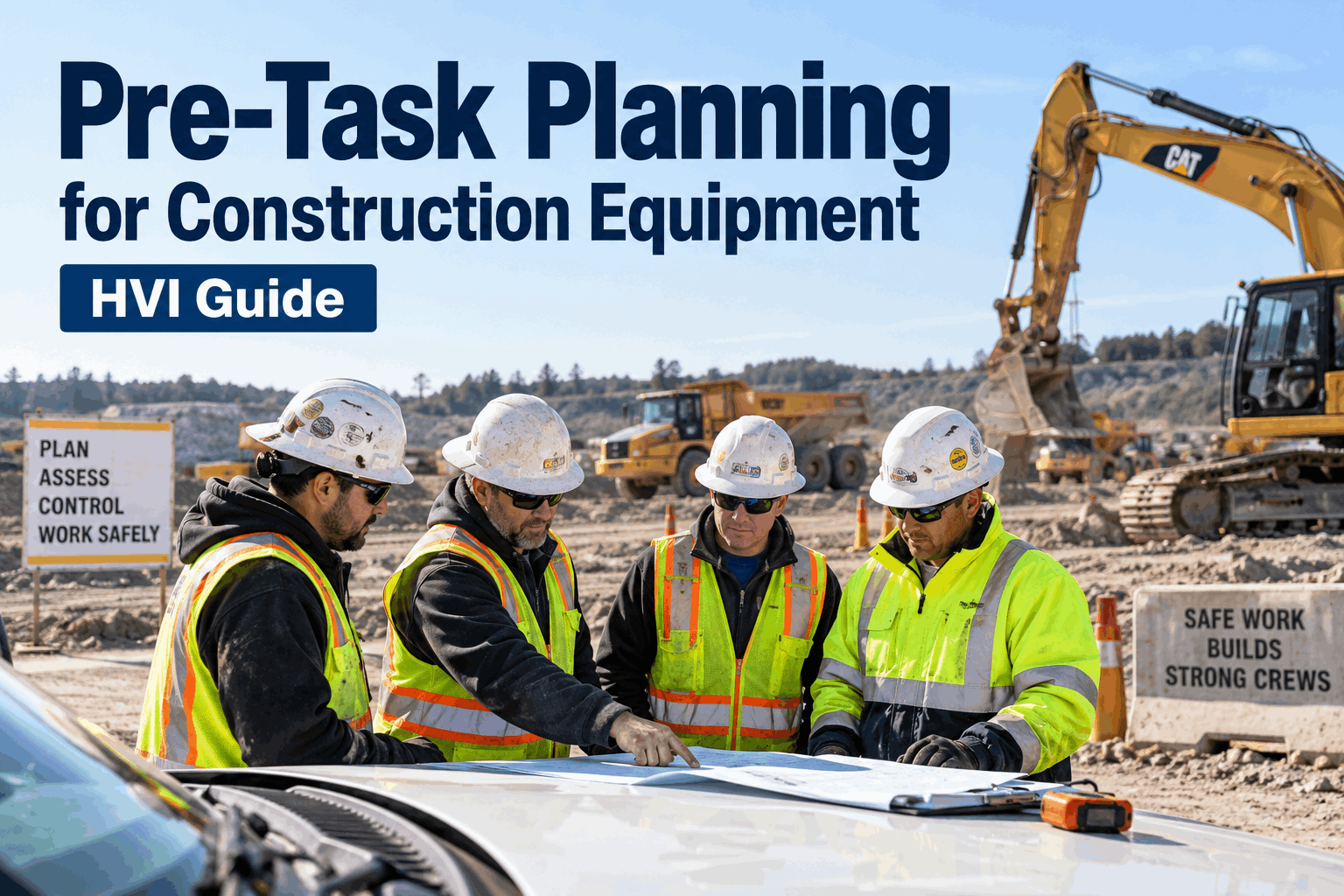
The safest crews on a jobsite aren't the ones with the thickest safety binder — they're the ones who stop for two minutes before every task and actually think it through. Pre-task planning is that pause: the daily, field-level habit of looking at the work in front of you, today's conditions, and the equipment you're about to run, and naming the hazards and controls before anyone starts. It's not the project safety plan and it's not a yearly document — it's a fresh read of today's reality, by the crew, right before the task. This guide covers what it is, how it differs from a JHA, and how to keep it real. Start free and run pre-task planning on a phone.
Two Minutes Before the Task — Every Task, Every Day
A pre-task plan is the crew's daily pause point: today's conditions, today's hazards, today's controls, named before the work starts. Not the project plan filed in the office — the field-level read of the job actually in front of you.
Work conditions never sit still. The crew, the equipment, the weather, and the activity happening next to you can all change between tasks — even within a single shift. Pre-task planning exists because the moment work starts without reviewing what's actually changed, safety runs on assumptions instead of a plan. It's the difference between "we did this yesterday" and "here's what's different today."
JHA vs. Pre-Task Plan: What Makes a PTP Different
These get confused constantly, and the difference is the whole point. A job hazard analysis and a pre-task plan aren't the same tool doing the same job — they work at different levels and different times.
Job hazard analysis (JHA)
Done once, at the start of a project or task type. It breaks a job into steps and identifies the hazards in general, then sets the safe work methods and controls. It's the broad, planned-in-advance foundation — the reference.
Pre-task plan (PTP)
Done every day, by the crew, right before the task. It takes the JHA's general hazards and applies them to today's actual conditions — this crew, this equipment, this weather, this adjacent work. It's the just-in-time reality check.
The clean way to hold it: the JHA identifies risks for the task in general; the PTP brings that into the field and applies it to the job in front of you before work begins. You don't pick one — the JHA sets the plan, and the PTP proves it still fits today. That's why OSHA-aligned programs use both, not either. Book a demo to see PTPs linked to the day's work.
Why the Same Task Isn't the Same Risk Twice
The instinct that kills pre-task planning is "we've done this a hundred times." That's exactly when it bites — because the task may be identical while everything around it has changed. A good PTP catches what routine hides.
A new hand, a swapped operator, a smaller team — the people change and so does who knows what.
A different machine, a new attachment, a rental you've never run — each brings its own quirks and hazards.
Rain overnight, frozen ground, wind, heat, low light — the site is not the site it was yesterday.
New trades working alongside, a crane overhead, an excavation opened next to you — adjacent work adds hazards you didn't have.
The PTP is the built-in moment to ask "what's different today?" before the task instead of after an incident. It turns the dangerous comfort of routine into a quick, deliberate check — the pause that catches the one thing that changed while everyone assumed nothing had. Start free and give crews a daily what's-changed check.
What a Good Pre-Task Plan Covers
A PTP doesn't need to be long — it needs to be honest and complete. Whatever form your company uses, a strong one walks the crew through the same core ground before the task begins.
The task & its steps
What the crew is actually doing today, broken into the steps that matter — so the hazards are tied to real actions, not a vague "do the job safely."
The hazards, today
The specific things that could hurt someone on this task, in these conditions — struck-by, caught-in, falls, energy, the equipment, the neighbors, the weather.
The controls & PPE
How each hazard is prevented or reduced, and the PPE required — the actual measures the crew will use, not a generic list copied from the binder.
Roles & communication
Who does what, how the crew communicates, who has stop-work authority, and the emergency plan — so everyone knows their part before the task starts.
The equipment's own hazards
For equipment work: the machine's condition and defects, swing radius, blind spots, ground conditions, and pinch points — the hazards the machine itself brings.
Crew review & sign-off
The whole crew reviews the plan, raises anything missed, and signs on — the moment the plan becomes shared understanding and accountability, not one person's paperwork.
The sign-off is the part that makes it real: a PTP one person fills out alone isn't planning, it's a form. When the crew talks it through and signs, the hazards are actually in everyone's head before the task — which is the entire point of doing it. Start free and capture crew sign-off on every PTP.
Pre-Task Planning for Equipment Work
When the task involves heavy equipment, the PTP has to account for hazards the machine itself creates — which is why it works best tied to the operator's daily check of that equipment. The two together cover the task and the tool.
Start with the machine's condition
The daily walkaround and defect check feeds the PTP: a machine with a flagged issue changes the hazards and the controls for the task. Known defects belong in the plan, not left in a separate log.
Add the machine's zone hazards
Swing radius, blind spots, travel path, pinch points, and the ground it'll work on — the hazards that come from the equipment operating, and the people and structures around it.
Capture it in the same daily flow
Run the PTP alongside the daily operator report so the equipment check and the task plan live together — one daily field routine the operator completes before the machine moves.
Treating equipment PTP and the daily operator report as one flow closes a common gap: the machine passes its check, but the task's specific hazards — today's ground, today's neighbors — never get planned. Run together, the operator confirms both the machine and the plan before work starts. Book a demo to see PTP tied to the daily operator check.
The Pencil-Whip Problem — and How to Beat It
Here's the honest risk with pre-task planning: done badly, it becomes a form someone fills in from memory in ten seconds to satisfy the office — same hazards, same controls, copied every day, thought about never. A pencil-whipped PTP protects no one.
A form, not a pause
The same generic hazards ticked every day without a look at today's conditions. It creates a paper trail and a false sense of safety — the plan exists, but the thinking it was supposed to trigger never happened.
A real crew conversation
Two minutes where the crew actually looks at the task, names what's different today, agrees the controls, and signs on. Short, specific, and honest — the plan reflects the real job, and the hazards are genuinely in everyone's head.
The fix isn't a longer form — it's making the plan specific to today and visible to someone who'll notice a copy-paste. When crews know a supervisor sees each PTP and it takes today's real conditions, the incentive flips from "tick and move" to "actually look." That's a habit you build, and a tool that supports it. Start free and make daily PTPs visible to safety.
How HVI Runs Pre-Task Planning as a Daily Field Habit
Pre-task planning lives or dies on whether crews actually do it, every day, for real. Three capabilities make it a genuine daily field routine instead of a card that gets lost or faked.
PTP on the crew's phone
The daily task, hazards, controls, and PPE captured in the field on a phone — quick enough to do before every task, with the equipment's own check built into the same flow.
Crew sign-off captured
The whole crew reviews and signs on the device, so the PTP is a shared, accountable record — not one person's form filled in alone from memory.
Real-time visibility for safety
The safety manager sees every PTP across every crew as it's submitted — so pencil-whipping shows, good planning gets recognized, and the daily habit is documented across the whole site.
The result is pre-task planning that's actually done, actually thought through, and actually visible — a two-minute daily pause that the crew owns and the safety team can see. It runs on the same daily field-reporting discipline HVI brings to the operator's daily equipment check. Start free and build the daily PTP habit.
From a safety manager who killed the paper PTP card
Our paper PTP cards were a joke — same three hazards written every day, half of them filled out at lunch for the whole morning. Nobody was planning; they were feeding the office a form. When we moved it onto phones and I could see every crew's PTP as it came in, the pencil-whipping stood out immediately and the plans got specific fast. Crews started catching real stuff — a changed ground condition, a new trade next door.
Frequently asked questions
What is pre-task planning?
Pre-task planning (PTP) is a daily, field-level safety habit where the crew reviews the specific task, conditions, and equipment right before work begins — identifying today's hazards, agreeing the controls and PPE, confirming roles, and signing on. It's a "pause point" before execution that shifts safety from assumption to active planning. Unlike a project-level document, a PTP is done fresh each day by the people doing the work, because the crew, equipment, weather, and surrounding activity can all change between tasks or even within a shift.
What's the difference between a JHA and a PTP?
A job hazard analysis (JHA) is done once, at the start of a project or task type, and identifies the hazards and safe methods for that job in general — it's the broad, planned-in-advance reference. A pre-task plan (PTP) is done daily, in the field, by the crew, and applies that general information to today's actual conditions right before the task. The JHA identifies the risks; the PTP proves the plan still fits today. They're complementary, not redundant — OSHA-aligned safety programs use both.
What should a pre-task plan include?
A good PTP covers the task and its key steps, the specific hazards present today, the controls and PPE to address them, the crew roles and communication method (including stop-work authority and emergency plan), and a crew review with sign-off. For equipment work, it also includes the machine's condition and defects from the daily check, plus its operating hazards — swing radius, blind spots, travel path, and ground conditions. It doesn't need to be long; it needs to be specific to today and honestly thought through, then signed by the crew.
Is pre-task planning required by OSHA?
OSHA requires employers to identify and control hazards and doesn't mandate one specific form, but pre-task planning and job hazard analysis are the recognized tools for meeting that duty at the daily, task level — and industry standards such as ANSI/ASSE A10.1 provide guidance on pre-task safety planning. Many contractors and project owners require documented PTPs on site, particularly for higher-risk work like equipment operation, work at height, or energized systems. Beyond compliance, a documented PTP is strong evidence that hazards were assessed and controlled before work began.
How do you stop pre-task plans from being pencil-whipped?
Pencil-whipping — ticking the same generic hazards daily without thinking — is the main failure mode of PTPs. The fixes are making the plan specific to today's actual conditions, keeping it short enough that crews engage rather than rush it, requiring a genuine crew conversation and sign-off rather than one person's form, and giving a supervisor real-time visibility of each PTP so copy-pasted plans stand out. Digitizing PTPs on a phone helps because plans become visible across crews in real time, which changes the incentive from "tick and move" to actually looking at the job.
Turn Pre-Task Planning Into a Daily Habit Crews Actually Do
Run the PTP on a phone before every task — today's hazards, controls, and PPE, tied to the equipment's daily check, closed with a crew sign-off and visible to safety in real time. So the daily pause is genuine, documented, and impossible to quietly pencil-whip. Live in under two weeks, trusted by 25,000+ users worldwide.
No credit card · No hardware · Pre-task planning templates ready on day one