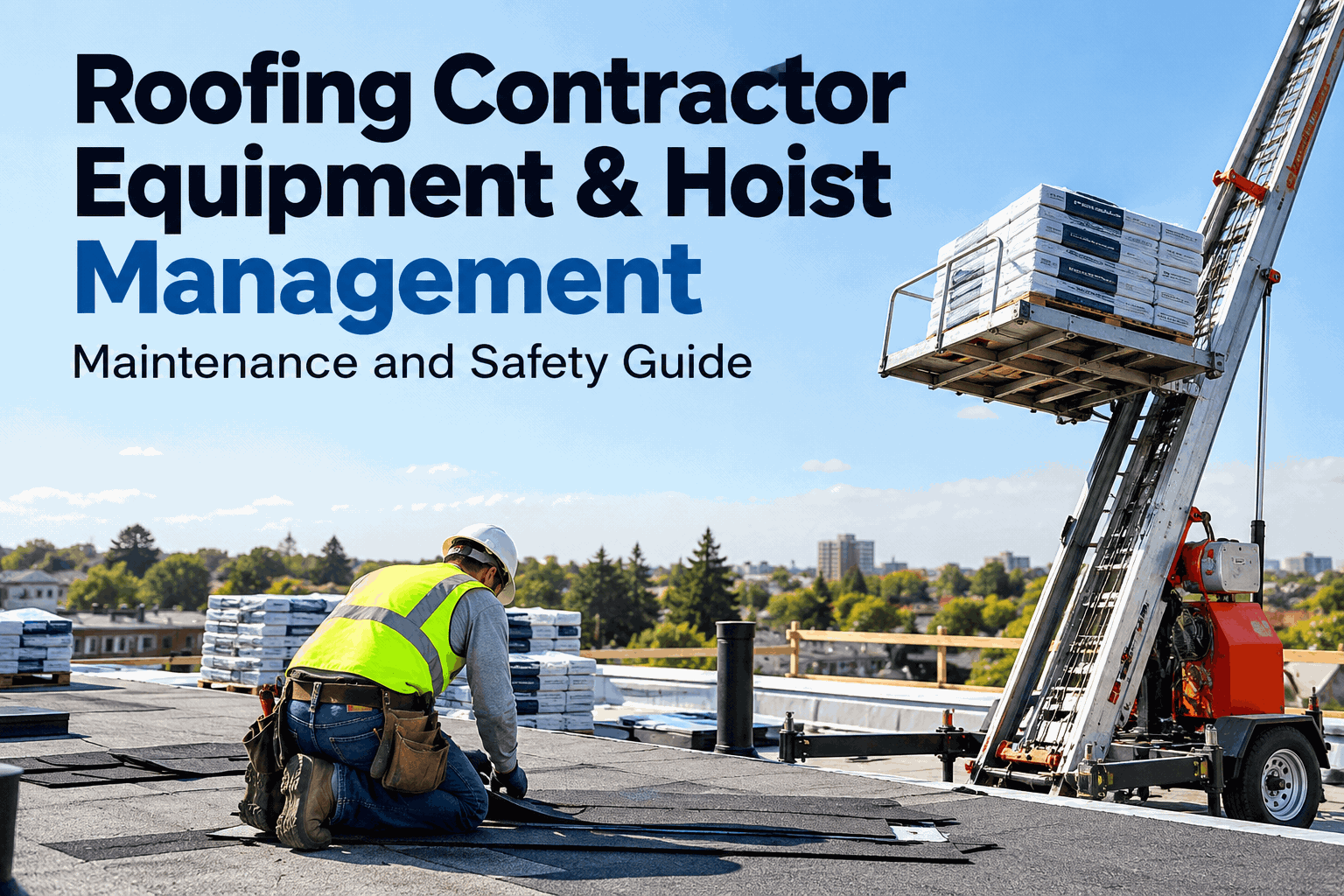
Roofing crews can arrive with the materials, labor and weather window lined up—then lose the morning because a material hoist fails its pre-use check. Managing roofing contractor equipment means knowing which hoists, lifts, kettles, and powered tools are ready, where they are assigned, and who owns the next repair. This guide turns those questions into a practical inspection and maintenance routine.
The roof is ready. Is the hoist?
One failed lift can strand material at ground level while a paid crew waits above. Build a reliable chain from yard checkout to roof delivery—with inspection evidence, planned service and clear repair ownership.
Four risks between the yard and the roof
Weather, frequent site moves and shared machines make equipment readiness difficult to confirm. Catch the issue before the crew depends on it.
Exposed conditions
Wind, moisture and debris increase wear and inspection demands.
Equipment across sites
Hoists and tools move between crews without a consistent handoff.
Different service needs
Hoists, lifts, kettles and generators need distinct checklists and PM.
Safety-critical defects
Unresolved issues must be assessed before equipment is released.
Roofing equipment moves through more than one jobsite
A roof crew depends on a chain of equipment—not a single truck. When an asset changes site without a documented condition check, yesterday’s defect becomes tomorrow’s delay.
Manager takeaway: Track the asset record and its latest inspection together. A location field tells you where a hoist was assigned; its inspection and maintenance history tell you whether it should be used. See how HVI organizes equipment records.
Different roofing assets need different maintenance rules
A single calendar reminder cannot cover every failure mode. Group equipment by how it operates, what gets inspected, and what triggers service.
Material hoists & lifts
Inspect supports, guarding, brakes, controls, limit devices, wire rope or chains as applicable, and setup conditions.
Kettles & hot-work gear
Check hoses, fittings, temperature controls, burners, leak points and fire-prevention equipment as applicable.
Generators, compressors & tools
Check guards, cables, hoses, fuel systems and recorded operating hours; plan servicing around use intensity.
HVI fit: Maintain separate asset profiles, configure inspection forms for each equipment type, and schedule preventive maintenance according to the records your team captures. Start building an equipment register.
A roofing hoist inspection checklist crews can actually use
Use a model-specific checklist prepared by a competent person and the manufacturer's instructions. The example below is a planning aid—not a substitute for required inspections, training or site procedures.
Before operation: six inspection groups
- Foundation & anchorage — base, bracing, tie-ins and stability
- Load path — hooks, rigging, ropes/chains and visible wear
- Controls & protection — stops, limit devices, brakes and guards
- Electrical/mechanical condition — cables, connections, drive and leaks
- Operating zone — exclusion area, landing, access and weather
- Documentation — identification, rated capacity, prior defects and required records
Record inspection and proceed under site procedures.
Stop use, isolate equipment as appropriate and escalate for assessment.
Document corrective action and required verification before release.
Configurable HVI inspection checklists can help teams capture a consistent record for each asset. Ask to see a roofing-equipment inspection workflow.
Plan maintenance around work windows—not the next breakdown
Schedule the work you can predict, then leave room for condition-based repairs. Hoists and lifts require their own manufacturer-defined maintenance and inspection intervals; the timeline below illustrates how to organize records, not universal legal frequencies.
Complete the required equipment-specific check and capture exceptions.
Review run-hours, calendar dates and manufacturer maintenance tasks.
Check condition, accessories, open repairs and installation needs.
Keep the asset unavailable until required checks and authorization are complete.
A failed inspection should start a repair decision—not a message thread
The real control is what happens after a defect is recorded. For safety-critical hoist concerns, keep the equipment out of service until the appropriate repair and verification process is completed.
Inspector records the fault, asset ID and supporting evidence.
Supervisor decides isolation, priority and repair responsibility.
Technician documents work performed and parts used.
Authorized person confirms required checks before return to use.
Rather than dispatching it to another roof, the team records the defect, marks the asset unavailable in its process, arranges assessment and repair, then retains verification evidence. HVI work orders and maintenance history support documentation of this sequence; physical lockout and authorization remain site responsibilities.
Five numbers that reveal equipment readiness
Measure whether the process is preventing avoidable job interruptions—not just whether maintenance forms were submitted.
Required checks completed ÷ checks due
Assets past their planned service trigger
Unresolved issues requiring a hold or assessment
Time from reported defect to verified closure
Equipment confirmed ready before reassignment
Start small: Pilot one group of hoists, define asset owners, standardize the checklist and review exceptions weekly. HVI's asset, inspection, PM and work-order records can provide the underlying information. Explore the workflow in a live demo.
Roofing contractor equipment management FAQs
Practical answers for equipment managers planning a more consistent inspection and maintenance program.
What equipment should a roofing contractor track?
Track service vehicles and trailers, material hoists, personnel lifts where used, generators, compressors, roofing kettles, powered tools and other significant shared assets. Record identity, assignment, inspection status, maintenance requirements and repair history appropriate to each item.
What belongs on a roofing material hoist inspection checklist?
Use the specific manufacturer and site requirements. Typical categories include support and anchorage, lifting components, controls, brakes, limit devices, guarding, electrical or mechanical condition, load-handling arrangements and the operating zone. A competent person should establish the checklist and required frequency.
How often should roofing hoists be inspected?
Inspection requirements vary by hoist type, jurisdiction, manufacturer instructions, site conditions and usage. Pre-use checks may be necessary, alongside other periodic or event-triggered inspections. Follow the applicable requirements rather than adopting a single generic interval.
How can contractors reduce equipment downtime across jobsites?
Maintain a shared asset register, record inspections at handoff, schedule preventive maintenance ahead of busy periods, and close defects through a documented repair-and-verification process. Review upcoming work against equipment readiness before assigning assets.
How does HVI support roofing equipment maintenance?
HVI supports equipment asset records, configurable digital inspections, preventive maintenance scheduling, work order tracking and maintenance history. These records help managers organize equipment readiness; HVI does not replace qualified inspections, site safety controls or manufacturer procedures.