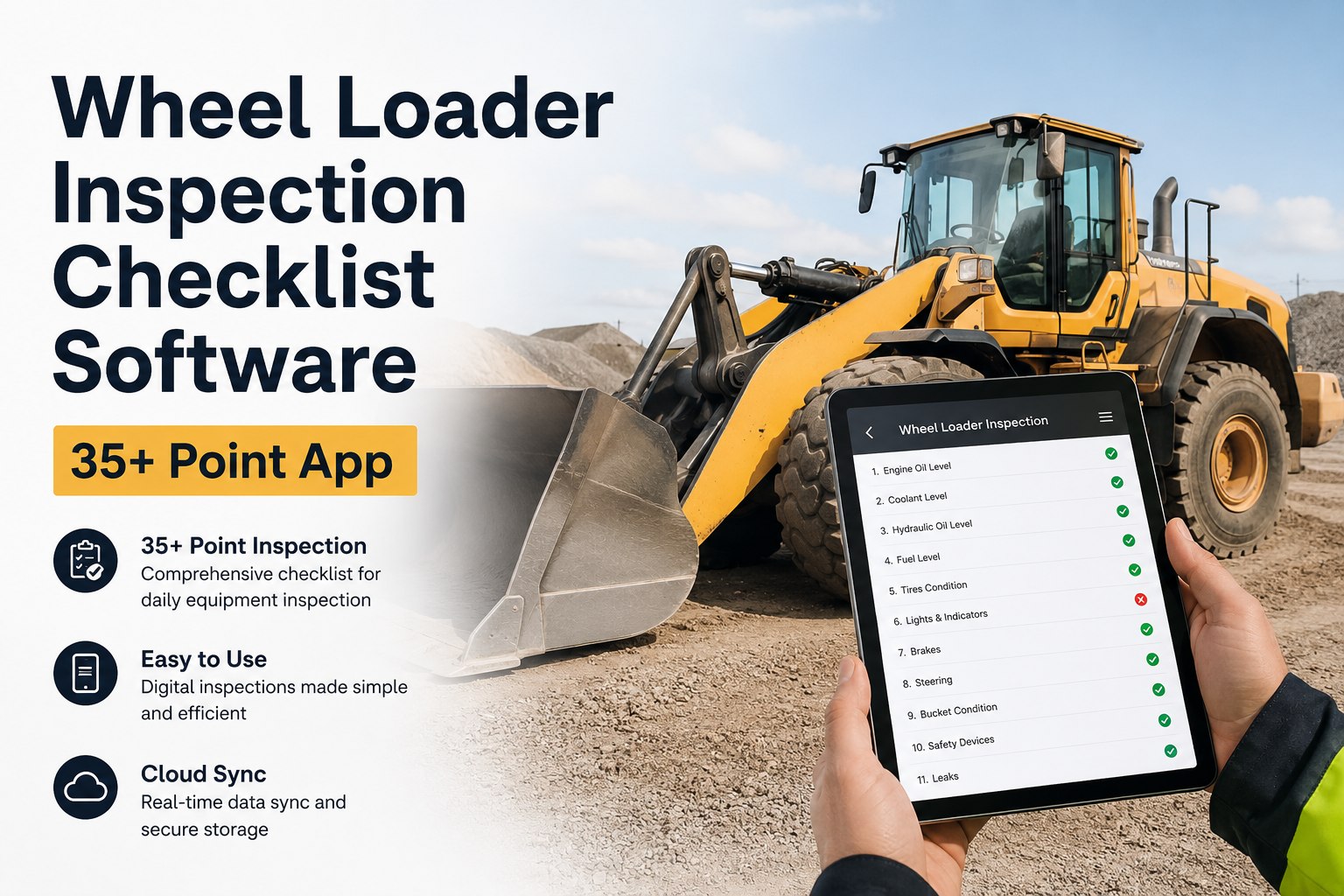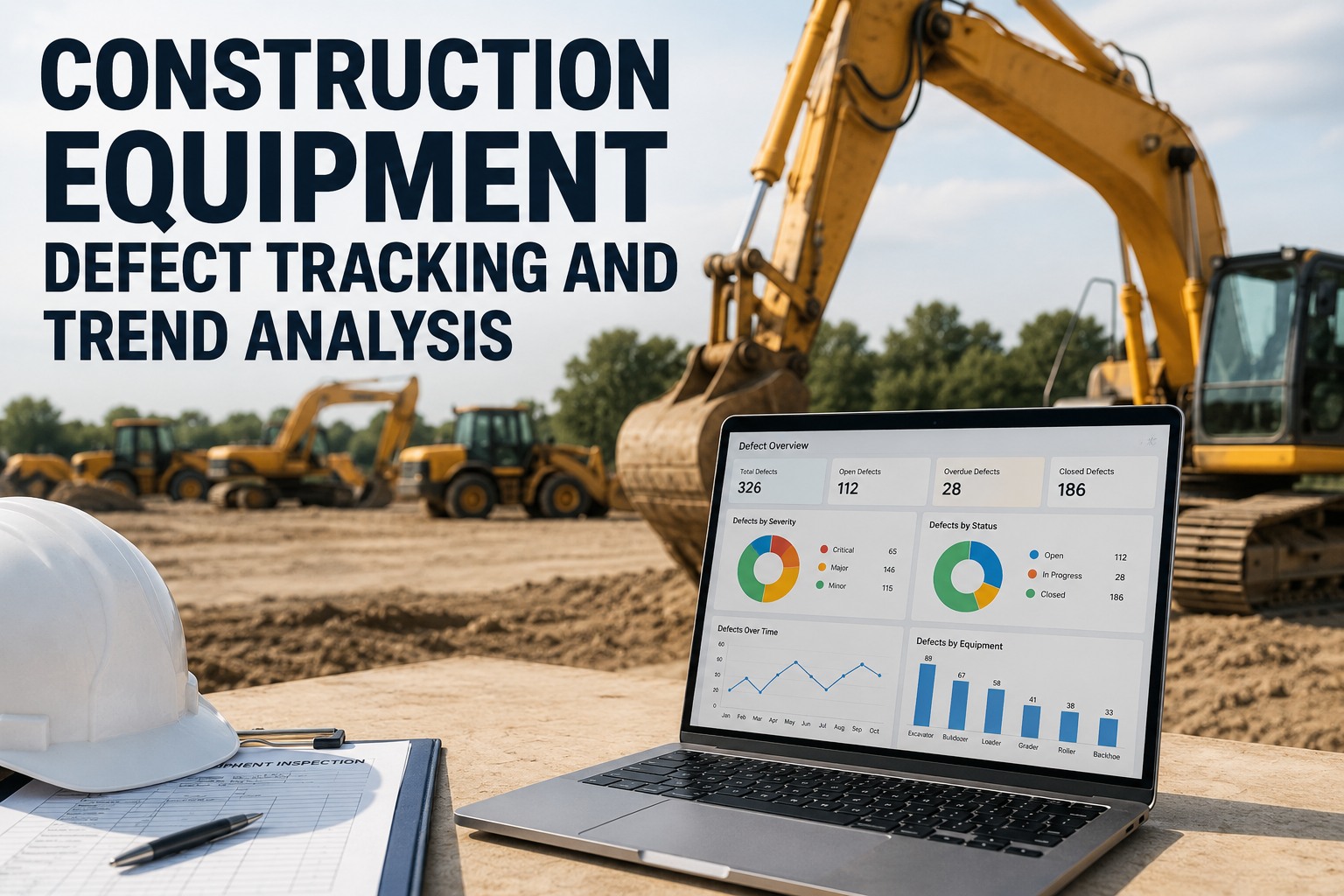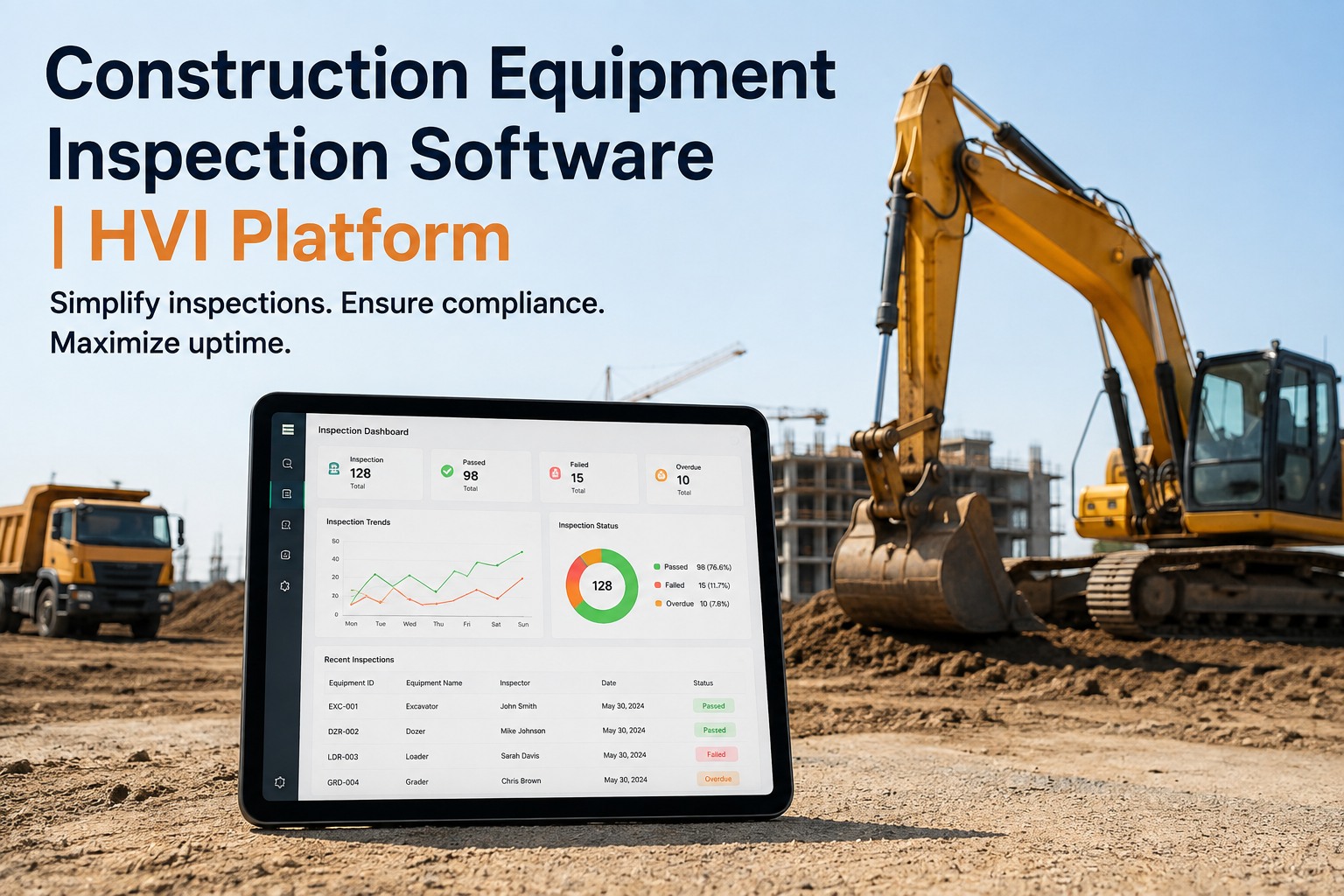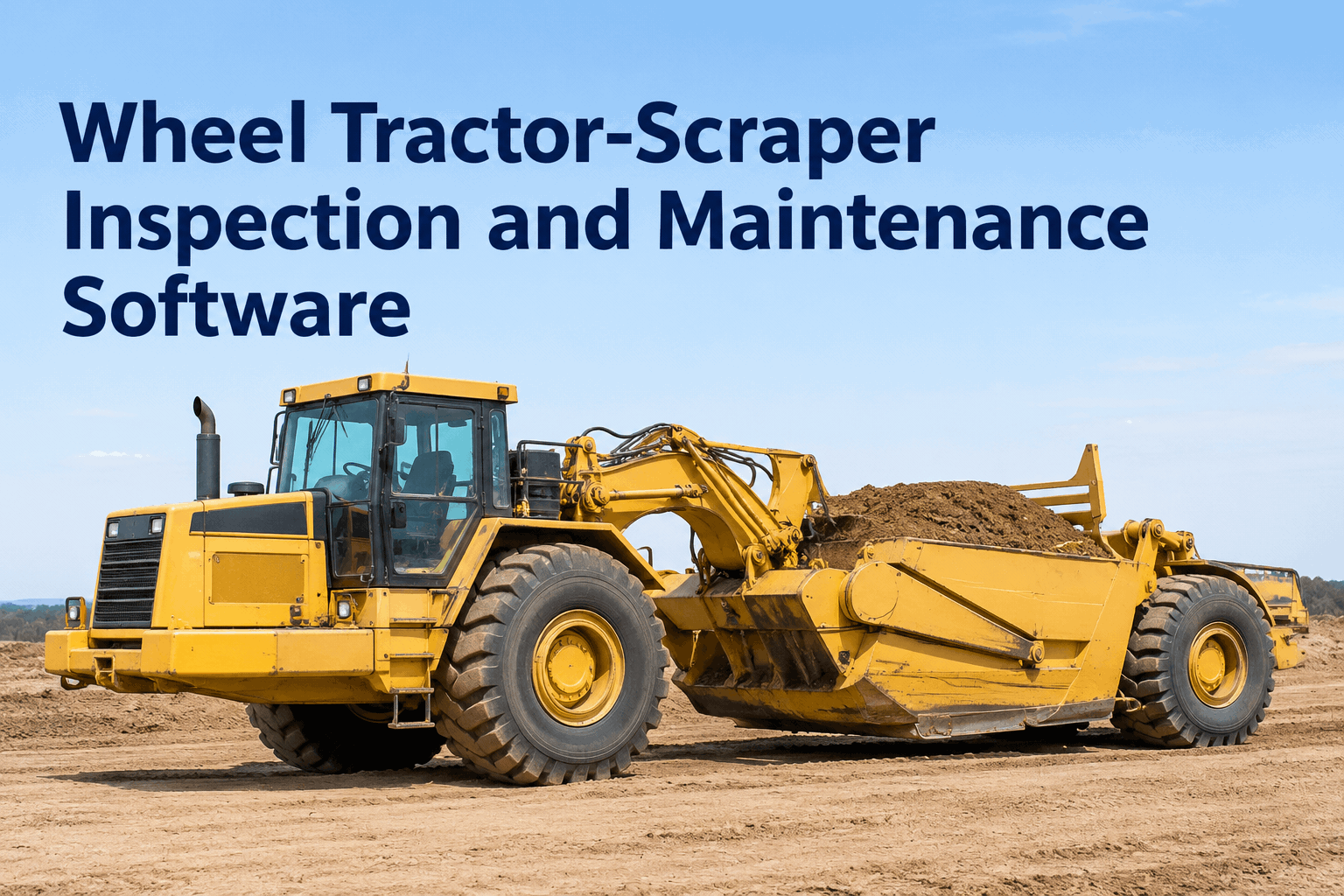
A wheel tractor-scraper earns its money in one brutal loop — load, haul, spread, return — and every stage of that cycle wears something different. Wheel tractor-scraper inspection and maintenance software catches the drifting apron, the worn cutting edge, the tired cushion hitch before any of them turns a 90-second load into a three-minute one or sidelines the machine mid-job. See how a scraper-specific inspection, defect flow, and hour-based PM keep the cycle tight, then book a demo to map it to your scrapers .
Keep the Load Cycle Tight. Catch the Wear Before It Costs You.
Scraper-specific digital inspections for the bowl, apron, ejector, cutting edge, and cushion hitch — defects flow straight to a work order, and PM fires on real meter hours.
A scraper is punished differently from the rest of the yellow iron. It's not a loader that works in one spot or a truck that just hauls — it loads under full engine strain, hauls at speed over rough haul roads, spreads with precision, and runs back empty, hundreds of times a shift. That cycle is the machine's whole purpose, and it's also the thing that quietly degrades: a cutting edge that's past its flip point loads 10–20% slower, a drifting apron adds seconds to every spread, a worn cushion hitch beats the drivetrain on every haul. None of it fails loudly. It just steals minutes off the cycle until someone finally measures it.
Where the cycle leaks timethe scraper load cycle, stage by stage — and the wear each one hides
The quickest way to understand scraper maintenance is to follow the load cycle. Each stage leans on a different subsystem, and each telegraphs its wear in a way a trained inspection catches before it becomes lost cycle time or a sidelined machine.
Load
The cutting edge and bowl fill under full load. A reversible edge past its flip point, or the wrong edge for the material, cuts load efficiency 10–20%. The telltales: longer load times, incomplete fill, uneven edge wear.
Haul
Loaded and moving, the drivetrain and cushion hitch take the beating. Watch for a hitch "bang," fuel-burn spikes, and transmission heat on grades — a worn cushion element hammers everything downstream.
Spread
The apron should cycle in under 4 seconds, the ejector extend in 5–7. A slow apron, uneven spread, or ejector stall means hydraulic seal drift — a $1,500 fix now, or a ~$12,000 cylinder rebuild and a week down if ignored.
Return
Running back empty at speed loads the brakes, retarder, and steering. Brake fade, retarder issues, or steering wander show up here — the safety-critical items a return-trip inspection is built to catch.
That drifting-apron example is the whole case in one number: $1,500 caught on an inspection versus $12,000 and a week of downtime caught by failure. HVI's scraper-specific inspection puts each cycle stage on the checklist with photo capture, so seal drift and edge wear get logged while they're cheap. Start a free trial and load your scraper template this week
The scraper-specific wear pointswhat a generic walkaround form misses on a tractor-scraper
A generic equipment checklist treats a scraper like any other machine and skips the parts that actually define it. These are the systems a scraper inspection has to cover by name — the ones a one-size form leaves blank.
Bowl & cutting edge
Bowl liner and wear plate, cutting edge depth and fasteners, and the reversible-edge flip point. Flipping on time roughly doubles edge life; missing it quietly costs load efficiency.
Apron
The front gate that opens to load and spread — should cycle in under 4 seconds. Watch seal leaks and hinge wear; a slow apron is the first sign of hydraulic trouble.
Ejector
The rear wall that pushes the load out, extending in 5–7 seconds. Inspect seal and slide condition and the cylinder rods; an ejector stall ends the spread mid-pass.
Cushion hitch
The shock-absorbing link between tractor and scraper. Pin and bushing wear, rubber cushion condition, and hitch-lock function — a worn element beats the whole drivetrain on every haul.
Hydraulics
The apron, ejector, and bowl lift cylinders. Seal drift is the early warning — a cycle that creeps slower over days, caught as a cheap seal instead of an expensive rebuild.
Tires & brakes
Front and rear tires take heat and cut on the haul road; brakes and retarder carry the loaded return. Both are safety-critical and both wear by the hour — checked, not assumed.
Build the checklist around these and the inspection actually fits the machine. HVI lets you configure a template per model — a Cat 621 isn't a twin-engine 637, and the push-pull units need both engine bays checked — instead of forcing a generic form. Book a demo to see a scraper template built to your fleet
From flagged defect to closed work orderwhy a digital scraper inspection beats a paper one every shift
Paper finds the worn edge and then loses it on a clipboard. Digital turns the same flag into tracked work. On a machine whose value is cycle time, that gap — between spotting the wear and fixing it — is exactly where the money leaks.
-
1
Operator runs the pre-shift inspection
A scraper-specific checklist on a phone or tablet — bowl, apron, ejector, cutting edge, hitch, tires, brakes — in a 15–20 minute walkaround, with photos, before the machine moves.
-
2
A defect is logged with photo & severity
A slow apron cycle or an edge near its flip point gets flagged with a photo and severity, tied to that exact scraper — not a scribble that's gone by end of shift.
-
3
It becomes a work order in one tap
The fault converts to a work order with details and photos attached, assigned to a tech and visible immediately — so the seal gets done before it's a cylinder.
-
4
Parts, labor & sign-off recorded
Parts used deduct from inventory and link their cost to the job; labor logs against the scraper; the tech closes it out on-site. The repair's real cost is captured, not estimated.
-
5
It lands in the machine's history
Every inspection and repair writes to the scraper's record and feeds cost-per-hour analytics — so you can see which machine is draining the job's budget and why.
PM that fires on hours, not memorymeter-hour preventive maintenance tiers for wheel tractor-scrapers
A scraper wears by the hour, and its PM is a tiered schedule that each machine earns through its meter. Tie the services to real operating hours and the edge flip, the hydraulic test, and the cushion-element change all happen on time — not whenever someone remembers.
15–20 minute pre-shift walkaround; weekly checks of tires, grease points, hoses, edge wear, and electrical.
Hydraulic pressure tests, pin and bushing measurement, cutting-edge flip or replacement, and oil and filter service.
Cushion-element replacement, frame crack checks, drivetrain analysis, and chain/flight inspection on elevating models.
HVI auto-generates the work order when a scraper's hours cross an interval, with the standard tasks and parts kit already attached, and alerts you before it's due. Meter-hour PM scheduling turns "we'll flip the edge next week" into a service that actually fires. Book a demo to see tiered PM on your scraper models
The scraper pre-shift checklistwhat every wheel tractor-scraper inspection should cover before the machine loads
This is the daily walkaround that keeps a scraper cycling and safe. In HVI it's a guided template — tick, flag, photo — so nothing gets skipped when the job's pushing dirt and a defect flows straight to the shop.
A pre-shift inspection is also an OSHA expectation for powered construction equipment (29 CFR 1926.602) — run it on paper and the record scatters; run it in HVI and every walkaround is a signed, photo-backed record. Book a demo and see the scraper checklist live on one screen
From an earthmoving superintendent who watches the cycle
On a dirt job the scraper cycle is everything — a few seconds a pass, times a few hundred passes a shift, times five machines, and suddenly you're a day behind on a fixed-price move. For years the thing that killed us was slow apron and ejector cycles that nobody flagged because the machine still technically worked.
Putting the cycle times and a photo on the inspection changed how we run. An operator notes the apron's gotten sluggish, it's a work order that night, and we reseal it for a grand instead of rebuilding a cylinder for twelve and losing a week. The inspection stopped being a formality and started protecting the schedule.
What scraper-specific tracking pays backthe case for inspecting a tractor-scraper as a cycle-time machine
Frequently asked questions
What is wheel tractor-scraper inspection software?
It's a mobile-first digital checklist built around a scraper's systems — bowl, apron, ejector, cutting edge, cushion hitch, hydraulics — that flags defects with photos and sends them straight to the maintenance team. Book a demo to see it on your scrapers.
What are the PM intervals for a tractor-scraper?
Typically a daily walkaround, weekly/50-hour checks, intermediate service at 250–500 hours (hydraulic tests, edge flip, oil and filters), and major service at 1,000–2,000 hours. HVI sets each per model and auto-generates the work order. See it in a demo.
Why do apron and ejector cycle times matter?
The apron should cycle under 4 seconds and the ejector extend in 5–7; when they slow, it's hydraulic seal drift — a cheap seal now or a ~$12,000 cylinder rebuild later. Logging cycle times catches it early. Book a demo to see cycle tracking.
How does a defect become a repair in HVI?
A flagged defect converts to a work order in one tap, with the photo and details attached and assigned to a technician. Parts and labor log against the scraper, and it closes out on-site. Book a demo to walk the full flow.
Does it work for twin-engine push-pull scrapers?
Yes. You configure the checklist per model, so push-pull units get both engine bays and cooling systems on the inspection, while a single-engine open-bowl machine gets its own template. Start a free trial or book a demo.
Protect the cycle, and you protect the job
HVI gives every operator a scraper-specific inspection, routes flagged defects straight to a work order with photos attached, fires PM on real meter hours, and keeps one cost-tracked history per machine. Bowl, apron, ejector, edge, and hitch get caught on the walkaround — as cheap maintenance, not lost cycle time. Live in under two weeks.
- Scraper-specific inspection, with photos
- Defect → work order in one tap
- Meter-hour PM, per scraper model
- Cost per hour, tracked per machine