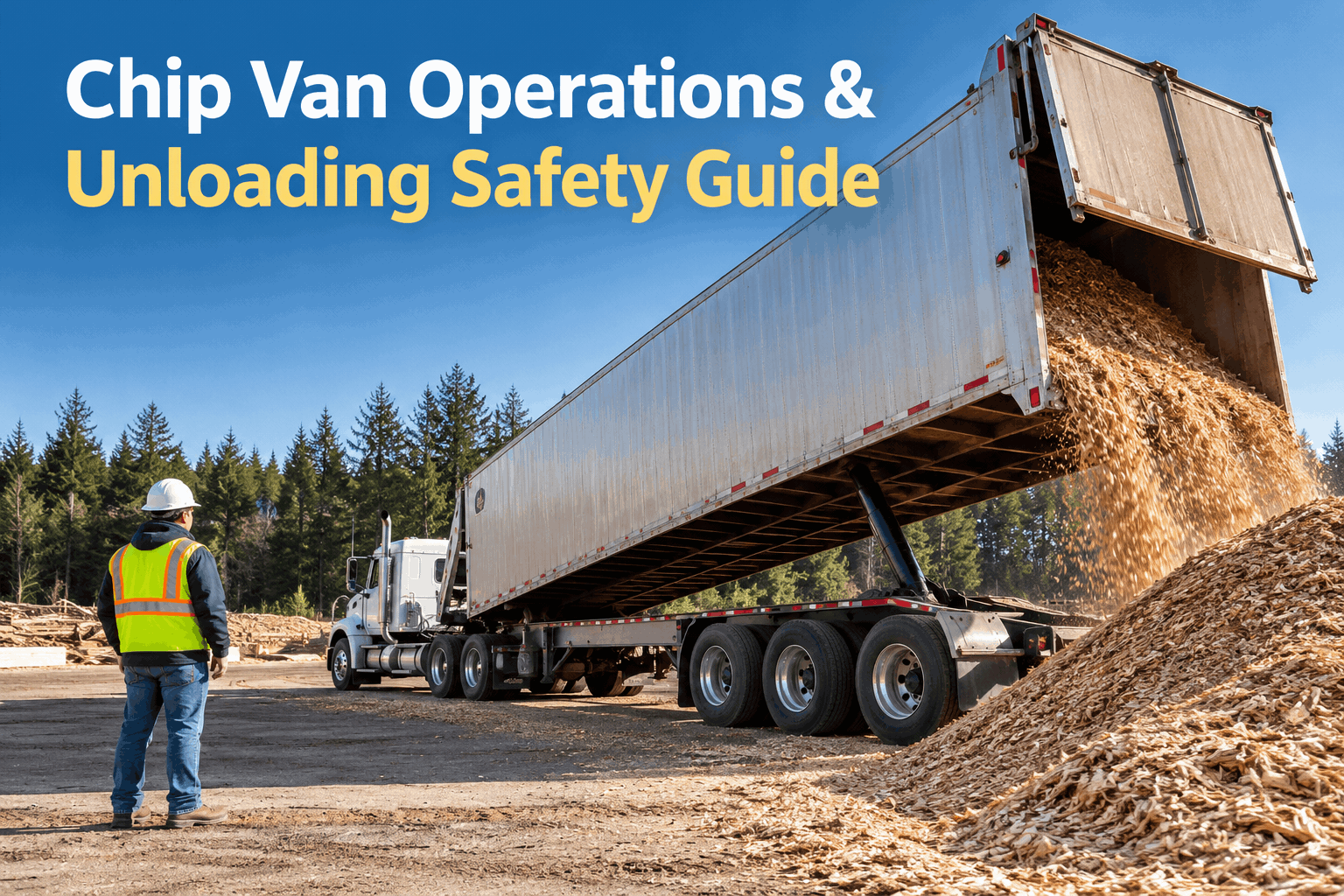
Chip van unloading safety begins before a trailer reaches the discharge point. Forestry fleets need to verify the unloading surface, overhead clearance, trailer condition and communication with site personnel before a load is released. This guide explains practical checks for wood chip hauling teams, including when to stop work and how to document defects before the next trip.
Chip Van Unloading Safety: Control the Site, Trailer and Release
One safe unloading decision depends on three things working together: a suitable site, a sound vehicle and a controlled unloading method.
Verify the unloading conditions before positioning
A safe approach starts with a go/no-go check, not with the first movement of the hoist or unloading mechanism.
Ground and approach
Confirm a firm, level unloading area; inspect for soft shoulders, ruts, washouts, slopes and unstable edges. Check room for approach, departure and emergency access.
STOP if the surface cannot safely support the vehicle and unloading method.Overhead and side clearance
Identify power lines, structures, conveyors, trees and other obstructions. Check the full operating envelope, including raised components when applicable.
STOP if safe clearance is uncertain.Vehicle and people
Inspect tires, suspension, trailer structure, doors, hydraulics or moving-floor equipment as applicable. Establish an exclusion zone and clear communication.
STOP for defects, bystanders or unclear signals.Know where a chip van unloading incident can begin
Not every chip trailer unloads the same way. Some use tipping bodies or hoists; others use walking floors or other discharge systems. The approved procedure must match the specific trailer, site and load.
For tipping equipment, the changing center of gravity makes ground stability and overhead clearance especially important. For walking-floor equipment, moving parts, discharge openings and material flow demand careful exclusion-zone control.
Inspect equipment condition and record defects using HVI vehicle inspections and maintenance records before a truck is returned to service.
Use a controlled unloading procedure
Supervisors should translate the equipment manufacturer's instructions and mill rules into a documented, site-specific sequence.
Arrive and assess
Confirm the designated location, route, surface and weather conditions.
Position and secure
Follow approved parking, braking and stabilization instructions.
Clear the area
Establish the exclusion zone and confirm communication with site personnel.
Unload as designed
Use the specific trailer's approved controls and remain alert for instability, jams or abnormal movement.
Stop, reset and depart
Confirm discharge is complete, equipment is fully returned to travel configuration and the exit is clear.
Make pre-trip and pre-unload inspections consistent
Use a vehicle-specific checklist that covers both highway readiness and the unloading equipment. A driver should report any defect that affects safe operation before dispatch or unloading.
- Tires, wheels, brakes, lights and visible suspension condition
- Trailer frame, hinges, doors, latches and discharge opening
- Hydraulic hoses, fittings, leaks and hoist components where fitted
- Walking-floor drive and guards where fitted
- Load security, tarp system and signs of uneven or stuck material
- Mirrors, cameras, communication devices and warning equipment
With HVI demo, forestry teams can explore how digital inspections, defect records and work orders support consistent maintenance follow-through.
Hold the vehicle or unloading activity as required, document the concern and route it for authorized assessment.
Turn chip van inspection findings into maintenance action
Explore how HVI supports vehicle inspections, preventive maintenance schedules, defect follow-up and fleet records for forestry hauling equipment.
Use clear go, hold and stop criteria
Apply the most conservative applicable site requirement. This framework helps teams recognize when a condition requires supervisor review.
Proceed under procedure
Pad, clearance, equipment, communications and exclusion zone all meet approved requirements.
Resolve before unloading
Uncertain ground, obstructed access, unresolved inspection findings or unclear spotter instructions.
Do not unload
Unstable conditions, unsafe clearance, equipment failure, people inside the hazard zone or unexpected load movement.
Connect unloading issues to the next service decision
A chip trailer that completes an unload may still need maintenance. Repeated hydraulic leaks, door binding, damaged hinges and abnormal discharge behavior should become traceable defects rather than informal verbal notes.
Fleet managers can use HVI for inspection records, preventive maintenance and work-order follow-up. HVI does not replace a mill's unloading controls, site safety management or specialized trailer control systems.
Review repeated issues by asset and use maintenance history to plan repair windows before the next hauling cycle.
From field finding to ready-to-haul
A practical 30-day chip van safety improvement plan
Review exposure
Map unloading sites, trailer types and past defect or near-miss patterns.
Standardize checks
Confirm site-specific procedures, stop-work triggers and trailer inspection items.
Close the loop
Test defect reporting, maintenance assignment and return-to-service verification.
Review and refine
Audit checklist completion, unresolved defects and recurring equipment issues.
Chip van unloading safety FAQs
What are the biggest chip van unloading hazards?
Key hazards include unstable ground, overhead obstructions, trailer instability during tipping, moving discharge components, unexpected load movement and people entering the unloading zone. The exact risks depend on trailer design and site conditions.
Should a chip trailer be unloaded on sloping ground?
Do not assume a slope is acceptable. Follow the equipment manufacturer's limits and site-specific procedure. If ground levelness or stability is uncertain, stop and obtain authorized guidance before unloading.
What should drivers inspect before unloading wood chips?
Check the designated unloading surface, overhead and side clearances, exclusion zone, doors, latches, hydraulic or moving-floor components where fitted, and signs of trailer damage or an unstable load.
What should happen if chips become stuck during unloading?
Stop the operation, secure the equipment according to the approved procedure and escalate to trained personnel. Never enter hazardous areas or attempt improvised jam clearing.
How can HVI help forestry fleets manage chip trailer safety?
HVI can support digital vehicle inspections, defect documentation, preventive maintenance, work orders and maintenance history. Site unloading procedures and real-time trailer controls remain the responsibility of the operator and site.
Keep chip vans inspected, maintained and ready for the next haul
Build a more consistent record of inspections and repairs across trucks and trailers with HVI.