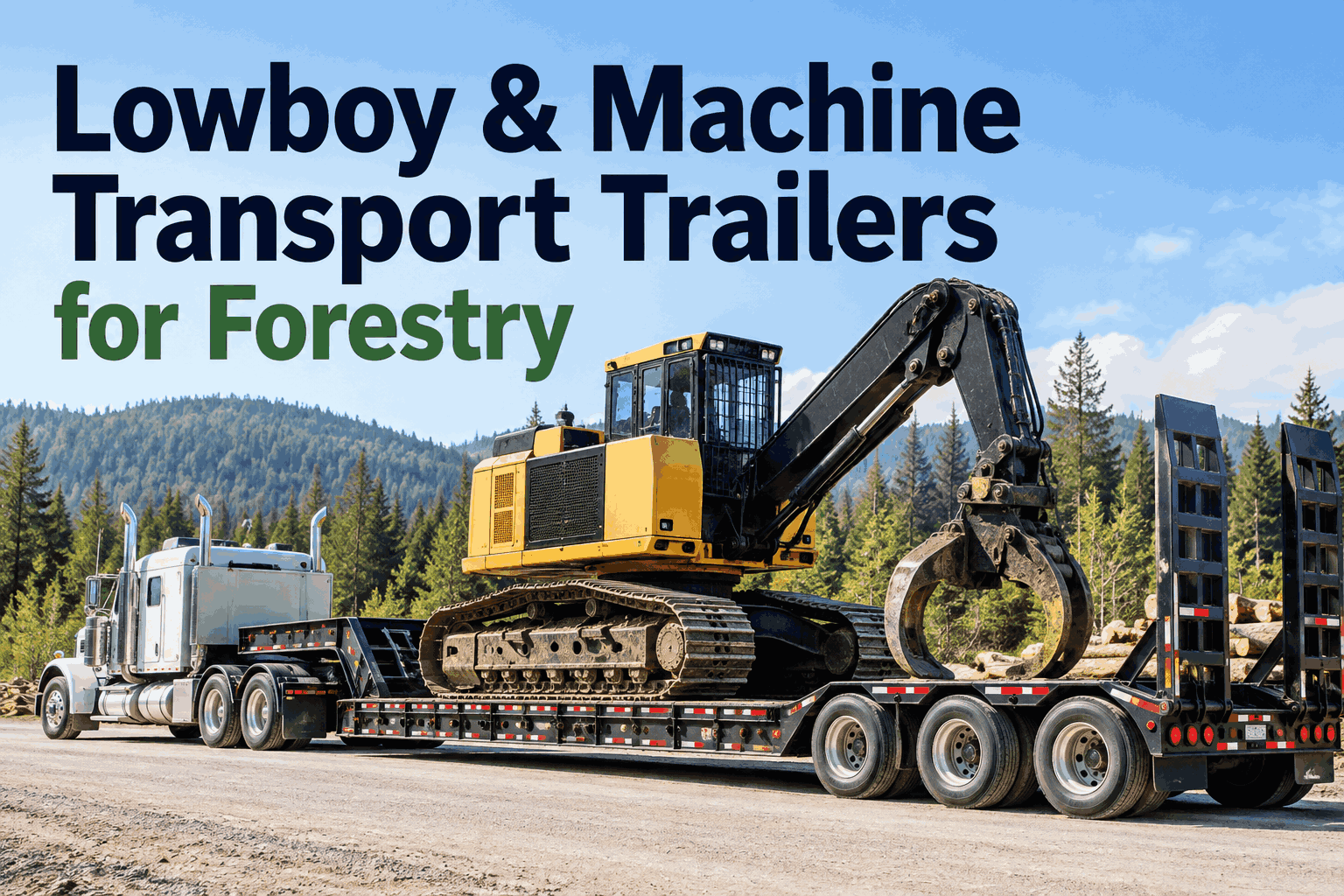
Forestry lowboy trailers get the least attention and carry the most risk. Everyone's eyes are on the processor or skidder being winched aboard — not the deck it sits on, the ramps it climbed, or the tie-down points holding it to the trailer over forty kilometres of washboard road. A lowboy that hauls machines all season and never gets its own walkaround is a securement failure waiting for a hill. Book a demo to see forestry trailer inspections standardized in HVI.
Everyone Inspects the Machine. Nobody Inspects the Lowboy.
Decks, ramps, tires and tie-down points take the whole load of moving iron through the bush — and they fail quietly. A standard trailer walkaround catches it before the hill does.
A forestry lowboy lives a brutal life: loaded with a processor at the landing, dragged over corduroy and rock to the next block, unloaded, and turned around to do it again. The machine it carries gets daily attention because it earns the money. The trailer underneath just works — until a cracked deck crossmember, a seized ramp hinge or a worn tie-down point turns a routine move into a rollaway. The fix isn't more caution; it's giving the trailer its own inspection, every load.
Why the Lowboy Is the Fleet's Least-Inspected Asset
The trailer carries the most load and the most consequence, yet it's the thing nobody's assigned to check. Three reasons it slips through — and all three are fixable with a standard walkaround.
A documented walkaround turns "someone should have caught that" into a checklist nobody can skip. HVI standardizes the trailer inspection so the lowboy gets the same discipline as the machine it hauls. Book a demo to see the trailer walkaround.
Five Zones Every Lowboy Inspection Must Cover
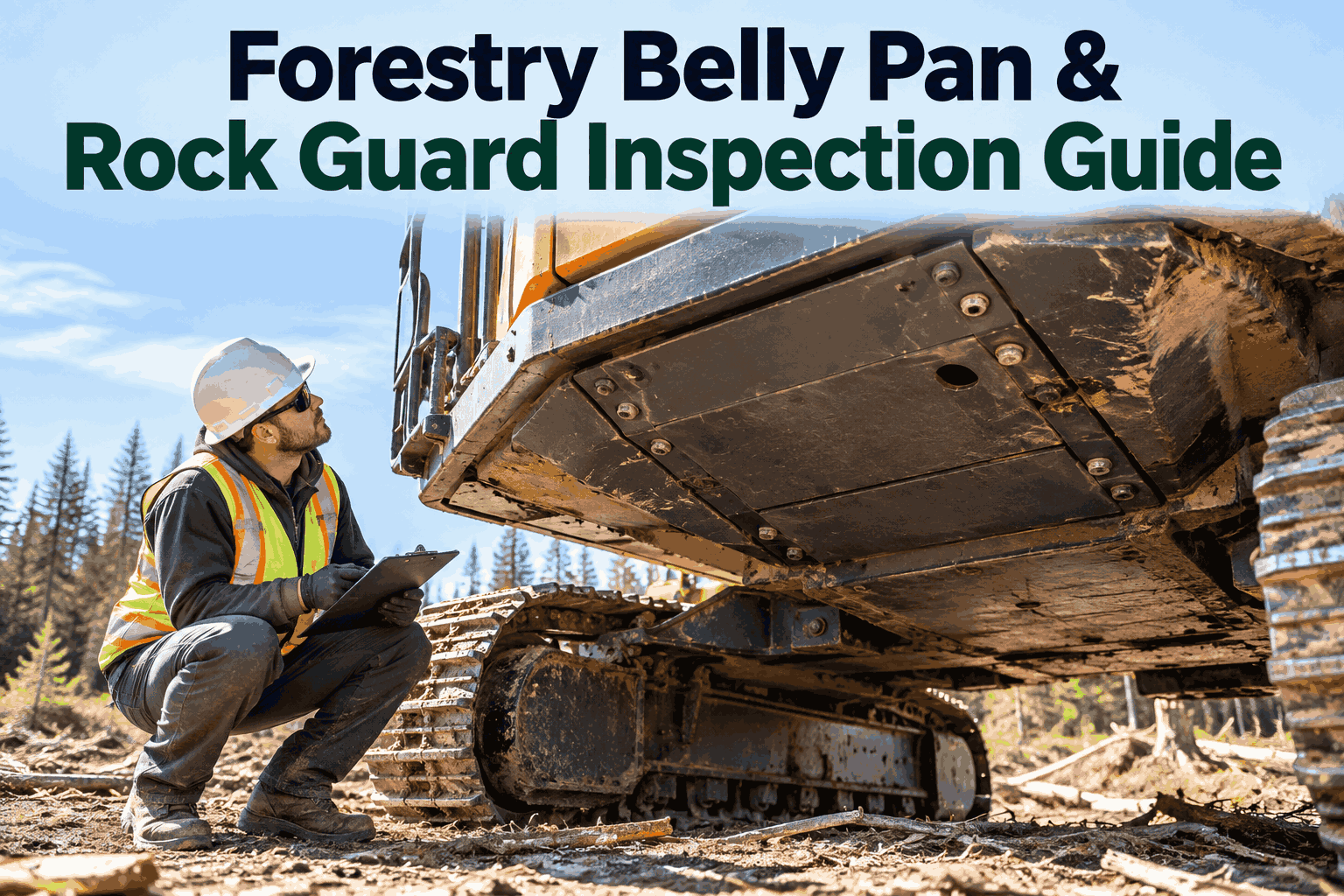
A lowboy fails in predictable places. Walk it the same way every time — gooseneck to ramps — and the failure shows up on the checklist, not on the climb.
Run as a guided check, each zone is logged and any defect photographed — so worn tires route into tire management and a cracked anchor point becomes a tracked repair, not a note that gets lost. Sign up free and build your lowboy walkaround.
The Tie-Down Points Carry Legal Weight, Too
A worn tie-down point isn't just a maintenance item — it's a compliance one. Heavy-equipment securement is regulated, and the trailer's anchor points are half of what makes a load legal.
If an anchor point is cracked or a chain is stretched, the math behind a legal load no longer holds — however good the straps looked. Logging an inspection that checks rated points against the load keeps the trailer on the right side of the rule, and HVI's safety and defect tracking keeps the record. Book a demo to see securement checks logged.
Unchecked Lowboy vs. Inspected Lowboy
Same trailer, same rough roads. What changes is whether a developing failure is caught at the landing or discovered on the highway.
- Deck cracks found after they spread
- Seized ramp hinge discovered mid-load
- Worn tie-down point fails under load
- Tire or light fault caught at a roadside stop
- No record of trailer condition
- Deck fatigue flagged while it's minor
- Ramp and latch checked before loading
- Rated tie-down points verified per load
- Tires and lights confirmed before the run
- Audit-ready record for every trailer
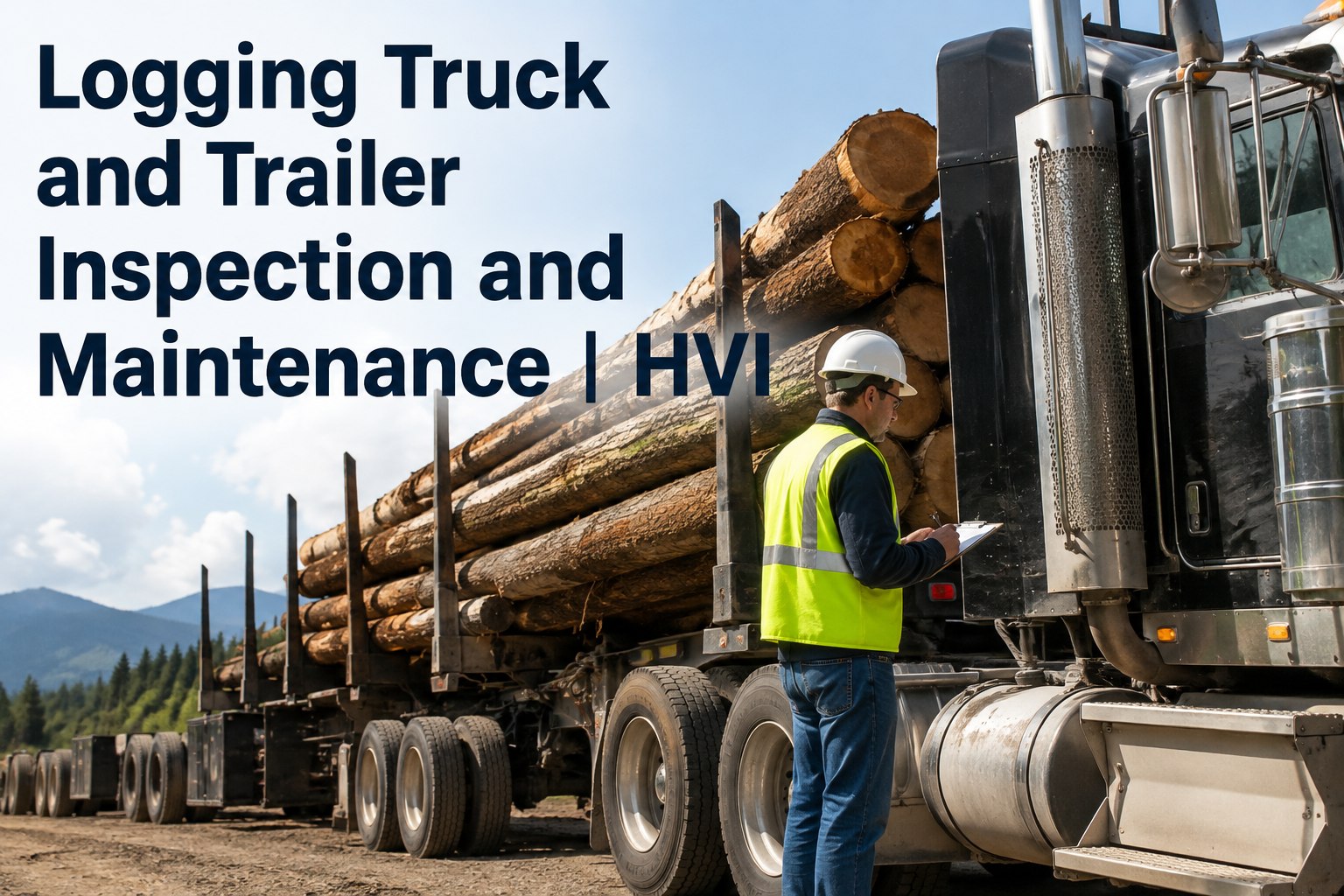
This is the same discipline HVI brings to highway log haulers — for those, see our logging truck and trailer inspection guide; preventive maintenance on both runs through HVI's PM scheduling. Book a demo to see trailer readiness proven.
A Logging Contractor's Take
We move a processor and two skidders between blocks all week, and honestly the lowboy was the one thing we never looked at hard — it just sat there doing its job. Then a deck crossmember let go while we were loading and nearly dropped a machine.
After that I put the trailer on the same inspection routine as everything else. Five minutes, every load: deck, ramps, chains, tires, lights. We've caught two cracked tie-down points since — either one of those lets go on a hill and it's a very bad day.
Logging ContractorOwner-operator · mixed forestry fleet
Forestry Lowboy Trailer FAQs
What should a forestry lowboy trailer inspection cover?
Walk the trailer in zones: the gooseneck and coupling, the deck and crossmembers, axles, tires and brakes, tie-down points and chains, and the ramps and lighting. Each zone has predictable failure points under the load and terrain forestry transport puts on a lowboy, so a consistent zone-by-zone check catches developing damage early.
Why do forestry lowboys wear faster than highway trailers?
They haul heavy machines over rough, unpaved forest roads and go through frequent load and unload cycles, often on uneven ground. That combination fatigues decks and crossmembers, stresses ramps and tie-down points, and is hard on tires and brakes — far more than a trailer that stays on the highway.
How many tie-downs does a transported machine need?
Under FMCSA securement rules (49 CFR 393), equipment weighing more than 10,000 lb must be secured by at least four tie-downs, and the combined working load limit of all securement must be at least half the weight of the load. The trailer's anchor points have to be rated and sound for that math to hold.
What are the most common lowboy trailer failures?
Cracked or fatigued deck crossmembers, worn or seized ramp hinges and latches, damaged or stretched tie-down points and chains, and tire or brake wear from heavy loads on rough ground. Most build gradually, which is exactly why a per-load walkaround catches them before they fail.
How does HVI help manage forestry transport trailers?
HVI standardizes trailer inspections across every zone with guided checklists and photo evidence, turns defects into tracked work orders, and schedules preventive maintenance on decks, ramps, tires, lighting and securement components. Each trailer keeps an audit-ready record, so transport readiness and securement compliance are documented, not assumed.
Keep Every Forestry Lowboy Transport-Ready
Give decks, ramps, tires, lights and tie-down points a standard walkaround, photograph defects, and schedule the maintenance that keeps machines moving between blocks safely and legally.
No credit card · See the trailer walkaround in a short demo