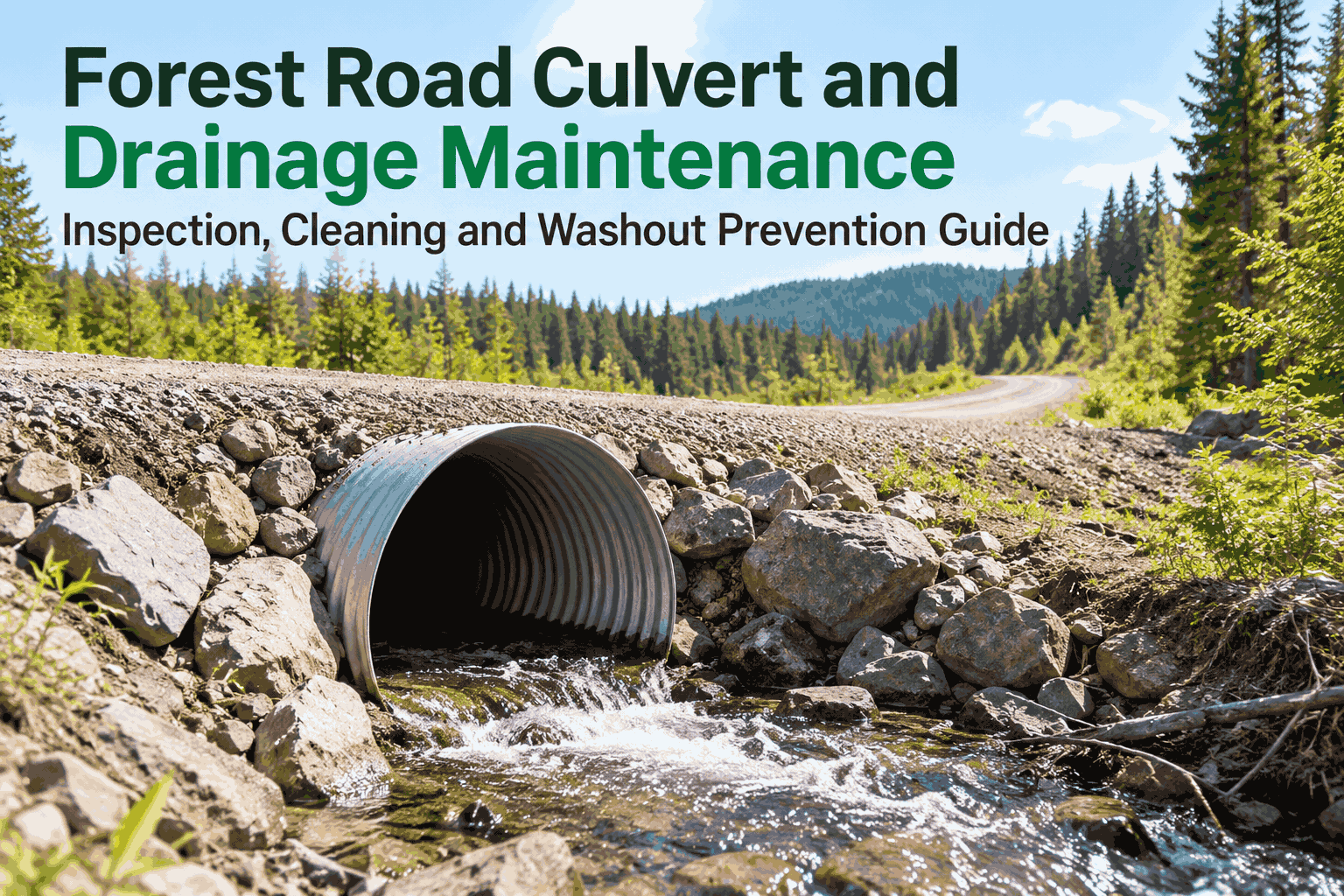
A blocked culvert can turn one storm into a washed-out forest road, a stranded haul crew and days of repair work. Effective culvert maintenance on forest roads starts with recognizing where water should flow, checking inlets and outlets before storms, and documenting defects before they become road failures. This guide covers practical inspections, cleaning priorities and how HVI helps keep the maintenance equipment ready.
The rain is coming. Can the road drain?
One buried inlet can redirect runoff across a haul road. Build a clear culvert inspection routine, prioritize washout risks and keep the excavators, service trucks and cleaning equipment ready to respond.
Follow the water before it crosses the road
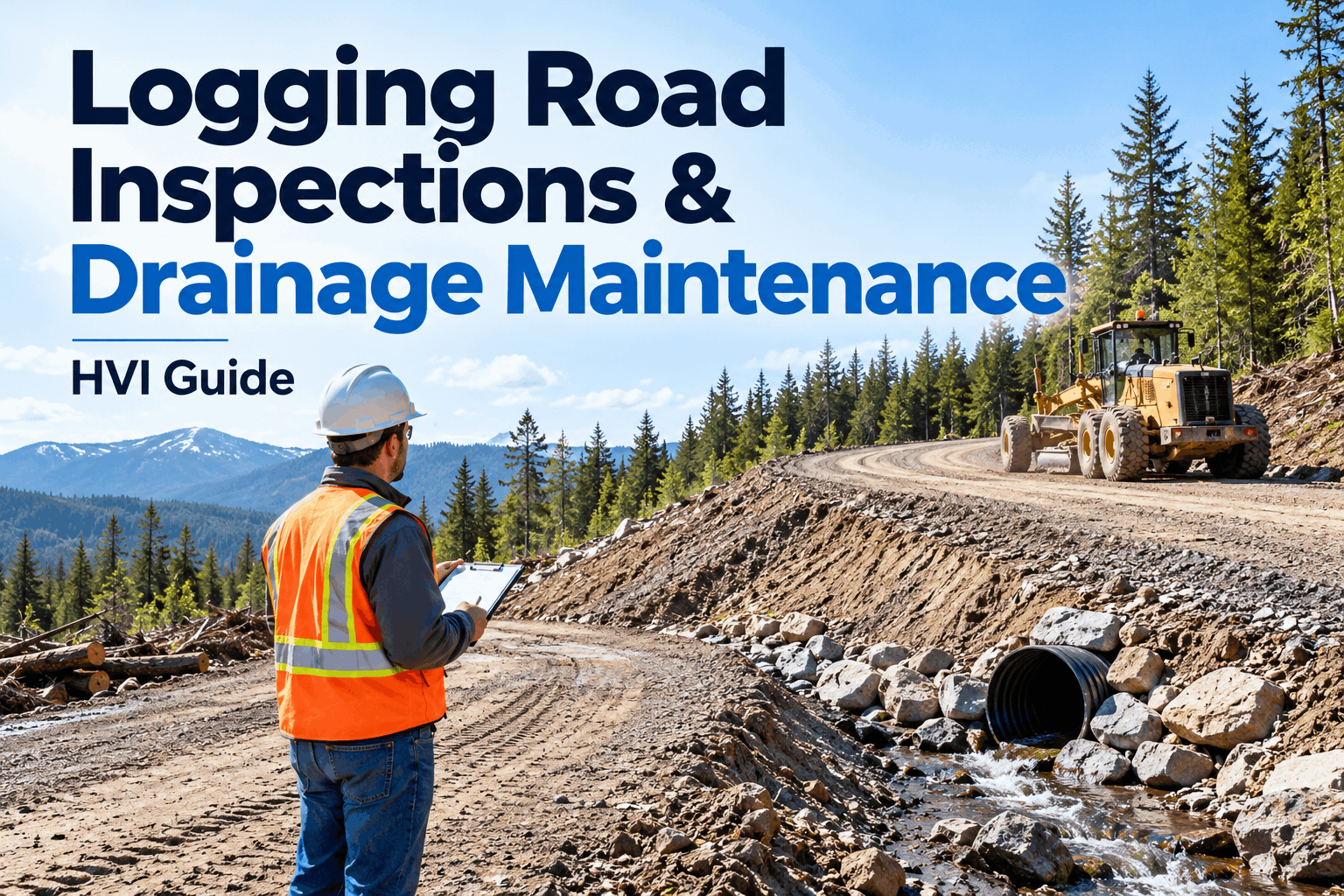
A culvert is only one part of the drainage system. Roadside ditches, inlet approach, barrel and outlet all need a clear flow path.
If water is overtopping the road, undermining the crossing or creating an unstable shoulder, restrict access and escalate for qualified assessment. Do not send workers into flowing water or unstable excavations.
A culvert inspection checklist crews can actually use
Use the same five checkpoints before wet weather, after significant storms and when drivers report ponding or erosion. Adjust frequency to site conditions and local requirements.
Branches, sediment, blocked opening, upstream ponding.
Cracks, deformation, joint separation and visible damage.
Scour holes, exposed pipe ends and displaced rock protection.
Settlement, cracking, saturated fill and evidence of overtopping.
Safe access, traffic restrictions and equipment required.
Plan drainage work by risk, not just by the calendar
Road crossings serving active haul routes, steep catchments and known blockage points deserve closer attention ahead of forecast heavy rain.
Before heavy rain
Review known problem crossings, verify safe access, assign cleaning tasks and check that drainage-maintenance machinery is serviceable.
After the event
Check overtopping marks, washed-out fill, outlet erosion and debris accumulation. Record new restrictions and arrange competent repairs.
Drainage maintenance depends on machines that are ready to work
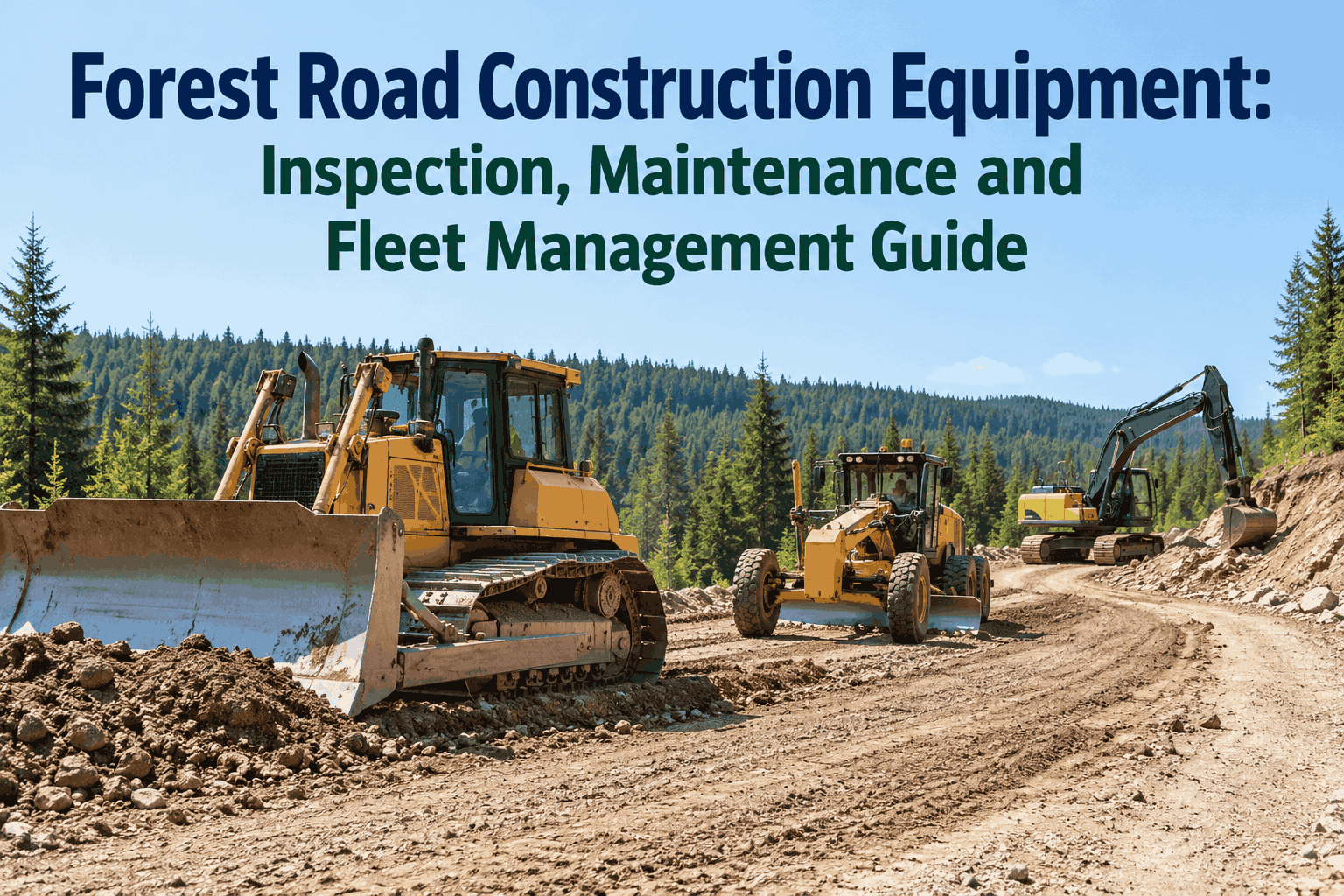
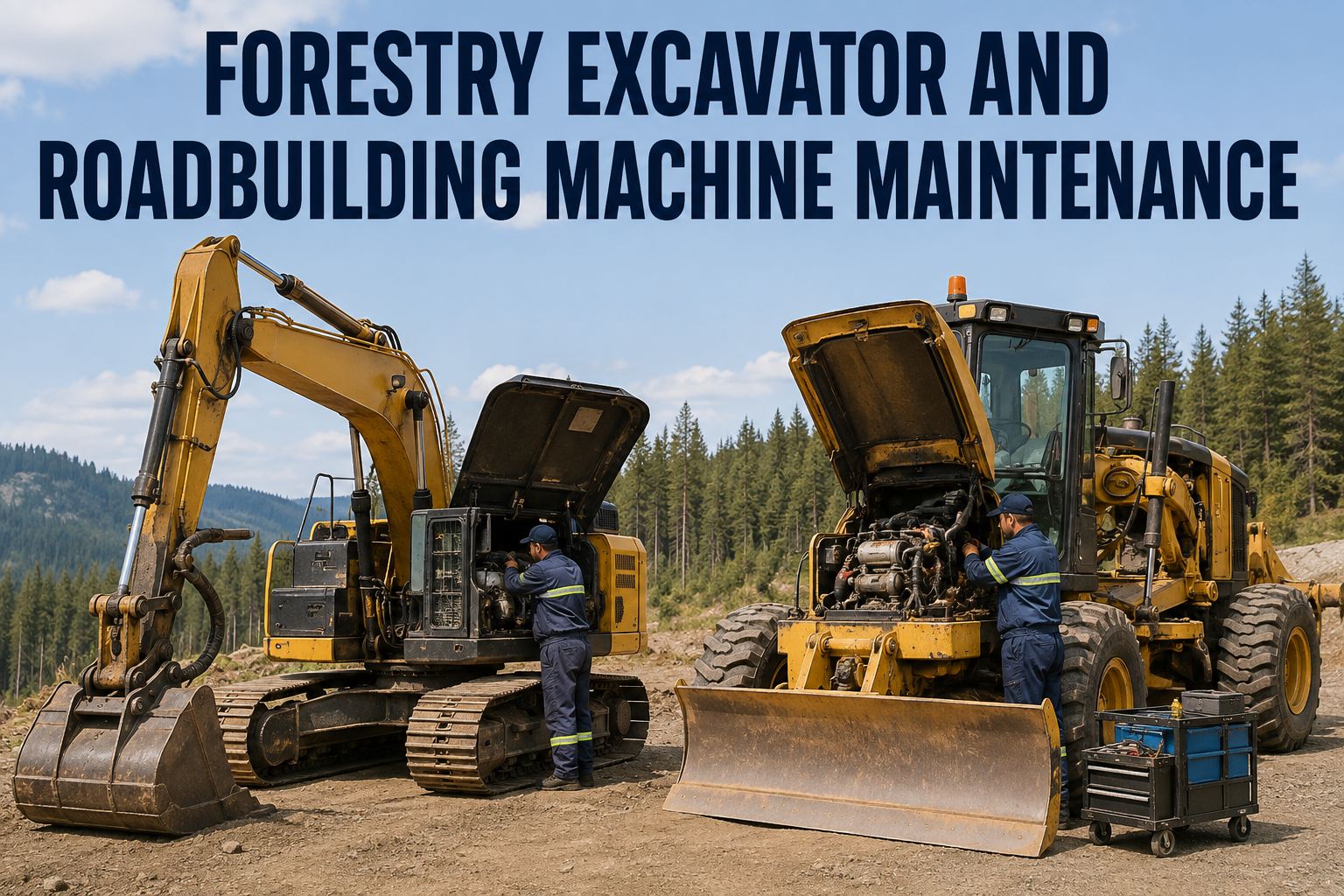
HVI's most direct role here is managing the condition and service history of the equipment used to inspect, clear and repair forest road drainage.
Excavators
Hydraulics, tracks, pins, attachments and leak checks before clearing or repair work.
Service trucks
Pre-trip vehicle inspections, tools, towing readiness and open vehicle defects.
Pumps and cleaning tools
Hoses, connections, guards, operating condition and service intervals where applicable.
Turn an equipment defect into a verified return to service
A field inspection is only useful when the issue reaches the person who can fix it—and the repair is documented before the machine goes back to work.
Example: an excavator hydraulic leak found before culvert cleaning should be reported, assessed and repaired before return to service. HVI can help maintain the inspection, defect and work-order history; it does not automatically assess road stability or control drainage infrastructure.
Sign Up Free to Record Equipment Defects and Maintenance History →Forest road culvert maintenance: quick answers
Practical answers for supervisors planning inspections, cleaning and equipment readiness.
How often should forest road culverts be inspected?
Use a risk-based schedule reflecting rainfall, catchment conditions, road importance and previous blockages. Include inspections before wet seasons and after significant storms; follow applicable agency standards and site requirements.
What are the most common signs of a blocked culvert?
Standing water upstream, reduced outlet flow, sediment or woody debris at the inlet, water crossing the road and new erosion around the pipe or road fill are warning signs. Some conditions require road restrictions and qualified assessment.
What should a forest road culvert inspection checklist include?
Inspect the inlet, barrel, outlet, erosion protection, road surface, shoulders and safe access. Record location, observations, photographs where appropriate, severity, follow-up actions and the person responsible.
How can forestry teams prevent culvert washouts?
Maintain drainage flow paths, clear obstructions safely, monitor known erosion points and respond promptly to overtopping or unstable road fill. Culvert sizing, replacement and structural repairs require appropriate engineering and regulatory review.
How does HVI help with forest road drainage maintenance?
HVI supports inspections, asset records, preventive maintenance, equipment defects, work orders and repair history for machinery used on drainage jobs. It should not be presented as a dedicated culvert condition monitoring, rainfall forecasting or hydraulic-design platform.