Logging road maintenance is not simply grading ruts after a storm. A blocked culvert, failed water bar or poorly drained running surface can interrupt timber hauling, damage equipment and send sediment toward nearby waterways. A repeatable logging road inspection checklist helps crews find defects early, choose the right repair and document when the route is ready for traffic again.
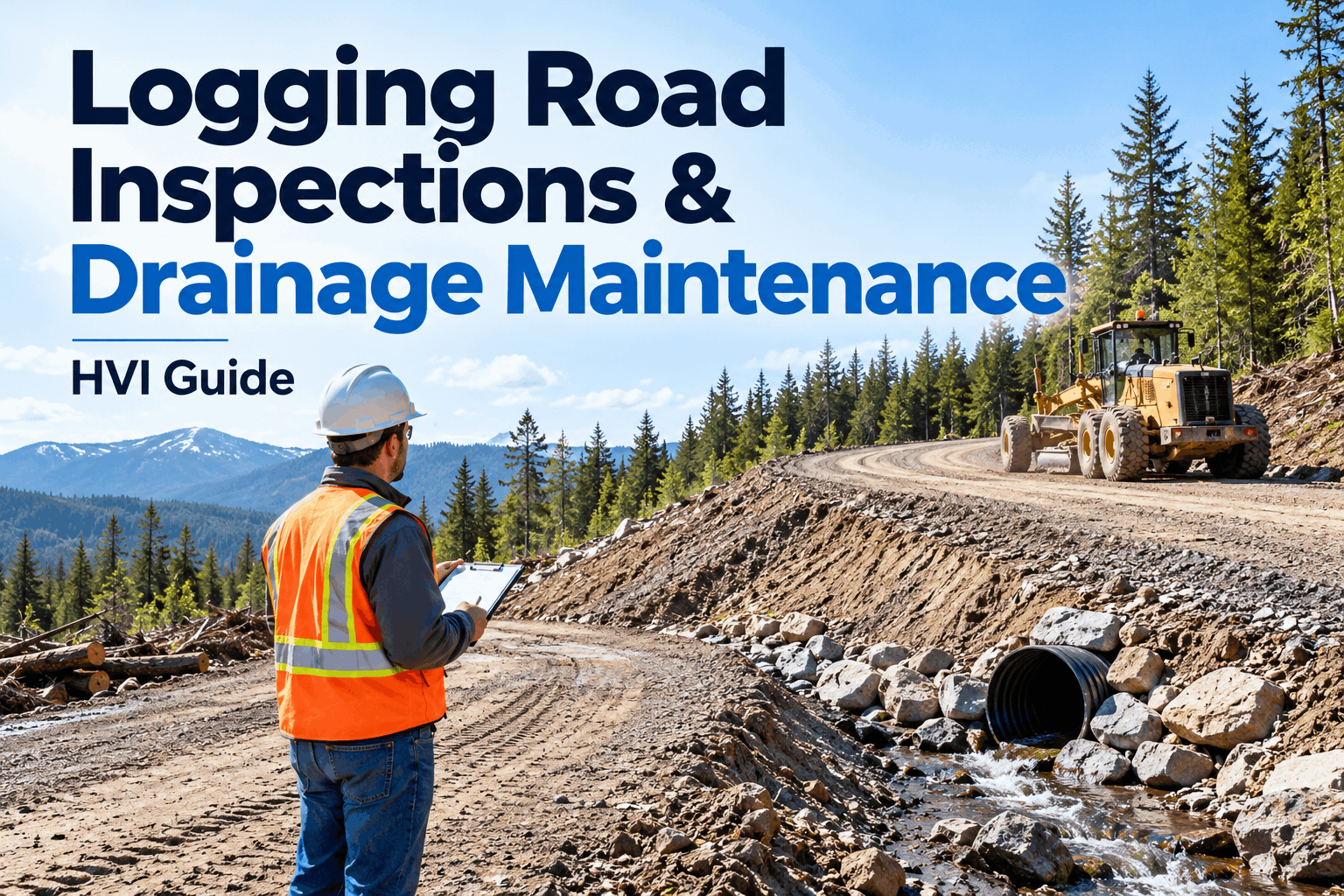
Logging Road Inspections & Drainage Maintenance
Keep access roads serviceable with practical water bar checks, drainage inspections and documented repairs—before small defects become major haul-route interruptions.
Inspect the route as a drainage system—not just a driving surface
A smooth road can still fail if water is trapped in wheel tracks, diverted into unstable fill or concentrated at an unprotected outlet. The objective is to move water away from traffic surfaces without creating erosion elsewhere.
Surface
Check rutting, potholes, crossfall, ponding and locations where traffic channels runoff.
Drainage structures
Inspect water bars, rolling dips, ditches and culvert inlets for blockages or loss of shape.
Outlets and slopes
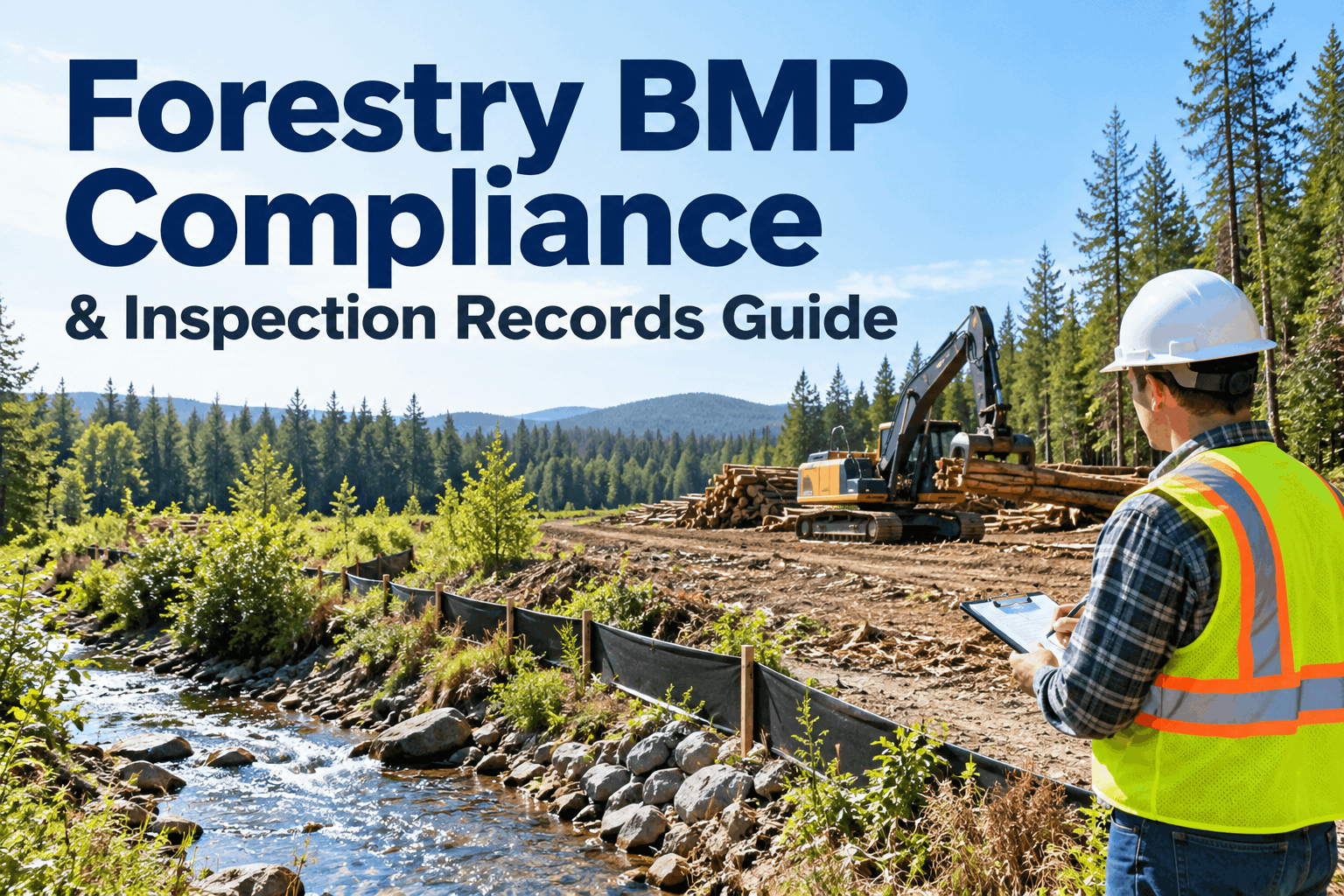
Look for scour, unstable embankments, sediment movement and discharge toward sensitive areas.
A useful field record identifies the road segment, structure, defect, severity, photograph, owner and required follow-up. Sign up for HVI to organize repeatable inspection records alongside your maintenance workflow.
Which logging road defects need attention first?
Prioritize by consequence, not simply by how visible the defect looks. Site-specific rules and competent assessment should govern restrictions and repairs.
| Observed condition | Likely consequence | Field response |
|---|---|---|
| Blocked culvert or overflowing ditch | Washout, diverted runoff, sediment discharge | Urgent Assess access restrictions; clear or repair under an approved method |
| Failed water bar / rolling dip | Runoff follows the road; concentrated erosion | High Restore drainage geometry and stable outlet |
| Deep rutting or soft road edge | Vehicle instability, drainage concentration | High Inspect traffic safety and subgrade condition |
| Minor sediment buildup | Reduced drainage capacity over time | Plan Schedule cleaning and confirm flow path |
Severity examples are illustrative; use site conditions, traffic, weather, waterway sensitivity and qualified judgment to set actual response thresholds.
Maintain water bars, rolling dips and culverts differently
Water bars and rolling dips
Verify the feature still intercepts and diverts surface runoff, the outlet is clear, and grading has not flattened its shape. Check for bypass flow at the ends, sediment accumulation and erosion below the discharge point.
Culverts and roadside ditches
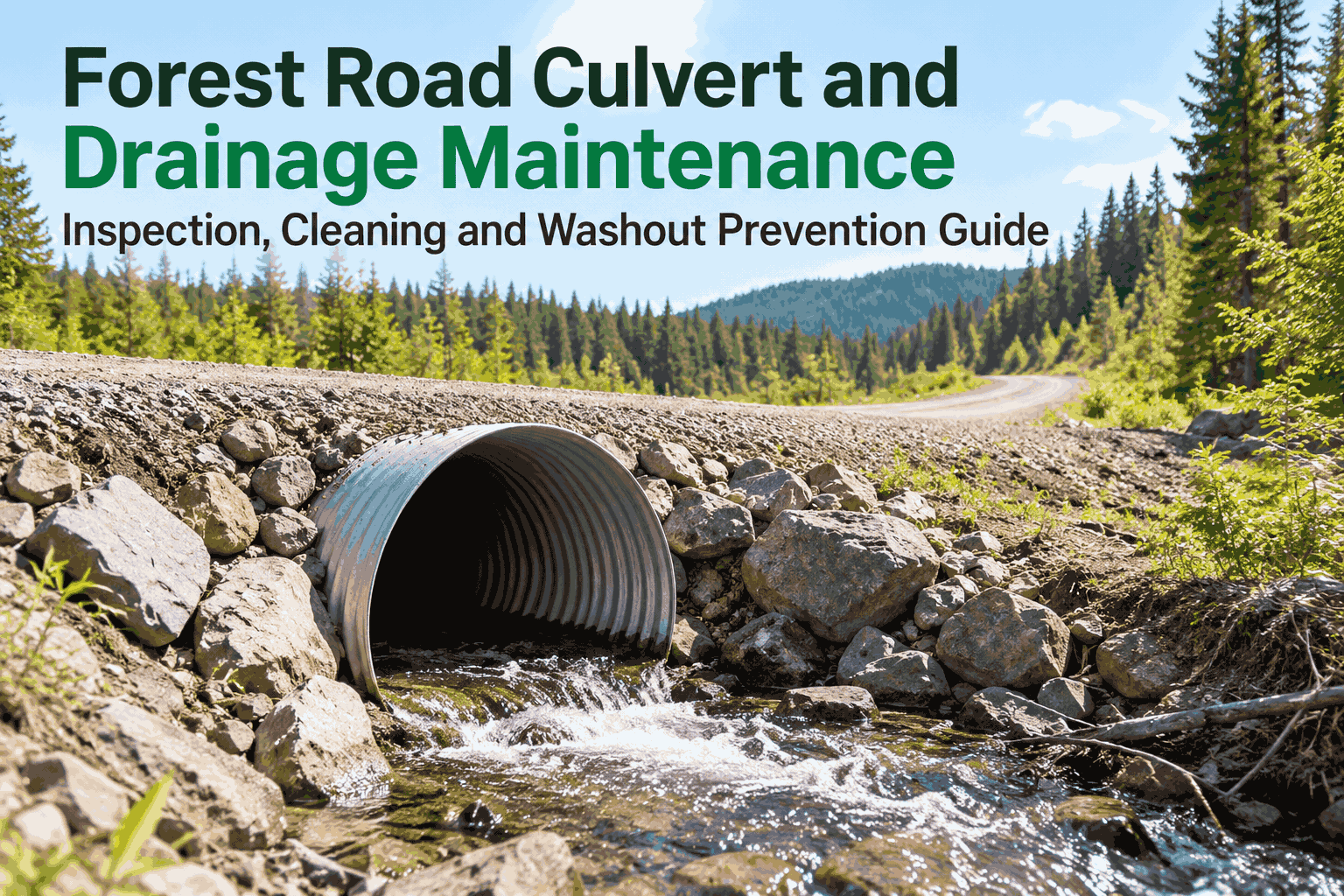
Inspect inlet and outlet obstructions, damage, undermining and overtopping evidence. Check that ditch water reaches the designed crossing without scouring the road shoulder or discharging onto unstable fill.
Keep road drainage defects visible until they are fixed
Use HVI to organize inspection evidence, document defects and connect follow-up maintenance to accountable records.
Turn every inspection into a clear repair decision
A practical logging road maintenance program needs more than a one-time checklist. It needs a visible chain from discovery to safe closeout.
Where site-road segments are managed as trackable assets or inspection locations, HVI inspection and work-order records can support follow-up. Book a demo to review the right workflow for your forestry operation; confirm location-level setup and reporting needs during the walkthrough.
Logging road inspection checklist
Adapt these checks to the road class, terrain, rainfall exposure, equipment traffic and applicable forestry best management practices.
Schedule inspections around risk—not only the calendar
During active hauling
Review high-traffic segments, drainage structures and known trouble spots at a frequency suited to conditions.
After intense rain or thaw
Check crossings, water bars, soft road edges and outlets before assuming the route remains safe for normal traffic.
Before peak harvest or closure
Inspect access readiness, complete priority repairs and verify temporary or seasonal drainage measures.
Consider a remote block where a culvert repeatedly plugs with slash after storms. Regrading the road surface alone will not solve the recurring problem. Recording each blockage, its location, cleanup cost and subsequent condition helps supervisors decide whether inlet protection, drainage redesign or a different maintenance interval is required.
Three metrics that show whether road maintenance is improving
Shows whether planned reviews are actually taking place.
Shows unresolved high-consequence conditions.
Helps identify locations where repairs may not address the underlying cause.
For example, if 6 of 30 documented drainage findings recur at the same locations, the illustrative repeat-finding rate is 20%. Review the repeated locations rather than treating each repair as unrelated. HVI's inspection history and maintenance records can support this review; confirm any required custom report during a forestry maintenance demo.
Build a more reliable logging road inspection process
Bring digital checklists, maintenance follow-up and repair evidence into one organized equipment and site maintenance workflow.
Logging road maintenance FAQs
What should a logging road inspection checklist include?
Include road surface condition, ruts, shoulders, water bars, rolling dips, ditches, culverts, stream crossings, outlets, sediment movement, photographs, defect severity, repair ownership and follow-up status.
How often should logging roads be inspected?
Set frequency using traffic, terrain, rainfall, road condition, environmental sensitivity and applicable rules. Supplement routine inspections with checks after major rain, thaw, flooding or other events likely to affect drainage or stability.
What is the difference between a water bar and a rolling dip?
Both redirect runoff off a road. A water bar is a diversion feature often used on lower-traffic or temporarily closed routes; a rolling dip is shaped to accommodate traffic while directing water toward a suitable outlet. The appropriate design depends on road use and site conditions.
Can HVI track logging road drainage repairs?
HVI provides digital inspection and maintenance record workflows that can help document findings and follow-up work. Confirm how your road segments, inspection locations and reporting requirements should be configured before deployment.
Does a digital inspection checklist establish forestry BMP compliance?
No. Digital records support evidence and follow-up, but compliance depends on actual site conditions, local rules, permit requirements and competent assessment. An inspection system does not replace engineering judgment or environmental authorization.
Keep logging roads ready for the next haul
Effective logging road maintenance combines drainage-focused inspections, risk-based repairs and documented verification. Start with known trouble spots, inspect after high-risk weather and review repeat defects to improve the underlying road condition—not merely the appearance of the surface. Sign up for HVI to start organizing forestry inspections, or book a demo to discuss your maintenance workflow.