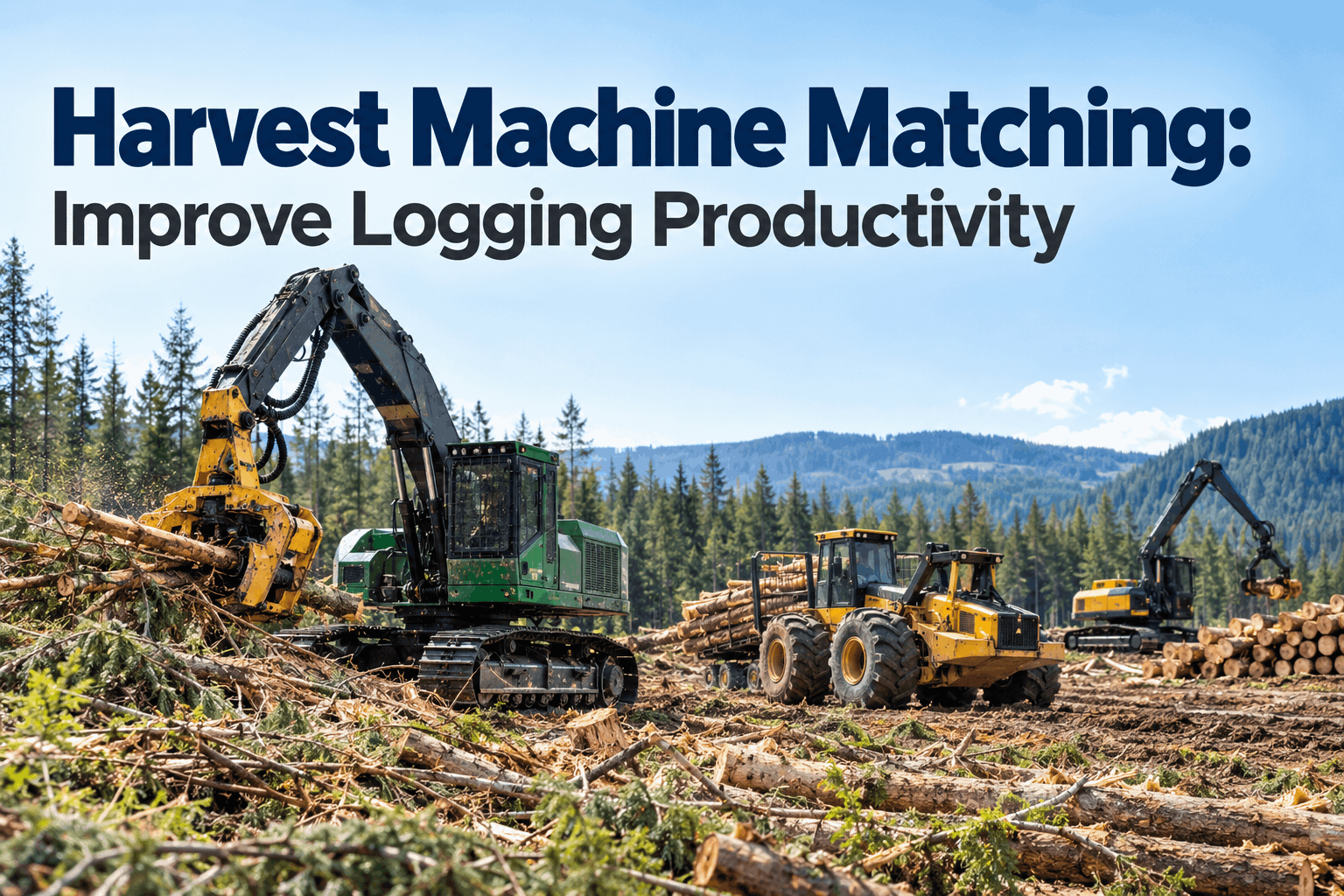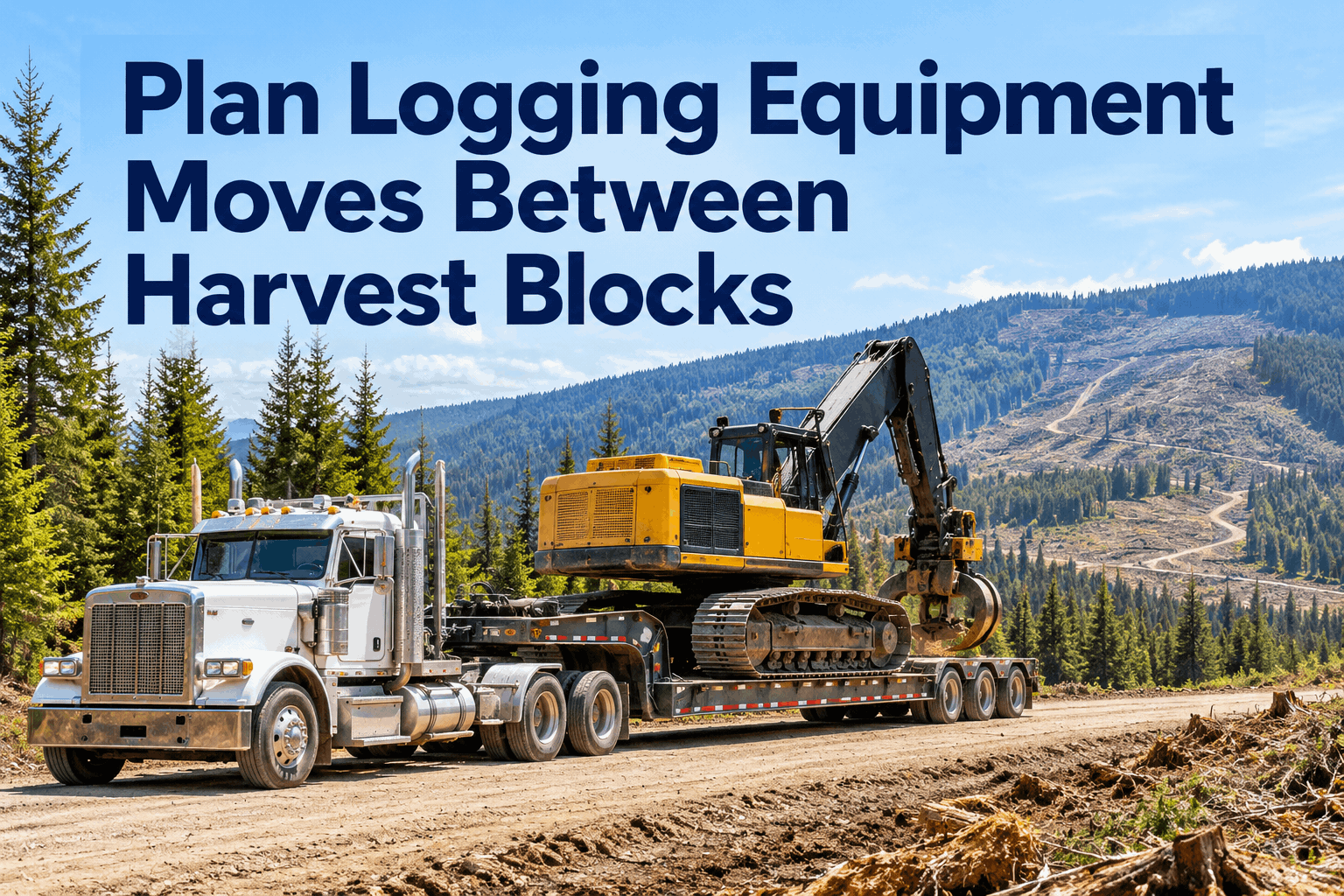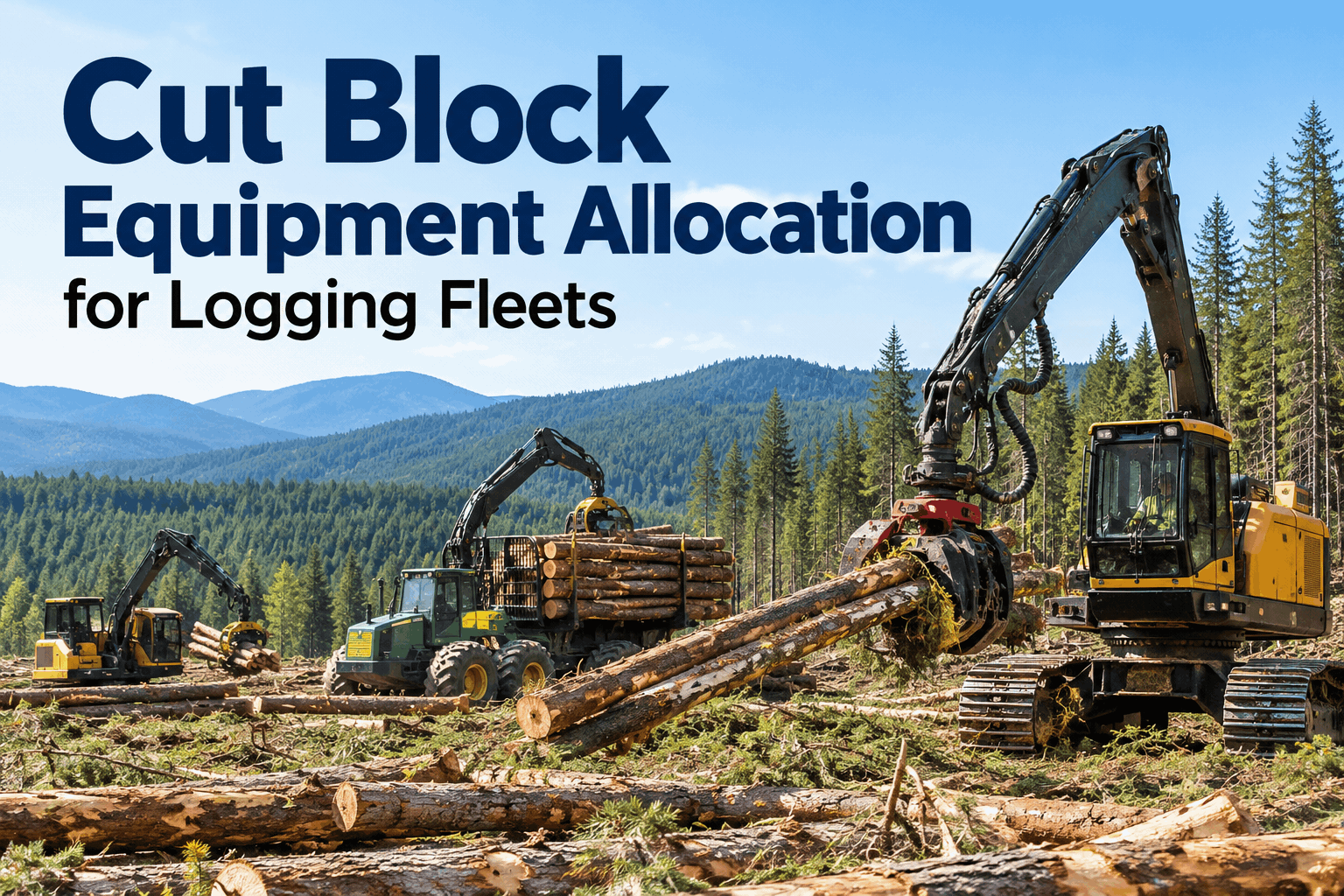
Cut block equipment allocation is the practical task of assigning the right feller bunchers, skidders, processors, loaders and support machines to each active harvest area. The challenge is not simply finding an available machine: it is confirming that the machine fits the terrain and production plan, can arrive when needed, and will not enter the block with overdue maintenance. This guide shows how to build a workable allocation plan and maintain readiness evidence. Book a demo to explore forestry equipment records and inspections in HVI.
Put the Right Machines on the Right Cut Block — Before the Shift Starts
Turn a scattered equipment list into a clear allocation plan that connects block requirements, machine availability, maintenance readiness and crew handoffs.
What Cut Block Equipment Allocation Actually Decidesa block-by-block deployment decision, not just a machine count
Harvest managers often have enough equipment in total but not enough of the right equipment at the right block. A skidder can be mechanically available yet poorly suited to a long, steep extraction route. A processor can be productive but stranded without sufficient stems arriving. A loader can be ready while access improvements delay the haul trucks.
Match terrain, soil, slope, extraction distance, landing space and permitted access to each machine's operating envelope.
Allocate felling, extraction, processing and loading resources according to the actual harvest method and crew schedule.
Confirm inspections, service status, known defects, attachments, tires or tracks and support equipment before release.
Coordinate release, transport, arrival, commissioning and the first productive shift at the receiving block.
The outcome should be a shared assignment record showing machine, block, responsible crew, start date, release gate and exceptions. HVI can support the equipment-record and maintenance side of this process; dispatch decisions remain with the forestry operation.
Build a Block Requirement Sheet Before Assigning Machinesstart with the worksite, then choose the fleet
Record the block's harvesting method, estimated volume, road access, extraction distances, slope, soil conditions, landing capacity and planned operating shifts. Identify which activities can run concurrently and which depend on an upstream machine.
For example, a block with a narrow landing and long extraction distance may need a different skidder arrangement than a block with short, level trails. Equipment selection should also reflect the manufacturer's limits, local site assessment and operator competence.
Do not assign a machine because it is the only unit marked “available.” First ask whether it is suitable for the job and whether its next planned service will interrupt the assignment. Book a demo to review equipment histories before block assignment.
Block requirement card · example
- Block
- North Ridge B
- Harvest method
- Tree-length
- Extraction
- Longer than Block A
- Landing
- Restricted turning area
- Machines needed
- Feller · skidder · processor · loader
- Release condition
- Access verified + inspections current
Create a Machine Allocation Matrix Across Harvest Blocksone readable board for competing assignments
The allocation board below demonstrates how a manager can distinguish committed equipment, units needing maintenance clearance and machines held as backup. Use real asset IDs, not informal labels such as “the yellow skidder,” so maintenance and movement records can be traced later.
| Equipment / role | Block A · active | Block B · starting | Block C · planned | Next action |
|---|---|---|---|---|
| Feller buncher FB-01 | Assigned | — | — | Confirm release shift |
| Skidder SK-04 | Assigned | — | — | Check service hours |
| Processor PR-02 | — | Assigned | — | Verify setup at landing |
| Loader LD-03 | — | Review | — | Close hydraulic leak work order |
| Skidder SK-07 | — | — | Reserve | Confirm transport availability |
Illustrative allocations only. Status labels describe a planning example, not a live HVI screen or automatically calculated assignment.
Review the board at the start of each planning cycle and whenever a breakdown, weather closure, crew change or transport delay alters the plan. Book a demo to see how HVI organizes fleet asset and maintenance records.
Use a Release Gate to Prevent Unready Equipment Movesa clear go / resolve / hold decision
Site fit confirmed
Block conditions and machine capabilities have been reviewed by the operations team.
Mechanical clearance
Inspections complete; critical defects resolved; service and component history reviewed.
Movement coordinated
Transport equipment, permits, route suitability and loading arrangements verified.
Receiving block ready
Landing, access, operators, fuel or energy supply and site-specific safety controls prepared.
Release authority should follow the mine or forestry contractor's established procedures. A software record can help document the decision, but it does not replace competent inspection or transport safety approval.
Sequence Equipment Deployment Without Creating Idle Crewsrelease-to-restart timing matters as much as machine selection
A block transition often fails because every machine is scheduled to move on the same day. In practice, site preparation, haulage availability, repair work and receiving-block setup have different lead times. The sequence below shows how to stage decisions rather than treating relocation as a single calendar event.
Confirm next block
Approve the site plan, required machine roles, access and expected production start.
Check readiness
Inspect machines, resolve critical defects and review PM due dates against the deployment window.
Release and transport
Complete shutdown, secure attachments, coordinate hauling and document the handover.
Start and verify
Inspect after unloading, brief crews and confirm the first productive shift and any emerging constraints.
Illustrative timing only; actual moves may require longer lead times, specialist transport and additional regulatory approvals.
Maintain one owner for the transfer plan. If the loader arrives but the processor is still on the previous block, the new crew can lose productive hours without any individual machine being mechanically broken.
How to Balance Machine Matching and Equipment Allocationuse productivity estimates as a constraint, not as the whole plan
Machine matching answers whether a combination of felling, extraction and processing machines can sustain the required production flow. Allocation answers which actual machines can be committed to a specific block, considering maintenance, geography, availability and timing. Both decisions matter, but they are not interchangeable.
Does the system have balanced capacity?
Compare productive output rates, cycle times, extraction distance, bottlenecks and expected utilization. A skidder with insufficient effective capacity may starve the processor.
Can the chosen units work on this block?
Check the physical unit's location, suitability, inspection status, open work orders, PM timing, operator assignment and transport availability.
- Skidder SK-04: mechanically ready
- Processor PR-02: available on start date
- Loader LD-03: repair clearance pending
- Lowboy slot: transport coordinator to confirm
For a detailed discussion of balancing production rates, see the separate HVI article on harvest system machine matching. This page concentrates on assigning and mobilizing the equipment itself.
Cut Block Equipment Allocation Checklist12 checks before a machine is committed
Use this checklist during the weekly allocation meeting and repeat the critical checks before equipment leaves the current block. Assign each exception to a named person; a ticked box without a responsible owner does not resolve a missing transport permit or a critical defect.
Block and production
- Harvest method and block scope confirmed
- Terrain, access and extraction distances reviewed
- Required machine roles and crew shifts agreed
- Landing and receiving site ready
Machine readiness
- Asset ID and assigned block recorded
- Pre-move inspection completed
- Critical defects and work orders resolved
- Upcoming preventive maintenance checked
Transport and startup
- Hauling slot, route and permits confirmed
- Attachments and transport restraints reviewed
- Receiving crew and operator briefed
- Arrival inspection and startup owner assigned
HVI can help centralize the inspection and maintenance evidence used in these checks. Sign up free to start organizing forestry equipment inspections and maintenance records.
Track the Few Measures That Improve Allocation Decisionskeep performance reporting tied to real operational choices
Define the reporting period and data rules before comparing crews or sites. A late start caused by a closed access road should not be classified as a machine failure. Equally, an equipment breakdown discovered during pre-move inspection is a maintenance readiness issue even if the transport truck has not yet been booked.
Use inspection records, work-order history and asset data to explain why a plan changed, rather than treating a changed allocation as proof of poor performance. Book a demo to explore HVI maintenance and fleet reporting for forestry equipment.
Put HVI Into the Forestry Allocation Workflowmaintenance evidence for decisions made by operations managers
Build the equipment register
Keep each machine's identifier, type, location and relevant maintenance history organized so planners know which unit is being discussed.
Inspect before reassignment
Use equipment inspections to document defects and readiness observations ahead of a move, with follow-up actions where required.
Review preventive maintenance
Check whether planned service or open repair work overlaps the proposed block assignment. Resolve conflicts before committing transport.
Review records after startup
Capture new issues and service events to improve the next allocation cycle and reduce repeated avoidable delays.
HVI supports the asset, inspection, PM and maintenance-record portions of this workflow. Site production planning, transport booking and the final deployment authorization remain operational responsibilities.
Cut Block Equipment Allocation FAQspractical answers for forestry operations and fleet managers
What is cut block equipment allocation?
It is the process of assigning specific forestry machines and crews to individual harvest blocks based on site requirements, machine suitability, readiness and deployment timing. It includes more than matching theoretical machine capacity.
How do you decide how many skidders a harvest block needs?
Estimate extraction volume, travel distance, load size, cycle time, operating conditions and effective productive hours. Compare skidder capacity with felling and processing demand, then validate estimates with site data and operator experience.
What should be checked before moving logging equipment to another block?
Verify block access, machine inspections, unresolved defects, preventive maintenance, transport arrangements, attachments, permits where applicable, receiving-site readiness and responsible crew assignments.
How is equipment allocation different from harvest system machine matching?
Machine matching balances production capacity across equipment roles. Equipment allocation assigns real assets to blocks while accounting for location, suitability, mechanical condition, timing and transport constraints.
How can HVI help forestry managers plan equipment allocations?
HVI can organize equipment asset information, inspections, preventive maintenance and maintenance records so managers can assess machine readiness. It is not a substitute for site planning, transport dispatch or engineering approvals.