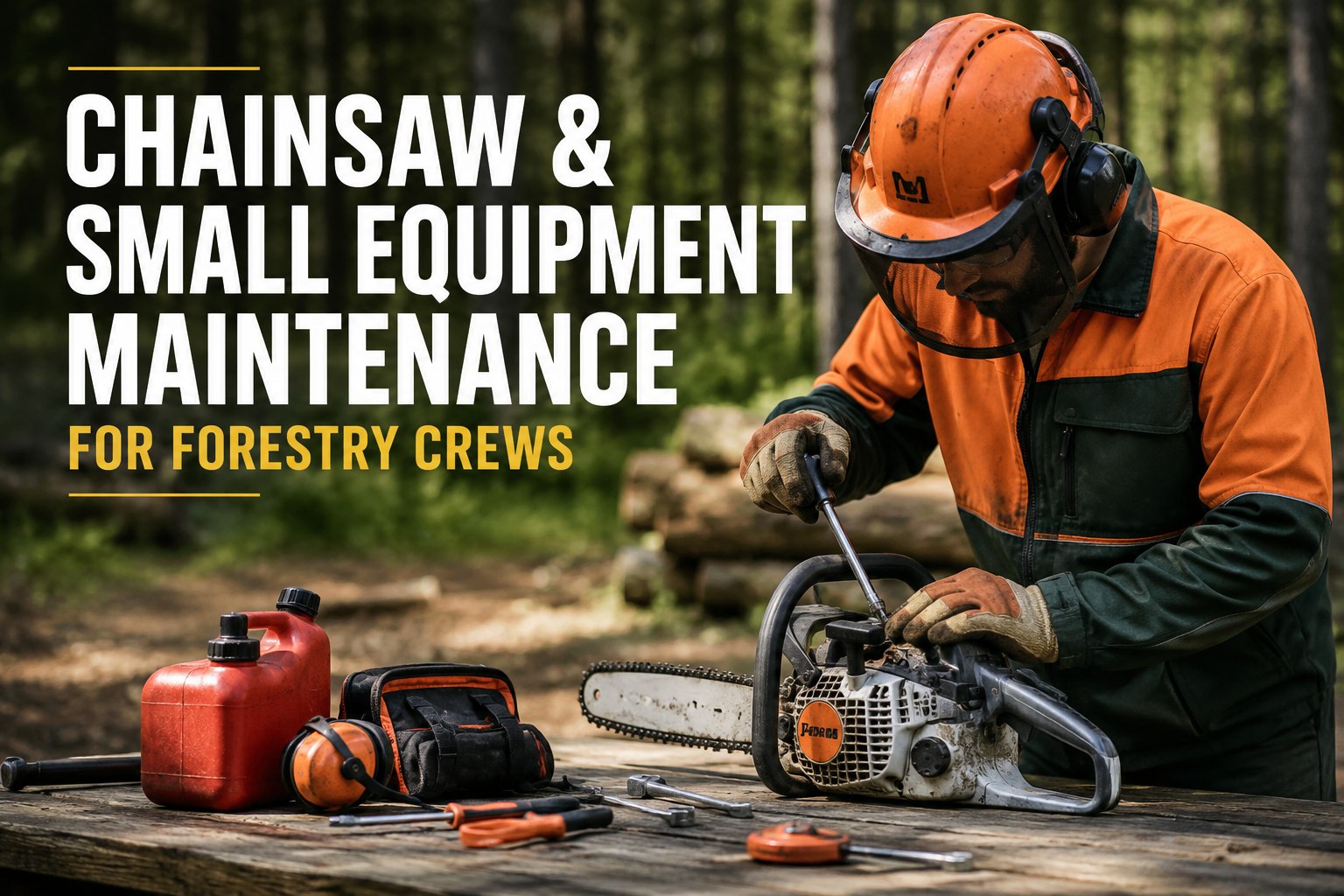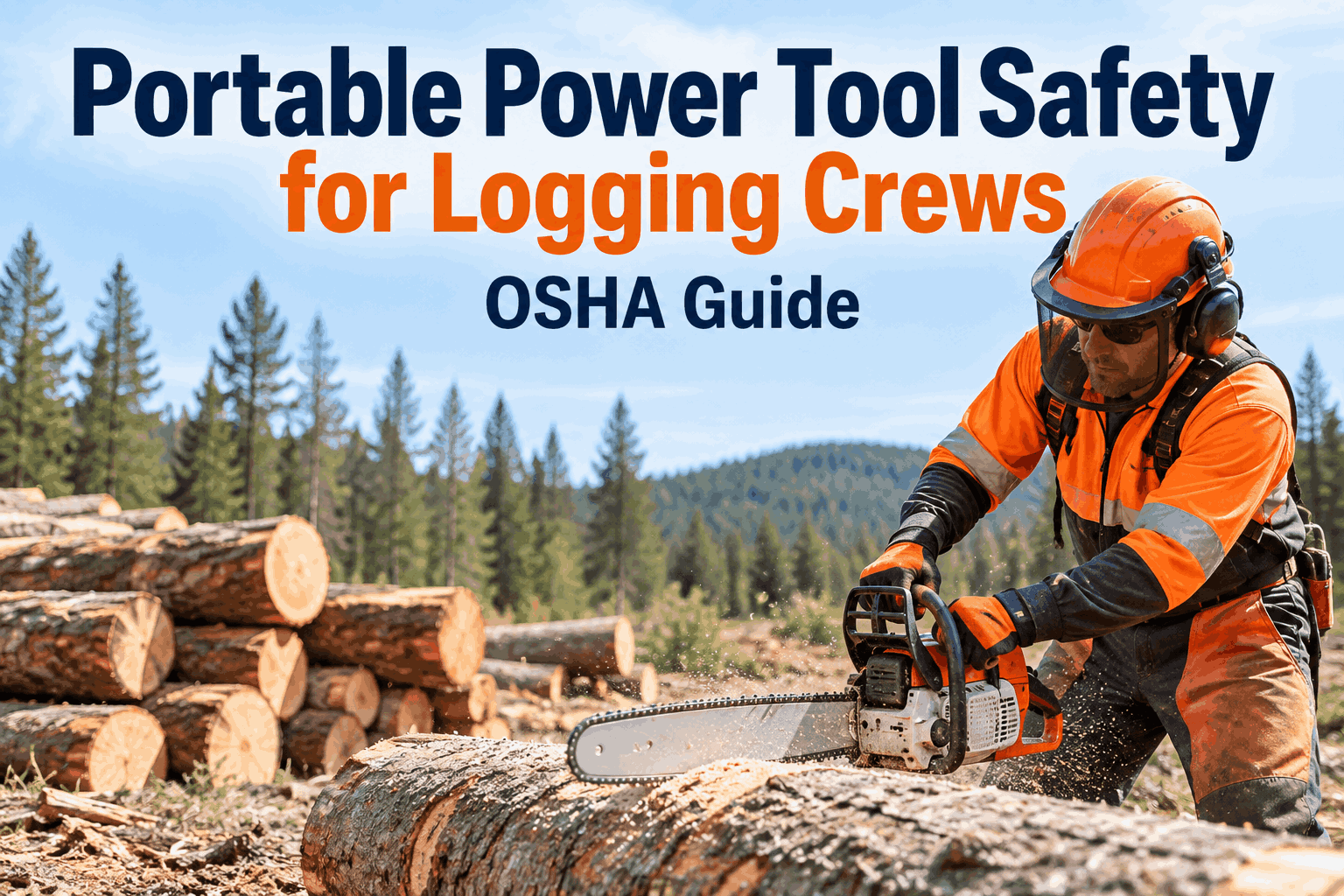
Portable power tool safety in logging starts before the first cut of the workshift. Hand tools, chain saws and other portable powered tools need to be serviceable, checked for relevant defects and used as designed, while crews need a clear way to remove unsafe tools from use and document what happens next.
Put Every Logging Tool Through a Readiness Check Before Work Starts
Build a repeatable work-shift routine for chain saws, axes, wedges and portable powered tools—then give defects a clear route from field finding to repair or removal from service.
For logging operations, tool inspection is more specific than a quick visual glance. OSHA 1910.266 requires employers to keep hand and portable powered tools in serviceable condition and inspect each tool before its initial use during each workshift. A practical program turns those requirements into a short field check, a clear serviceability decision and a traceable response when a defect is found.
Portable Power Tool Safety Starts With a Go / No-Go Decision
OSHA's logging standard applies the work-shift inspection requirement to hand and portable powered tools, including tools provided by employees. Instead of treating that check as paperwork, crews can use it as a release gate: inspect the condition that matters, decide whether the tool is serviceable, and keep a questionable tool out of work until the issue is addressed.
- Handles & guards
- Controls
- Cutting components
- Safety devices
The minimum work-shift inspection addresses handles and guards, controls, chain-saw chain adjustment, mufflers, chain brakes and nose shielding devices, impact-tool heads, cutting edges and other safety devices.
A digital inspection workflow can make the same check sequence available across crews instead of relying on memory or inconsistent paper forms. See how HVI can turn a logging tool check into a repeatable work-shift inspection.
Make the Chain Saw Inspection Specific Enough to Catch the Wrong Defect
Chain saw inspection deserves its own workflow because several critical conditions need to work together. A sharp chain alone does not make the saw ready. Controls, chain adjustment, handles, guards, muffler, chain brake and other required safety features all matter before operation.
Sound, tight-fitting, properly shaped and in place.
Check that operating controls function properly.
Verify proper chain adjustment before initial use.
Confirm that it is operational and in place.
Confirm required devices are in place and function properly.
OSHA requires a gasoline-powered chain saw to be started at least 10 feet from the fueling area, on the ground or otherwise firmly supported, and with the chain brake engaged. Drop starting is prohibited. Operators must also be certain of their footing before cutting.
Hand Tool Safety Is About the Working End and the Holding End
Axes, impact tools and other hand tools create different failure points than a chain saw. The useful inspection question is simple: can the worker hold, strike, cut and transport the tool without a condition in the tool itself creating an avoidable hazard?
Loose fit, splinters, sharp edges, damage or poor shape.
Mushrooming, chipping or deterioration of the striking surface.
Dull, damaged or improperly shaped cutting surface.
Missing, loose, damaged or unable to perform its safety function.
Under OSHA's logging rule, the heads of shock, impact-driven and driving tools are part of the required work-shift inspection. When a head begins to chip, the tool must be repaired or removed from service.
Cutting edges also need attention during the shift—not just during the morning check. OSHA requires a cutting edge to be sharpened according to the manufacturer's specifications when it becomes dull during the workshift. A recorded defect can therefore become a maintenance task rather than disappearing into a verbal reminder.
A Portable Power Tool Inspection Needs an Action After “Fail”
The weakest inspection programs end with a checkbox. A stronger process defines what happens after the worker finds a damaged handle, failed control, improperly adjusted chain, missing safety device or other condition that means the tool should not simply continue through the shift unchanged.
Record the actual condition—not just “failed.”
Keep the inspection and maintenance history connected to the tool.
This is where maintenance management and inspection history can work together. The crew records the condition in the field, while supervisors retain visibility into what needs attention and the tool's subsequent maintenance record. See how HVI can connect a failed logging tool inspection with its maintenance follow-up.
Keep Logging Tool Safety Going After the Inspection
A passed inspection does not make the rest of the shift automatic. OSHA's logging requirements also address intended use, cutting-edge condition, tool storage, transportation and several chain-saw operating practices. The practical goal is to preserve safe tool condition from release through use, movement and storage.
Use the tool only for the purpose for which it was designed.
Respond if a cutting edge dulls or a condition changes during work.
Transport tools so they do not create a hazard for vehicle operators or passengers.
Return tools to the provided location when they are not being used.
OSHA requires the saw to be shut down or the chain brake engaged when it is carried more than 50 feet. The same action is required over a shorter distance when terrain, underbrush, slippery surfaces or similar conditions may create a hazard.
A custom checklist can help supervisors keep these operating expectations alongside the work-shift inspection rather than treating tool safety as a one-time morning event. See how HVI can structure tool checks around the way logging crews actually work through a shift.
Portable Power Tool Safety: Frequently Asked Questions
How often must logging hand and portable powered tools be inspected?
Under OSHA 1910.266(e)(1), each hand and portable powered tool must be inspected before its initial use during each workshift. The requirement includes tools supplied by employees as well as employer-provided tools.
What should a logging hand tool inspection check?
The OSHA logging standard's minimum inspection includes relevant handles and guards, controls, chain-saw chain adjustment and mufflers, chain brakes and nose shielding devices, heads of shock or impact-driven tools, cutting edges and other safety devices.
What should crews check during a chain saw inspection?
Relevant checks include handles and guards, operating controls, chain adjustment, the muffler, chain brake and other required safety devices. The saw also needs to be operated and adjusted according to the manufacturer's instructions.
Can a chain saw be drop started during logging work?
No. OSHA 1910.266 requires the chain saw to be started on the ground or where it is otherwise firmly supported, with the chain brake engaged. The saw must also be started at least 10 feet from the fueling area.
How can HVI support logging tool safety?
HVI can help crews standardize digital tool inspections, document defects and maintain inspection and maintenance records. Employers remain responsible for determining the requirements that apply to their operation, maintaining serviceable tools and following applicable OSHA and manufacturer requirements.
Make “Ready for Work” a Documented Tool Condition
Standardize logging tool inspections, make defects visible and keep inspection and maintenance history connected across crews and worksites.