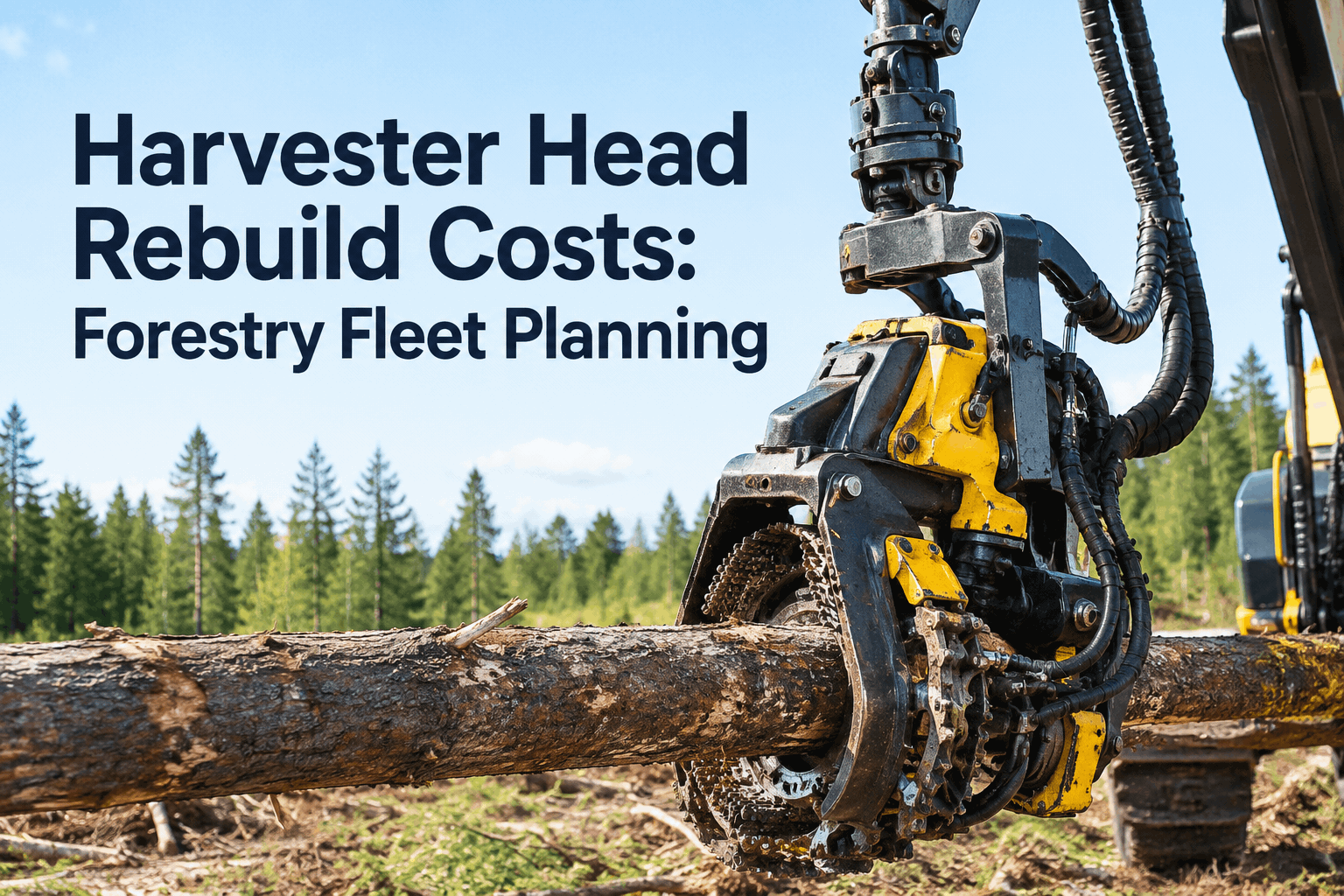
A harvester head rebuild can be a planned investmentor a budget shock that lands in the middle of harvest. A practical harvester head rebuild cost plan starts with a clear scope, comparable quotes, a realistic downtime allowance and maintenance records that show what the attachment has already cost your fleet.
Build the rebuild budget before the head comes off the machine
Bring parts, labor, outside services, freight, and lost production into one decision—then compare the final invoice with the estimate.
What actually drives a harvester head rebuild estimate?
Request a quote with the same scope from each supplier. A low headline price is not a fair comparison if one quote excludes machining, testing, freight, or parts discovered during teardown.
Parts and components
List known wear items, damaged assemblies, seals, hoses, bearings, motors, and any components the inspection suggests may need replacement. Mark quoted versus provisional items.
Labor and specialist work
Separate removal, teardown, inspection, machining, reassembly, calibration or setup, and final testing. Confirm what is included in the supplier's labor estimate.
Freight and downtime
Include transport, handling, outside services, temporary replacement arrangements, and the production impact of the head being unavailable.
Rebuild or replace? Compare the full decision
Use an inspection and supplier assessment to establish condition first. Then compare the cost and expected service life of each viable option.
Rebuild may make sense when…
- The main structure is serviceable and damage is repairable.
- The supplier can define the scope, exclusions, and warranty.
- Expected remaining service life fits the fleet plan.
- The total rebuild cost is competitive with a suitable replacement.
Replacement deserves review when…
- Structural damage or repeated failures make the scope uncertain.
- Parts availability creates long or unpredictable delays.
- Past rebuilds have not delivered acceptable service life.
- A replacement offers better lifecycle value for the application.
Decision rule: Compare expected total cost over the same planning period—not only the initial rebuild invoice. Include downtime, likely follow-up work, warranty terms, and the expected service life of each option.
Turn the quote into a budget you can manage
A rebuild budget should remain useful after the work starts. Keep the estimate, approved changes, work order, and final expenses tied to the same asset and repair event.
| Budget line | Before work starts | At closeout |
|---|---|---|
| Parts and materials | Record supplier quote, quantities, lead times, and provisional items. | Enter actual parts used and any returns or substitutions. |
| Labor and subcontractors | Separate internal labor from external service estimates. | Record actual hours, invoices, and approved additional work. |
| Downtime and logistics | Estimate transport, turnaround time, and production exposure. | Record actual unavailable days and transport costs. |
| Scope changes | Set an approval process for extra work found after teardown. | Explain each variance and attach supporting documentation. |
Cost variance = Actual rebuild cost − Approved budget
Example: if the approved budget is $24,000 and the final recorded cost is $27,000, the variance is +$3,000, or 12.5% over budget. These figures are illustrative, not a market quote.
Rebuild planning checklist
Use this checklist before approving a harvester head or felling head rebuild. Select each item as your team completes it.
Use maintenance history to improve the next rebuild decision
One invoice tells you what a repair cost. A consistent record across inspections, work orders, parts, and labor helps you understand whether costs are rising, the same defects keep returning, or an attachment is approaching a point where replacement deserves a serious review.
With HVI, forestry teams can keep equipment inspection records, defects, work orders, parts, and labor/material costs associated with the asset. Use those records to support your own budget analysis and review actual repair spending over time. Start with the data your team already captures, then improve the consistency of each repair closeout.
Explore HVI forestry equipment inspection and maintenance management to see how asset history and work-order cost records can support rebuild planning.
Plan the next harvester head rebuild with better cost visibility
See how HVI connects equipment inspections, repair work orders, and maintenance expenses so your team can compare estimates with actual costs and make the next rebuild decision with clearer records.
Harvester head rebuild cost FAQs
How much does a harvester head rebuild cost?
There is no dependable universal price because head type, condition, parts, labor, and supplier scope vary. Obtain an itemized quote based on an inspection and compare it with your own repair history.
What should a rebuild quote include?
Ask for parts, labor, machining or specialist services, testing, freight, lead times, exclusions, and warranty terms. Clarify how additional damage discovered after teardown will be priced and approved.
Is rebuilding cheaper than replacing a harvester head?
It can be, but the initial price alone is not enough. Compare expected service life, downtime, follow-up repairs, parts availability, and warranty coverage for both options.
How can I estimate the downtime cost of a rebuild?
Estimate the time the attachment will be unavailable and the likely production or replacement-equipment impact for that period. Use your operation's own production and cost assumptions rather than a generic industry figure.
How does HVI help track rebuild expenses?
HVI can associate maintenance records, defects, work orders, parts, and labor/material costs with equipment. These records help teams review actual spend and compare completed work against their approved budget.