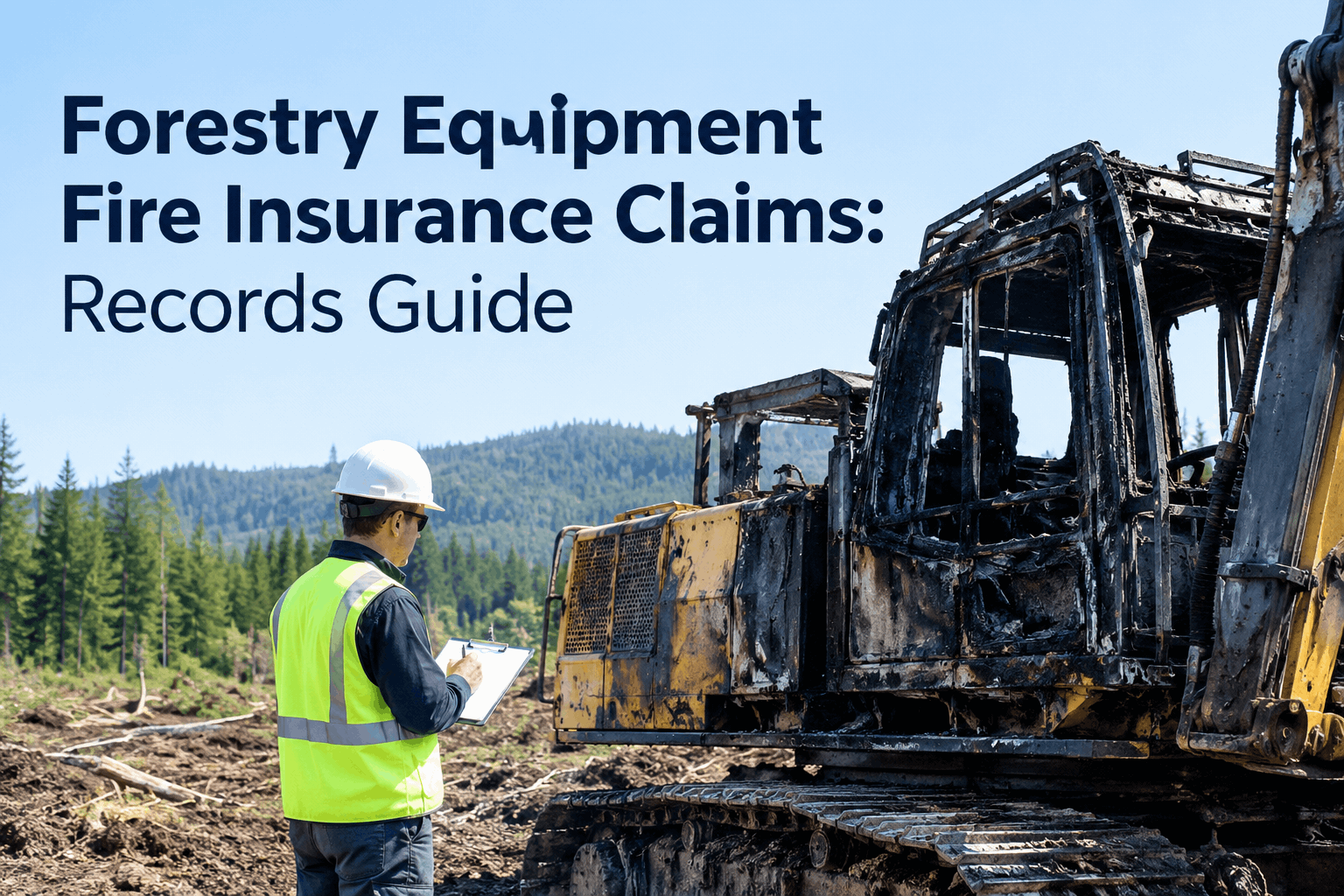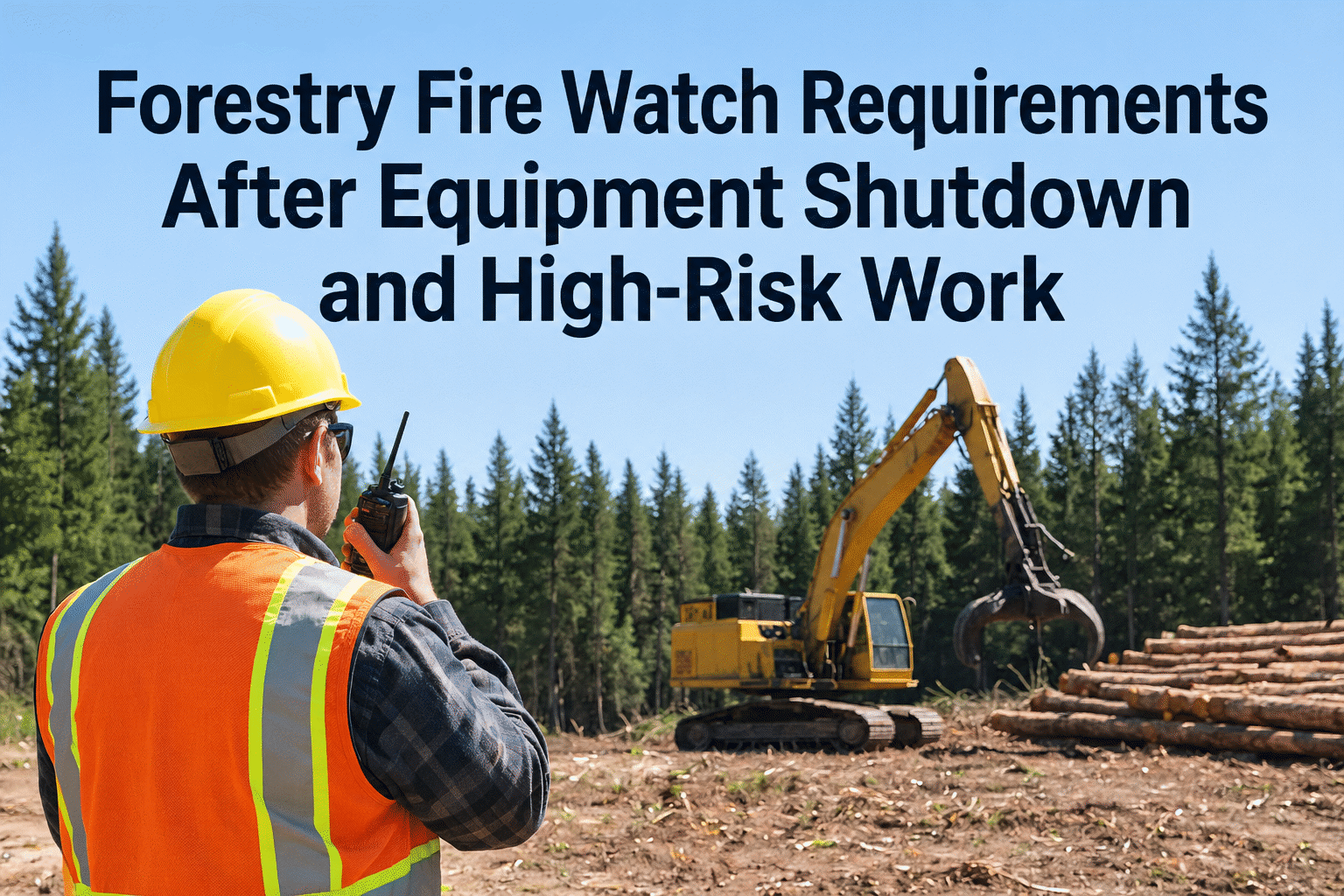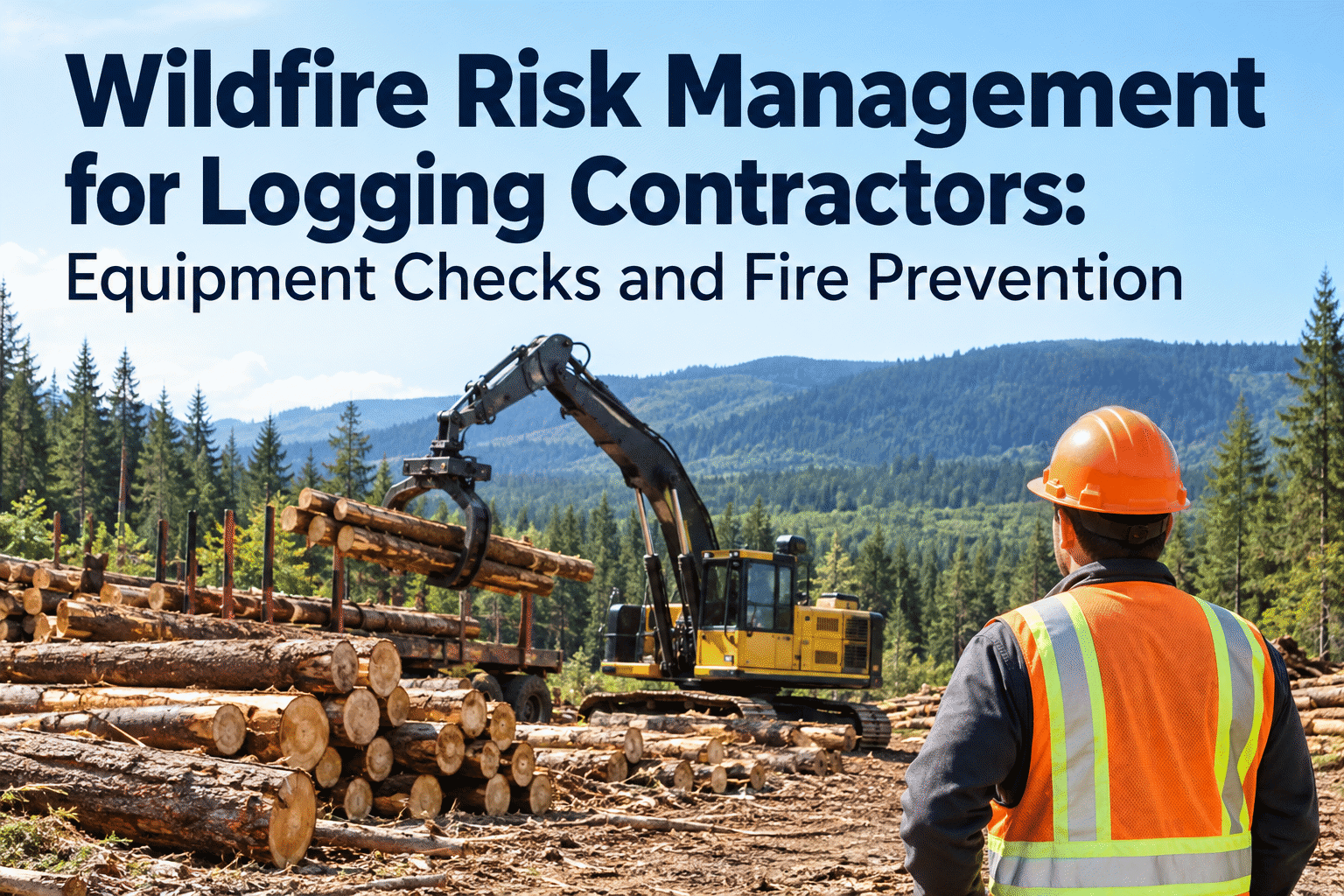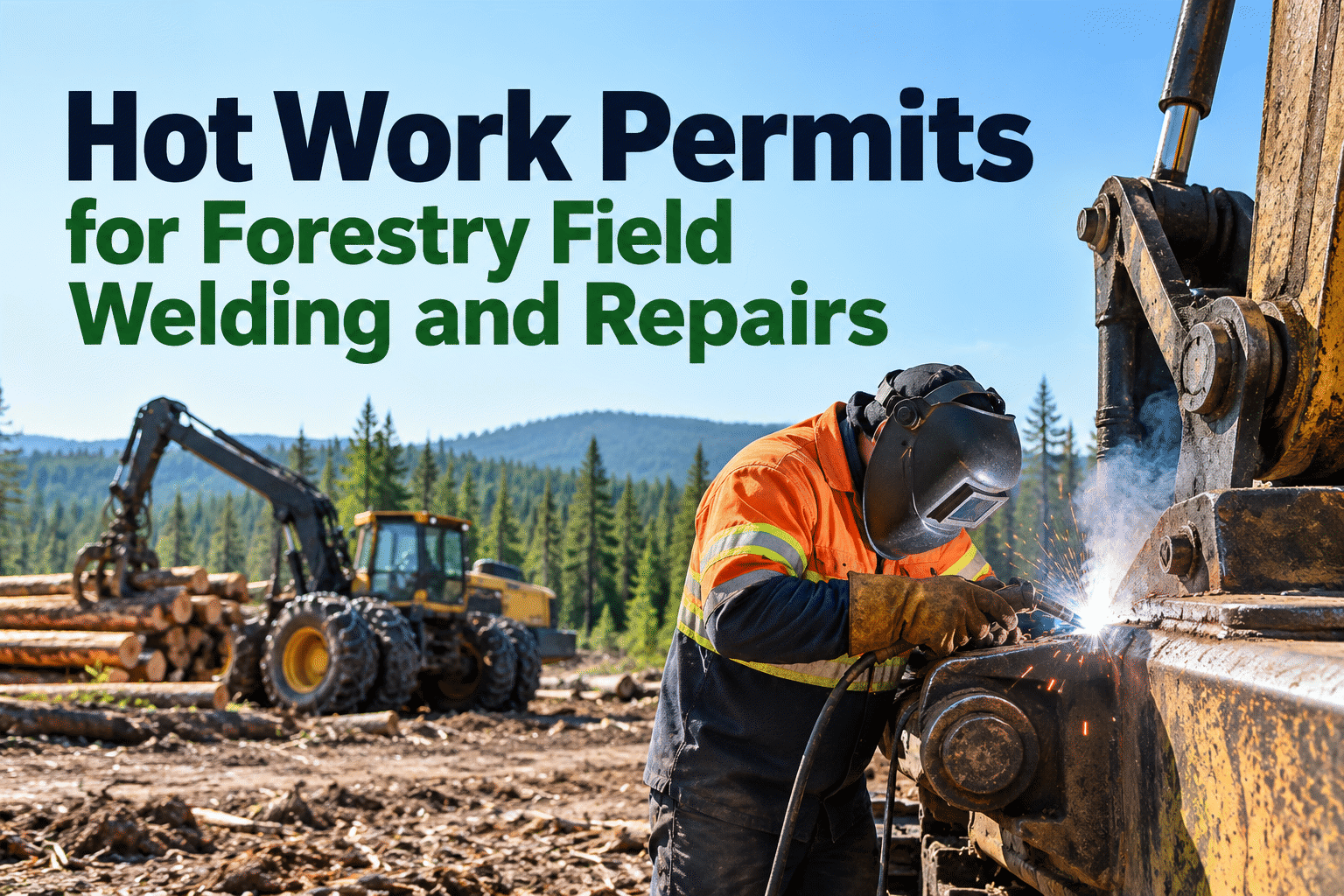
Hot work permits help forestry crews control ignition hazards before welding, cutting or grinding at remote logging sites. A practical permit process confirms site conditions, fire protection, authorization and fire-watch arrangements before sparks are created. This guide explains how to document those decisions and connect field repairs to equipment inspection and maintenance records.
Hot Work Permits for Forestry Field Welding and Repairs
From ignition-risk assessment to final fire-watch sign-off, build a repeatable approval process for welding, cutting and grinding near combustible vegetation and logging equipment.
When does a forestry hot work permit apply?
A hot work permit is a documented authorization for work that can create flames, sparks or enough heat to ignite nearby material. Forestry operations require special attention because fuel loads, wind and access to emergency services can change quickly.
Welding and torch cutting
Repairs to guards, brackets, attachments and structural components may expose dry bark, needles, dust or hydraulic residue to ignition sources.
Grinding and abrasive cutting
Sparks can travel beyond the immediate work area. Confirm clearance, shielding, wind conditions and fire-watch coverage.
Other heat-producing work
Evaluate soldering, heating and similar operations under the site's hot work policy, equipment instructions and applicable requirements.
Important: A permit is not permission to work during a fire restriction. Check the current local fire-danger rating, land-manager rules, permits and any mandatory shutdown orders before proceeding.
Set up a controlled hot work zone before striking an arc
Use this zone-by-zone visual as a planning aid. Actual separation distances, fire-watch duration and protective measures must follow applicable rules, the permit issuer and site-specific risk assessment.
For a documented pre-work condition check, start free with HVI digital inspections and configure a checklist aligned with your company's approved permit procedure.
A six-step hot work permit process for remote forestry repairs
Keep the decision traceable from the first request through the last post-work check. Each step should have a named owner and a recorded outcome.
Request and identify the work
Record equipment ID, site, job description, repair method, planned time and responsible technician.
Assess ignition hazards
Check weather, restrictions, vegetation, debris, fuel systems, nearby materials and alternative repair methods.
Prepare and protect
Isolate equipment, clean the work area, install shields, verify firefighting resources and establish emergency communications.
Approve before starting
Confirm the competent authorizer, work limits, validity period, crew briefing and assigned fire watch.
Perform and monitor
Maintain controls throughout the task. Stop and reassess if wind, fuel conditions, staffing or work scope changes.
Close out and verify
Inspect the area, complete the required post-work fire watch, record findings and authorize equipment return to service.
Keep field repair checks connected to equipment records
See how HVI inspections and maintenance records can help your team document equipment condition and follow-up actions.
What should a hot work permit checklist capture?
The checklist should provide evidence that hazards were assessed and controls verified, not just a signature at the bottom of a form.
Permit ID, equipment number, exact location, work scope and start/end times.
Fire-danger status, wind, combustibles, leak checks and required restrictions.
Isolation, cleanup, shielding, suppression equipment and communication arrangements.
Technician, authorizer, fire watch, briefing confirmation and approval time.
Suspensions, reassessments, changes in weather or scope, and new authorization.
Post-work inspection, fire-watch completion, observed defects and sign-off.
HVI can support the equipment-side evidence trail through digital inspection and maintenance records. Book a demo to discuss how to document forestry field repair checks. A dedicated legal permit approval system should not be assumed without verifying your configured workflow.
Proceed, pause or relocate the repair?
A good hot work program includes a clear route for saying no. Use the following examples as decision prompts—not as substitutes for site rules.
Controls are verified, the required fire watch is available, current conditions are acceptable and the permit is valid.
Wind increases, debris cannot be fully cleared, a leak is discovered or the work changes beyond the approved scope.
Fire restrictions prohibit the work, safe access is unavailable, essential suppression resources are missing or the hazard cannot be controlled.
Where field conditions cannot be controlled, a workshop repair may be the safer option. Keep the decision and equipment defect in the maintenance record, and sign up to organize inspection findings and follow-up work in HVI.
Example: cracked attachment bracket at a remote landing
A skidder attachment bracket needs welding. The machine is parked beside dry slash and a fuel transfer point. Rather than immediately welding, the supervisor uses a documented decision sequence.
Record the decision, not just the repair
What the crew documents
- Photograph the damaged bracket and surrounding work area.
- Confirm whether hot work is permitted under current site conditions.
- Record debris removal, fuel activity controls and fire-watch assignment.
- Approve the work only after safeguards are verified.
- Log repair completion, follow-up inspection and release to service.
For maintenance managers, linking the permit reference to the equipment repair record helps explain why the job was delayed, moved or completed. Book an HVI demo to review maintenance documentation workflows.
Build a field-ready hot work program in four weeks
Define controls
Confirm local rules, responsible approvers, prohibited conditions and approved work methods.
Standardize checks
Prepare a permit checklist, fire-watch log, emergency contact card and equipment ID convention.
Train and test
Run a tabletop scenario with technicians, supervisors and fire-watch personnel.
Audit the evidence
Review completed permits, closeout records, equipment defects and corrective actions.
Track permit completeness, missing fire-watch closeouts, repeat equipment ignition hazards and unresolved defects. Use HVI's free signup to begin organizing equipment inspection and maintenance records.
Hot work permit FAQs for logging and forestry teams
What is a hot work permit in forestry operations?
It is a documented authorization process for ignition-producing work such as welding, cutting or grinding. It identifies the work, assesses local fire hazards, assigns controls and fire watch, and records approval and closeout. Requirements vary by jurisdiction, land manager and site.
Do all field welding repairs require a hot work permit?
Not necessarily under every jurisdiction or site policy. Many forestry contractors require permits for welding and similar ignition-producing work. Follow the applicable regulations, fire restrictions, insurance requirements and your employer's hot work procedure.
How long should a hot work fire watch continue?
Follow the duration required by applicable rules, the site's permit program and the specific risk assessment. Do not assume one universal duration. Consider hidden ignition sources, combustible materials and post-work monitoring requirements.
What should stop forestry hot work immediately?
Prohibited fire conditions, changing wind, uncontrolled combustibles, leaking fuel or hydraulic fluid, unavailable fire protection, loss of communications or any failure of required permit controls should trigger stop-work and reassessment.
Can HVI issue and approve legally compliant hot work permits?
HVI supports digital inspections and equipment maintenance records that can help document relevant checks and repairs. A dedicated permit-to-work approval capability and legal compliance for a specific jurisdiction should be verified before relying on it as the official permit system.
Connect forestry safety checks with maintenance follow-up
Document equipment defects, inspections and repair history in one maintenance workflow. Talk through your team's requirements with HVI.