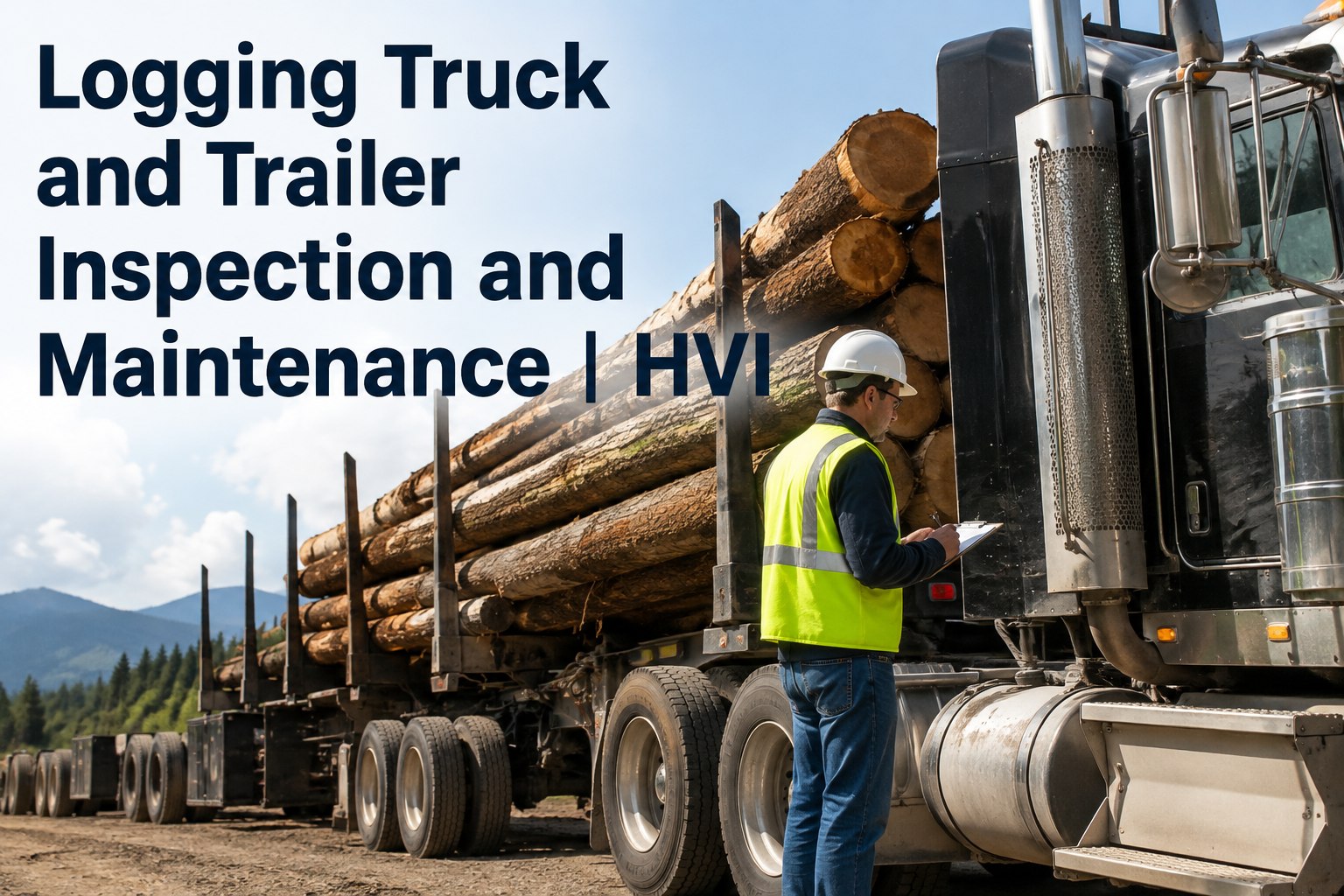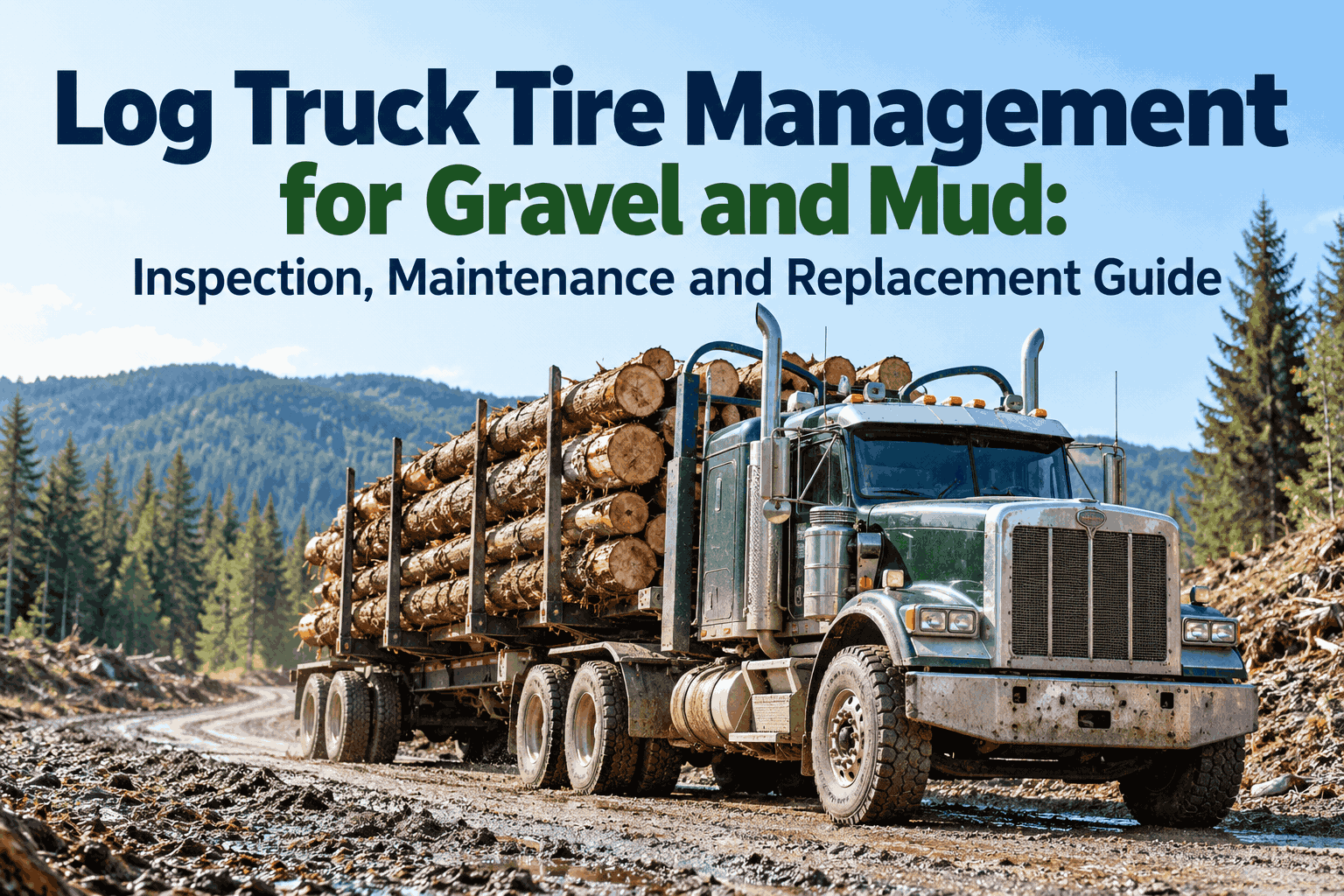
A loaded log truck leaves the landing on rough gravel, crosses a muddy section and returns with a cut sidewall that was missed at the last stop. For forestry fleets, tire failures can interrupt hauling far from a service bay. A practical log truck tire management program links route exposure, position-specific inspections, defect decisions and replacement records—before a damaged tire becomes the next roadside delay.
Gravel cuts. Mud hides damage. Know which tire needs attention.
Make each tire position visible—from the first pre-trip check to its final replacement. Keep pressure readings, damage findings and repair history connected to the truck.
The road changes the inspection—not just the tread
Gravel and mud create different failure clues. Inspect for the condition the truck just encountered, not only the miles it has covered.
Sharp aggregate, potholes and embedded rock can cause cuts, punctures, irregular wear and sidewall damage.
Mud can conceal tread damage, complicate pressure checks and increase slip risk on grades or loading approaches.
Tire selection, inflation targets and safe operating limits must follow the tire, vehicle and axle manufacturers' requirements and applicable regulations. Book a Demo to Record Route-Specific Tire Findings.
One truck. Multiple tire stories.
A truck-level “tires OK” checkbox cannot show which steer, drive or trailer position is repeatedly damaged. Use an asset record and a position map to keep the history useful.
Drive tire: sidewall cut found after gravel haul
Store tire ID, make/size, position, installation date, inspection findings, cost and warranty information. Update the position when a tire is moved or replaced.
Sign Up Free to Create Tire Position RecordsA tire inspection checklist that works at the landing
Keep the check short enough for routine use, but specific enough to trigger a meaningful repair decision. Use suitable equipment and qualified personnel for measurements.
Before departure
- Measure inflation using an appropriate gauge and approved procedure
- Check tread depth and irregular wear against applicable limits
- Inspect sidewalls, tread and valve areas for cuts or damage
- Check wheel, rim and visible fastener condition
After rough sections
- Inspect for fresh impact damage and lodged objects
- Look for damage hidden by mud once safe to clean
- Check for abnormal wear or signs of air loss
- Record the route, truck and affected tire position
When a defect is found
- Document the finding and attach photos where useful
- Apply appropriate operating restrictions; do not dispatch an unsafe tire
- Refer damage and repairability decisions to qualified personnel
- Record repair, replacement and return-to-service verification
Build the service plan around wear and exposure
Set baseline checks by manufacturer guidance and operating requirements, then adjust inspection attention when trucks spend more time on abrasive gravel or deep mud.
Every operating day
Capture the required pre-trip/post-trip tire findings and escalate damage before the next load.
At scheduled service
Review pressure, tread measurements, wear patterns, alignment concerns and repeated position failures.
When a defect or wear limit is reached
Assess repairability, replace where required and retain the tire's service and cost history.
Intervals and thresholds depend on tire construction, vehicle configuration, service duty and regulations; the timeline above is a planning framework, not a universal tire-service interval. Book a Demo to See Preventive Tire Maintenance Scheduling.
Replace with a record—not a guess
Good replacement decisions consider safe condition first, then useful-life history and total cost. HVI tire records can help managers compare recurring damage by position and route.
Install → Inspect → Service → Replace
Keep a continuous record of installation, changes in position, damage, maintenance and final removal.
Fields worth capturing
Illustrative data fields—not a claim that HVI automatically diagnoses tire wear or determines replacement safety.
Make a reported cut lead to a verified repair
Inspections only protect uptime when exceptions have an owner and a documented outcome. The maintenance record should show what happened before a truck returns to service.
1. Record
Driver identifies damage, tire ID and position.
2. Assess
Supervisor or technician determines restrictions and next steps.
3. Repair / replace
Qualified personnel complete approved work and document parts or tire changes.
4. Verify
Check repair evidence and release status before dispatch.
What HVI contributes: inspection records, defect reporting, tire asset history and maintenance follow-up. Decisions on tire repairability and vehicle release remain with qualified personnel. Book a Demo to See Tire Defect and Repair Tracking.
Log truck tire management: common questions
Practical answers for forestry fleet managers working across gravel roads, muddy approaches and remote landings.
What causes excessive tire wear on logging trucks?
Common contributors include sharp gravel, impact damage, incorrect inflation, axle or alignment problems, heavy loading, rough road surfaces and operating conditions. Investigate the actual wear pattern rather than assuming one cause.
What should a log truck tire inspection include?
Inspect inflation using approved procedures, tread depth and condition, cuts, bulges, embedded objects, sidewalls, valves, wheels and visible rim damage. Record the tire position and escalate defects under applicable requirements.
How often should forestry fleet tires be inspected?
Follow required pre-trip/post-trip checks, applicable regulations and manufacturer recommendations. Add appropriate checks after severe gravel or muddy-road exposure; do not substitute a generic interval for fleet-specific requirements.
Should logging fleets track each tire by position?
Yes. A tire ID and position history can reveal repeat damage, irregular wear and replacement cost patterns that a truck-level inspection record may miss.
How can HVI help with log truck tire management?
HVI supports tire asset records, position tracking, digital vehicle inspections, defect documentation, preventive maintenance planning and maintenance history. It is not a substitute for physical inspections or an automatic tire-pressure monitoring system.