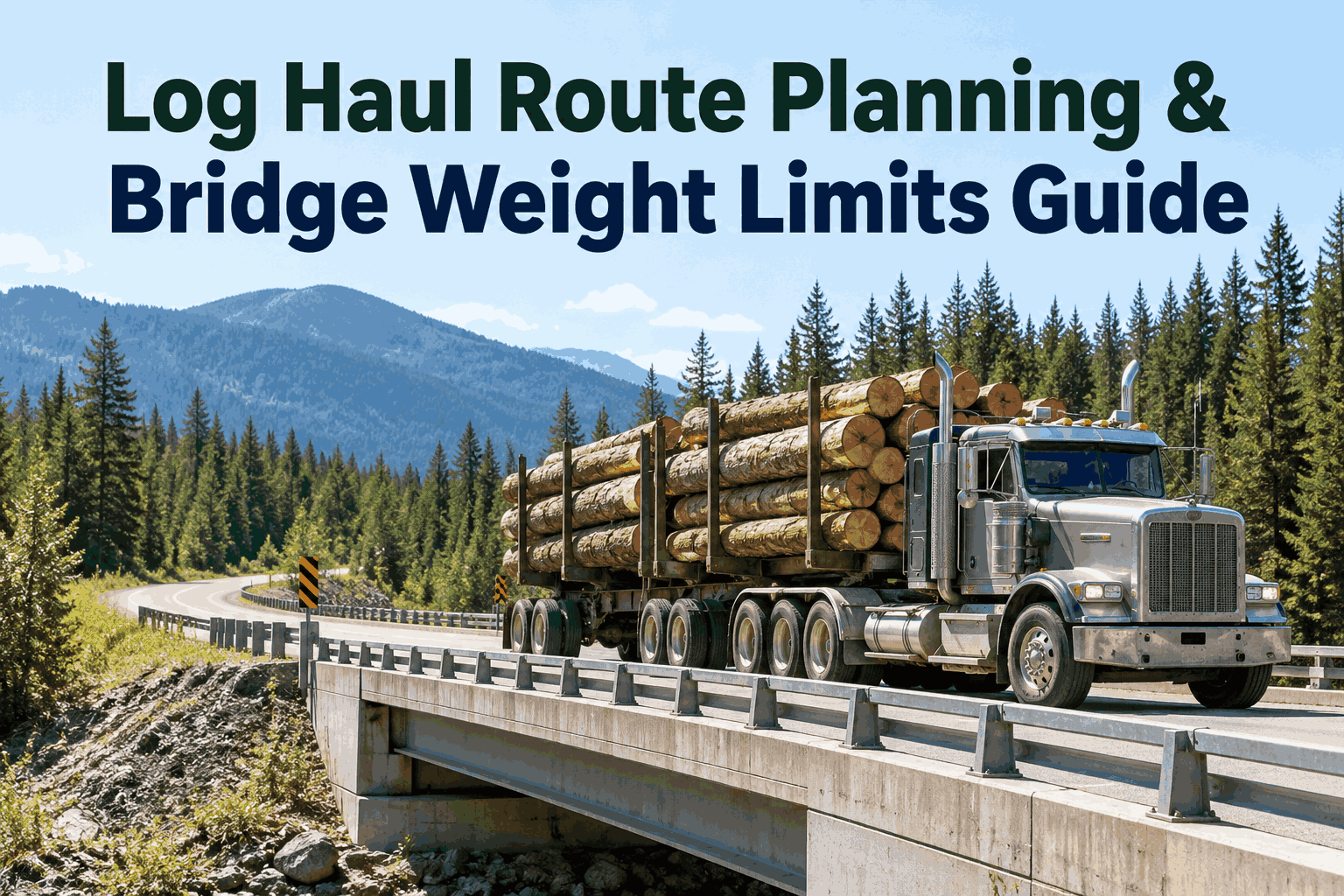
A log truck can look properly loaded at the landing and still exceed an axle-group limit before it reaches the highway. Log truck weight compliance depends on more than total load weight: axle distribution, route restrictions, vehicle ratings and accurate scale records all matter. This guide shows forestry haulers how to catch overweight loads before dispatch and keep inspections, corrections, and maintenance documentation organized.
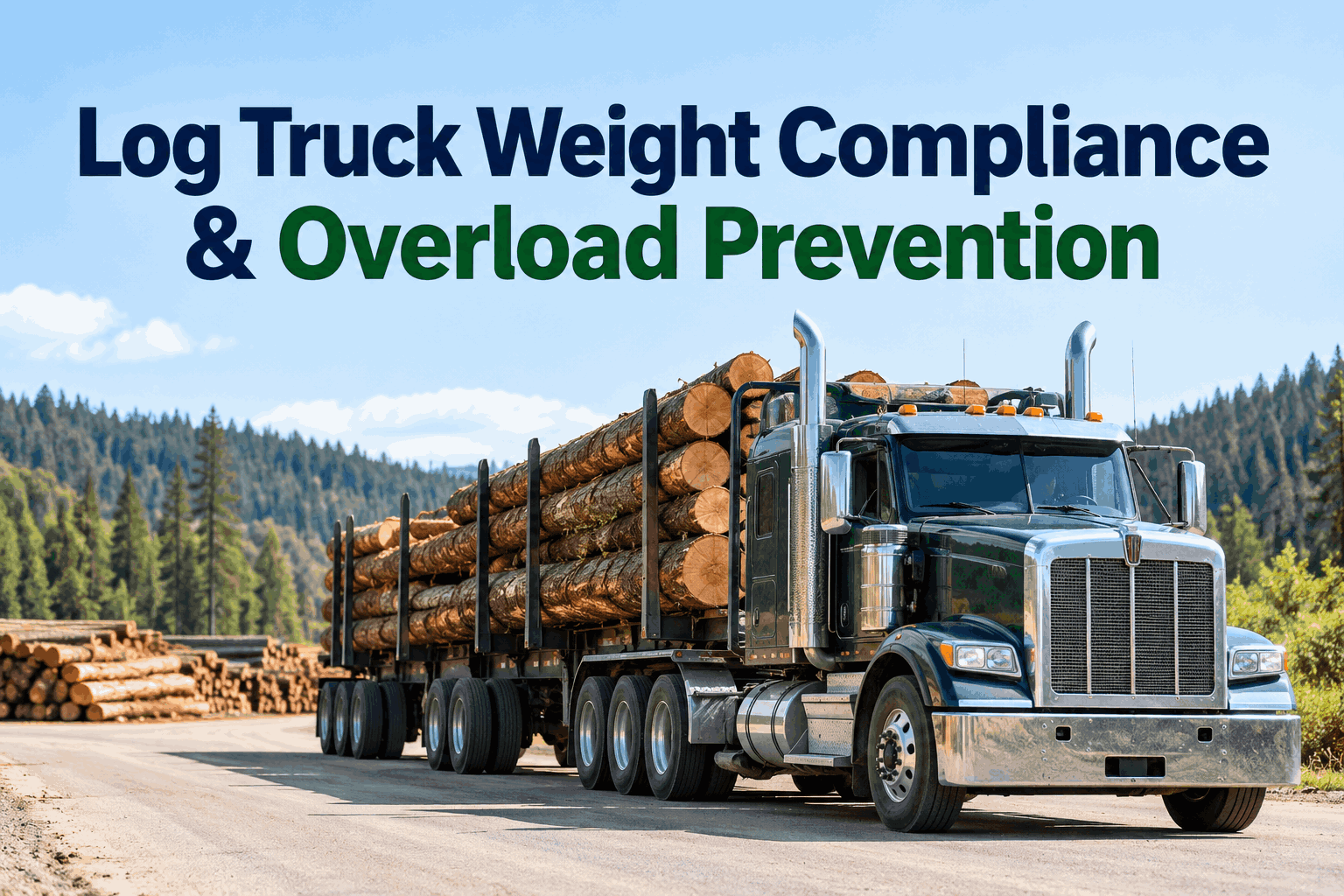
Log Truck Weight Compliance & Overload Prevention
Build a reliable pre-dispatch process for gross weight, axle groups, load placement, and road-ready inspections—without relying on guesswork at the landing.
Why a Legal Gross Weight Can Still Mean an Overweight Truck
Timber is irregular, and log placement changes how weight is carried. A truck may be below its permitted gross weight while one axle group exceeds its allowable limit.
Three limits must agree before dispatch
The total measured weight must fit the applicable road and permit requirements.
Steer, drive and trailer groups each need their own check—not just a total.
Manufacturer ratings, tire capacities, bridges and local restrictions may impose lower limits.
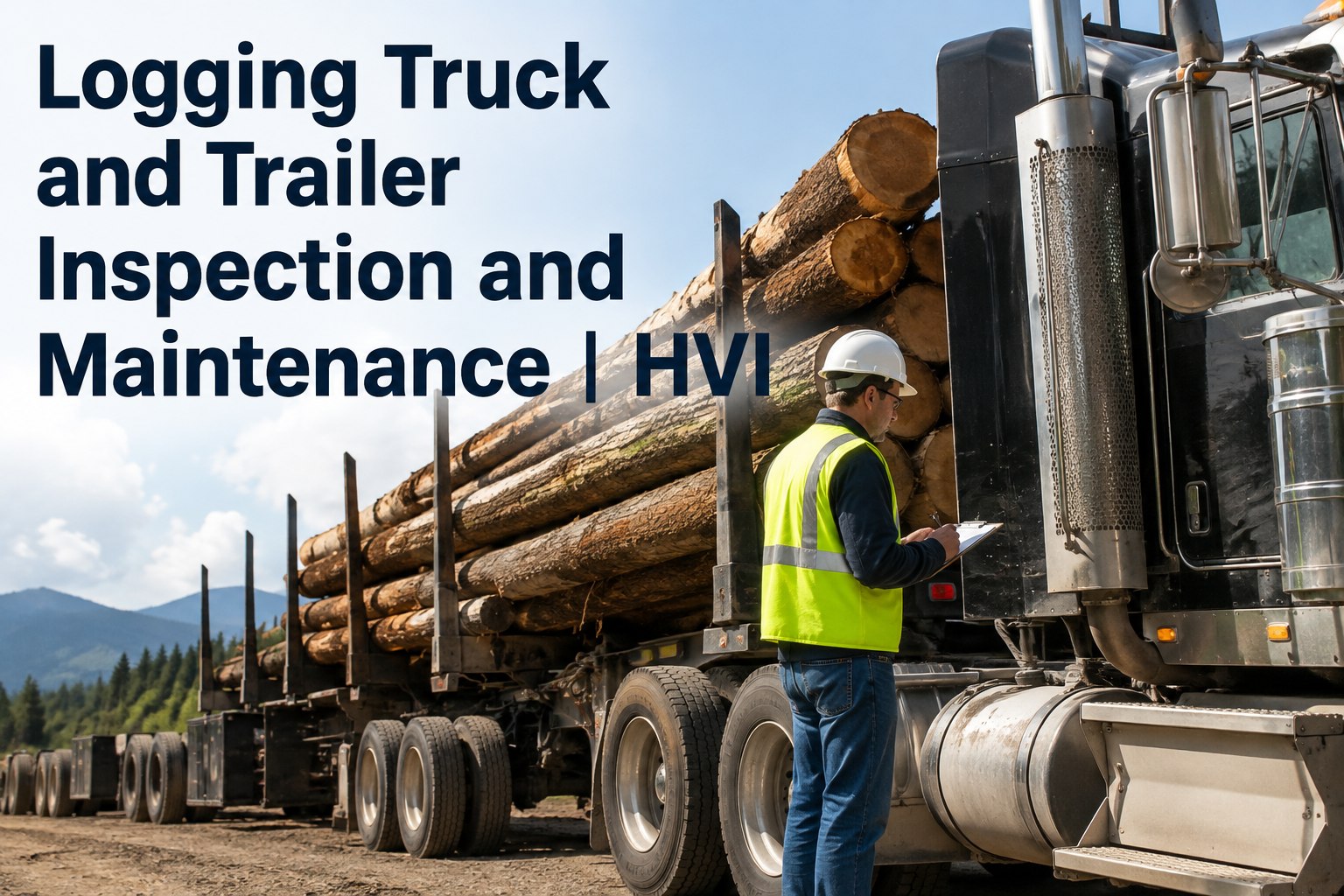
For a better audit trail, connect pre-trip checks to HVI vehicle inspection records so the truck's condition is documented alongside the dispatch process.
What Changes Axle Loads on a Log Truck?
Log length, bunk position and uneven placement can shift load toward the tractor or trailer. The only reliable confirmation is a suitable weighing process.
Log position
Check how the load sits between bunks and whether it shifts weight toward a particular group.
Mixed log lengths
Different lengths and diameters can produce uneven weight distribution.
Moisture and species
Visual volume is not a dependable weight estimate; timber density varies.
Configuration and spacing
Axle count, spacing, trailer type and permits affect applicable legal limits.
A Practical Log Haul Weight Compliance Checklist
Use this sequence as a starting point for a site-specific loading procedure. It complements, but does not replace, required driver inspections and cargo securement rules.
Loading and weighing
Equipment and records
Use HVI digital checklists to document vehicle condition and maintenance concerns. Weight values still need to come from a validated weighing process.
What to Do When a Load Exceeds a Limit
Overweight findings need a controlled correction process—not an assumption that a legal gross total cancels an overloaded axle group.
Document and release
Retain the required weight and inspection evidence before dispatch.
Hold and correct
Follow approved procedures to redistribute or reduce the load, then reweigh.
Connect Truck Inspections with Weight and Repair Records
Scale tickets, load corrections and maintenance findings should be traceable to the right vehicle and trip. HVI supports the inspection and maintenance-record side of that process.
Identify the truck and trailer
Use consistent asset IDs so the right vehicle receives the inspection record.
Complete the inspection
Record condition checks and report defects that need attention.
Attach supporting evidence
Keep applicable scale-ticket or permit evidence within your approved documentation workflow.
Track maintenance follow-up
Review inspection history and close out equipment repairs appropriately.
Log Haul Truck / LT-042
Suspension concern referred for maintenance review before vehicle release.
Explore HVI maintenance management or book a log-haul fleet walkthrough to discuss your inspection workflow.
Three Ways to Reduce Repeat Overload Problems
Consistent loading decisions depend on shared procedures between the loader operator, driver, dispatch team and maintenance manager.
Study repeat axle overloads
Look for recurring patterns by truck configuration, loading site and trailer combination.
Use a clear loading procedure
Define when to weigh, who can approve corrections and how exceptions are recorded.
Address equipment condition
Keep tire, suspension, bunk and trailer inspection findings connected to repairs.
The strongest compliance process combines measured weights, documented corrections and road-ready vehicle inspections. Digital records support accountability; they do not replace the scale or the driver's responsibility.
Log Truck Weight Compliance FAQs
What is the legal weight limit for a log truck?
There is no single limit for every log truck. Legal weights depend on jurisdiction, axle configuration and spacing, route restrictions, vehicle ratings and applicable permits. In the United States, federal Interstate limits are a useful starting point, but bridge-formula and state-specific rules must also be checked.
Can a log truck be overweight on an axle but legal overall?
Yes. A truck can be below its applicable gross limit while a steer, drive or trailer axle group exceeds its own limit. That is why axle-group measurements matter.
How can log truck overloads be prevented?
Confirm limits before loading, use a consistent loading plan, weigh the truck as required, correct overloaded groups and retain the necessary records. Train crews to recognize configuration and route differences.
Are weight checks the same as log load securement checks?
No. Weight compliance concerns gross and axle loads, ratings and route rules. Cargo securement concerns the restraint and containment of logs. Both must be addressed independently.
Can HVI automatically determine whether a log truck is legally loaded?
HVI helps with digital vehicle inspections, defect tracking and maintenance documentation. Do not treat it as a certified weighing system or legal weight calculator. Confirm any desired custom weight-record workflow during a product demo.
Prevent Overloads Before the Truck Leaves the Landing
Good log truck weight compliance begins with knowing the correct limits and measuring the actual load. Gross weight, axle distribution, vehicle ratings and route restrictions all need to align.
Keep the process dependable with repeatable pre-trip checks, documented corrections and timely maintenance follow-up. See how HVI supports log-haul inspections while your weighing and compliance procedures handle legal load decisions.
Give Every Log Haul Truck a Clearer Inspection History
Keep equipment checks, defect reports and maintenance follow-up easier to review—so your team can focus on getting road-ready trucks dispatched.