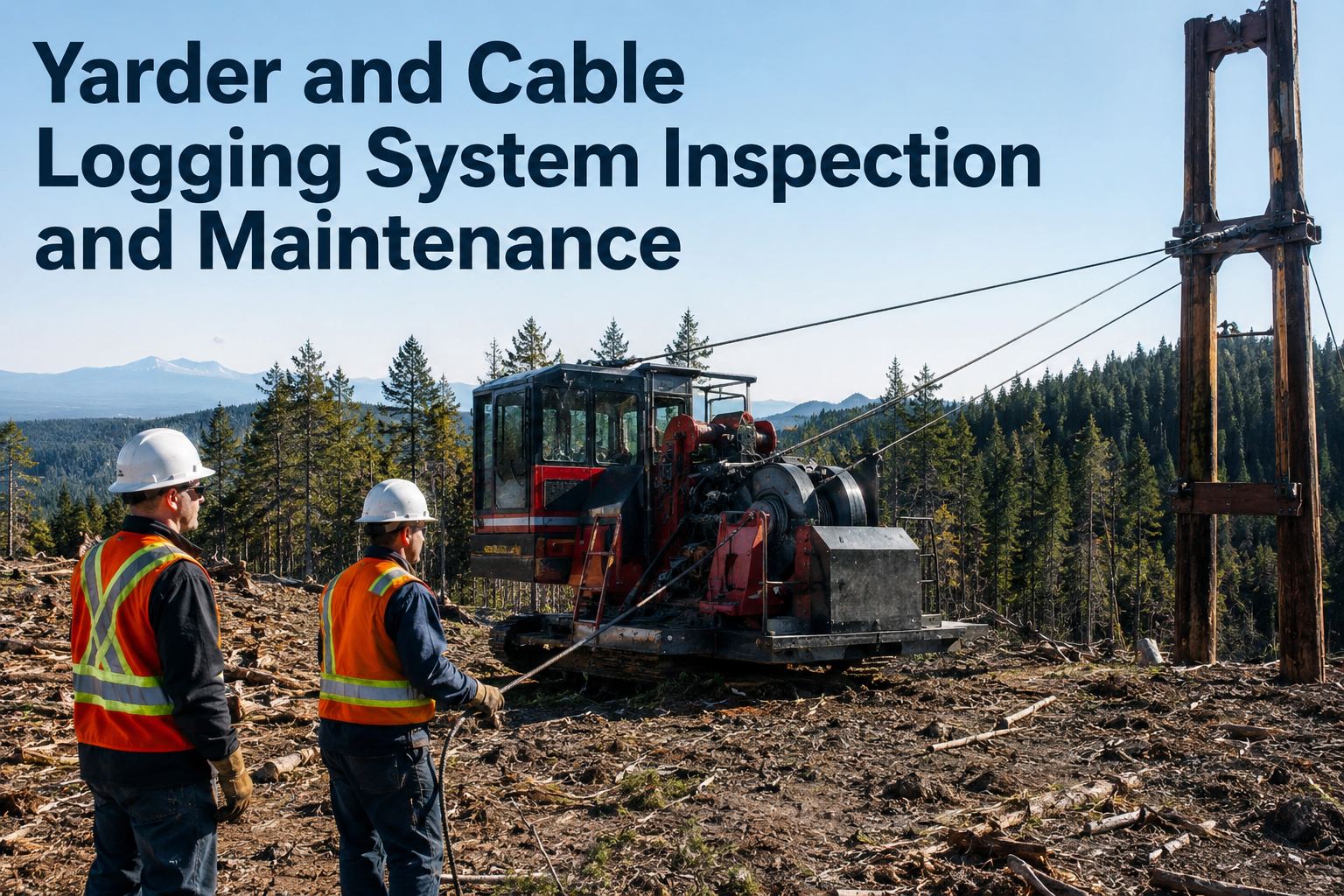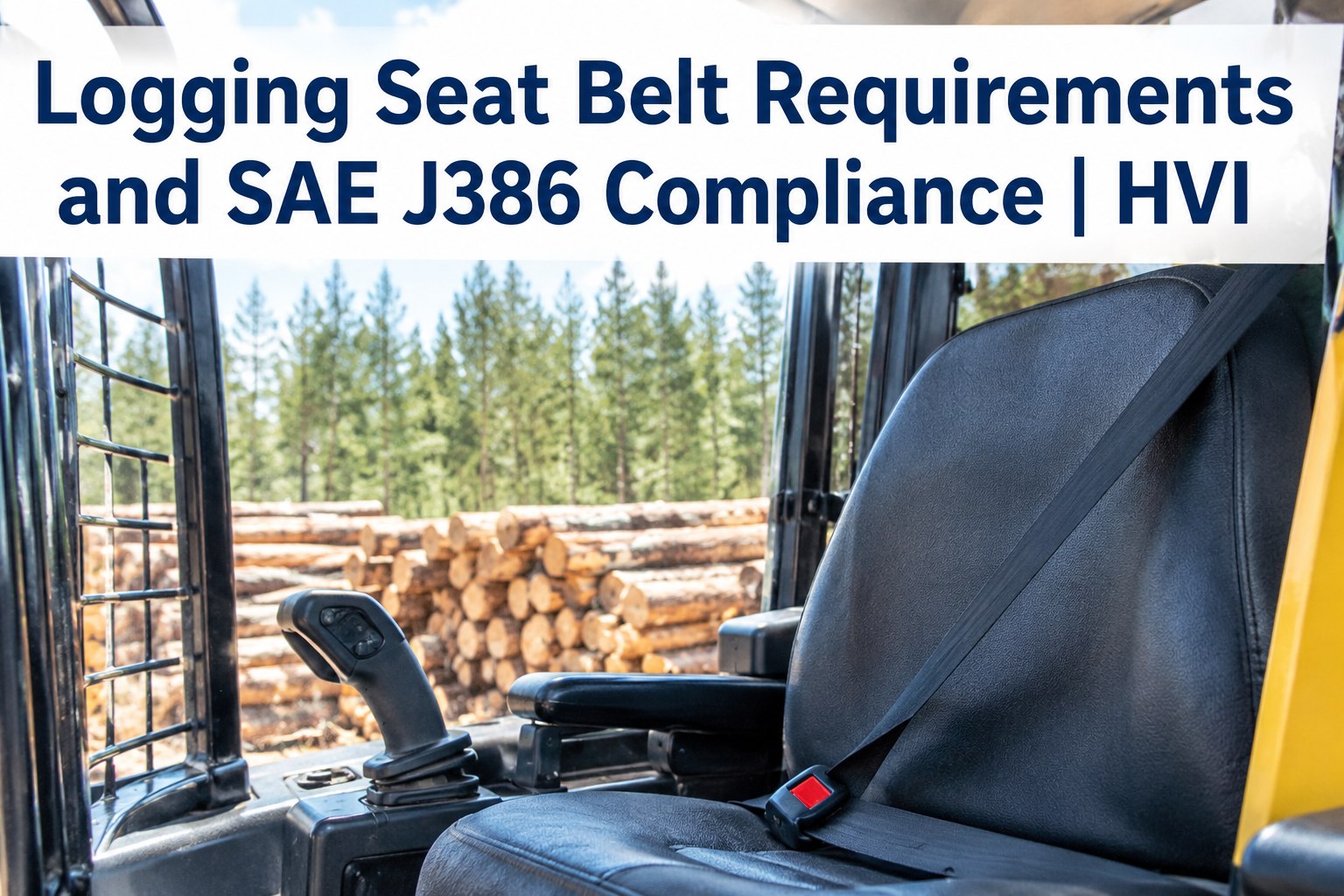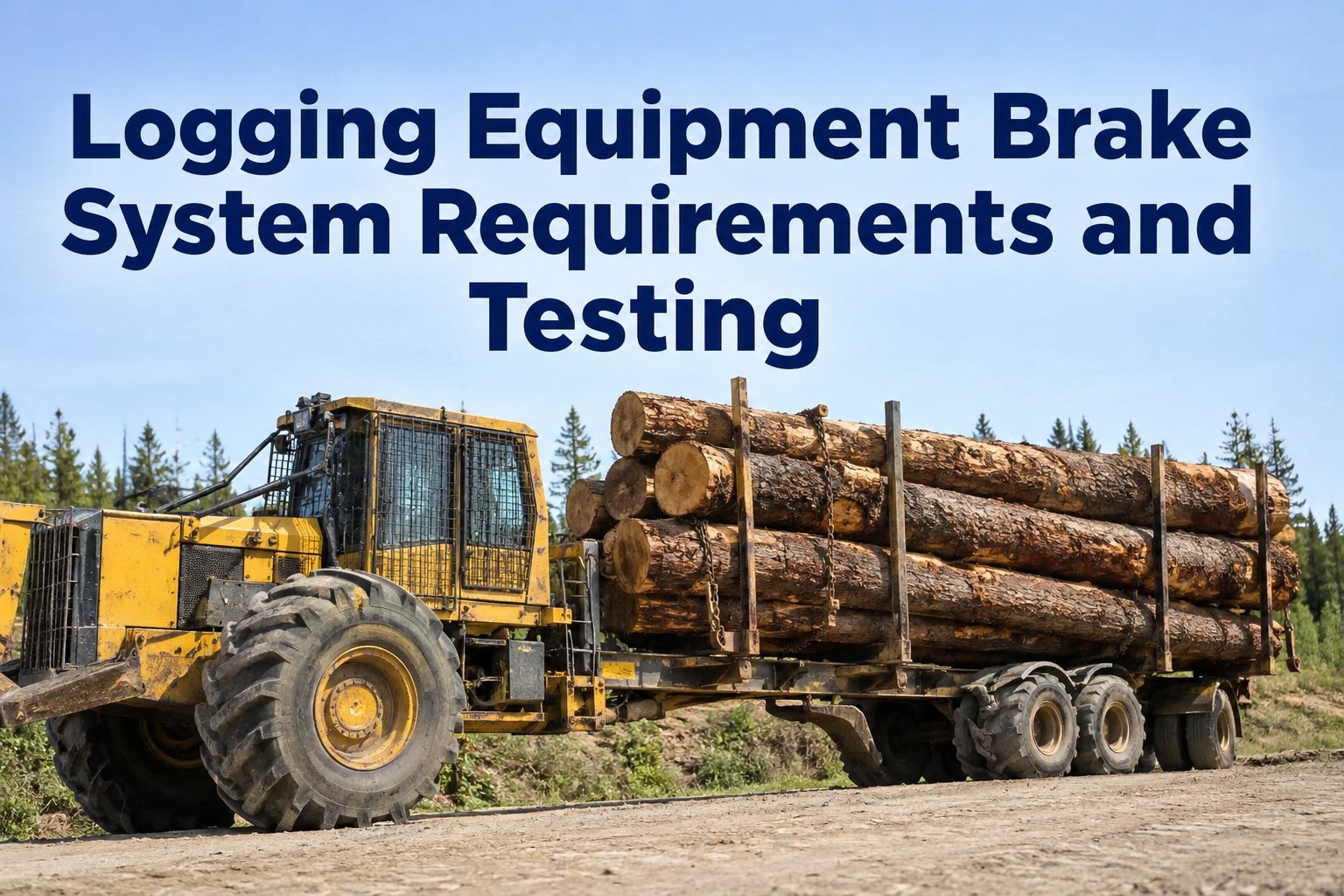
You leave the landing at 5:40 a.m. with a loaded bunk, twelve miles of gravel between you and the highway, and two completely different rulebooks riding in the cab. The moment those tires hit pavement, logging truck DOT compliance takes over from whatever bush standard your outfit runs on the block — and the officer at the scale does not care that your forwarder operator did a walkaround in the dark. Most log haulers we talk to are managing this split with a DVIR app for the truck and a clipboard for the machines, which means nobody, including you, has a single live view of the fleet. You can walk through a demo on your own units to see how the two worlds collapse into one dashboard, but first it helps to understand exactly where the exposure sits.
Your log truck answers to FMCSA on the highway and to the logging standard in the bush.
Most operations run a DVIR app for the highway tractor and paper for the loader, forwarder and skidder. The result is a compliance gap that shows up at the scale, in the shop, and on the landing when a machine goes down with no inspection history.
What the two-system split actually costs a log hauler
The split between highway and bush is not just annoying paperwork — it shows up as roadside downtime, failed audits, and missed maintenance that pulls a truck out of service during peak haul.
FMCSA obligations every log hauler must clear on the highway
Once the truck is on a public road, the logging-specific exemptions end and the standard federal motor carrier rules apply. Four obligation areas generate the most violations and downtime for log haulers.
Driver Vehicle Inspection Report
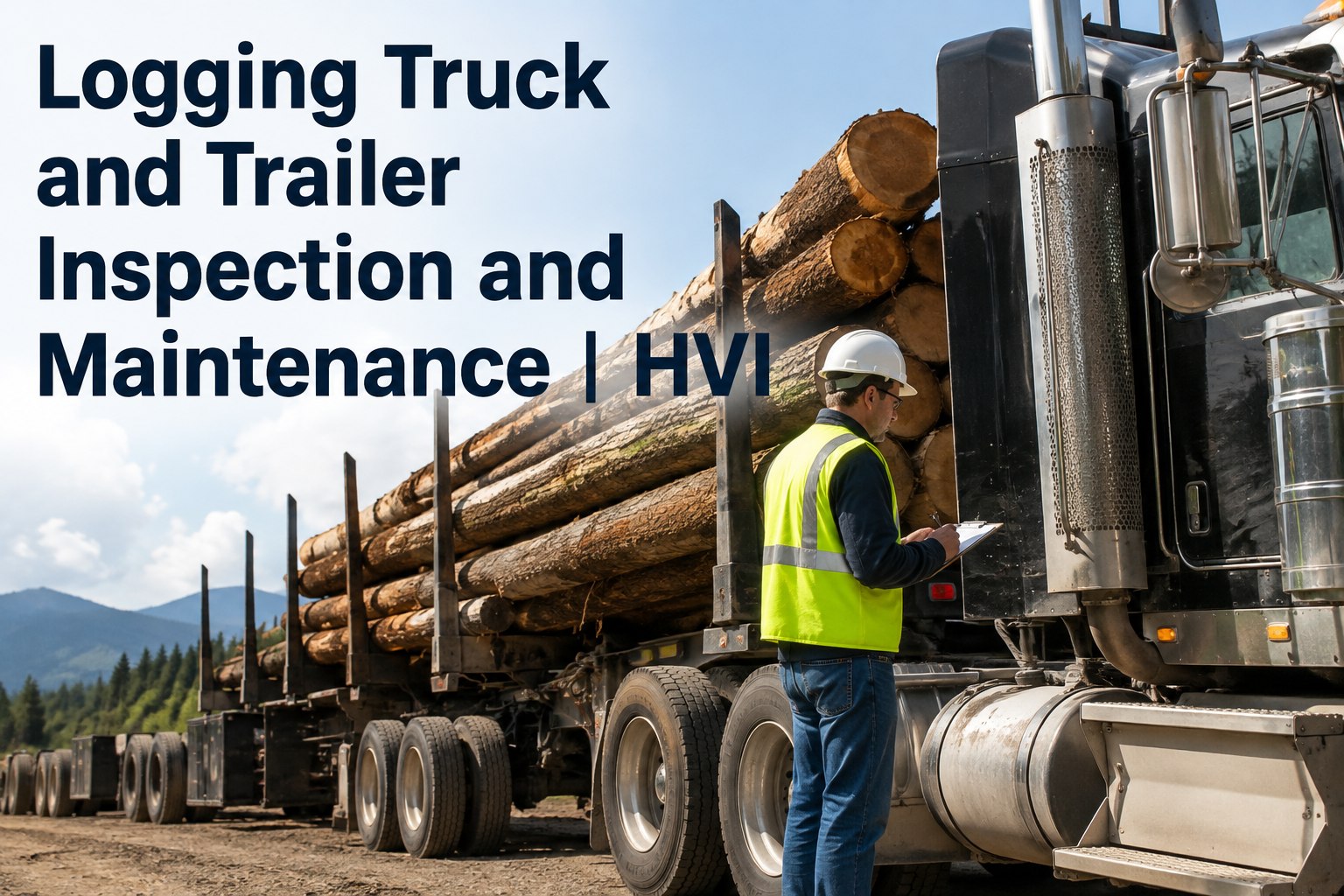
A pre-trip and post-trip DVIR is required for each commercial vehicle operated. The driver must note any defects, and the motor carrier must repair any defect affecting safe operation before dispatching the truck again. A live demo of HVI's digital DVIR shows how defects convert to work orders the second they are logged.
Annual inspection by a qualified inspector
Every commercial motor vehicle must pass a periodic (annual) inspection performed by a qualified inspector. The inspection report and decal must travel with the truck. Miss the window and the truck is effectively unauthorised on the highway until it clears.
Driver qualification and CDL
Every CDL log truck driver must hold the correct class of licence for the combination, carry a medical certificate, and have a complete driver qualification file on record. Log haulers running on restricted routes also need to verify endorsements specific to the jurisdiction.
Hours of Service and ELD
HOS limits apply the moment the truck is on a public road. An ELD must record driving time, and the driver must be able to transfer records at roadside. Bush-only movement off public roads has different rules, which is where most mixed-use confusion lives.
Log truck securement: stakes, bunks, tiedowns and bunk integrity
Logs behave unlike any other freight. They shift, they settle, and they store enormous kinetic energy. The securement rules for log hauling exist because a single released log at highway speed is fatal.
| Component | What the rule requires | What fails at roadside |
|---|---|---|
| Bunks and stakes | Must be designed and maintained to cradle the log load and resist forward, rearward and lateral movement under all normal transport conditions. | Cracked or weld-repaired stakes, worn bunk pins, and mismatched stake heights that let the top tier ride above the stake. |
| Tiedowns | Each tiedown must be attached to the vehicle or cargo in a way that prevents it from becoming loose, unfastening, or opening while the vehicle is in transit. | Frayed binders, hooks opened by chain stretch, and tiedowns tensioned only by hand without a ratchet or binder. |
| Bunk integrity | The complete bunk assembly including wrappers, bolsters and stakes must be inspected for structural soundness at the frequency the manufacturer and the regulation require. | Hidden cracks in the wrapper weld, elongated pin holes, and timber rot in the bolster that are invisible during a quick glance. |
| Load height and overhang | Logs must be loaded so the top tier does not exceed the height of the stakes, and overhang is controlled to prevent instability during braking and cornering. | Overloaded top tiers, uneven butt diameters, and loads shifted forward during hard braking on gravel approach roads. |
One truck, one driver, one federal regime
On the paved road your log truck is a commercial motor vehicle like any other. The officer at the scale checks your DVIR, your annual inspection sticker, your ELD, your securement, and your weight. Everything is documented, timestamped, and enforceable.
Machines, mud, and a different standard
Two miles off the highway the rules change. Your loader, forwarder and skidder share the landing with the log trucks, and the inspection regime is driven by the logging standard, the mill's contractor requirements, and your own safety management system — not FMCSA.
Log truck weight compliance across jurisdictions and forest roads
A loaded log truck is one of the heaviest legal vehicles on the road, and the weight rules shift at the property line of every landowner, county and state. One misjudged permit and the truck sits.
Bridge and gross weight limits
Gross vehicle weight limits are set by jurisdiction and by the specific bridge formula on the route. A truck that is legal on a state highway may be overweight on a county forest road with a lower posted limit.
Axle loading and load distribution
Log length, butt diameter and bunk position all change axle loading. A load that is legal gross can still be over an axle limit, and the driver has no way to know until the scale prints the ticket.
Oversize and overweight permits
Long logs and certain combinations require a permit for each move, sometimes per state or province. Missing or expired permits are a common reason a loaded truck is held at the scale house.
Seasonal and spring weight restrictions
Many forest roads carry reduced weight limits during spring breakup and wet seasons. Hauling over a posted road during a restriction can trigger fines, landowner bans, and loss of the hauling contract entirely.
The landing is not a regulated rest area
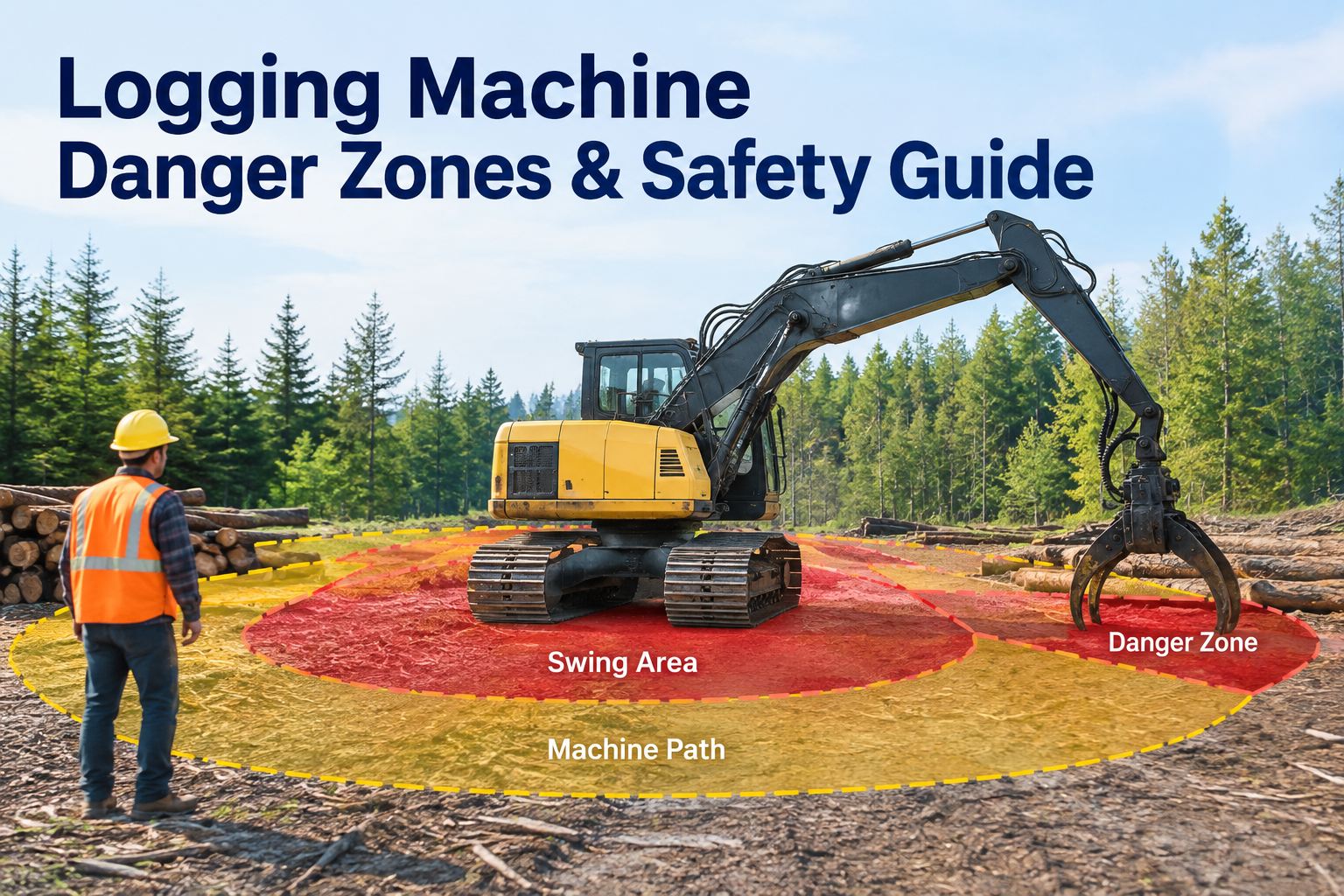
The bush side of the operation is where the two-system split hurts most. Your log trucks back onto the same landing as a 40-tonne loader swinging logs over the cab. The exposure is real, and the records are usually non-existent.
Machines and trucks in the same workspace
Log trucks, loaders, skidders and forwarders share the landing. There is no physical barrier between a highway vehicle and heavy off-road plant, and the inspection standard for each is different.
No combined inspection record
The truck has a DVIR in the app. The loader has a greasy clipboard in the cab. When the safety manager asks for the last 30 days of landing equipment checks, nobody can produce a single report.
Breakdowns with no upstream history
A loader goes down on the landing and the mechanic finds a hydraulic leak that was flagged on the clipboard three weeks ago but never made it into a work order. The bush side runs on memory and text messages.
Insurance and client audit gaps
Mill contracts and insurers increasingly require evidence of preventive maintenance across all equipment on the landing, not just the truck. Paper binders do not survive an audit, and screenshots of group chats do not count.
See HVI running on your own log trucks and loaders
One dashboard for the highway tractor, the log trailer, the lowboy and the landing machines. Book a 30-minute demo and we will configure it to your asset list on the call.
One platform for the truck, the trailer and the machine
HVI was built for mixed fleets. Logging trucks and trailers — including highway log haulers, lowboys and fuel trucks — sit alongside loaders, forwarders and skidders in the same account, with configurable inspection templates per asset type.
Configurable templates per asset
Run a 25-point highway DVIR on the log truck, a separate bunk-and-stake inspection on the trailer, and a hydraulic-and-track template on the loader — all from the same app, all timestamped and photo-backed.
Combined truck and machine dashboard
Every asset on one screen: the log truck, the lowboy, the fuel truck, and the landing equipment. You can see the full fleet view in a live demo and stop juggling two reporting systems.
Defect-to-work-order automation
A driver flags a worn bunk pin on the pre-trip and a work order opens in the shop before the truck reaches the yard. No text messages, no sticky notes, and the part is ordered against the correct asset record.
Audit-ready records in seconds
When DOT, the mill, or the insurer asks for proof, you pull every inspection, photo and work order for any asset in a few taps. No binder, no scanning, no lost paper. You can start logging inspections free and build the audit trail today.
What a two-system gap costs a 12-truck log fleet in one season
Take a realistic 12-truck logging operation running hard for a 10-month season. The trucks are on a DVIR app. The two loaders and the forwarder are on paper. Here is where the money leaks.
The math is uncomfortable but simple. Six truck-days a month at $1,200 is $43,200 of lost revenue over a six-month peak season — and that assumes no roadside violation fines, no tow charges, and no lost mill contract for late delivery. Moving the machines onto the same digital platform as the trucks is not a software upgrade. It is recovering revenue that is already leaking out the shop door. You can map your own numbers on a quick call before the next haul cycle starts.
Logging truck DOT compliance is one problem, not two
One fleet, one record
The highway and the bush are two operating environments, but they are one fleet. Running two inspection systems guarantees gaps that show up at the scale and on the landing.
Securement is not optional
Bunks, stakes, tiedowns and bunk integrity have their own rules for a reason. A cracked wrapper weld or a worn pin is a roadside failure waiting for the first hard brake.
Digital closes the gap
A single cloud platform covering trucks, trailers and machines gives you a live view, audit-ready records, and defect-to-work-order flow without the paper chase.
The trucks were on an app and the loaders were on a clipboard that lived in the cab. Every audit was two days of chasing paper. We moved everything onto HVI and now I pull 30 days of inspections for the whole landing in about ten seconds. The thing I personally track is defect turnaround — if a bunk pin gets flagged Monday, I want the work order closed by Wednesday, and now I can see that it is.
Log truck compliance questions, answered straight
Does a log truck need a DVIR under FMCSA rules?
Are log trucks exempt from any DOT regulations?
What is checked during a logging truck annual inspection?
How does load securement work for log trucks?
Can one inspection system cover both highway trucks and logging machines?
Bring your log trucks and landing machines onto one platform
Book a 30-minute demo and we will configure HVI to your asset list on the call — trucks, trailers, loaders and forwarders in one dashboard.
Free to start - Works on any phone - No card needed