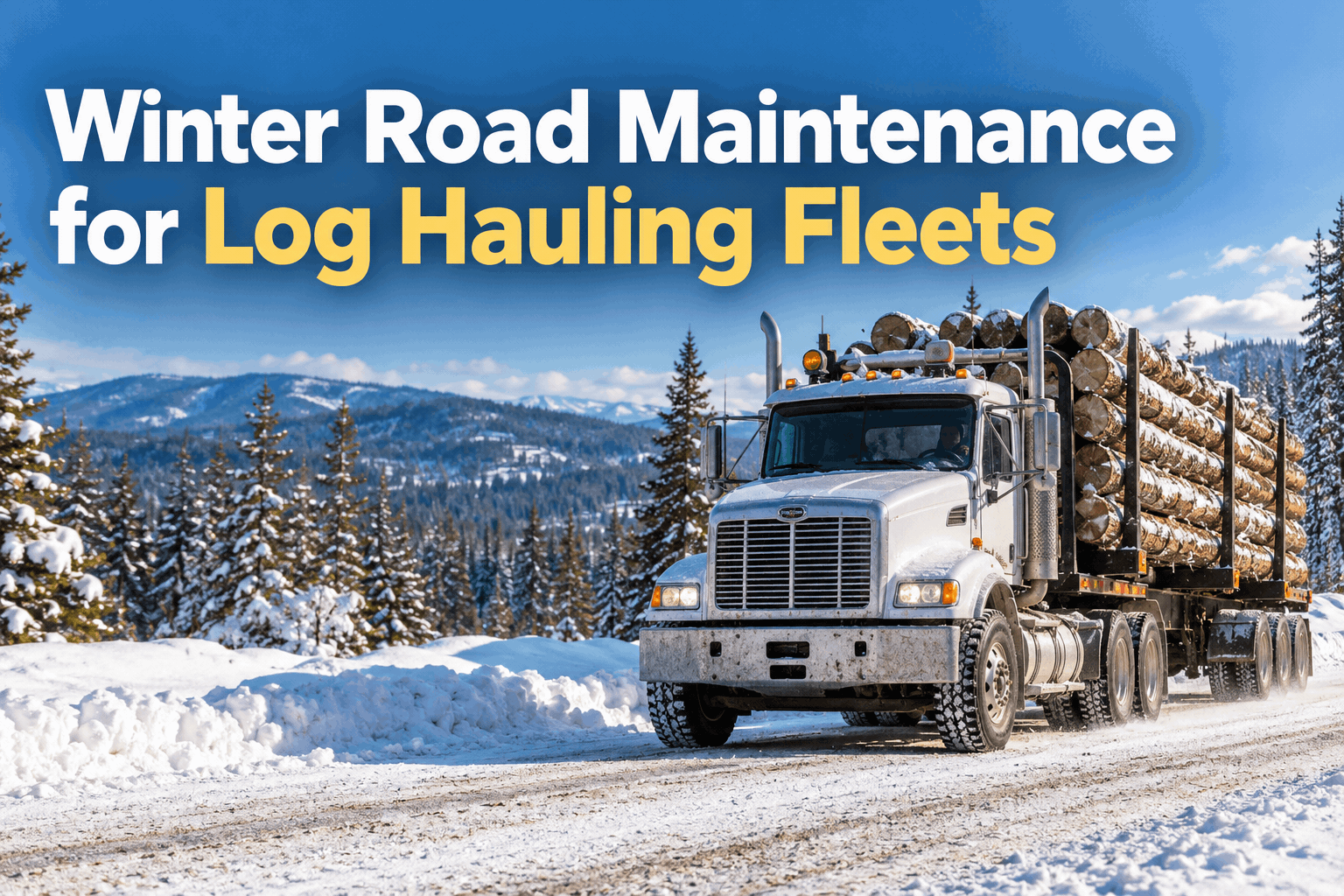
Winter logging road maintenance is a daily operating decision, not just a snowplow task. For log hauling fleets, a passable road must support loaded trucks through grades, curves, landings and changing freeze–thaw conditions. This guide explains how to inspect winter haul routes, prioritize snow and ice control, manage tire chains and decide when to suspend hauling—while keeping vehicle inspections and maintenance records organized.
Winter Logging Road Maintenance: Keep the Route Safe Before the Trucks Roll
Coordinate road condition checks, traction controls and log truck readiness with a repeatable go / restrict / stop decision process.
Winter hauling depends on the weakest road segment
A road can look clear near the yard yet become hazardous at a shaded switchback, narrow bridge approach or steep landing exit. Snow cover hides ruts and drainage; thawing softens the road base; freezing precipitation can erase traction between inspections.
Fleet supervisors should assess route condition and vehicle readiness together. Road maintenance crews control the surface; drivers report changing conditions; mechanics verify the equipment needed to operate safely. Neither a completed road inspection nor a serviced truck is sufficient by itself.
Inspect the road in five operational zones
Build a repeatable inspection route around the places where a loaded log truck has the least room to recover.
Yard exit
Check plowed width, turning space and chain-up location.
Grades
Check traction, braking approaches and runaway risk.
Curves
Inspect ice, visibility, berms and usable road width.
Crossings
Look for blocked drainage, icing and structural concerns.
Landing
Confirm safe access, stable staging and exit traction.
Choose the right snow, ice and drainage response
Maintenance priorities should follow the hazard and the expected loaded-truck movement—not a fixed plowing schedule alone.
Snow accumulation and drifting
Plow early enough to maintain width and sightlines. Clear turnouts and avoid leaving berms that trap meltwater.
Polished ice and traction loss
Apply suitable abrasive material where approved; recheck grades and curves after treatment. Sanding does not make every condition safe.
Thaw, runoff and refreeze
Open blocked drains, inspect culverts and limit heavy traffic where the road base is losing support.
Uncontrolled or rapidly changing hazards
Stop dispatch to affected segments until the road supervisor confirms controls and authorizes reopening.
Make shutdown criteria explicit before the shift
Use site-specific thresholds approved by qualified supervisors. The examples below are decision categories, not universal legal limits or safe operating thresholds.
Route controls verified
Required segments inspected, traction acceptable for planned loads, visibility adequate and vehicles cleared for duty.
Action: dispatch under normal site controlsManageable exposure
Localized conditions require additional sanding, reduced movement, route changes, chain requirements or controlled convoys.
Action: authorize documented restrictionsUncontrolled exposure
Unsafe traction on critical grades, blocked routes, unstable surfaces, poor visibility or unresolved vehicle safety defects.
Action: suspend movement; reassessKnow which log trucks and support machines are ready for the route
Use HVI to organize inspections, preventive maintenance, work orders and service histories for the vehicles and equipment that keep winter hauling moving.
Winter log truck inspection: eight checks that matter
Road treatment cannot compensate for a truck with defective brakes, inadequate traction equipment or impaired visibility. Add winter-specific items to your pre-trip inspection and defect-correction process.
Log Truck · LT-204
Link road reports to maintenance decisions
Give road crews, dispatchers and mechanics a clear handoff so a repaired road does not reopen to an unready truck—and a serviced truck does not enter a closed segment.
Inspect route
Road crew records hazards and treatment status.
Set access status
Supervisor marks go, restrict or stop.
Check vehicles
Driver inspection identifies defects or chain needs.
Correct and record
Mechanics complete work orders and service records.
Authorize dispatch
Dispatch verifies both route and truck readiness.
HVI can help with the vehicle inspection and maintenance record workflow—Start Free. Road closure authority, dispatch approvals and live weather monitoring remain with your existing operating systems and personnel.
A practical winter haul road maintenance schedule
Inspect before first dispatch
Review forecast, route hazards, road treatment needs and vehicle inspection status. Assign restrictions before trucks depart.
Reassess after conditions change
Prioritize new snow, freezing rain, temperature swings, vehicle reports and areas with repeated traction loss.
Close the loop
Log unresolved hazards, equipment defects, sanding use, road repairs and the next shift's priority segments.
Road maintenance equipment PM
Snowplows, graders, sanders and service trucks need their own winter service plans. Track cutting edges, hydraulic leaks, spreader function, lighting, tires and cold-weather starting.
Records worth keeping
Capture equipment IDs, inspection findings, defect severity, corrective work, maintenance dates and downtime. These records help explain recurring breakdowns and support winter maintenance planning.
Where HVI supports winter logging operations
Vehicle inspections
Standardize truck and support-equipment checks and document reported defects.
Preventive maintenance
Plan winter servicing for log trucks, graders, plows and road support equipment.
Work orders and history
Track corrective repairs and retain a maintenance history by asset.
Fleet oversight
Review maintenance activity and recurring issues to prioritize equipment attention.
Winter logging road maintenance FAQs
How often should winter logging roads be inspected?
Inspect before hauling begins and reassess whenever snowfall, freezing rain, thaw, drifting or driver reports indicate a meaningful change. Frequency should be set by the road operator based on local hazards and traffic intensity.
When should log hauling stop because of winter road conditions?
Stop or restrict movement when critical grades lack reliable traction, visibility is inadequate, the road surface or support is unstable, access is blocked or a serious safety defect remains unresolved. Authorized site personnel should define and apply the thresholds.
Does sanding remove the need for tire chains?
No. Sanding and tire chains address different traction risks. Chain use depends on conditions, vehicle configuration, manufacturer guidance, applicable rules and the operator's safe-work procedures.
What should a winter logging truck inspection include?
Check tires, chains, brakes and air system, visibility equipment, steering, lighting, cold-weather fluids, load restraints, communications and emergency supplies. Correct safety-critical defects before dispatch.
Can HVI manage winter road closures and live road conditions?
HVI supports vehicle and equipment inspections, maintenance scheduling, work orders and service history. Live road-condition sensing, route closures and dispatch authorization should be handled through your designated forestry operations process.
Start with the trucks and equipment you depend on every day
Make inspections and maintenance records easier to manage across your logging fleet and road support assets. See how HVI fits your winter readiness workflow.