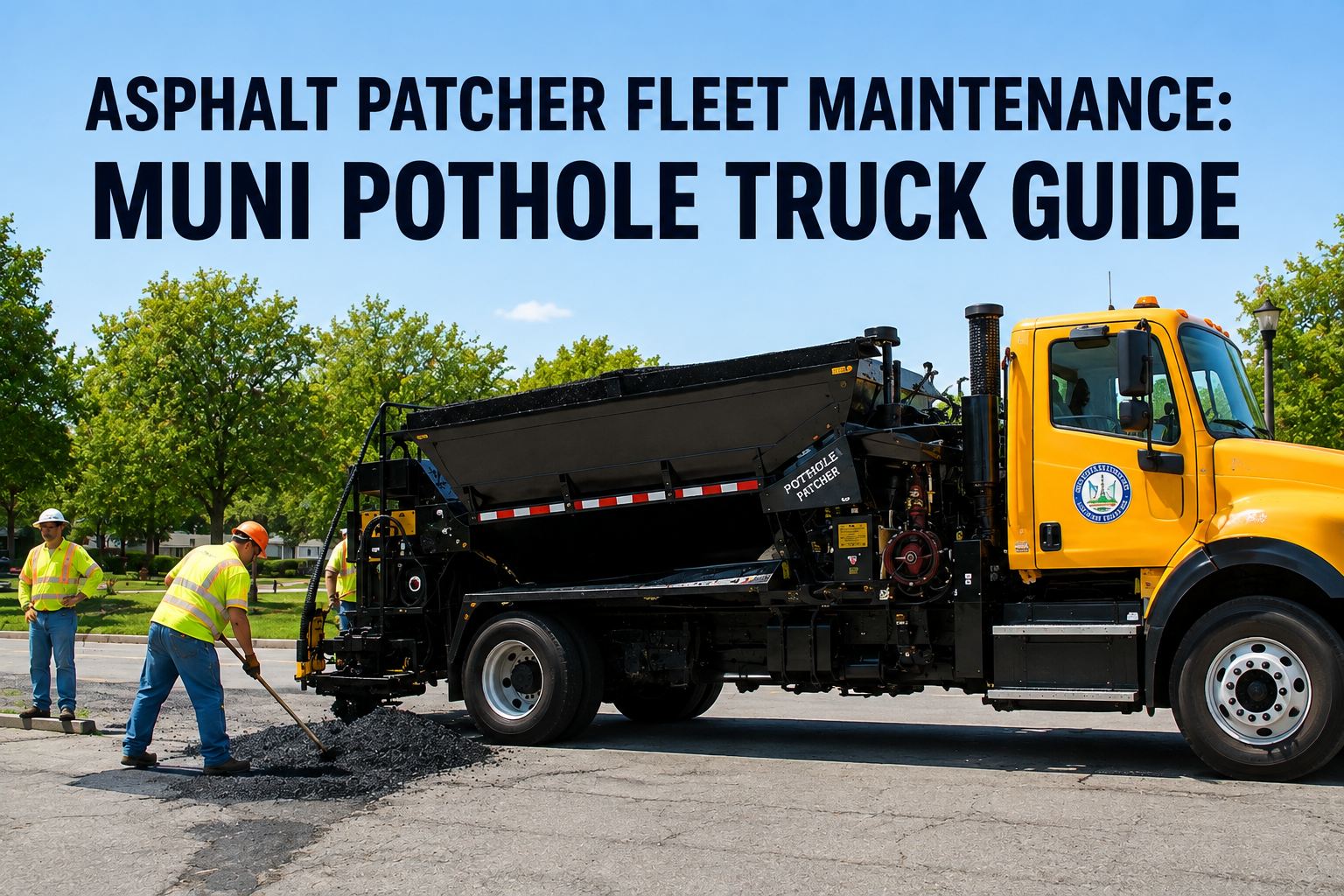
You know the phone call: a citizen reports a pothole on Main Street, the crew rolls the Dura Patcher out and the burner will not light — because the last preventive maintenance on that hopper heater happened sometime last spring and nobody can find the paper record. Asphalt patcher maintenance is a seasonal, high-stakes game where a single failed burner motor or a tack tank that has not had its annual pressure test can idle an entire crew for a day. Whether you run a municipal pothole truck fleet, a spray injection patcher or a hot box patcher operation, the trucks sit idle for months and then get hammered when pothole season opens — and that is exactly when failures cost the most. The fleet managers who keep their patcher trucks running are the ones who treat the off-season as PM season and use a guided walkthrough of a patcher CMMS to fire up every unit before the first call.
Spring pothole season runs at 4x volume — is your patcher truck fleet ready to fire?
Burner PM every 100 hours. Hopper heater checks before seasonal start. Tack tank pressure tests annually. When the calls start flooding in on January 15, the crews that pre-seasoned their Dura Patchers and hot box patcher trucks are the ones filling potholes — not waiting on parts.
The real cost of a patcher truck that will not light
A pothole repair truck is not a standard dump truck. It carries a fired heating system, a tack tank under pressure, a burner motor with hours, and a hopper full of hot mix that has to stay workable. When any one of those systems fails in season, the crew goes home and the calls keep coming.
Pothole truck PM timeline: from layup to peak season firing
Asphalt maintenance fleets live and die by the calendar. The patcher truck sits from late fall through winter, then gets hammered the moment the frost breaks. This is the timeline the well-run municipal patcher truck fleet follows — and the one HVI enforces automatically.
Off-season layup (October–December)
Drain and clean the tack tank, inspect the burner nozzle, log final engine hours, and file the end-of-season DVIR. HVI closes out the season with a timestamped inspection record so nothing is lost over the winter.
Pre-season fire-up (by January 15)
Light the hopper heater, run the burner motor under load, pressure-test the tack tank, and verify the spray injection system cycles. HVI triggers every one of these as a due PM with photo capture — you can see the pre-season workflow in a live demo before pothole season opens.
Peak season (February–May)
Burner PM every 100 engine hours, daily tack tank level checks, daily DVIR before the truck leaves the yard, and instant defect-to-work-order conversion when a crew spots a problem. This is where the 4x volume hits and where most patcher failures happen.
Wind-down and audit (June–September)
Pull the full season's inspection and work order history for the municipal or state audit. HVI compiles every DVIR, every burner PM, every tack tank pressure test into one report — no binder, no spreadsheet archaeology.
Patcher truck safety inspection: the four systems that fail first
A patcher truck is not a dump truck with a heater bolted on. Four systems carry unique failure modes that a standard truck DVIR will miss — and every one of them can idle the truck for a day or create a serious safety hazard in the yard.
Burner motor and ignition
- Nozzle condition and fuel flow at 100-hour PM
- Ignition electrode gap and ceramic insulator
- Burner motor amperage draw under load
- Flame sensor cycle and safety shutoff test
Tack tank and spray system
- Annual pressure test logged with date and inspector
- Spray bar nozzle condition and flow uniformity
- Tack line filter and pump pressure gauge reading
- Tank interior cleaned and inspected for lining wear
Hopper heater and hot box
- Seasonal heater element inspection before fire-up
- Hopper interior for asphalt buildup and refractory damage
- Thermostat calibration and hi-limit shutoff test
- Auger or conveyor drive operation and chain tension
Chassis and road compliance
- Daily DVIR covering lights, brakes, tires, and glass
- Patcher body mounting bolts and frame cracks
- Hydraulic system leaks and hose condition
- Placarding, extinguisher, and PPE kit verification
Paper binder vs HVI CMMS for patcher fleet maintenance
Most municipal and contractor patcher fleets still run inspections on a paper clipboard that lives in the truck cab and a binder that lives in the shop office. The gap between what got done and what got recorded is where failures hide. Here is what changes when you move patcher inspections and PM tracking into HVI.
| Maintenance task | Paper binder and spreadsheet | HVI digital inspection and CMMS |
|---|---|---|
| Burner PM at 100 hours | Engine hours pulled manually from the dash; PM missed when the truck is busy | HVI tracks engine hours via integration and flags the PM as due with a work order auto-created |
| Tack tank annual pressure test | Test date written in a binder; nobody checks it until the tank fails in season | HVI schedules the test 30 days before expiry and blocks the truck from dispatch if overdue |
| Hopper heater seasonal fire-up | Done when someone remembers; first sign of failure is a cold hopper on day one of pothole season | HVI fires a pre-season checklist on January 15 with photo capture of the lit burner and heater readings |
| Daily DVIR before dispatch | Driver fills a paper form; defects called in by radio and lost in translation | Driver completes DVIR on a phone; defects with photos convert to work orders instantly |
| Audit and compliance records | Days of digging through binders and spreadsheets to prove PM was done | One report pulled in HVI shows every inspection, PM, and repair with timestamp and photo |
See HVI running on your own patcher fleet — book a 30-minute demo
Walk through burner PM scheduling, tack tank pressure test tracking, and pre-season readiness for your Dura Patcher and hot box patcher trucks. We will show it on your units, your routes, your crew.
HVI patcher fleet: four capabilities that keep pothole trucks firing
HVI is built for the mixed-duty cycles that patcher trucks run — long idle periods followed by intense seasonal use. These are the four capabilities that directly reduce unplanned downtime and make audit season painless. You can start logging patcher inspections free and have your first truck live the same day.
PM scheduling by engine hours, date, and season
Set the 100-hour burner PM, the annual tack tank pressure test, and the January 15 pre-season fire-up as recurring triggers. HVI calculates due dates from engine hours pulled via telematics integration and flags overdue PMs in red before they become roadside failures. Outcome: no more burner ignition failures on the first cold morning of pothole season.
Digital DVIR with instant defect-to-work-order
Drivers complete the pre-trip inspection on a phone or tablet in the cab, photograph any defect, and submit. HVI converts confirmed defects into work orders automatically — no radio call, no text message to the shop, no lost paper. Outcome: defects get fixed before the truck leaves the yard instead of becoming a breakdown two hours into the shift.
Parts and inventory across multiple shops
Track burner nozzles, ignition electrodes, tack pump seals, and heater elements across every yard. HVI flags low stock before the pre-season rush and ties parts usage back to each work order for true cost-per-asset reporting. Outcome: you are not waiting three days on a burner nozzle in the middle of February when every supplier is backordered.
Audit-ready records with timestamp and photo
Every inspection, PM, and repair carries a timestamp, the technician or driver who logged it, and photo evidence. Pull a full compliance history for any patcher truck in seconds for DOT, municipal, state, or insurance audits. Outcome: audit prep drops from days of binder digging to a single report export. See the audit report flow in a quick demo before your next review.
What a missed burner PM actually costs a 6-truck patcher fleet
Consider a municipal streets department running six Dura Patcher trucks through a four-month pothole season. Two of those trucks miss their 100-hour burner PM because the season opened early and the shop was short-staffed. Here is the leak.
Where patcher fleet maintenance hours actually go
When you break down where a typical municipal patcher truck fleet spends its maintenance hours across a year, the imbalance is clear — and it is exactly why pre-season readiness matters more than in-season fire-fighting.
Asphalt patcher maintenance: what to do next
Treat January 15 as your hard readiness deadline
Spring pothole volume runs at 4x the off-season rate. Every patcher truck that is not fired, tested, and PM-checked by mid-January is a truck that will fail during the window where it matters most. HVI enforces this deadline with automated pre-season PM triggers.
Track burner hours, not just odometer miles
A patcher truck's burner motor accumulates hours while the truck sits still. The 100-hour burner PM interval only works if you track engine and burner hours — which HVI does via telematics integration. Mileage-based PM alone will miss it every time.
Pressure-test the tack tank before it is needed
The annual tack tank pressure test is the single most commonly missed PM on a patcher truck — and the most dangerous to skip. HVI schedules it 30 days before expiry and blocks dispatch if it lapses. Review your tack tank compliance in a live walkthrough before the season opens.
Kill the paper DVIR and the radio defect call
Paper DVIRs and radioed defect reports are where patcher failures hide. HVI's phone-based DVIR with instant defect-to-work-order conversion means every defect is photographed, timestamped, and routed to the shop before the truck leaves the yard.
The year before we put HVI on the patcher fleet, we had two Dura Patchers go down in the same week of February because nobody had logged the burner hours over winter. We lost eight crew-days. Now the 100-hour PM fires itself and I get the alert on my phone — I have not had a burner failure at season open since.
Asphalt patcher maintenance questions, answered
How often should a Dura Patcher burner motor get preventive maintenance?
When should a municipal pothole truck fleet start pre-season readiness?
What is included in a tack tank inspection for an asphalt patcher?
Can HVI track PM by engine hours instead of just mileage for patcher trucks?
How does HVI handle daily DVIR for a pothole repair truck?
Get every patcher truck fired and ready before pothole season opens
Book a 30-minute demo and we will walk you through burner PM scheduling, tack tank pressure test tracking, and the January 15 pre-season readiness workflow on your own fleet. Or sign up free and start logging inspections today.
Free to start — Works on any phone — No card needed