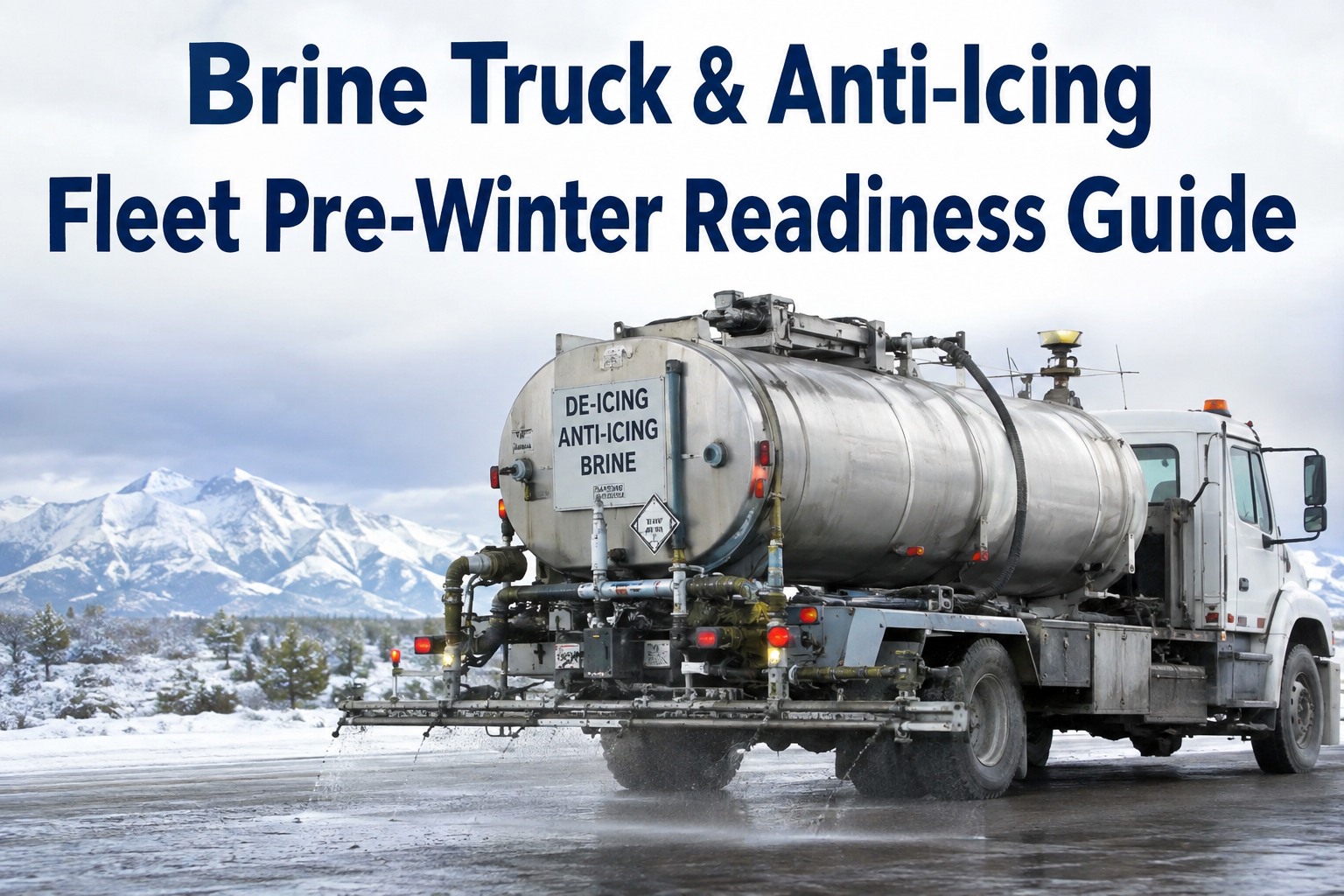
Brine trucks and anti-icing equipment take more abuse in a single winter storm season than most highway trucks see in five years of regular freight hauling. A brine truck maintenance plan that treats direct liquid application sprayers like ordinary plows is a fast track to corroded tanks, seized pumps, and emergency rebuilds in the middle of a freezing January night. Salt spray, calcium chloride and pre-wet chemicals destroy wiring harnesses, eat through mild steel spray bars, and clog nozzle tips with crystallized solids that starve your pump of pressure. Running a tight anti-icing fleet means executing a specific, aggressive pre-season checklist before the first frost, not after the first snowfall. If your current process lives on paper DVIRs and group chats, you can book a quick demo to see how HVI digitizes the entire pre-winter readiness workflow for mixed municipal and commercial fleets.
Pre-Winter Anti-Icing Readiness
Are your brine trucks ready for salt-spray season, or are you rebuilding pumps in January?
Brine trucks corrode three times faster than standard plows. Without a documented direct liquid application PM schedule, salt damage destroys tanks, pumps, and spray bars before the first winter storm even hits the ground. HVI's anti-icing checklist triggers preventive maintenance by engine hours—saving you up to 40% on seasonal rebuild costs.
The True Cost of Salt Damage
What poor brine truck maintenance actually costs your fleet
Direct liquid application equipment operates in a highly corrosive environment. Every missed PM interval compounds into hard costs—from emergency pump rebuilds to roadside breakdowns during active storm events. Here is what that inaction looks like when you run the numbers.
Pre-Season Inspection Checklist
Brine tank inspection and spray bar maintenance checklist
Pre-winter readiness is not a single visual walk-around. It is a tiered inspection process that verifies the structural integrity of the tank, the flow rate of the pump, and the clearance of every single nozzle on the spray bar. Following Salt Institute best-practice guides, this checklist ensures your anti-icing equipment applies the correct gallons per lane mile.
Stainless Steel Tank Inspection
- Inspect interior and exterior welds for hairline stress cracks caused by freezing expansion
- Pressure test baffles to ensure liquid surge is controlled during route driving
- Verify cleanout ports open freely and gaskets are not swollen from chemical exposure
- Check mounting cradle U-bolts for tension loss and frame rust pitting
Pump & Direct Liquid Application
- Flush 12-volt and hydraulic pumps with fresh water immediately after last seasonal use
- Inspect pump seals for calcium chloride crystallization and shaft wear
- Calibrate flow meter to ensure accurate gallons per lane mile application rate
- Rebuild pump if approaching 200 hours of direct liquid application service time
Spray Bar & Nozzle System
- Remove every nozzle tip and soak in warm water to dissolve dried salt brine solids
- Replace nozzle tips entirely if they have surpassed 50 hours of active spraying
- Inspect spray bar segments for mild steel rust that restricts internal fluid flow
- Test solenoid valves to confirm electronic triggering responds instantly from the cab
PM Triggers & Intervals
How to schedule calcium chloride truck PM by engine hours
Relying on calendar dates for anti-icing pre-season maintenance is a mistake. A severe winter storm week racks up more wear in five days than a dry month does in thirty. HVI triggers work orders based on actual engine hours and application volumes, ensuring your brine sprayer inspection intervals match real-world equipment usage. Below is the benchmark interval table used by municipal and commercial anti-icing fleets.
| Component | Inspection Trigger | Maintenance Action | Risk if Ignored |
|---|---|---|---|
| Spray Bar Nozzles | 50 engine hours | Replace tips, flush lines | Uneven application, wasted brine |
| Brine Pump | 200 engine hours | Full rebuild, seal replacement | Pressure loss, roadside failure |
| Stainless Tank | Annual (Pre-season) | Weld check, baffle pressure test | Catastrophic leak, frame corrosion |
| Pre-Wet System | 100 engine hours | Flush tanks, check check-valves | Salt clumping, spinner jam |
| Wiring & Solenoids | Monthly in-season | Dielectric grease, continuity test | Dead valves, manual operation only |
Do This, Not That
Salt corrosion protection: standard practice vs. anti-icing best practice
Many municipal brine truck programs treat their direct liquid application equipment the same as standard dump trucks and plows. This side-by-side breakdown highlights why anti-icing equipment demands a dedicated PM strategy, and how moving from a reactive paper process to digital inspection software eliminates the gap.
- Flushing spray bars only at the end of the winter season
- Scheduling pump rebuilds by calendar month regardless of usage
- Storing paper DVIRs in a damp cab binder until spring audit
- Ignoring mild steel frame rust until structural failure occurs
- Relying on driver memory to report low flow pressure
- Flushing direct liquid application systems after every major storm event
- Triggering pump rebuilds automatically at exactly 200 engine hours
- Capturing timestamped defect photos on a phone and converting them to work orders instantly
- Logging frame corrosion progression with visual evidence in a central CMMS record
- Receiving overdue alerts when flow rate calibration checks are missed
How HVI Helps
How HVI manages your anti-icing fleet and winter readiness
HVI is built for heavy-duty, mixed-use fleets that need to prove compliance and prevent unplanned downtime. For brine trucks and pre-wet systems, the platform translates Salt Institute guidelines into automated, engine-hour-based preventive maintenance that you can see configured for your own routes in a live demo. Here is how the specific capabilities map to your winter outcomes.
Engine-Hour PM Triggers
HVI tracks actual engine hours via GPS and telematics integrations, automatically generating work orders for spray bar tip replacements at 50 hours and pump rebuilds at 200 hours—eliminating guesswork and premature wear.
Instant Defect-to-Work-Order
Drivers spot a clogged nozzle or a leaking tank valve, snap a photo on their phone, and submit a digital DVIR. HVI instantly converts that defect into a tracked work order for the shop, killing paper binders and group chats.
Parts & Inventory Control
Track replacement nozzle tips, pump seals, and calcium chloride stock across multiple shops. HVI alerts you when inventory drops below safety stock, so a winter storm never catches your mechanics short on critical spare parts.
Audit-Ready Compliance
Every brine tank inspection and spray bar calibration is timestamped and photo-backed. Prove your fleet's winter readiness to DOT, municipal safety auditors, and insurance providers in seconds without digging through filing cabinets.
Cost of Inaction
The math: what a missed pump rebuild costs you in January
Let’s look at a realistic worked example. A 40-truck municipal brine fleet ignores the 200-hour pump rebuild trigger on two direct liquid application trucks. The pumps fail mid-storm in early January. Here is how the costs stack up against running the PM correctly in October.
Planned Maintenance (October)
Roadside Failure (January)
That is a $3,320 swing per truck—and that does not include the operational cost of an untreated ice route during the downtime. When you scale this across a mixed fleet, missing automated pre-winter readiness triggers is one of the most expensive blind spots a maintenance manager can have.
Key Takeaways
Brine truck maintenance: getting through the season intact
Track by hours, not days
Direct liquid application equipment wears by engine hours, not calendar dates. Shift your PM schedule to trigger at 50 hours for tips and 200 hours for pumps to stop premature failure.
Flush relentlessly
Calcium chloride and salt brine crystallize fast. Flushing the system after every major storm is the single highest-ROI action a driver can take to protect the stainless tank and spray bar.
Digitize the evidence
Paper DVIRs rot in cabs. Photo-backed digital inspections create a defensible, timestamped compliance record that proves your winter readiness to any auditor or insurer instantly.
"We used to lose two or three brine pumps every January because nobody remembered the 200-hour rebuild until the pressure dropped. Once we set HVI to trigger the PM off the telematics feed, pump failures in the middle of a storm basically dropped to zero. That alone paid for the software."
Frequently Asked Questions