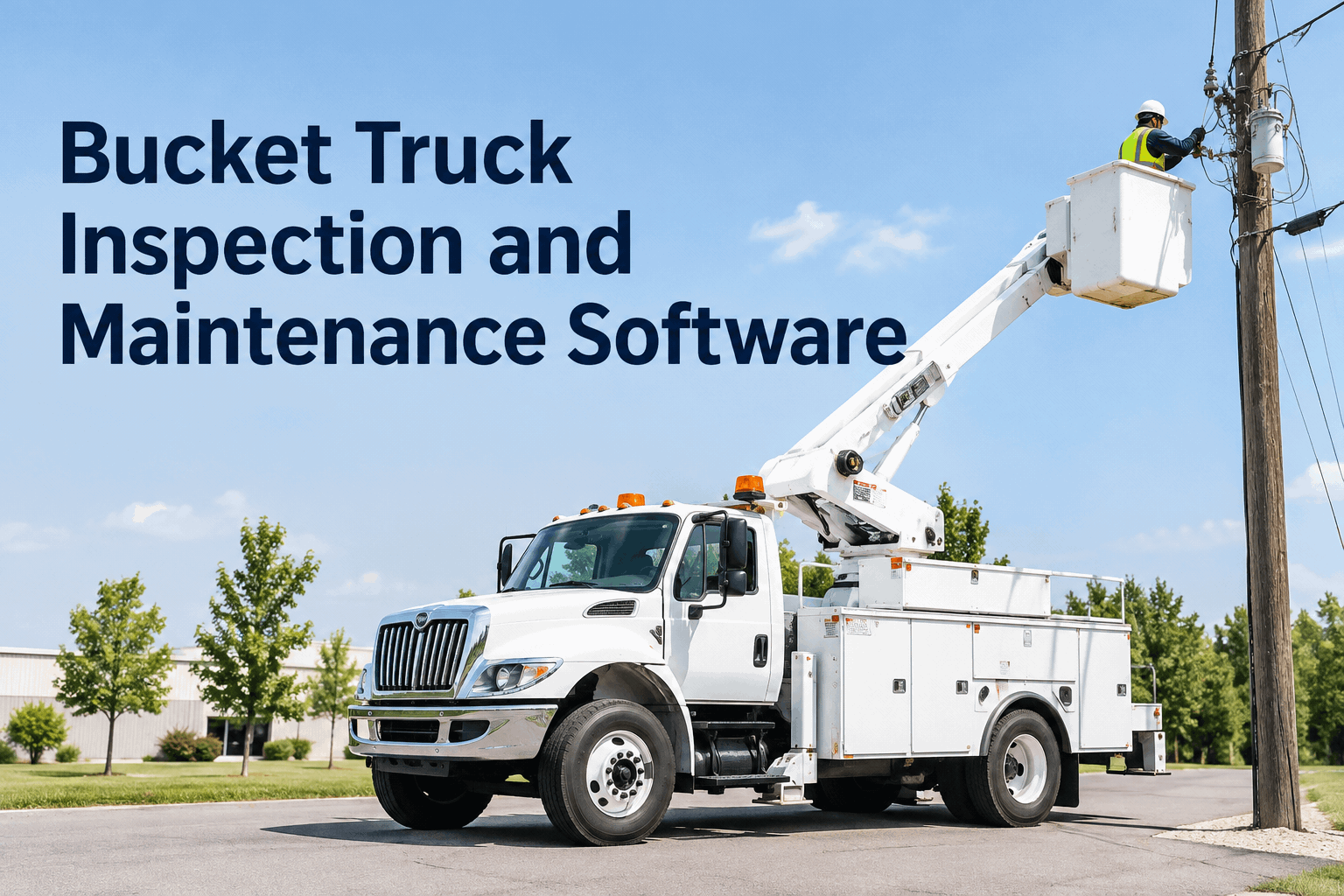
Dispatch assigns bucket truck U-14 to a live-line call at 7am. Nobody checks that the boom's dielectric certificate expired three weeks ago — the insulation that is supposed to stand between the operator and an energized line hasn't been proven since. Bucket truck inspection and maintenance software exists to catch that before the truck leaves the yard, not after the bucket goes up. See how HVI gates a dispatch on certification status
Don't Dispatch a Crew Onto an Un-Certified Boom
A bucket truck's insulated boom carries a dielectric certificate with a hard expiry date. HVI turns that date into a gate — green to dispatch, amber to watch, red to lock — so no crew ends up aloft on an unproven boom.
A bucket truck isn't a vehicle with maintenance deferred until it breaks — its boom carries an electrical safety rating that's only valid until a specific date, and after that date the boom is legally no better than bare fiberglass. That's a different kind of problem than a worn brake or a leaking hose, and it needs a different kind of software response: a date that blocks a dispatch, not a note that sits in a binder.
Why a lapsed dielectric certificate is a dispatch problem, not a paperwork problemthe numbers behind sending a crew out on an unproven boom
None of that is abstract compliance language once a crew is standing under the boom. A certificate that lapsed three weeks ago doesn't look any different from one that's current — the only thing that tells the difference is whether someone checked the date before dispatch. Book a demo to see that check happen automatically, every time.
Three clocks on one truck — why the dielectric date needs its own gatea bucket truck isn't tracked on one schedule, it's tracked on three
A bucket truck's chassis runs on its own PM clock, and the aerial device's hydraulics and structure run on engine hours, not mileage — HVI covers that hours-based aerial device schedule in detail here. The dielectric certificate is a third clock entirely, and it behaves differently from the other two: it isn't a wear estimate, it's a pass-or-fail electrical rating with a hard expiry date under ANSI A92.2. A grader missing a PM interval is a maintenance risk. A boom past its dielectric date near an energized line is a safety rating nobody can vouch for — which is why it belongs on a dispatch gate, not a maintenance to-do list. For the full inspection-tier breakdown, see how HVI structures digital inspections across all three clocks on one unit. Book a demo to see all three tracked on one bucket truck record.
Certificate in a binder vs. certificate on the dispatch gatesame compliance requirement, two very different mornings
- Dielectric test records live in a binder at one depot
- Dispatch has no visibility into certification status at all
- An expiry date gets missed between test renewals
- Nobody notices until an audit, a customer review, or an incident
- Every depot tracks it its own way, if it's tracked at all
- Every boom's test record attached to the unit, searchable by date
- Dispatch sees the same status your shop sees, before assigning
- Alerts fire well ahead of the renewal deadline, not after
- A lapsed cert locks the unit out of live-line dispatch automatically
- One record, visible the same way across every depot
Neither version changes the regulation — ANSI A92.2 still requires the same 12-month test either way. What changes is whether a lapsed date gets caught at the dispatch desk or found out the hard way. Start free and put your own fleet's dielectric dates on a gate dispatch can see.
What to look for in bucket truck compliance softwarea short list before a certificate decision rides on it
Automatic lockout when a certificate lapses
A status that only informs isn't enough — it needs to stop the dispatch.90/60/30-day renewal alerts, not a single reminder
Scheduling a qualified tester takes lead time — a last-week alert is too late.Dispatch sees the same status the shop sees
A certificate locked in a maintenance app dispatch never opens doesn't protect anyone.Test reports attached to the unit, not a shared drive
An auditor or customer should pull up pass/fail values by unit ID in seconds.One view across every depot
A multi-depot utility or municipal fleet needs certification status that doesn't stop at a yard's gate.Daily pre-use checks feed the same unit record
Boom condition, hydraulics, and the certificate status should live in one place, not three.HVI is built to clear every item on that list for bucket trucks and every other insulated aerial device in a municipal or utility fleet — start free and put your dielectric dates on the gate this week. For the full ANSI A92.2 inspection-tier breakdown, see HVI's safety management tools built around exactly this kind of standard.
From a utility fleet safety manager who closed the gap
We never had a bad outcome, and that's exactly what made it dangerous — nothing forced us to take the dielectric dates seriously until someone actually traced a near-miss back to a certificate that had quietly lapsed a month earlier. It wasn't anyone's fault specifically. It was everyone's job a little, which meant it was nobody's.
Now the certificate status sits right where dispatch makes the call, not buried in a binder at the shop. A truck past its date simply can't go out on a live-line job — the system won't let it. We haven't had a single lapsed certificate reach a dispatch screen since, and our last audit took twenty minutes instead of two days.
Want your own dielectric dates gating dispatch instead of living in a binder? Book a 20-minute demo walked through your fleet.
Frequently asked questions
How often does a bucket truck boom need a dielectric test?
Insulated booms generally require dielectric testing at least every 12 months under ANSI A92.2. Confirm the exact interval and test method for your specific unit and application against current requirements.
What happens if a dielectric certificate lapses?
Under OSHA 1910.269, a boom without a current dielectric test must be treated as non-insulating, meaning different grounding and work practices apply until it's retested and recertified.
Can HVI stop a truck from being dispatched once its certificate expires?
Yes. A lapsed dielectric certificate locks that unit's status, so dispatch sees it's unavailable for live-line work the same moment the shop does.
Is dielectric testing the same as the daily pre-use inspection?
No. The daily pre-use check covers visible boom, bucket, and hydraulic condition before every shift, while the dielectric test is an annual electrical rating performed by a qualified tester.
Does HVI track certification across multiple depots?
Yes. Fleet and safety managers get one certification view across every depot, so a unit's status is visible wherever it's based or dispatched from.
Let the certificate decide who goes out, not a binder nobody checked
HVI tracks every bucket truck's dielectric certificate alongside its daily inspections and PM schedule, alerts your team before it lapses, and locks the unit from live-line dispatch the moment it does — so the only question dispatch has to ask is which certified truck to send.
No credit card · Certificate records attached to every unit · Dispatch-level visibility built in