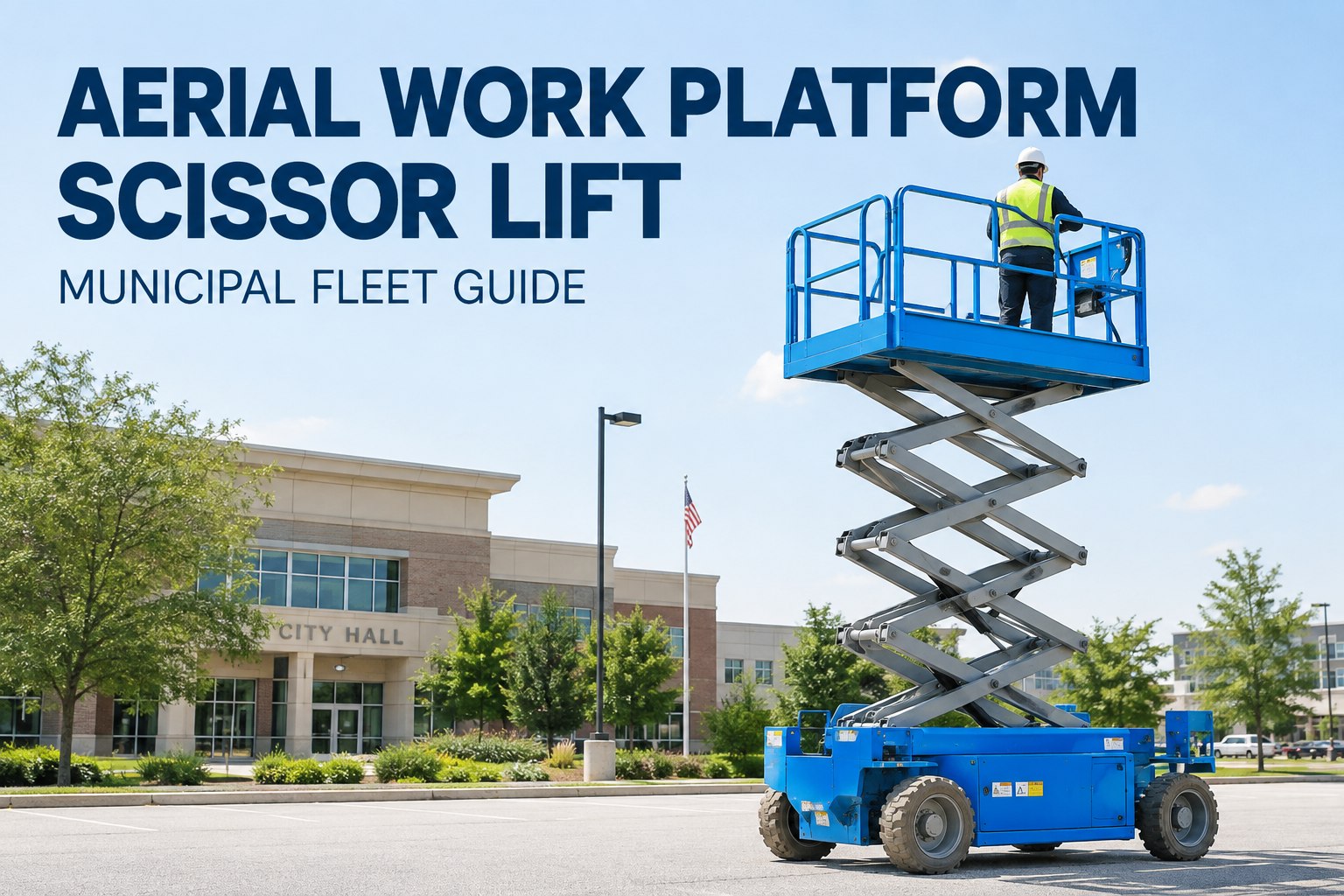
Your scissor lift fleet is the backbone of municipal maintenance — streetlight repairs, building upkeep, tree trimming, and facility work all depend on these machines being ready when your crew needs them. But when a JLG 3246ES sits dead because someone skipped the monthly battery equalize, or a Genie GS-1930 fails its annual load test because the pothole guard wasn't cycled daily, you're not just losing a machine — you're losing a workday, a crew, and possibly a compliance citation. ANSI A92.20 doesn't care whether you call it a scissor lift or an aerial work platform; the pre-use inspection requirement is the same, every shift, no exceptions. If you're still tracking scissor lift maintenance on paper forms and hoping someone remembers the 50-hour grease interval, you're running on borrowed time. The good news: digital inspection software built for municipal fleets can turn this chaos into a system that actually works. Walk through it on your own units and see how it fits your operation.
Scissor Lift Inspections That Actually Happen
ANSI A92.20 requires pre-use inspections every shift and frequent inspections every three months. HVI's scissor-specific templates make sure your JLG, Genie, and Skyjack units stay compliant, safe, and ready to work.
What Your Scissor Lift Daily Check Must Cover
Every shift, before anyone steps on the platform, your operator needs to verify these systems. Miss one, and you're exposed to liability if something goes wrong.
Hydraulic System
- Check for leaks at cylinder rods and hose fittings
- Verify fluid level in reservoir sight glass
- Test emergency lowering function
- Listen for unusual pump noise during lift cycle
Pothole Protection
- Cycle pothole guards through full range (Genie GS-1930)
- Verify guards deploy automatically when elevated
- Check for bent or damaged guard plates
- Test limit switch function
Controls & Safety
- Test all platform and ground controls
- Verify emergency stop at both stations
- Check tilt alarm and descent alarm
- Confirm manual descent valve operation
Structure & Pins
- Inspect scissor arms for cracks or deformation
- Check pivot pins for wear or looseness
- Verify all retaining clips and cotter pins present
- Look for rust or corrosion at weld joints
JLG vs Genie vs Skyjack: What Each Manufacturer Requires
The three most common scissor lifts in municipal fleets have different PM intervals and critical checkpoints. Here's what you need to track for each.
| Maintenance Task | JLG 3246ES | Genie GS-1930 | Skyjack SJ3219 |
|---|---|---|---|
| Battery Equalize | Monthly | Monthly | Monthly |
| Scissor Pin Grease | Every 50 hours | Every 50 hours | Every 50 hours |
| Pothole Guard Cycle | Weekly | Daily | Weekly |
| Hydraulic Oil Change | 1,000 hours | 1,200 hours | 1,000 hours |
| Annual Load Test | Required | Required | Required |
| Quarterly Inspection | Every 3 months | Every 3 months | Every 3 months |
All three manufacturers require pre-use inspections every shift per ANSI A92.20. The differences come in lubrication intervals, battery maintenance, and component-specific checks. See how HVI handles multi-brand fleets in one system.
How a Scissor Lift Inspection Works in HVI
From the operator's phone to your maintenance dashboard in under five minutes. No paper, no clipboard, no wondering if it actually happened.
Operator Opens Template
Your crew member scans the QR code on the lift or selects it from their assigned asset list. The correct ANSI A92.20 pre-use template loads automatically — JLG, Genie, or Skyjack specific.
Guided Walkthrough
The app walks them through each checkpoint with photos and pass/fail toggles. Pothole guard won't cycle? They snap a photo, mark it failed, and add a note. Battery voltage low? Same process.
Instant Defect Alert
Any failed item triggers an immediate work order. Your shop foreman gets a notification with the photo, the operator's note, and the asset's full service history. No phone tag, no lost paperwork.
Compliance Record Locked
The completed inspection is timestamped, GPS-tagged, and stored in the cloud. When your safety manager needs proof for an audit or insurance claim, it's there in seconds — not buried in a filing cabinet.
Stop Losing Track of Scissor Lift PMs
HVI's preventive maintenance scheduling tracks battery equalize, pin grease, and load tests automatically. See it running on your fleet.
Built for Municipal Aerial Work Platform Fleets
You're not running a construction site with one lift. You're managing a mixed fleet across multiple facilities, and every unit has different PM schedules. HVI handles that complexity.
Automated PM Scheduling
Set battery equalize to monthly, pin grease to 50 hours, and load tests to annual. HVI tracks engine hours and calendar dates, then alerts your shop before anything goes overdue. No more spreadsheet reminders.
Photo-Backed Inspections
Every defect gets a photo, a timestamp, and a GPS location. When OSHA or your insurance carrier asks for proof, you pull up the record in seconds. Start logging inspections free and see how it works.
OEM-Specific Templates
Pre-built checklists for JLG 3246ES, Genie GS-1930, Skyjack SJ3219, and other common municipal lifts. Customize them to match your exact units, or build your own from scratch in minutes.
Compliance Reporting
Pull a report showing every inspection, every PM, and every work order for any date range. Filter by asset, by location, or by technician. When budget season comes, you have the data to justify replacements.
What You Need to Remember About Municipal Scissor Lifts
ANSI A92.20 applies to scissor lifts the same as boom lifts. Pre-use inspection every shift, frequent inspection every three months, annual inspection by a qualified person. No exceptions for "just a quick job."
Battery maintenance is the most-skipped PM. Monthly equalize charges prevent sulfation and extend battery life by years. Skip it, and you're buying a $1,200 battery pack every 18 months instead of every five years.
Pothole guards save lives but only if they work. Genie requires daily cycling. If the guard sticks or the limit switch fails, the lift can tip when elevated. Test it every shift.
Paper inspections don't hold up in court. If someone gets hurt and you can't prove the lift was inspected, you're liable. Digital records with photos and timestamps are your defense. Book a demo to see the audit trail in action.
"We had a Genie GS-1930 go down because the pothole guard limit switch failed. Nobody had cycled it in weeks — the paper checklist just had a checkmark. Cost us two days and a very uncomfortable conversation with the city manager. Now every inspection is on the phone, with a photo. I can pull up any unit's history in about ten seconds. Wish we'd done it three years ago."
Scissor Lift Compliance Questions
Does ANSI A92.20 really require a pre-use inspection every single shift?
What's the difference between a frequent inspection and an annual inspection?
How do I track maintenance for JLG, Genie, and Skyjack lifts in one system?
What happens if I miss the monthly battery equalize charge?
Can I use HVI for other municipal equipment besides scissor lifts?
Ready to Stop Chasing Paper Inspection Forms?
HVI's scissor lift templates, automated PM scheduling, and photo-backed records keep your municipal fleet compliant and your crew safe. See it running on your own units.
Free to start — Works on any phone — No card needed