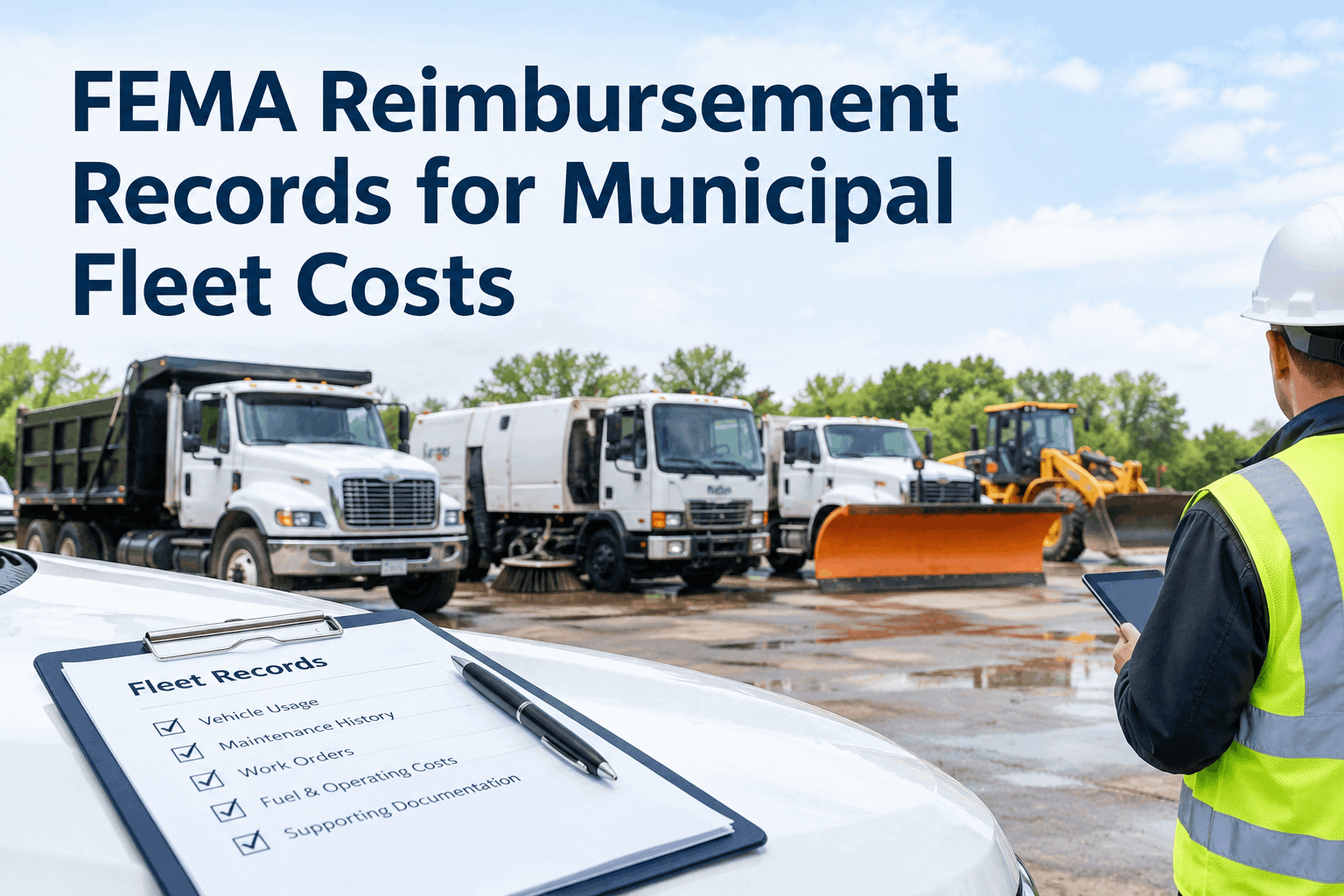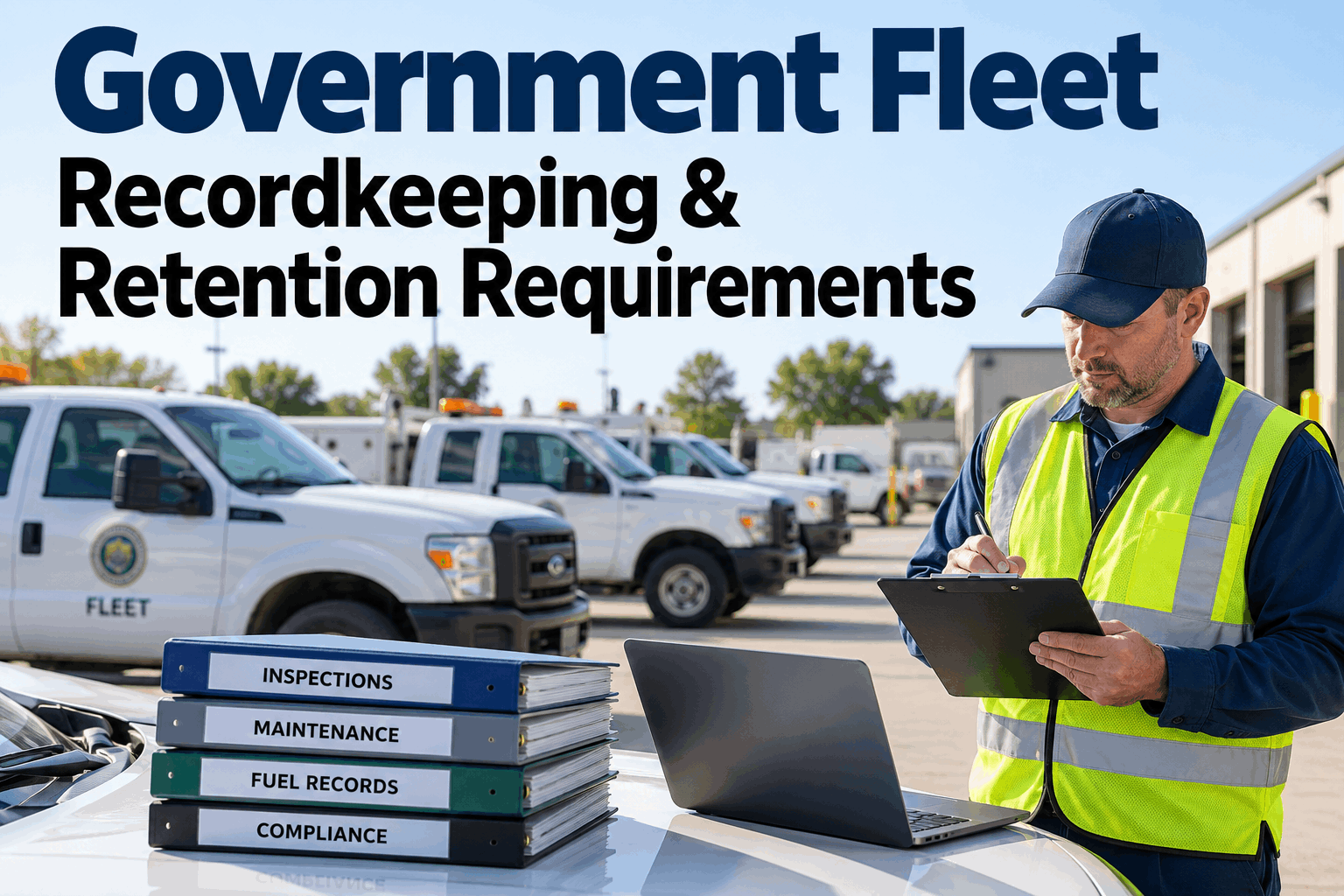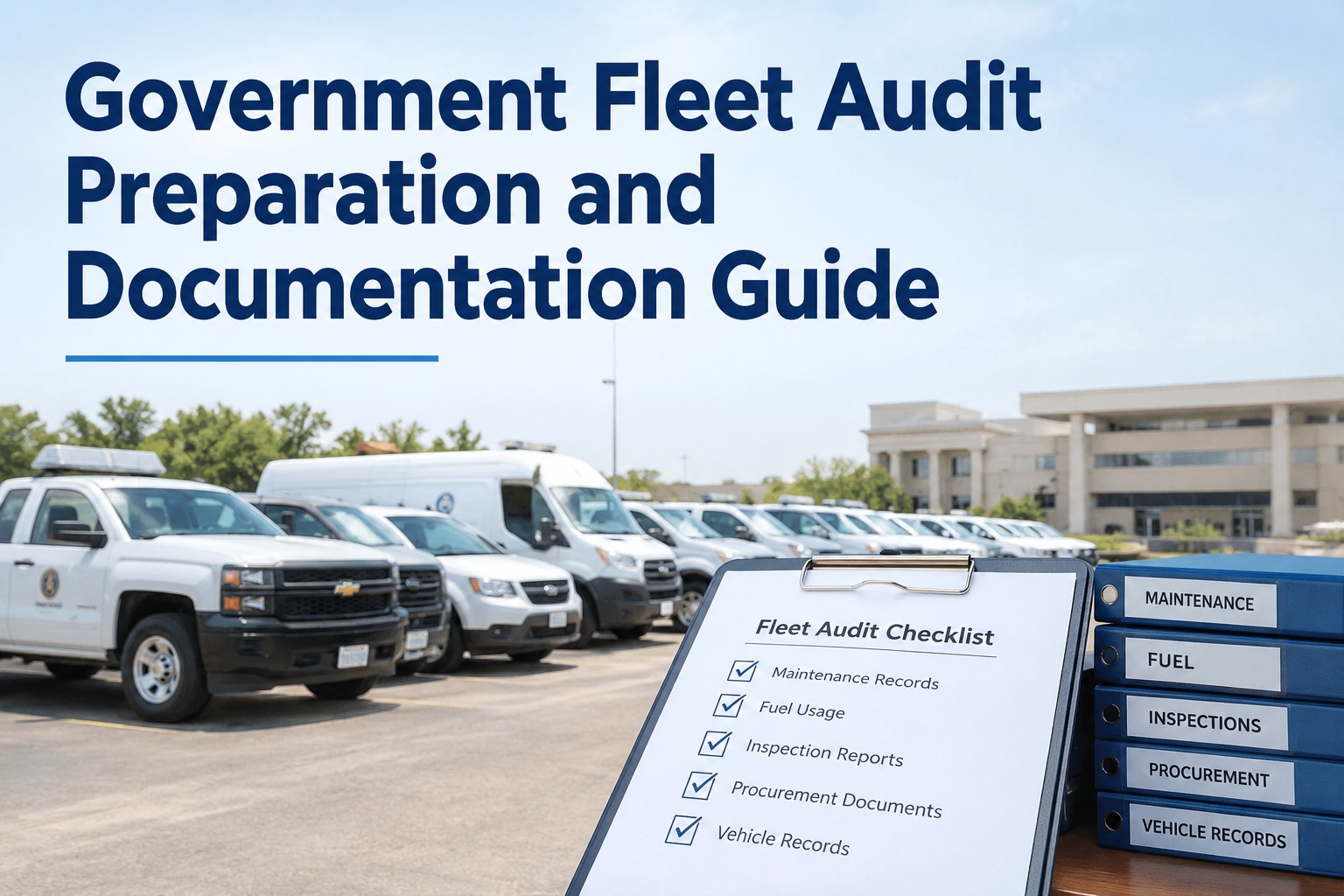
It's 9:15 on a Tuesday, and your city auditor wants the inspection and repair history for a sanitation truck that was out of service twice last quarter. One report is in a paper binder, the repair invoice is in finance, and the defect closeout is buried in email. That is why government fleet audit preparation starts long before the auditor arrives: you need one defensible trail from the vehicle inspection to the completed repair. Here is how to build it — or book a demo to see HVI inspection records.
An audit should take a record search, not a rescue mission.
Give an auditor the right vehicle, the right dates and the complete evidence chain — without calling three departments to find it.
For a government fleet, an audit can examine safety, preventive maintenance, procurement, spending, grant-funded assets or internal controls. Not every audit asks for the same evidence. Your first job is to understand the review scope and the applicable record-retention rules; your second is to make the requested records complete, dated and easy to retrieve. HVI helps with the operational side: digital inspections, maintenance histories, defects and fleet reporting. It does not replace your auditor, finance ledger or legal retention policy.
What a government fleet audit actually needs Start with the request, then assemble evidence by vehicle and period
Auditors rarely want a folder named “maintenance.” They want to know whether a specific vehicle was inspected, whether a safety defect was handled, whether scheduled work happened and who approved its return to service. A useful municipal fleet audit checklist groups the proof by the question being tested.
Evidence needs vary by jurisdiction, vehicle class, funding conditions and audit scope. Financial approvals, invoices and procurement files may live in separate municipal systems. Book a demo to review vehicle-level evidence retrieval in HVI.
The missing-link problem in fleet compliance audits A good inspection alone is not proof that the repair was completed
Consider a parks department pickup with a brake warning reported on Monday. An inspection exists, but the repair record says only “fixed.” There is no technician name, completion date or follow-up check. The fleet may have repaired the vehicle properly — yet the file cannot demonstrate the full sequence. That gap creates follow-up questions and avoidable work for your team.
Weak audit file
Inspection PDF in one folder. Repair note on a spreadsheet. No common identifier. The auditor has to infer whether the two records refer to the same issue.
Defensible audit file
Asset number, inspection date, defect reference, work record and documented closeout can be followed in order. Supporting invoices are cross-referenced when needed.
The goal is traceability, not paperwork for its own sake. With consistent asset IDs and a defined closeout procedure, you can show what happened without reconstructing it from memory. Sign up to begin organizing digital vehicle inspections.
Stop rebuilding vehicle histories before every audit
See how HVI can keep inspections and maintenance evidence associated with the right asset, ready for your next internal review.
A 30-day municipal fleet audit preparation plan Four focused passes are easier than a last-minute document hunt
If your audit date is approaching, resist the urge to scan every paper file at once. Start with the audit request and work backward. Use the following sequence as a planning example; shorten or expand it according to fleet size and audit scope.
Confirm scope
List audited departments, vehicle classes, dates, policies and requested evidence. Assign a fleet lead and a finance or compliance contact.
Sample records
Select active, high-mileage, recently repaired and out-of-service units. Check whether inspection, PM and defect records agree.
Close documentation gaps
Locate supporting invoices, clarify missing asset IDs and document corrective actions. Never backdate or fabricate records.
Run a mock request
Ask a colleague to retrieve a random vehicle's evidence packet and explain every outstanding exception before the audit.
A repeatable process also helps after the audit. Keep the evidence request log, assign corrective actions and revisit recurring gaps at your monthly fleet review. Book a demo to explore HVI maintenance history and reporting.
Run a five-vehicle mock audit before the real one Use a small sample to expose the biggest documentation gaps
You do not need to audit every unit to discover a weak process. A small, deliberately varied sample can reveal inconsistent checklists, missing work-order references or incomplete defect closure. The example below is fictional; it shows how to prioritize follow-up rather than reporting actual government fleet results.
For every exception, record what is missing, why it matters, who owns the correction and when the follow-up will be checked. If the original record does not exist, disclose the gap and document the remedial action instead of creating an apparently historical record. That distinction matters for government accountability.
How HVI supports audit-ready government fleet records Operational evidence that finance and compliance teams can actually use
Digital vehicle inspections
Standardize checks across departments and keep inspection findings associated with the correct unit instead of loose paper forms.
Maintenance history
Review service work and preventive maintenance activity per vehicle when an auditor asks how a particular unit was maintained.
Defect visibility
Make reported issues easier to follow through maintenance and closure processes, with supporting details where captured.
Fleet reports and exports
Prepare operational summaries for internal review and share relevant data with finance or audit teams using available reporting options.
The most important improvement is consistency. When drivers, technicians and managers use the same asset identifiers and follow the same documentation rules, your audit evidence becomes more reliable. HVI supports that recordkeeping workflow; agencies still need their own approvals, retention schedules and financial controls. Book a demo to see which HVI reports fit your audit process.
Government fleet audit readiness: the final checks Use this list before you send the evidence packet
Vehicle and maintenance evidence
- Asset IDs match across inspection and repair records
- Inspection dates and responsible people are identifiable
- PM intervals and completed work are documented
- Safety defects have an explainable disposition
- Out-of-service and return-to-service decisions are traceable
Governance and retrieval
- Audit scope and retention requirements are confirmed
- Supporting invoices and approvals can be located
- Missing records are logged without alteration
- Exports are reviewed for accuracy and sensitive data
- One accountable person handles each follow-up request
Some agencies must also demonstrate procurement controls, grant compliance, emissions or regulatory inspection requirements. Those are separate obligations and should be checked against the specific rules that apply to your jurisdiction and funding source. Start free to build a more consistent inspection record process.
“The difficult question isn't ‘Did we service the truck?’ It's ‘Can we show which inspection triggered the work, when it was done and who signed it off?’ If those three things live in different places, every audit becomes detective work.”
— Example perspective of a municipal fleet maintenance manager
Government fleet audit preparation FAQs
What records are needed for a government fleet audit?
The exact list depends on audit scope and local rules. Common operational evidence includes vehicle asset records, completed inspections, preventive maintenance history, reported defects, repair documentation and proof of defect resolution. Financial or grant audits may also request invoices, approvals, procurement records and asset-disposal files.
How often should a municipality review fleet audit readiness?
A monthly exception review is a practical operating habit, with a more formal sampling exercise before scheduled audits. Review high-risk assets and unresolved defects more frequently. Follow any audit or regulatory review frequency required by your jurisdiction.
How do you handle missing fleet maintenance records?
Identify the missing evidence, search the appropriate source systems, document the gap and assign corrective action. Do not invent, backdate or alter historical records. Where needed, provide an honest explanation and evidence of the new control introduced to prevent recurrence.
Can digital vehicle inspections help with government fleet compliance?
Yes. Consistent digital checklists can improve the availability of inspection dates, findings and vehicle identifiers. They are one part of compliance, however; maintenance follow-up, required approvals, record retention and applicable regulatory obligations still need to be addressed.
How can HVI help prepare for a municipal fleet audit?
HVI supports digital inspections, vehicle maintenance histories, defect-related workflows and fleet reporting. These records can make operational evidence easier to organize and retrieve. HVI does not itself certify an agency as compliant or replace municipal finance and audit controls.
Make government fleet audit preparation a routine, not a scramble
A defensible audit file tells a clear story: the vehicle was identified, inspected, maintained, and any defects were resolved or properly managed. Build that evidence while the work happens, check a sample regularly, and keep the original records intact. That is how government fleet audit preparation becomes less stressful and more useful for day-to-day fleet decisions. For a closer look at the operational recordkeeping, book an HVI fleet audit readiness demo.
Be ready when the next vehicle record is requested.
Give your team a more reliable way to capture inspections, trace maintenance and retrieve fleet evidence without chasing paperwork.