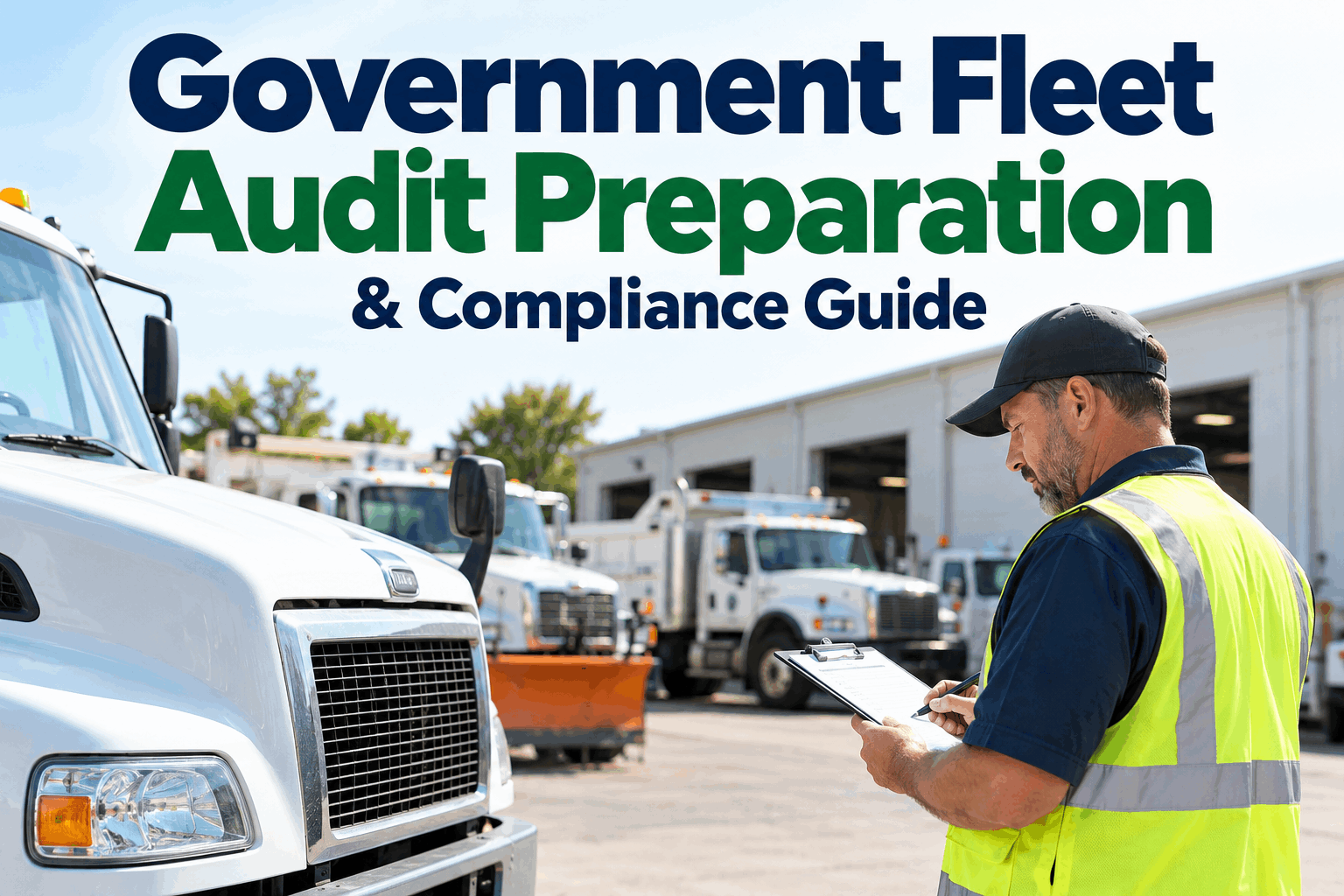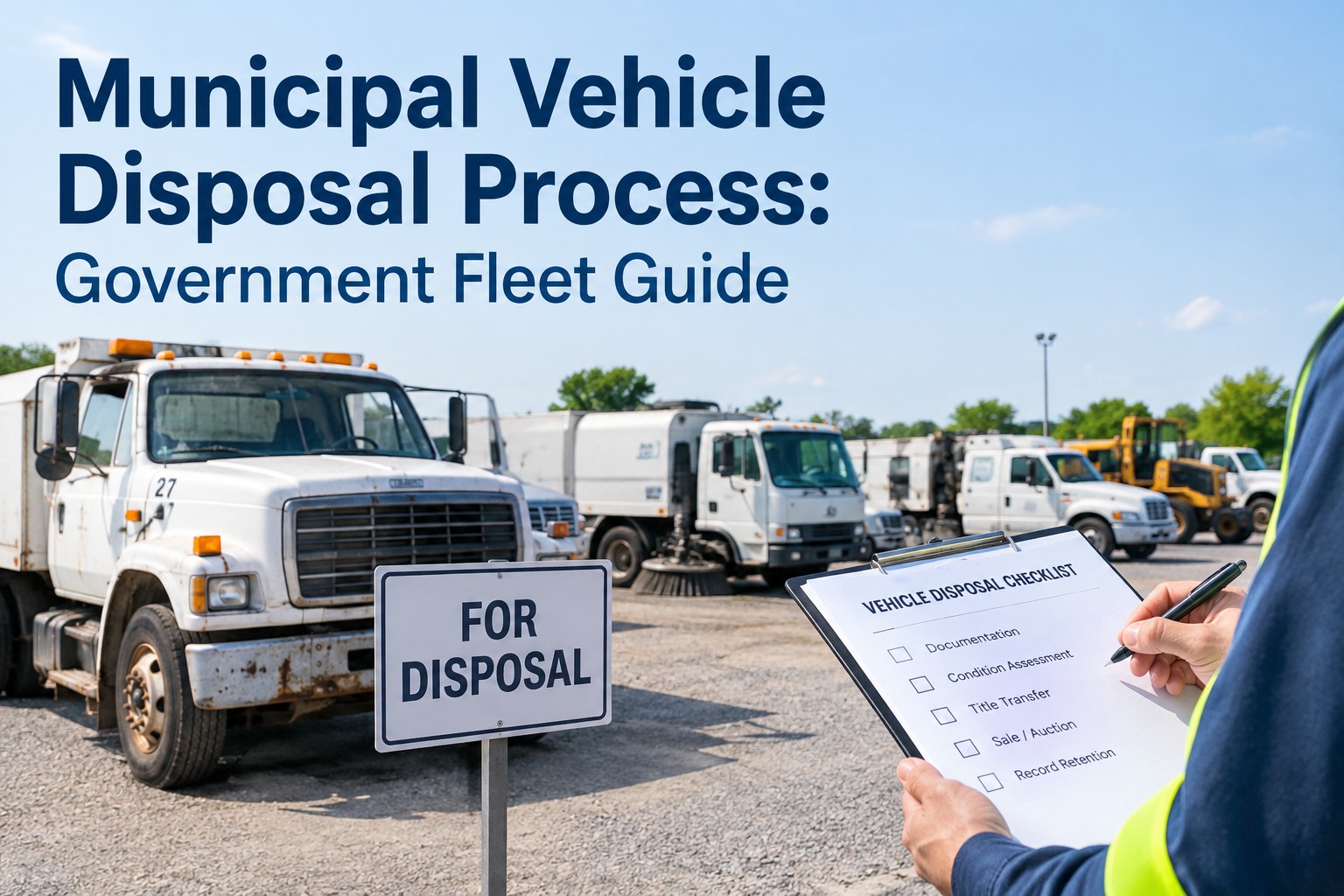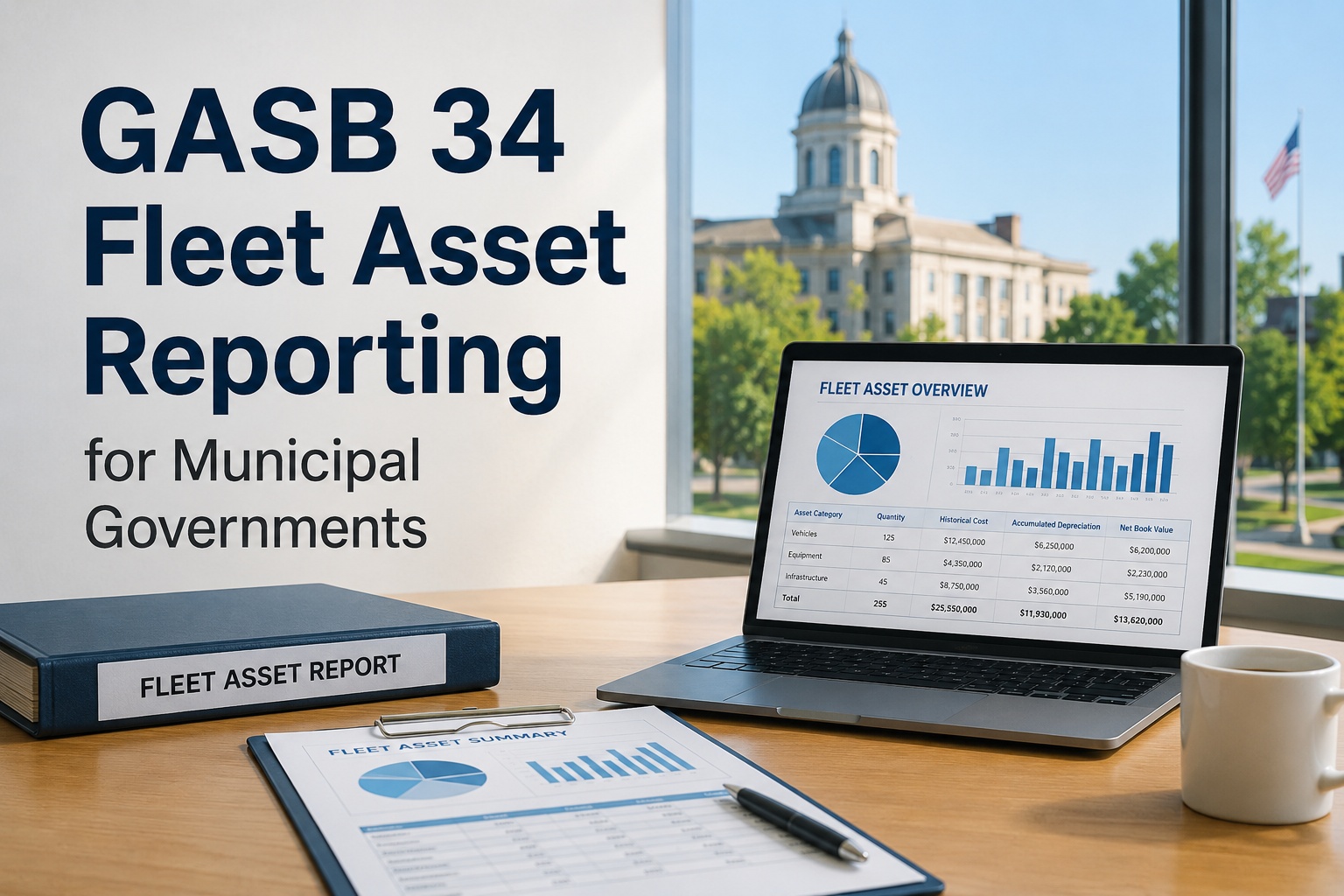
The grant paid for the truck, but the grant doesn't end at the purchase — it comes with strings that last the asset's whole life, and an auditor who can ask to see every one of them. Grant funded fleet compliance is the paperwork trail that proves you met them. Book a demo to see grant-asset records kept audit-ready.
The audit question most fleets can't answer in the room
A monitor points at one grant-funded unit and asks for its full file. The records all exist — the trouble is producing them on the day.
Requirements summarized from federal grant rules (2 CFR 200.313) — confirm the terms of your specific award
- Property record with source of funding
- Proof of physical inventory on file
- Maintenance history showing upkeep
- Disposition record when it's retired
- A spreadsheet row, maybe
- No dated inventory reconciliation
- Service receipts in three binders
- Nobody sure if it was ever logged out
When a city or agency buys a vehicle with federal or state grant money, the award attaches conditions that follow the asset for years — a property record with specific fields, a physical inventory on a set schedule, documented maintenance, controlled use, and a proper disposition when it leaves. Miss the paperwork and you risk a finding, repayment, or a flag on the next application. The work isn't hard; keeping it all in one place and audit-ready is.
What grant funded fleet compliance actually requires
Federal awards spell the obligations out plainly in the equipment-management rules. Five requirements cover almost every grant-funded vehicle or piece of equipment. This is the public-fleet view; the same rules applied to mine equipment are covered in our grant-funded mining equipment guide.
Property records
Each asset needs a record with its description, serial or ID number, source of funding, acquisition date and cost, the federal share, location and condition. The single most-requested item at audit.
Physical inventory
A physical inventory must be taken and reconciled against the records at least once every two years — not an estimate from memory, a dated count you can show.
Loss & theft safeguards
A control system to prevent loss, damage or theft, with any loss investigated and the funding agency notified when it affects the program.
Maintenance in working order
Regular maintenance procedures must keep the asset in proper working condition — and you need the records that show it actually happened.
Proper disposition
When the asset is retired, disposition is documented. Above the federal threshold (generally $10,000 per unit), the agency may be owed its share of the proceeds.
None of these are onerous on their own. The failure is almost always administrative — the record exists somewhere, but not in a form you can produce on the day a monitor asks. Book a demo to see each requirement mapped to a record.
Where compliance actually breaks
Findings rarely come from fleets that ignored the rules — they come from fleets that followed them on paper that then scattered. The gap is almost always the same three places.
The funding source falls off the record
A vehicle gets logged like any other asset, and the "bought with Grant X" tag never makes it onto the record. At audit, nobody can prove which units the award covers.
The inventory was never dated
Someone "checks the trucks" every so often, but there's no reconciled, dated inventory to show the two-year requirement was met. A real count that isn't documented counts as no count.
Maintenance proof lives in receipts
The work was done, but the evidence is a stack of invoices and a tech's memory. Pulling a clean service history for one grant unit becomes an afternoon of digging.
Each gap is a records problem, not a maintenance problem — which is exactly why a connected system closes it. When the funding tag, the inventory date and the service history all live on the asset record, producing the file is a click, not a scramble. Start free and keep every grant asset audit-ready.
The grant asset lifecycle — what to track at each stage
Grant compliance isn't a one-time form; it's a record kept across the asset's whole life. Here's what each stage demands, from the day the award buys the unit to the day it's disposed.
-
AcquireTag the funding source on day one
Create the property record with source of funding, cost, federal share and ID — before the vehicle enters service, while the award details are at hand.
-
InventoryReconcile on schedule
Run and date a physical inventory at least every two years, reconciled against the records — the evidence an auditor asks for first.
-
MaintainLog every service to the asset
Keep maintenance and inspection records on the unit so "kept in working condition" is a documented fact, not a claim.
-
UtilizeShow it's used for the grant purpose
Usage and assignment records demonstrate the asset serves the program the award funded — a growing focus in grant monitoring.
-
DisposeDocument the disposition
Record how and when the asset left service, and settle the agency's share where the unit is above the federal threshold.
Miss a stage and the gap doesn't show until audit — when it's too late to recreate a dated record. Kept continuously, the whole lifecycle is one unbroken file per asset. Book a demo to see the full grant-asset lifecycle tracked.
The numbers behind grant compliance
Why the records discipline is worth it — three figures that frame the stakes for a grants manager.
the maximum interval between physical inventories of grant-funded equipment under federal rules — a dated, reconciled count, not an estimate
per-unit federal threshold above which the funding agency may be owed its share at disposition — get the record wrong and it's a repayment
the single most common audit finding is missing or incomplete documentation — not misuse of funds, just paperwork that can't be produced
The pattern is consistent: the money was spent correctly, but the proof wasn't kept where anyone could find it. That's a records problem a connected system solves outright. Book a demo to see a grant file pulled in seconds.
From a grants manager who's been through the audit
Our first grant monitoring visit, they picked three vehicles and asked for the full file on each. We had the trucks, we'd maintained them, we just couldn't prove it fast enough — the funding tag was in one system, the service history in another, and the inventory was a walk-around nobody had dated. We passed, barely, on a promise to fix the records. Now every grant asset has one file I can pull in front of a monitor in seconds.
How HVI keeps grant assets compliant — feature by feature
Every federal requirement maps to a record HVI already keeps in the normal course of running the fleet — so compliance is a byproduct of the work, not a separate scramble at audit time.
Property records with funding source
Asset records hold the ID, cost, condition and the grant that funded each unit — the property record an auditor opens with.
Dated inventory and inspections
Digital inspections create a timestamped, signed record every time an asset is checked — the dated evidence the two-year rule needs.
Maintenance history on the unit
Work order records prove "kept in working condition" — a complete service log attached to each grant asset.
Utilization and assignment
Usage records show the asset serves the program the grant funded — the use evidence monitors increasingly ask to see.
Disposition on the record
When an asset is retired, its disposition is logged against the same record — closing the file the way the award requires.
Exportable audit reports
Reporting pulls the full file for any asset or grant on demand — the difference between passing an audit and dreading one.
One connected record per asset, built as you work — not a binder reassembled the week before a monitor arrives. Start free and put your grant fleet on one record.
Frequently asked questions
What does grant funded fleet compliance involve?
Keeping the records a grant requires across a vehicle's life: a property record with the funding source, a physical inventory reconciled at least every two years, loss safeguards, documented maintenance, and a proper disposition. Most findings come from missing paperwork, not misused funds.
What records must a grant-funded vehicle have?
A property record showing description, serial or ID number, source of funding, acquisition date and cost, federal share, location and condition — plus maintenance history and, eventually, disposition. These are the items a grant monitor asks to see for a specific asset.
How often must grant equipment be inventoried?
Federal rules require a physical inventory reconciled against the property records at least once every two years. The key is that it's dated and documented — an undocumented count doesn't satisfy the requirement, even if it happened.
What happens when a grant-funded asset is disposed of?
The disposition must be documented. For units above the federal per-unit threshold (generally $10,000), the funding agency may be owed its share of any proceeds. Below it, the asset can usually be retained or sold without further obligation — but confirm your award's terms.
How does HVI help with grant compliance?
HVI keeps the funding source, property record, inventory dates, maintenance history, utilization and disposition on one record per asset, exportable on demand — so grant files are audit-ready by default. It's a records and reporting layer; it doesn't replace your grant administrator or the award's specific terms.
Make every grant-funded asset audit-ready
Keep the funding source, property record, inventory dates, maintenance history and disposition on one record per vehicle — and produce any grant file the moment a monitor asks. Live in weeks, not quarters.
No credit card · One record per grant asset · Built for public fleet audit readiness