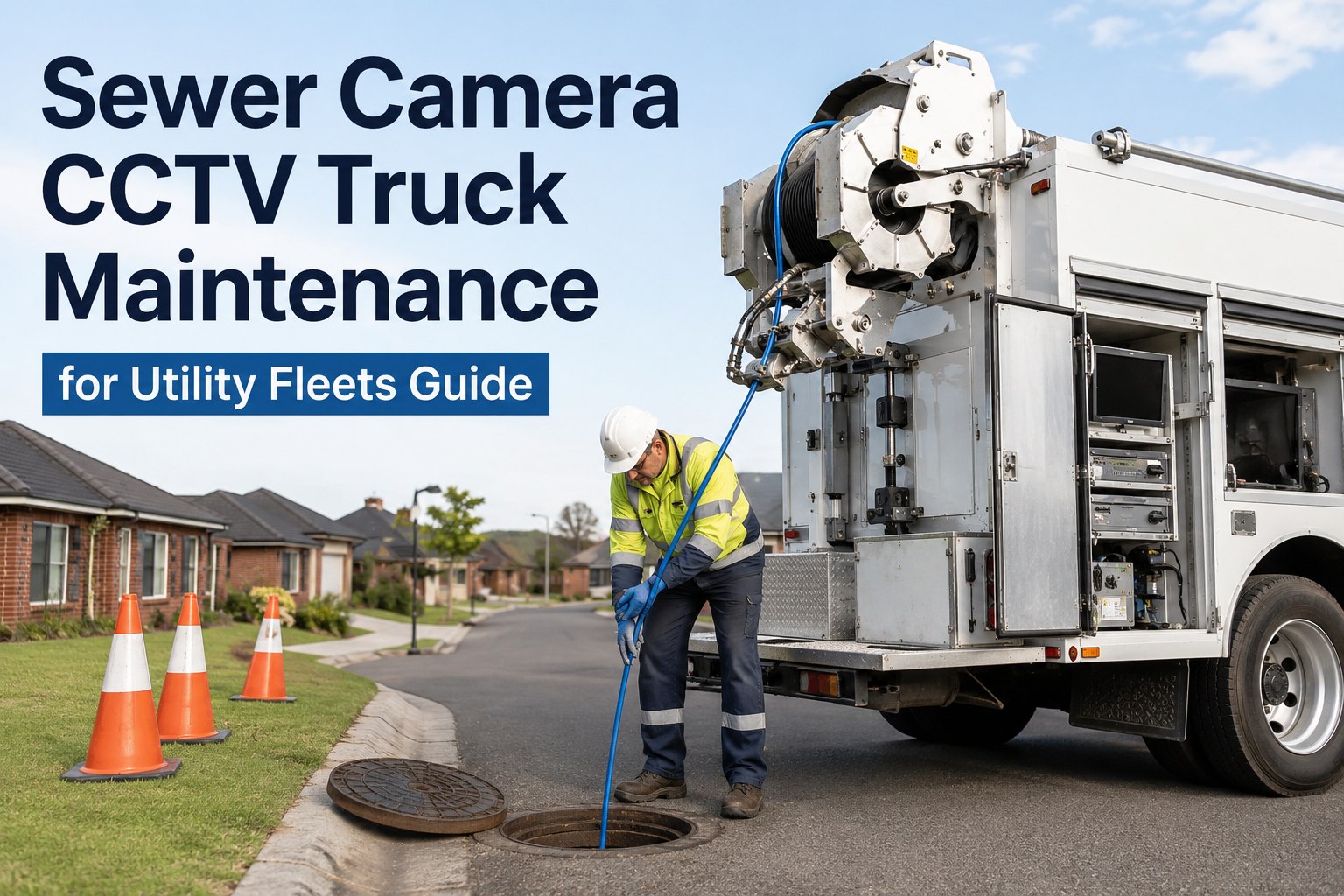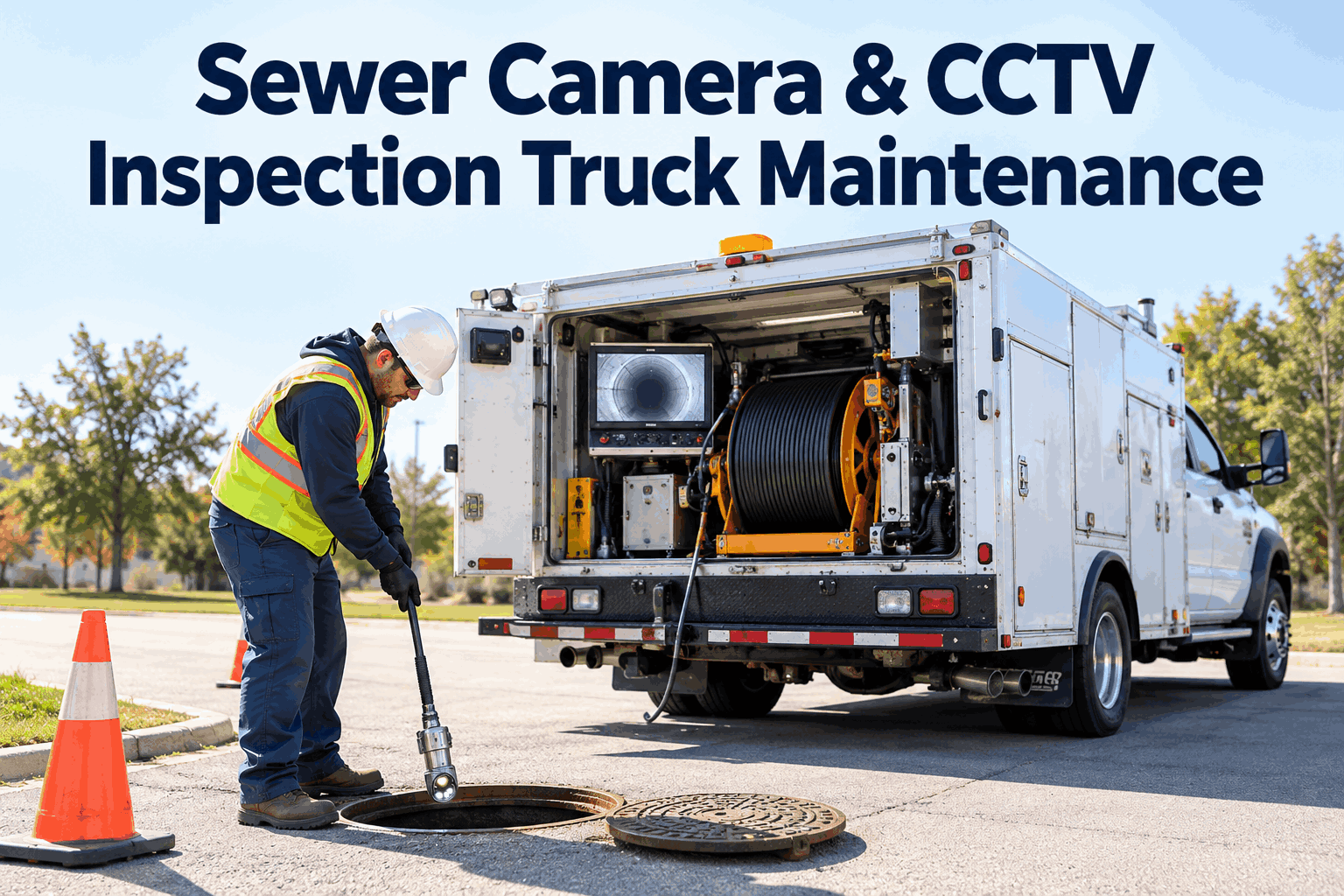
Sewer camera truck maintenance has one unusual challenge: a vehicle can start, steer and brake normally yet still be useless at the first manhole. A damaged cable, unreliable reel, camera fault, crawler problem or onboard power issue can cancel the inspection just as effectively as a chassis breakdown. Municipal fleets therefore need to maintain the truck and its CCTV inspection system as one mission-ready unit.
The Truck Is Ready Only When the Camera Can Finish the Inspection
Build sewer camera truck maintenance around the complete inspection mission—from driving to the site and powering the equipment to deploying the camera, retrieving the cable and retaining the service history.
Professional sewer inspection systems can combine camera heads, crawlers, powered or assisted cable reels and control equipment inside one vehicle. Some systems use synchronized reels specifically to manage cable movement and reduce the chance of cable damage during retrieval. That makes CCTV inspection truck maintenance different from maintaining an ordinary municipal van: availability depends on the equipment carried by the vehicle as much as the vehicle itself.
Sewer Camera Truck Maintenance Has Two Layers of Availability
A conventional vehicle inspection can tell a fleet supervisor whether the truck is roadworthy. It cannot, by itself, confirm that the crew will be able to lower a crawler, transmit a usable image, control the camera and retrieve the cable when the inspection is complete.
The practical answer is an asset-specific inspection that covers both layers without pretending every CCTV system is identical. Operators should follow the installed equipment manufacturer's inspection and service requirements, while the fleet record keeps those checks attached to the correct truck and equipment. HVI's digital equipment inspections can support unit-specific checklists, and you can see how a municipal CCTV readiness inspection can be organized in HVI.
Build a Go/No-Go Sewer Camera Truck Inspection
The best time to discover a camera or reel problem is in the yard, not after traffic control is established and a crew is standing beside an open manhole. A short operational readiness check should answer whether the major systems required for that day's inspection can actually perform their function.
Checks should be tailored to the actual system fitted to each unit. A crawler-based mainline system, push-camera van and portable inspection setup can have different components and manufacturer procedures. The fleet process should preserve that specificity rather than forcing every unit through the same generic vehicle checklist. See how HVI can turn a failed CCTV readiness item into a visible maintenance workflow.
Cable and Reel Condition Deserve Their Own Maintenance View
The cable is not simply stored equipment. It is repeatedly paid out, routed into the access point, pulled behind inspection equipment and recovered onto the reel. Professional inspection-system manufacturers use features such as strain relief, protective rollers and synchronized reels to reduce damaging forces and cable wear. That makes the entire deployment path worth inspecting—not just the camera at its end.
Inspect accessible cable condition for damage, contamination or other concerns defined by the equipment manufacturer.
Notice abnormal reel movement, level-wind issues, unusual resistance or other changes during operation.
Use the correct guides, rollers and deployment practices for the installed inspection system.
Keep cable and reel repairs visible so recurring problems do not disappear into general truck history.
Inspection equipment differs by manufacturer and configuration. Use the applicable OEM instructions for inspection, cleaning, lubrication, adjustment and service intervals, then use the maintenance system to make those requirements repeatable.
Preventive tasks can be scheduled around the actual equipment requirements instead of relying on crew memory. HVI's preventive maintenance workflows can keep recurring equipment service visible alongside vehicle PM, while a CCTV fleet demo can show how those separate maintenance needs fit under the same unit record.
Turn CCTV Inspection Findings Into Equipment-Specific Work Orders
A defect note such as “camera problem” is too vague to build useful history. The record should identify which part of the inspection system failed, what the operator observed and what maintenance response followed. That distinction becomes valuable when a supervisor later needs to know whether the same reel, cable, camera or power system has caused repeated downtime.
This is where defect tracking becomes more useful than a paper checklist. HVI can connect an inspection finding to maintenance work-order management, keeping the original observation and follow-up work closer together. That helps the next technician understand what happened without relying on a text message or the memory of the operator who first noticed it.
Make Sewer Camera Truck Maintenance History Explain Downtime
A specialized municipal vehicle accumulates two kinds of service history. One side concerns ordinary chassis maintenance; the other concerns the equipment that makes the vehicle useful to sewer operations. Keeping both visible under the same unit helps managers understand why the vehicle was unavailable and which system is demanding attention.
UNIT
That distinction can improve replacement planning, recurring-defect review and conversations between fleet and sewer operations. It also gives supervisors a cleaner starting point when a unit repeatedly misses work. See how HVI can keep vehicle maintenance and specialized equipment history visible around the same municipal asset.
Manage Sewer Camera Truck Maintenance Around the Work the Unit Must Perform
A sewer inspection vehicle is ready only when the chassis, onboard power, reel, cable, camera or crawler and control equipment can support the inspection mission. Maintaining only the road vehicle leaves a major part of availability unmanaged.
HVI gives municipal teams a way to build equipment-specific inspections, schedule preventive work, route defects into work orders and retain service history around the complete unit. Manufacturer requirements still determine how the installed CCTV equipment should be serviced; HVI helps make the resulting maintenance process visible and repeatable.
CCTV Inspection Truck Maintenance FAQs
What should sewer camera truck maintenance include?
A maintenance program should cover both the road vehicle and the installed sewer inspection equipment. Depending on the unit, that can include chassis systems, onboard electrical or auxiliary power, camera heads, crawlers, cable, reels, controllers, monitors and related deployment equipment. Exact inspection and service requirements should follow the applicable vehicle and CCTV equipment manufacturer documentation.
How should a sewer CCTV truck be checked before an inspection route?
A pre-departure check should confirm that the vehicle is ready for road operation and that the inspection system can perform its required functions. That may include powering the system, checking the camera image and lighting, observing reel operation, reviewing accessible cable condition and confirming the controller or recording system works as intended. The exact procedure should match the installed equipment.
Why are cable and reel inspections important on CCTV inspection vehicles?
The cable is repeatedly deployed and recovered during pipe inspections, while the reel controls how that cable is paid out and retrieved. Cable routing, strain, reel operation and deployment practices can therefore affect equipment condition and inspection availability. Inspection-system manufacturers may use protective guides, strain-relief features or synchronized reels to help manage these forces.
How often should sewer camera equipment receive preventive maintenance?
There is no single maintenance interval that applies to every sewer camera, crawler, cable reel or inspection vehicle. Equipment designs and operating conditions vary. Municipal fleets should use the service requirements for their specific installed equipment and then schedule those recurring tasks consistently rather than relying on a generic interval.
How can HVI help manage a municipal sewer camera fleet?
HVI can help teams create asset-specific inspections, schedule preventive maintenance, document equipment defects, create and manage work orders, and retain service history. This allows the road vehicle and its specialized sewer inspection equipment to be managed within a more connected maintenance process.