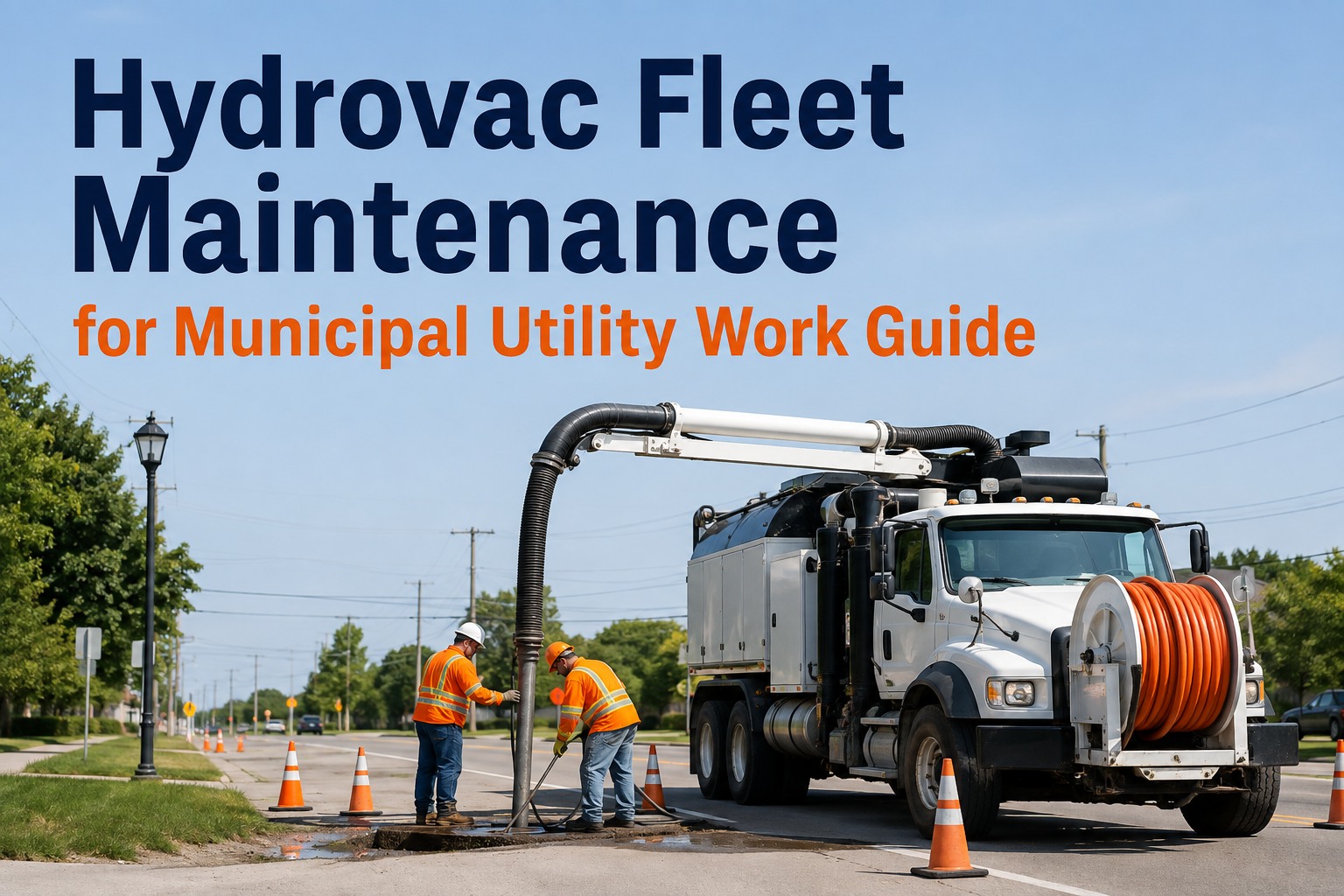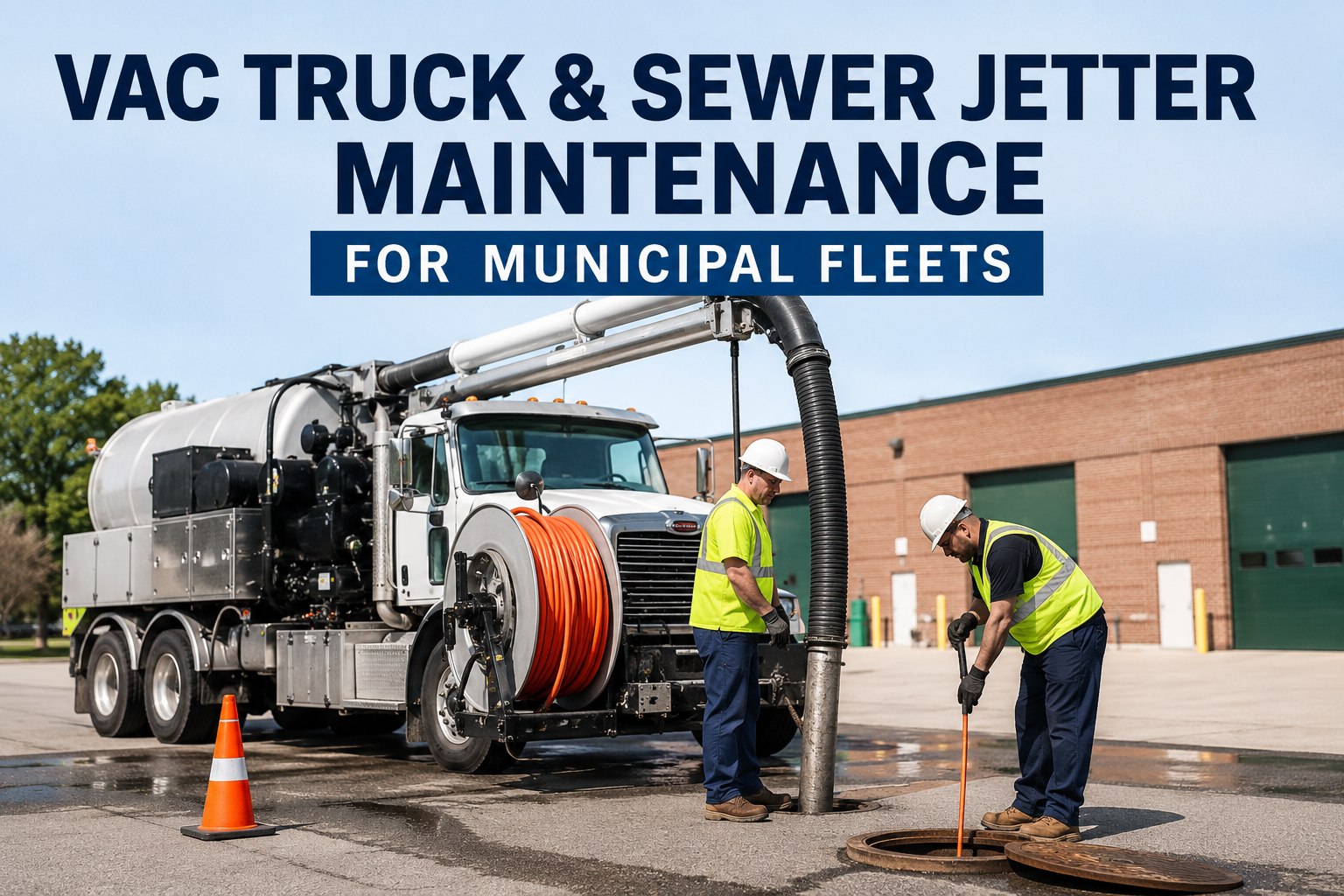
A vac truck sits at the worksite at 6 a.m. with a tank full, a boom ready, and six blocks of sewer line still on the day sheet. Two hours later it is deadlined — the blower threw a seal, the water pump is overheating, and nobody logged the last time the boom pin was greased. Vac truck maintenance for municipal fleets runs on six sub-systems that have nothing to do with the chassis — blower, water pump, boom, PTO, hydraulics and vacuum controls — and a single failure on any one of them can cost $8,000 in parts and two days of downtime while the crew waits. That is the reality for every Vactor 2100, Aquatech jetter, and combination sewer cleaner in your municipal fleet, and it is exactly the gap that a 30-minute walkthrough of HVI on your own units is built to close.
Six sub-systems. One asset record. Zero paper chases.
Vactor, Aquatech, and hydro-excavation units carry 200-plus moving parts — and none of them are covered by a standard truck DVIR. Run blower, pump, boom, and PTO checks on one mobile record, with every defect pushed straight to a work order.
What a missed PM interval actually costs your fleet
Most municipal shops track chassis oil changes on a spreadsheet and hope the vac sub-systems look after themselves. They don't. Here is what the numbers look like when a blower, water pump, or boom pin fails between intervals.
If you run a 12-unit muni fleet and lose two trucks a month to this kind of failure, you are burning $192,000 a year and 48 truck-days of crew output. The fix is not more spreadsheets — it is a PM template built for the machine, not the title. You can see the vac-truck PM template loaded on a real asset in a short demo.
Vac truck PM schedule: the six sub-systems on one record
A Vactor 2100 needs blower oil every 250 hours, water pump seals checked annually, and boom pins greased weekly. The PTO shaft is a monthly check. Below is how those intervals map across the six sub-systems HVI holds on a single asset — so a chassis oil change never crowds out a blower service again.
Blower
Oil level and condition check. Drain and refill at the OEM interval. Catch a low-oil condition early and you save the $8K failure. Miss it and the rotor seizes.
Water Pump
Jetter pump seals replaced annually. Weekly check for pressure drop and weep at the packing — a 500-psi loss on the gauge means a blocked nozzle or a failing seal.
Boom & Hose Reel
Boom pin grease weekly, hose-reel swivel monthly. A dry pin welds itself to the bushing, and you find out when the boom won't swing on a Friday afternoon callout.
PTO & Driveline
PTO shaft inspection monthly — U-joints, yoke, slip-spline lube, and air-line integrity. A failed PTO means the whole truck moves but nothing on the bed works.
Hydraulics
Hydraulic fluid and filter service at 500 hours. Daily walk-around for hose chafe and cylinder weep — the tank lift and door cylinders carry the full load every cycle.
Vacuum Controls
Vacuum relief, shutdown valves, and gauge calibration checked quarterly. A sticking relief valve over-pressures the tank and blows the door seal — a messy, avoidable failure.
Run these on six separate spreadsheets and one will always be out of date. Run them on one HVI asset record and the 250-hour blower service, the weekly boom grease, and the monthly PTO check all trigger their own alerts — which is why most muni shops book a demo to see the template live before they roll it out.
Why engine hours beat odometer for sewer cleaning trucks
A combination sewer cleaner can rack up eight hours of PTO time in a single afternoon while moving less than three miles down a pipe. If you trigger PM on mileage alone, the blower and water pump are running dry long before the chassis says it is due.
HVI reads hour-meter and telematics feeds directly into the PM engine, so a Vactor 2100 that ran 40 hours of jetting in a storm week gets its blower service flagged on hour 250 — not on the date a spreadsheet guessed. If your current system cannot do hour-based PM, start logging inspections free and see the difference on your first asset.
The five failure points every shop foreman should know
Blower Starvation
When blower oil drops below the sight glass and the rotor runs dry. Result: scored lobes, seized shaft, $8K rebuild, two days down. The 250-hour oil check exists to prevent this one failure mode.
Pump Cavitation
The jetter pump pulls air instead of water, usually from a blocked strainer or low tank. Impeller pitting follows, then a 500-psi pressure drop at the nozzle. Caught on a weekly run-check, fixed in 20 minutes.
Boom Pin Weld
A dry boom pin micro-welds to the bushing from rotation friction. First sign is a stiff swing; second sign is a snapped pin and a boom on the ground. Weekly grease is cheaper than a new boom pivot.
PTO U-Joint Failure
The PTO shaft turns at 540 or 1000 rpm under load. A dry U-joint grenades, takes out the shaft guard, and sometimes the pump coupling. Monthly inspection catches play before it becomes shrapnel.
Door Seal Blowout
The vacuum relief valve sticks closed, tank over-pressurizes, and the rear door seal blows out — dumping debris on the road. A quarterly relief-valve check is the only thing between you and a hazmat cleanup.
See the vac-truck PM template on your own Vactor or Aquatech
Book a 30-minute demo and we will load your worst-maintained unit into HVI live — blower, pump, boom, PTO, the lot.
How HVI keeps municipal vac trucks out of the shop bay
HVI is built for the machine, not just the title on the registration. Four capabilities map directly to the six sub-systems on a combination sewer cleaner.
Hour-based PM for every sub-system
Schedule the 250-hour blower oil, the annual pump seals, and the weekly boom grease on one asset record. HVI reads the hour meter and fires a due alert before the interval slips — not after the failure.
Mobile DVIR with defect-to-work-order
Operator runs a six-point vac-truck check on a phone at the yard gate. A weeping pump seal becomes a photo-backed defect, and HVI pushes it straight to a work order before the truck leaves site.
Audit-ready timestamped records
Every inspection, photo, and work order carries a timestamp and user ID. When a safety officer or insurance auditor asks for proof the boom pin was greased last Tuesday, you pull it in seconds, not hours.
Parts & inventory across shops
Track blower oil, pump seals, and boom grease stock across every depot. When a work order opens, HVI reserves the part; when stock hits a minimum, it flags a reorder so you are not waiting on a seal kit during a breakdown.
These are not generic fleet-software features bolted onto a vac truck — they are the reason HVI runs six sub-systems on one record. You can walk through the full work-order flow on a call and see how a pump-seal defect becomes a closed, photo-backed repair in under a day.
The math: paper PM vs HVI on a 12-truck sewer fleet
Take a typical municipal fleet running 12 combination sewer cleaners. Each truck averages two major sub-system failures a year under paper-based PM — usually a blower or a pump seal that was missed between intervals. Here is what changes when the same fleet runs hour-based PM on HVI.
| Metric (12 trucks, 12 months) | Paper + spreadsheet | HVI hour-based PM |
|---|---|---|
| Major sub-system failures / year | 24 (2 per truck) | 7 (missed intervals caught early) |
| Average cost per failure | $8,000 parts + labor | $1,200 (seal/grease, not rebuild) |
| Unplanned downtime days / year | 48 days | 11 days |
| Annual failure cost | $192,000 | $8,400 |
| Audit prep time per inspection cycle | 6 hours (binder diving) | 20 minutes (export from HVI) |
The gap between $192,000 and $8,400 is not a software cost — it is the cost of running a vac truck fleet on a chassis-only spreadsheet. Most of that saving comes from catching the blower oil at 250 hours and the pump seal before it cavitation-pits the impeller. If you want to run the same numbers on your own fleet size, book a demo and we will model it live with your truck count and typical failure rate.
How to move a municipal vac fleet off paper in four weeks
A common worry is that switching PM systems will eat a month of shop time. It does not — HVI is built to roll out fast on phones and tablets already in the yard. Here is the week-by-week path most muni shops follow.
Load assets and PM templates
Import your 12 vac trucks, trailers, and support units. Apply the Vactor 2100 / Aquatech PM template — blower, pump, boom, PTO, hydraulics, vac controls — to each asset record in one pass.
Set hour-based intervals and alerts
Enter current hour-meter readings. HVI calculates the next due date for the 250-hour blower oil, the annual pump seals, and the weekly boom grease, then fires alerts to the shop foreman's phone.
Operators run mobile DVIRs
Drivers run the six-point vac-truck check on a phone before leaving the yard. Defects with photos push straight to a work order. No more text-message photos to the foreman's personal phone.
First audit-ready cycle closes
Run the first full PM cycle through HVI. Export the timestamped, photo-backed record for the safety officer. The binder goes in the cabinet and stays there.
What changes when vac truck maintenance runs on HVI
Six sub-systems, one record. Blower, water pump, boom, PTO, hydraulics, and vac controls stop living on separate spreadsheets and start sharing one asset history.
Hour-based PM catches what mileage misses. The 250-hour blower oil fires on the hour meter, not a guess — which is how you avoid the $8K seizure.
Defects become work orders instantly. A weeping pump seal at the yard gate is a photo-backed work order before the truck reaches the first manhole.
Audit proof in seconds, not hours. Every grease, every seal, every inspection is timestamped and photo-backed — pull it for DOT or insurance in one export.
We were greasing the boom pin when somebody remembered, not when it was due. The week we put the Vactor 2100s on HVI, the 250-hour blower oil popped up on three trucks at once — two of them we would have run dry within a month. That is the number I track now: zero overdue blower services, every Monday morning.
Vac truck and sewer jetter PM questions, answered
How often should a Vactor 2100 blower be serviced?
What is included in a sewer cleaning truck preventive maintenance schedule?
Why should municipal vac truck fleets use CMMS software instead of spreadsheets?
Can HVI handle both the truck chassis and the vac sub-systems on one record?
How fast can a municipal fleet roll out HVI for vac truck maintenance?
Stop running Vactors and Aquatech units on a chassis-only spreadsheet
Book a 30-minute demo and we will load your worst-maintained vac truck into HVI — blower, water pump, boom, PTO, and all six sub-systems on one record.
Free to start — Works on any phone — No card needed