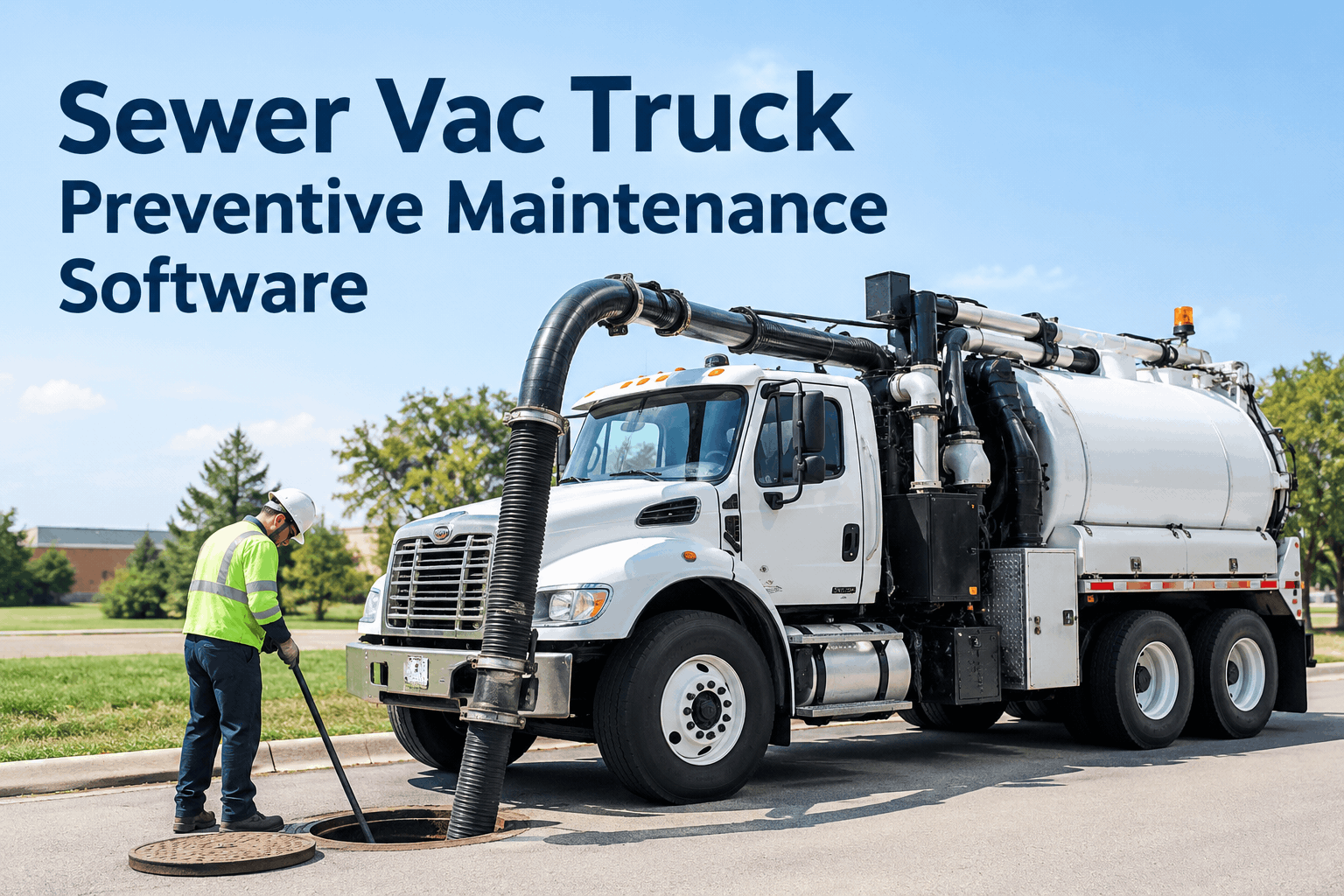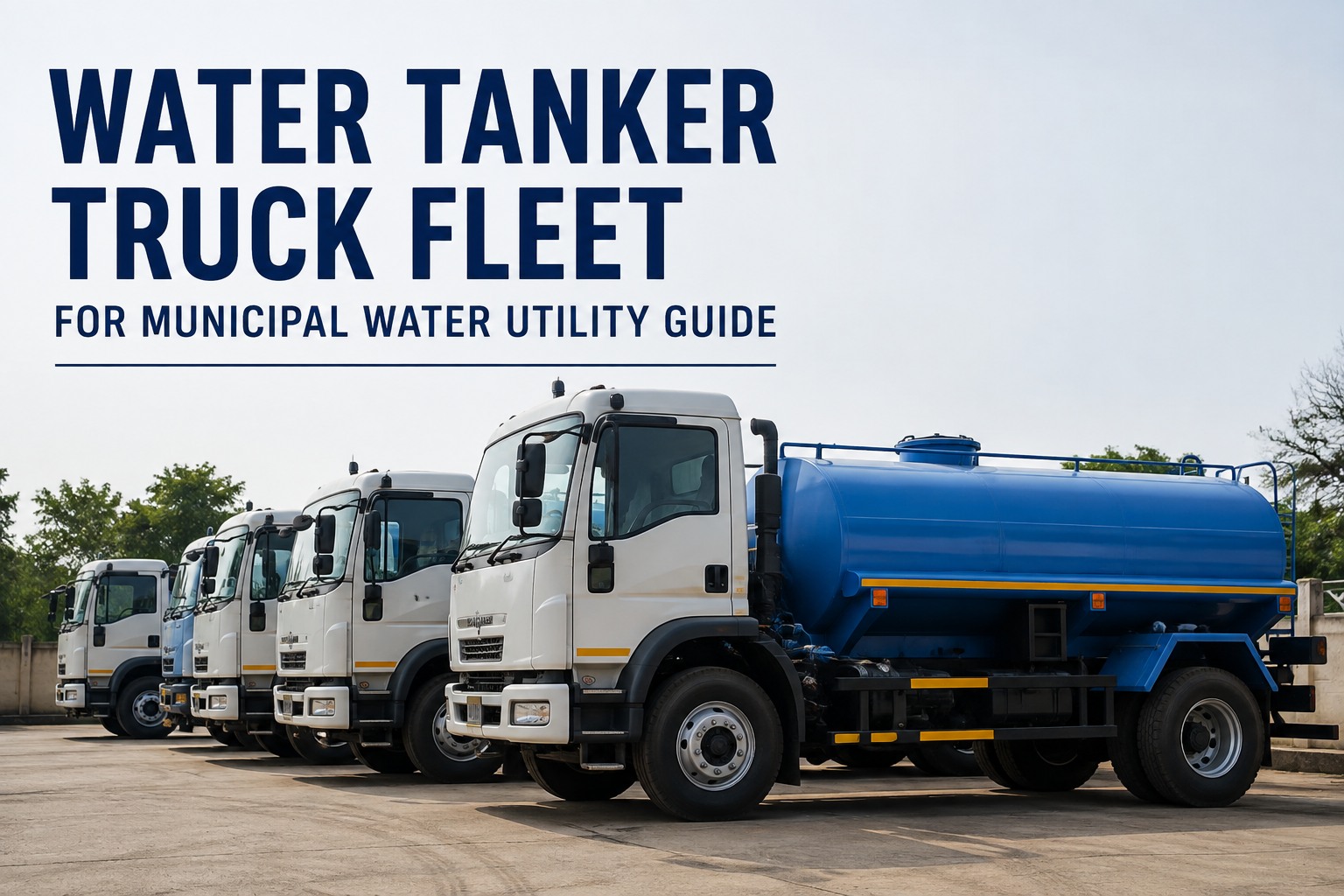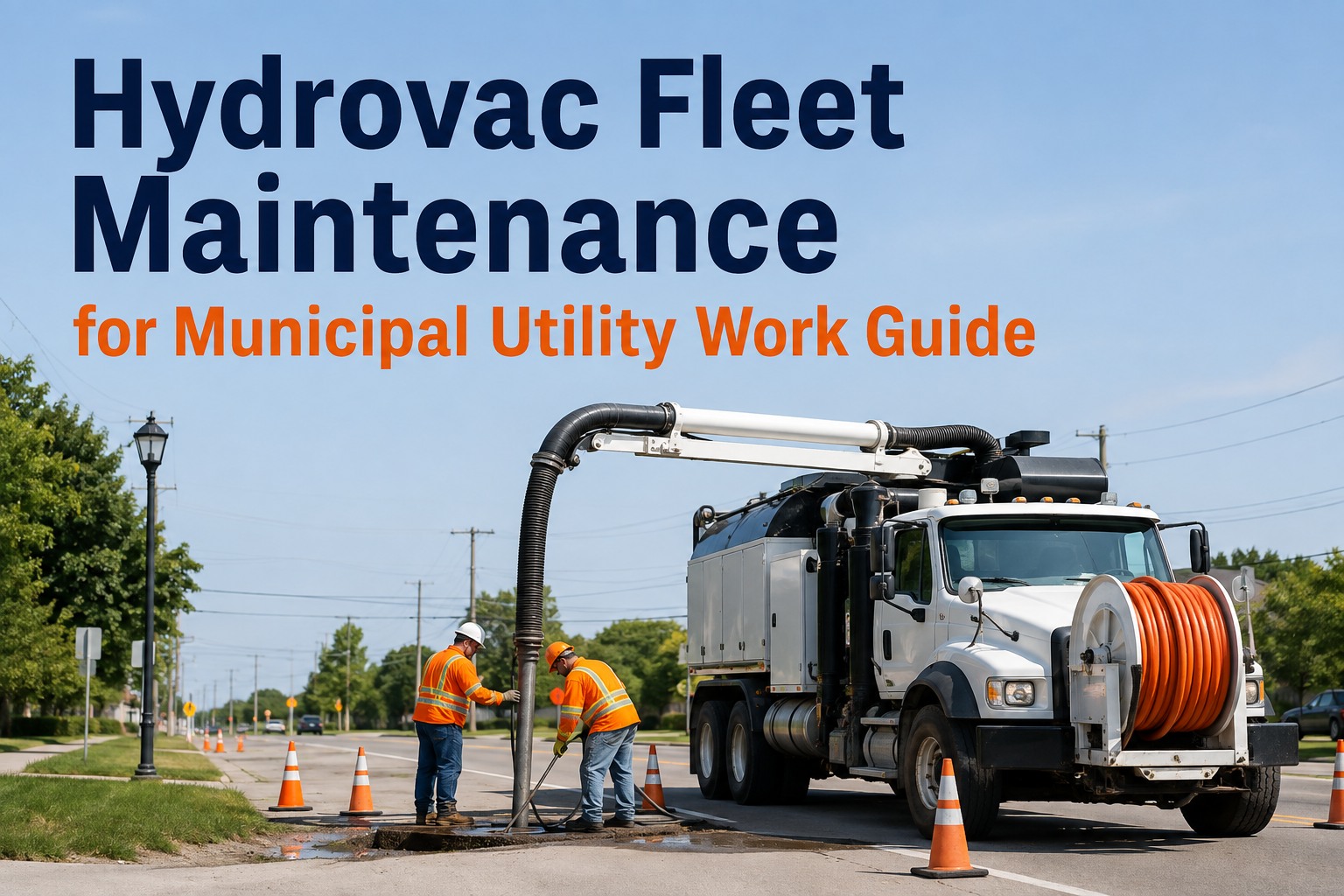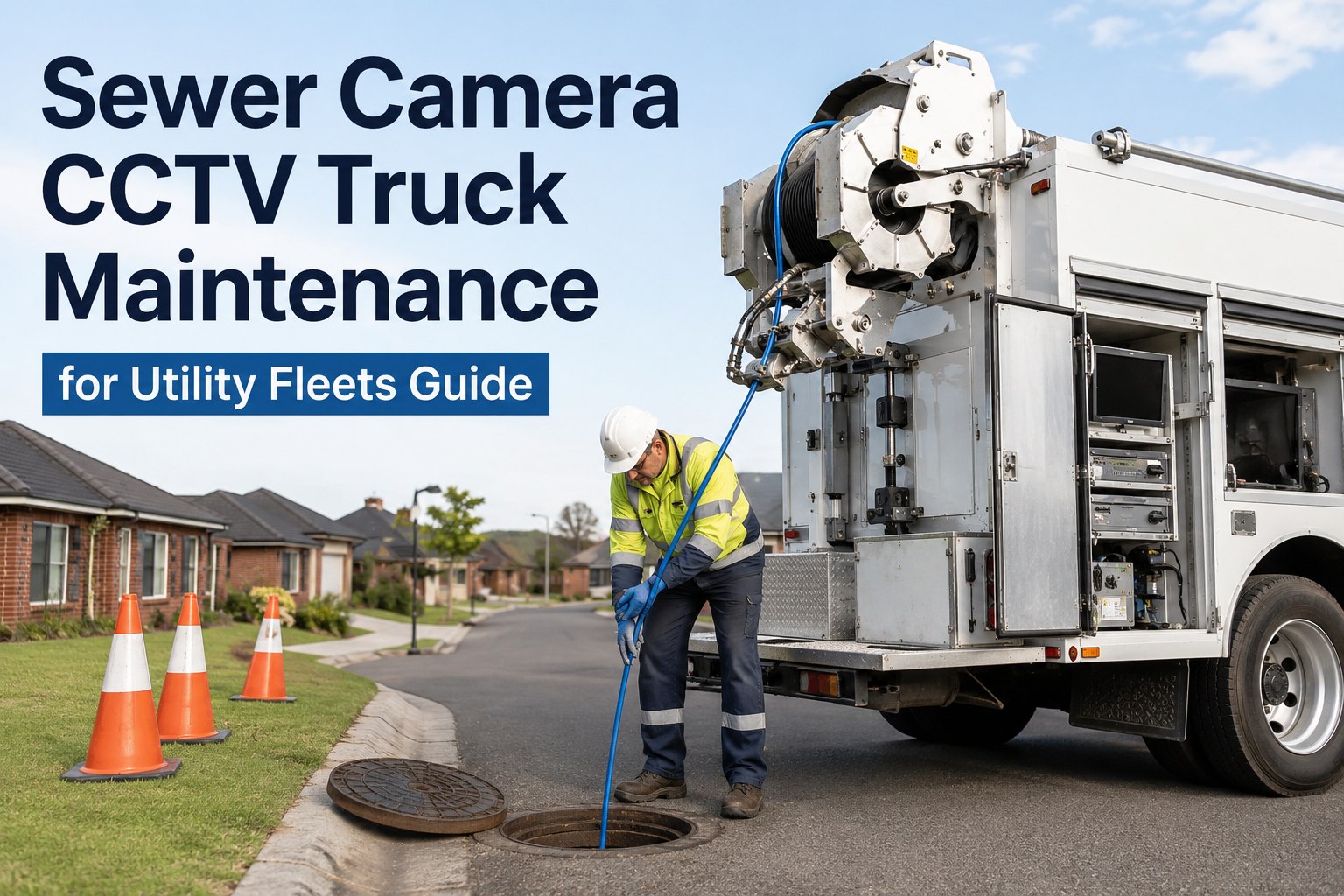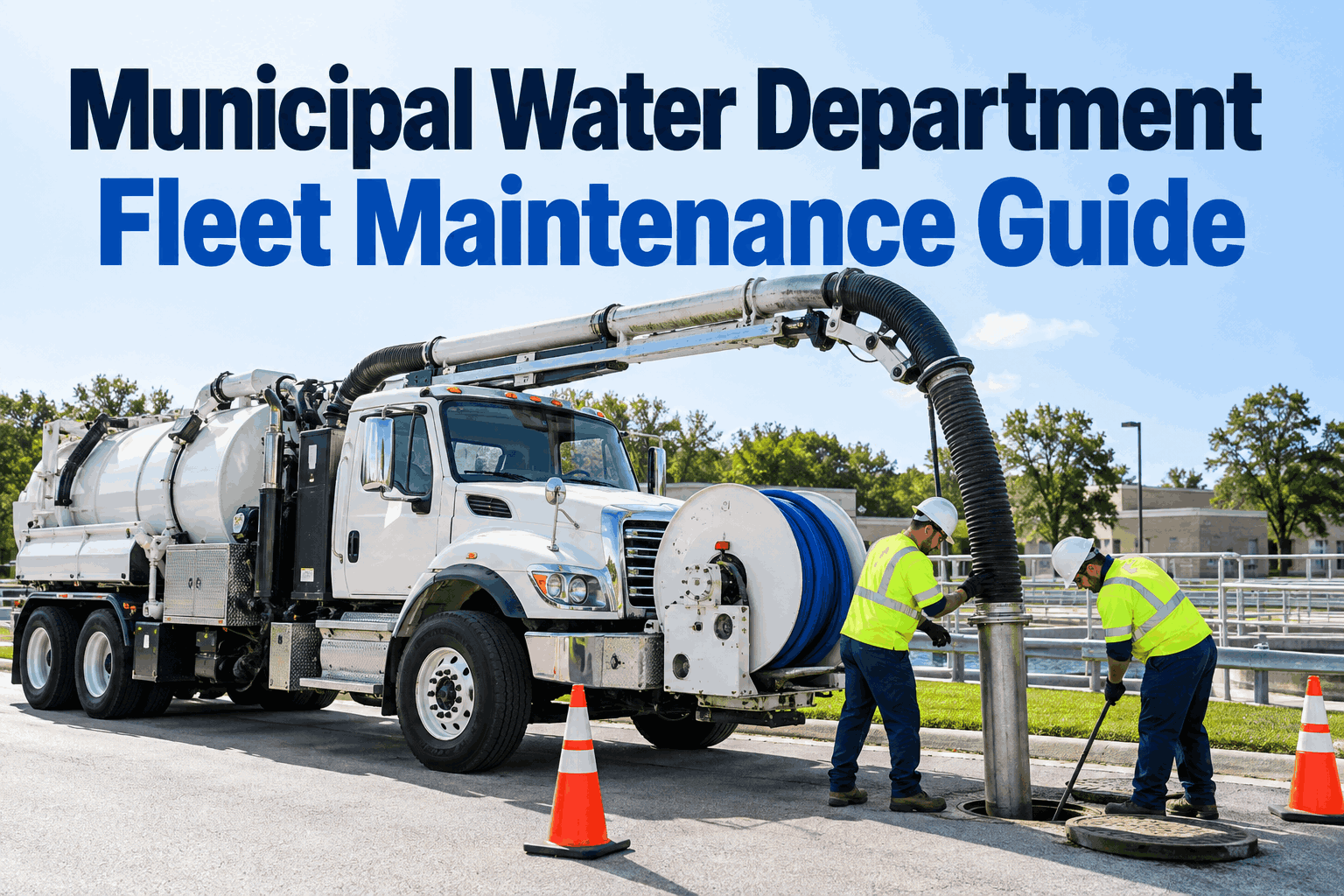
A water utility fleet does two completely different jobs with the same trucks. By day it runs planned work — hydrant flushing, line cleaning, meter replacement — on a schedule you can see coming. Then at 2am a main breaks, and the same crews have to roll immediately with a vactor, a jetter and whatever it takes to stop a street from flooding. Water department fleet maintenance has to keep the fleet ready for both at once, because a down unit isn't just lost productivity — it can be a response that didn't make it in time. This guide covers how to manage that fleet so it's ready either way — book a demo to see it on yours.
Ready for the schedule and the 2am call.
Vactors, jetters, hydrovacs, service trucks and meter vans — one fleet, two kinds of work. HVI keeps inspections, preventive maintenance and defects in one place so every unit is ready for planned jobs and emergency response alike.
Most fleet tools assume every truck does one predictable kind of work. A water utility breaks that assumption twice over: the trucks are specialized, and the demand swings between a planned schedule and an unplanned emergency without warning. A water department fleet maintenance program has to hold both — the deep PM a vactor needs and the always-ready state an emergency fleet demands. Here's how the pieces fit together.
Two jobs, one fleetwhy water utility fleet maintenance is a readiness problem
The thing that makes a water fleet hard to maintain isn't the machinery — it's that the same units have to serve two very different demands, and maintenance has to protect both without knowing which one comes next.
- Hydrant flushing and line cleaning routes
- Meter replacement and service work
- Scheduled inspections and crew assignments
- Maintenance windows you can plan around
- Water main breaks and flooding
- Sewer backups and overflows
- Hydrovac for strikes and exposures
- Crews roll now — the unit has to start
A unit that fails a planned route costs a day; a unit that won't start for an emergency can cost a flooded street or a regulatory incident. That dual stake is why scattered paper and reactive repairs don't hold up here — the fleet has to be provably ready. That's the job maintenance management is built for. Book a demo to see planned and emergency readiness side by side →
What's in a water utility fleetthree asset families, three maintenance profiles
"The fleet" is really three layers, and each needs a different maintenance approach. A program that only tracks the standard trucks leaves the expensive, response-critical equipment running on memory.
Vactors, jetters & hydrovacs
The high-value equipment — blowers, water pumps, booms, PTO, vacuum systems. These wear by run-hours, not miles, and a failure strands both planned work and emergencies.
Service trucks & meter vans
The everyday fleet that carries crews, tools and parts to the job. Standard mileage-based PM, but they still have to be inspected and ready every shift.
Backhoes, pumps & trailers
Excavation and dewatering gear, portable pumps, air compressors and trailers — often the forgotten assets, yet essential to closing out an emergency dig.
HVI holds all three families in one register, each on the schedule that fits it. The deep sub-system cadence for the specialized gear is covered separately in our vac truck and sewer jetter maintenance and hydrovac fleet maintenance guides — this page is the whole-department view that ties them together. Start free and bring every family into one system →
Two clocks, not onewhy water utility PM runs on hours, not just miles
The single biggest scheduling mistake on a water fleet is running everything on the odometer. A vactor can sit nearly still on a job and still burn eight hours of engine and PTO time — a truck that looks low-mileage is actually high-wear. Each asset needs the clock that matches how it really works.
HVI schedules each asset on its own trigger — miles for the road fleet, engine and PTO hours for the specialized gear — and raises the work order automatically when either threshold is crossed. Schedule a vactor on mileage and you'll chase failures you never saw coming. Preventive maintenance scheduling handles both clocks per unit.
The defect-to-ready loophow a flagged unit gets back to the response line
On a water fleet the daily pre-use check isn't just safety — it's the gatekeeper of readiness. A defect caught in the yard has to move to the shop and back fast, because the unit it pulls might be the one needed for the next call.
The link that matters is between the flag and the work order — a fault that opens the ticket itself, and marks the unit down so dispatch doesn't assign it to an emergency it can't answer. When a blower issue or a bad pump is tracked the moment it's seen, the fleet's readiness number stays honest. That's the gap daily operator reporting closes between the crew and the shop.
Water department fleet maintenance in HVIthe readiness board a utility fleet manager opens each morning
This is what keeps readiness real: every unit, its next PM, its planned-vs-emergency status, and the defects that became work orders overnight — the view a water utility fleet manager checks before crews are assigned.
Before assigning a crew, the manager can see which units are ready, which are down, and whether the emergency line is fully covered — a readiness picture paper can't give at 6am. That live view is what analytics and reporting builds from, and you can book a demo to see this board on your own yard.
Utility truck pre-use inspection checklistthe water utility vehicle inspection that confirms a unit can roll
Before a water utility vehicle leaves the yard, the operator runs a pre-use inspection covering the chassis, the specialized equipment and the safety gear. Here's a baseline checklist, grouped the way HVI loads it on the operator's device — each item observable, each flaggable with a photo.
- Brakes & air — pressure builds, holds, no leaks
- Tyres & lights — road-legal, no damage
- Steering, horn & mirrors — responsive
- Leaks — nothing pooling under the unit
- Blower / vacuum — starts, no unusual noise
- Water pump & hoses — pressure, no leaks
- Boom & PTO — moves freely, engages cleanly
- Hydraulic levels — in range, no seepage
- Traffic control — cones, signs, beacons present
- Confined-space & gas gear — present, in date
- Water / fuel levels — topped for a long call
- Hours logged — toward next PM interval
On paper these get a rushed tick before a job; in HVI each is a tap, a critical fail flags the unit as down, and anything found carries a photo into a work order. Start free and load your utility pre-use checklists →
From a water utility fleet manager
The call I dreaded was a main break at night and then finding out the backup vactor had a blower problem nobody had logged. You can't dispatch a truck that won't do the job, and when it's an emergency there's no time to find that out at the scene.
Putting the specialized gear on engine hours instead of mileage was the fix — it stopped the surprise failures. And now readiness is a number I can actually see: how many units are ready, which ones are down, and whether my emergency line is covered. That's the whole game for us.
Water department fleet maintenance — FAQs
What makes water department fleet maintenance different?
Two things: the equipment is specialized (vactors, jetters, hydrovacs with blowers, pumps and PTO systems), and the same fleet serves both planned work and no-warning emergencies. Maintenance has to keep every unit provably ready, because a down truck can mean a missed emergency response, not just lost productivity.
Should vactors and jetters be scheduled by miles or hours?
By engine and PTO hours. A vactor can run eight hours of equipment time while barely moving, so mileage badly understates wear. HVI schedules the specialized gear on run-hours and the road fleet on mileage, each on its own trigger, so no unit drifts past its service interval.
How do you keep an emergency-response fleet ready?
By tracking readiness as a live status, not an assumption. Daily pre-use checks flag defects before they strand a unit, a flagged fault marks the truck down so it isn't dispatched to a call it can't answer, and the board shows at a glance whether the emergency line is fully covered.
Can one system handle specialized and standard water fleet assets?
Yes. HVI runs vactors, jetters and hydrovacs alongside service trucks, meter vans and support equipment in one register, each with its own checklist and PM schedule. Everything from the deep sub-system cadence to a simple pre-use check lives on one asset record.
Does a digital program help with utility maintenance records?
Yes. Every inspection, PM and defect is stored with a timestamp, the operator or mechanic, and photos on defects. When a safety review, an audit or an insurer asks for a unit's history, it's one search instead of a dig through paper — and the completeness of the record is the proof.
Keep the water fleet ready for the schedule and the surprise
HVI schedules every unit on the right clock, catches defects at pre-use, routes them to the shop, and shows planned and emergency readiness on one board — across vactors, jetters, service trucks and support gear. Live on your fleet in under two weeks.
No credit card · Works offline in the field · Specialized and standard fleet on day one