A paver sits under a tarp from November to March, and nobody thinks about it again until the first warm week in April when the street crew fires it up for the season's first patch job — and it won't hold hydraulic pressure. Now the mix is getting cold in the truck, the crew is standing around a machine instead of laying mat, and the DOT resurfacing contract has a schedule clause that doesn't care whose fault it is. A street maintenance fleet doesn't fail like a sedan fleet does — it fails in the gap between seasons, in equipment that sat idle for months and got asked to perform on day one. This guide covers the asset profile, the seasonal service cycle, and the commissioning process that keeps that gap from becoming a blown schedule. Book a demo to see hour-based PM and seasonal commissioning running on one street maintenance fleet record.
A paving fleet doesn't run on a calendar — it runs on a season
Step through the year a paver, roller, or patch truck actually lives — and what has to happen at each stage to keep it street-ready.
Winter is when a paver, roller, or crack sealer sees the least road time all year — which makes it the best window for the deep service a busy paving schedule never allows. Hydraulic fluid, coolant, and gearbox oil get flushed and changed, screed wear plates get measured and replaced, and frames, conveyors, and augers get fully inspected while nobody's waiting on the machine to hit a job site.
Batteries that sat disconnected all winter, hydraulic systems that haven't cycled in months, and fluids that need a fresh check before the first start — commissioning is the process that turns "it's been sitting" into "it's certified ready." Skip a step here and the failure shows up on the first job of the season, in front of a crew and a client, instead of in a shop bay.
Once paving season is running, machines log hours fast and PM has to trigger on those hours, not a wall calendar built for a sedan fleet. Daily cleaning of hoppers, augers, and screeds becomes part of the job, not an afterthought, because hardened asphalt buildup is what turns a five-minute scrape into a half-day repair.
How a machine goes into storage decides how much winter service it needs and how ready it is in spring. A thorough clean-out, a final inspection, and a documented list of what needs attention before recommissioning turns a rushed spring startup into a five-minute checklist review.
Four phases, one machine, one record that has to follow it the whole way around. That continuity — not any single inspection — is what keeps a street maintenance fleet ready on day one of the season. Book a demo to see the seasonal cycle tracked on one equipment record
Most fleet software is built around vehicles that run every day, all year — a patrol car, a delivery van. A street maintenance fleet doesn't behave that way. A paver might run flat-out for eight months and sit dead-still for four, and maintenance has to flex with that rhythm instead of fighting it. Get the seasonal cycle right and a street department shows up ready to pave the first warm week of spring. Get it wrong, and the season's first pothole complaint is followed by a machine that won't start.
The street maintenance fleet asset profile
A street maintenance fleet isn't one type of equipment — it's a working set of specialized machines, each with its own wear points and its own service rhythm, all expected to show up ready the same week the weather turns. Preventive maintenance on this equipment runs on operating hours far more than mileage, since most of it barely touches a public road under its own power.
Asphalt pavers
Screed, augers, conveyors, and hydraulics take the daily abuse. Wear plates, chain tension, and hopper condition need checking on a schedule tied to hours run, not the day of the week — a paver that skips its screed wear check is one bad mat away from a rejected job.
Road rollers
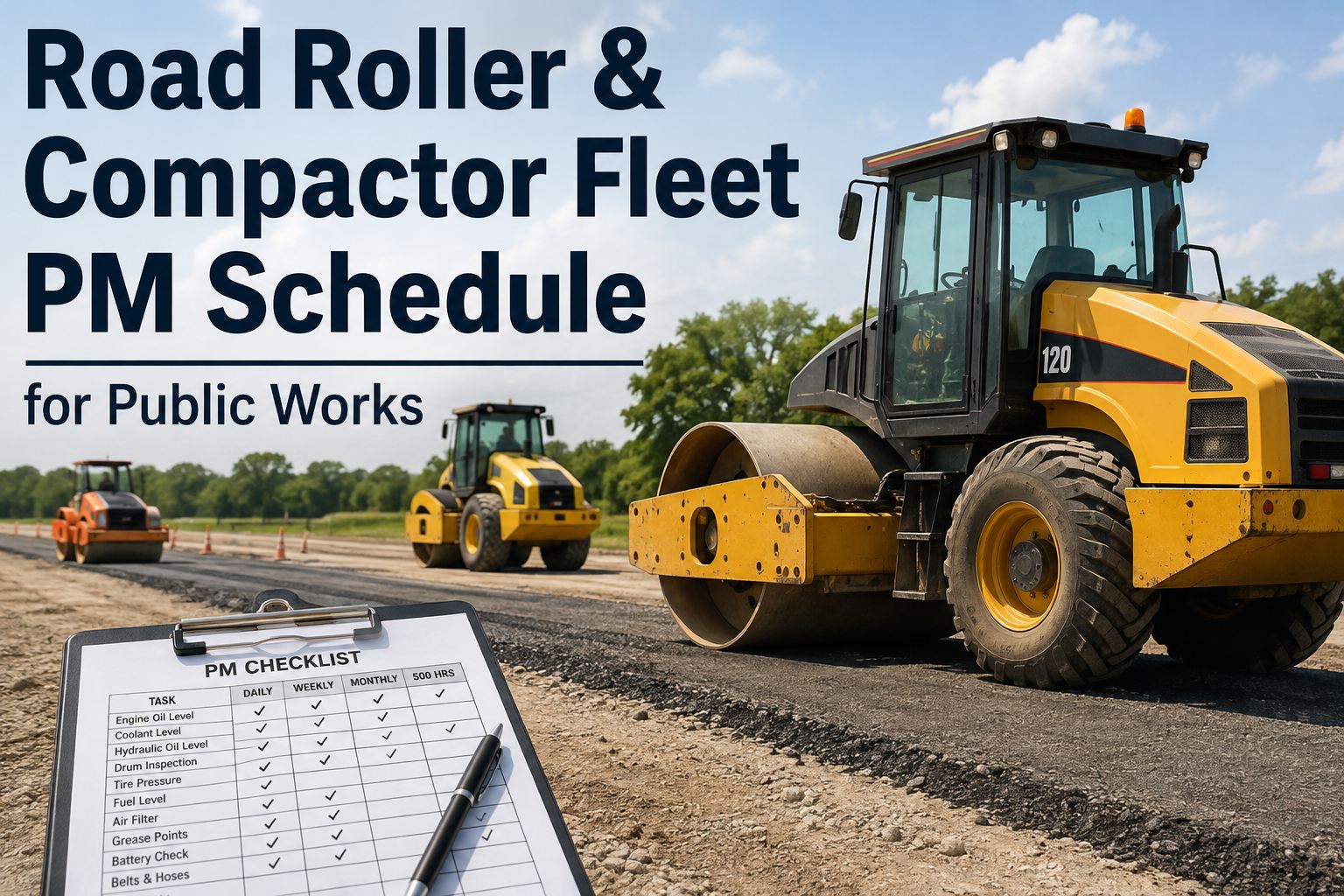
Drums, vibratory systems, and water spray bars for asphalt release are the parts that fail quietly until a drum stops turning mid-pass. Hour-based service on the vibratory mechanism and drum bearings catches wear before it shows up as an uneven compaction pattern in the finished road.
Pothole patchers & crack sealers
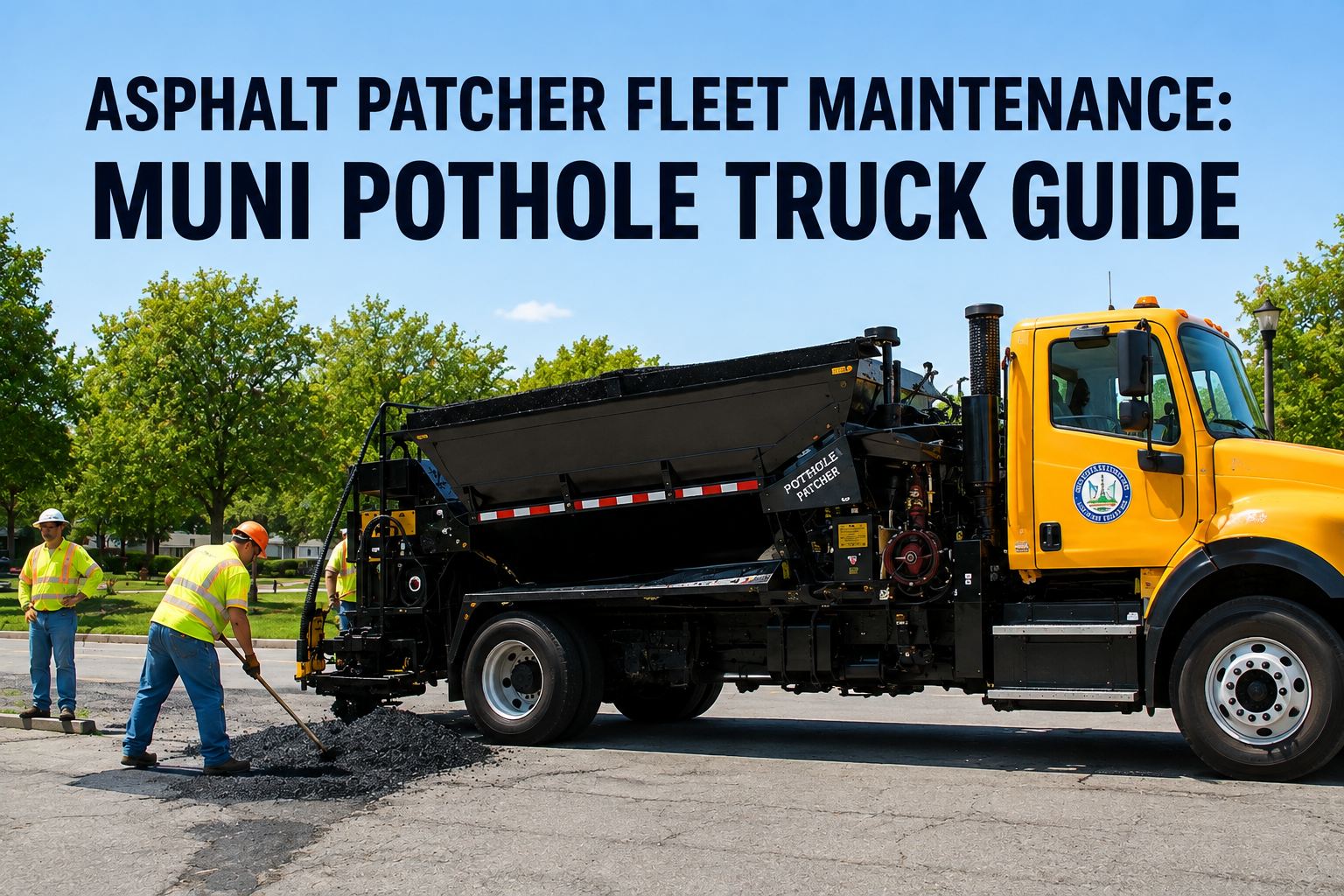
Heated hoppers, pumps, and spray wands are the components most likely to clog or seize between jobs, especially when material is left sitting instead of purged. These units need a cleaning and inspection routine as much as a mechanical one.
Line stripers & chip spreaders
Spray tips, paint pumps, and metering systems on a striper — or the conveyor and spread-rate controls on a chip spreader — need frequent cleaning since dried paint or aggregate dust is what causes the calibration drift that shows up as a crooked or thin stripe on the finished road.
Support vehicles & material transfer units
Dump trucks, water trucks, and material transfer vehicles round out the crew and log real road mileage, which means they need the mileage-based PM rules that the specialized equipment around them doesn't — one more reason a street fleet needs a system that handles more than one trigger type.
See how an hour-based paver maintenance checklist lines up daily, weekly, and seasonal tasks against a single machine's actual run time.
What a bad spring startup actually costs a street crew
in liquidated damages exposure from schedule overruns tied to equipment downtime — the pre-HVI baseline for one 25-machine paving fleet running state DOT and municipal resurfacing contracts, per HVI's own paving fleet case study.
unplanned equipment breakdowns per season on that same fleet before centralized PM — each one a crew standing idle and mix going cold in the truck while a mechanic got called out.
of annual productive hours is roughly how much unplanned downtime, reactive repairs, and parts stockouts cost municipal fleets industry-wide, based on public-sector fleet maintenance research — a gap that hits seasonal equipment hardest.
a year is what deferred street and road maintenance can add to the average driver's vehicle repair and fuel costs, according to a Forbes Technology Council analysis — a reminder of what's riding on the crew that keeps pavement in shape.
The pattern across all four numbers is the same: the cost of a street maintenance fleet problem rarely shows up as a repair bill first. It shows up as a delayed job, a liquidated-damages clause, or a crew standing around equipment that should have been caught in the shop, not on the street. Book a demo to see how hour-based PM and daily inspection tracking close that gap on your own fleet.
Where the buildup hides — material handling systems
The parts of a paving machine that fail first usually aren't the engine or the frame — they're the systems that touch hot asphalt, paint, or aggregate directly, and they fail from buildup as often as from wear. These are the spots that get skipped when a crew is racing to the next job.
A structured daily and weekly checklist that names these exact points — not just "clean the machine" — is what keeps a crew from learning about a clogged pump the same way the striping inspector does. Read the full paver maintenance tracking guide for the daily, weekly, and seasonal service clocks side by side.
Spring commissioning: bringing a fleet back from storage
Every street maintenance fleet manager has a version of the same spring story — a machine that sat all winter and needed a jump, a hydraulic system that needed to cycle a few times before it held pressure, a hose that dried out and split on the first hot day. Commissioning turns that guesswork into a sequence.
Commissioning isn't a longer version of a daily inspection — it's a distinct checklist that only runs once a year, which is exactly why it's the one most likely to get skipped when a crew is eager to get back on the street. Tying commissioning tasks to the calendar, so they trigger automatically instead of relying on someone remembering, is what keeps them from being the first thing cut when the weather turns warm early.
Paper-based paving fleet vs. a street maintenance fleet on HVI
| Paper logs & memory-based scheduling | Street maintenance fleet on HVI | |
|---|---|---|
| PM scheduling | Based on the calendar, regardless of hours actually run | Triggers on engine hours, calendar date, or both per asset |
| Seasonal commissioning | Relies on whoever remembers what the machine needs after storage | Commissioning checklist triggers automatically each spring |
| Daily inspections | Paper sheets that may or may not make it back to the shop | Digital inspections logged per machine, defects flagged instantly |
| Equipment history | Scattered across binders, memory, and whichever mechanic worked the job | Full service and defect history in one record per machine |
| Fleet visibility | Street department tracked separately from the rest of public works | One dashboard across street, roads, and every other department |
Start a free trial and see a paver, a roller, and a patch truck all scheduled correctly on the same dashboard, each on the trigger that actually fits it.
From a street maintenance supervisor who fixed the spring scramble
Every March used to be the same fire drill — pull the pavers out of the barn, try to remember what we did to them in the fall, and hope for the best. One year we lost four working days to a hydraulic leak on our main paver because nobody had flushed the system properly before storage, and that was four days of patch requests piling up with residents calling council members.
Now commissioning is a checklist tied to the calendar, not something I have to remember to schedule, and every machine's fall shutdown record tells us exactly what it needs before it goes back out. We haven't had a spring breakdown in two seasons, and when the roads department budget comes up for review, I can actually show what each machine cost us instead of guessing.
If your street crew has its own version of that March scramble, book a demo and walk through how commissioning tasks trigger on your own fleet's calendar.
Street maintenance fleet FAQs
What equipment is typically included in a street maintenance fleet?
A street maintenance fleet generally includes asphalt pavers, road rollers (both vibratory and pneumatic), pothole patch trucks, crack sealers, line stripers, chip spreaders, and support vehicles such as dump trucks and material transfer units. Each asset type has a different wear profile: pavers and rollers see heavy use of hydraulic and material-handling systems, patchers and crack sealers rely on heated hoppers and pumps that need regular cleaning, and line stripers and chip spreaders depend on precise metering systems that drift out of calibration if paint or aggregate residue is allowed to build up. Support vehicles behave more like a standard fleet and are usually scheduled on mileage rather than hours.
Why does street maintenance equipment need hour-based PM instead of mileage-based PM?
Most street maintenance equipment, including pavers, rollers, chip spreaders, and crack sealers, moves very little distance under its own power relative to how much work it does, so a mileage-based schedule built for a road vehicle would barely trigger any service at all. These machines wear based on engine hours and operating cycles instead: how long the hydraulic system has run, how many hours the screed or vibratory drum has been in use, and how many hopper cycles a patcher has completed. Preventive maintenance software built for mixed fleets needs to schedule service on whichever trigger fits each asset, since a single county or city street department typically runs both hour-based specialized equipment and mileage-based support vehicles side by side.
What does spring commissioning involve for paving and street maintenance equipment?
Spring commissioning is the process of bringing equipment out of off-season storage and certifying it ready for the first job of the season, rather than simply starting it and hoping. It typically covers battery and electrical checks after months of disconnection, a slow cycle of every hydraulic function to check for leaks and confirm pressure holds, verification that off-season fluid and filter changes were completed and haven't degraded in storage, an inspection of wear parts like screed plates, belts, and tires, and a check of safety systems such as alarms, lights, and guards. Many street departments also use commissioning as a checkpoint to confirm operator certifications are current before equipment goes back into active roadwork. Treating commissioning as its own scheduled checklist, rather than an informal walk-around, is what prevents the failures that otherwise show up on the first job of the season.
How often should heated hoppers, augers, and spray systems be cleaned on paving equipment?
Material-handling systems on paving and patching equipment generally need cleaning far more often than the rest of the machine, because they are the components directly exposed to hot asphalt, paint, or aggregate. Hoppers on pavers and patch trucks are commonly cleaned daily, since material left sitting can harden and require significant time to remove. Augers and conveyors are often greased twice per shift, ideally while the machine is still warm, to keep contaminants from settling in bearings and drive components. Spray systems on line stripers and release-agent systems on pavers should be checked for clogging on a similarly frequent basis, since a partially clogged nozzle or pump often shows up first as a quality problem in the finished work rather than as an obvious mechanical fault.
What happens when street maintenance equipment breaks down during an active roadwork project?
Equipment downtime during an active paving or patching job carries costs well beyond the repair bill. A stalled paver or roller stops the entire crew, since asphalt cools quickly in the truck and material that isn't placed within a limited window may need to be rejected. On contracted work, particularly state DOT and municipal resurfacing projects, downtime that causes schedule overruns can trigger liquidated damages clauses, and repeated delays can affect a contractor's standing on future bids. Preventive maintenance scheduled on actual operating hours, combined with daily pre-shift inspections that catch developing issues before they become breakdowns, is the primary way street maintenance operations avoid discovering equipment problems in the middle of a live job.
Give your street maintenance fleet a schedule built around how it actually runs
HVI schedules preventive maintenance on engine hours for pavers, rollers, and patchers, triggers seasonal commissioning tasks automatically, and tracks daily inspections and defects on one record per machine — alongside every other department's fleet on the same dashboard. No more guessing what a machine needs after four months in storage.
No credit card · Hour-based PM built in · Commissioning checklists that trigger on their own